
From Rubens to Reels: What Art Teaches Us About Social Media
In Instagrammable, art historian Koenraad Jonckheere draws connections between centuries-old masterpieces and today’s image-obsessed culture of social media. He unravels the paradox of ‘looking without seeing and seeing without looking’. The result is a visually rich, thought-provoking book that fascinates, yet falters when it tries to speak the language of digital culture.
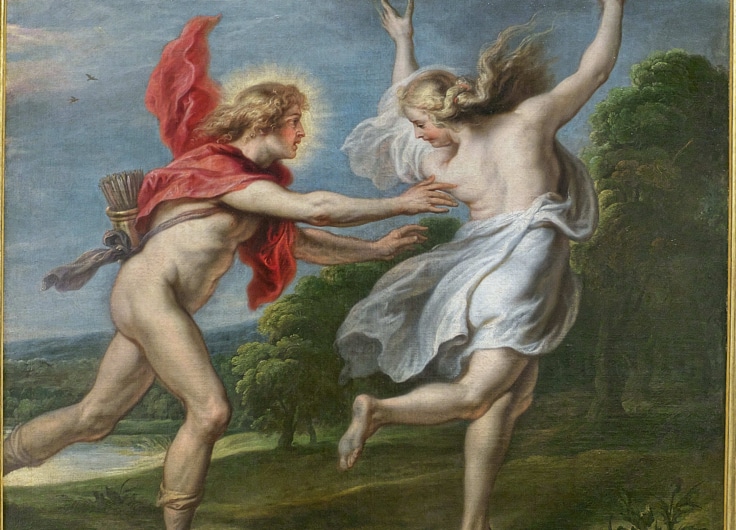
If only he hadn’t looked back. There was just one condition that the Orpheus we know from the famous Greek myth had to abide by to retrieve his beloved Eurydice from the underworld. But, “afraid that she was falling behind or born of a longing to see her, he looked back lovingly.” The wrong decision. The agreement was broken, and Eurydice had to remain forever in the underworld.
The story’s conclusion gnaws at Koenraad Jonckheere, professor of art history at Ghent University. Why did Orpheus look back? There’s no definitive answer to this question, but what lingers is the image of Orpheus, who “could hear and feel what he loved, but was driven to despair by the image that he was deprived of. Without an image, there can be no trust, you might say, but with an image, there can be no belief. This paradox is enduringly intriguing, and it’s one of the pillars of visual art and the entire visual culture that derives from it. They who think to find a truth in seeing – let alone the truth – will be left disappointed.”
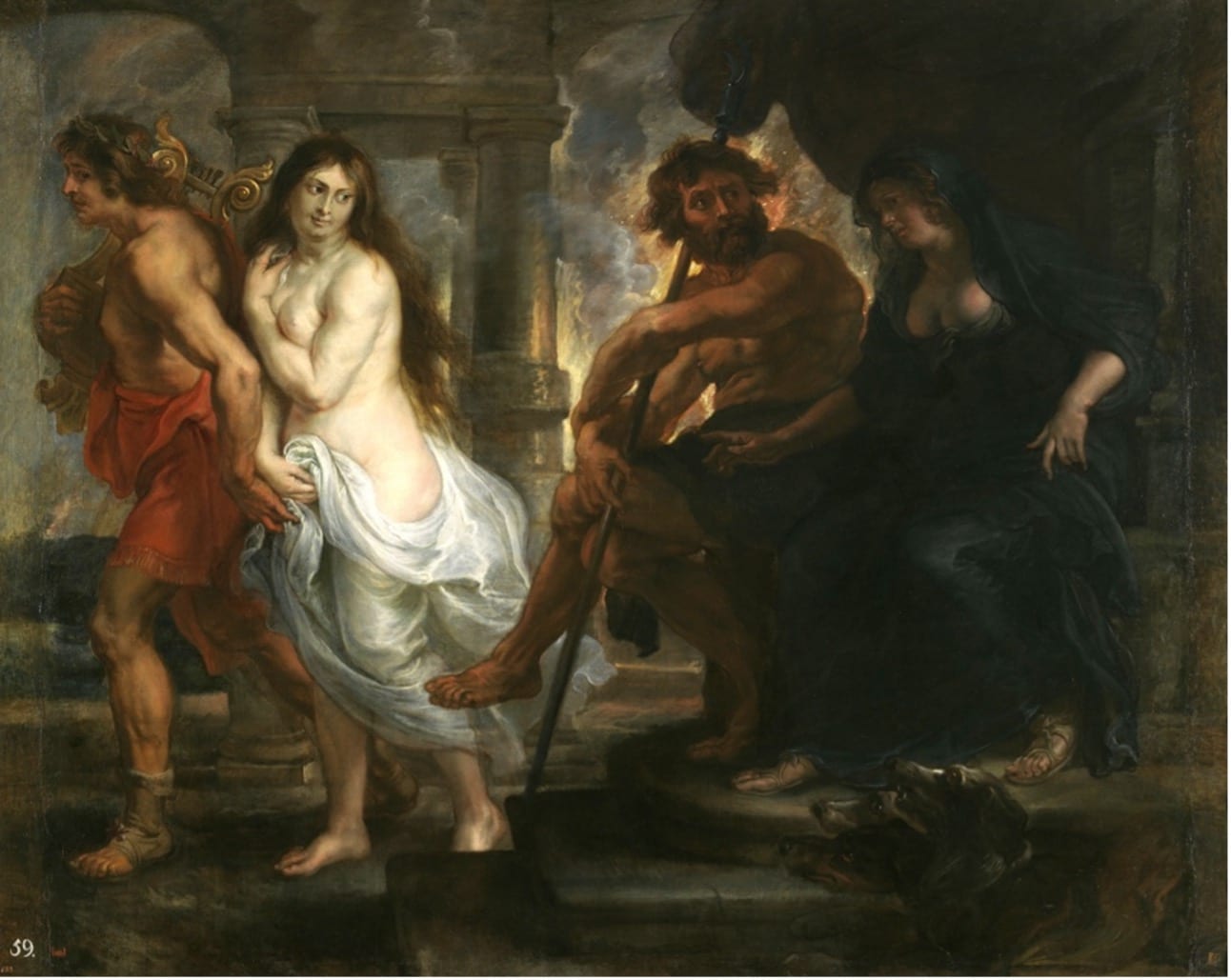 Orpheus and Eurydice by Pieter Paul Rubens, circa 1636-38
© Museo del Prado, Madrid
It’s in this fundamental paradox of the Orpheus myth that Jonckheere finds his point of departure for Instagrammable: between looking without seeing and seeing without looking. It’s the difference between seeing without imagining and imagining without seeing; between holding her hand in the belief that she is following closely behind, and yet looking back anyway out of fear of the worst of your imaginings. “Never before have we seen so many faces flash past us, and yet never before have the people behind those faces been so elusive”, Jonckheere explains. “They allow us to see everything and everyone, yet at the same time make the world totally ungraspable. While the thumb moves over the screen, magically delivering image after image to the eyes, the world that speeds by becomes less and less tangible. A lesser cause drove Narcissus insane.”
In a society that expresses itself increasingly in terms of images, it has become an essential skill to have a good understanding of images and their manipulation. That Jonckheere takes on the task of helping develop such an understanding is promising. Yet he warns in the opening chapter that the reader shouldn’t expect any answers in the book: “Raising issues is far more interesting than reading a summary of answers.” This is an interesting position to adopt, but it’s also one that creates some of its own tensions and questions later.
In a society that expresses itself increasingly in terms of images, it has become an essential skill to have a good understanding of images
How Jonckheere investigates the similarities between classical works and social media is infectious. He is an erudite teacher and a skilled storyteller, and the greatest merits of the work are in the ease with which he teaches the reader to look at the images shown. Among other things, he points out the smoky haze that softens the objects depicted around Mona Lisa. This sfumato technique, meant “to equal, if not surpass, God’s creation”, finds an echo in the filters of Instagram and other photo apps. “The constant manipulation of images, like we do on smartphones and iPads, is not nearly as new as we might think it is, seen from a historical perspective,” argues Jonckheere.
As befits a good teacher, Jonckheere expects the reader to adopt an active and critical position. The tempo at which the artworks and theories he refers to is high, but the book provides a wealth of images when the ideas discussed threaten to become too abstract. The clear, compact way in which Jonckheere explains classical philosophy and theories not only adds a charge to the works under discussion but further offers a handle for readers who may not be at home in the world of art history.
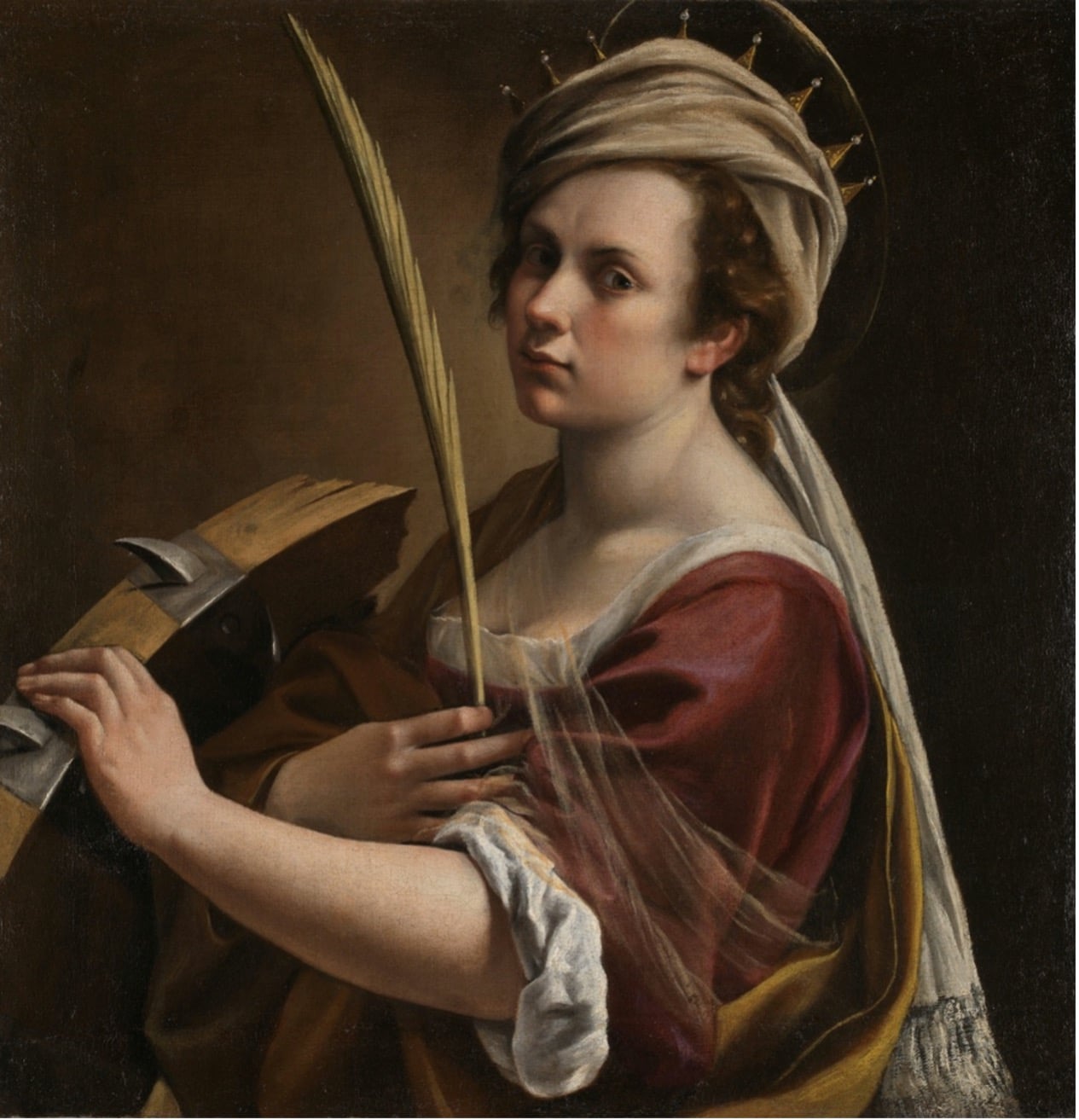 ‘Self-Portrait as Saint Catherine of Alexandria' by seventeenth-century painter Artemisia Gentileschi. Koenraad Jonckheere calls religious icons ‘influencers avant la lettre’
© Wikimedia Commons
A good example is how Jonckheere explains the importance of the triadic theory in the classical arts. The Holy Trinity (the Father, Son and Holy Ghost) together forms Godliness and plays a central role in Christian teachings. But, because two of the three are not visible, a problem emerges: why is only Jesus, and not the others, visible and tangible? The influential Christian philosopher Augustine offered a solution by adding the concept of ‘vision’ to the Trinity. With this, he distinguished between three forms of representation: the imago (a mirror image, a direct but fleeting reflection), the similitudo (a likeness, something that resembles but is not identical to the original), and the aequalitas (an equal thing, with a deep correspondence to Godliness). According to Jonckheere, these three layers of image-making form the basis for how we still look at images today: from the selfies and mirror-images on social media (imago), to the stylised or filtered images that look like ourselves but show an idealised version (similitudo), to memes that embody a broader or symbolic truth (aequalitas). An understanding of these centuries-old concepts thus not only aids interpretations of Christian art, explains Jonckheere, but also offers insight into contemporary visual culture, in which visibility, likeness and representation raise questions once again.
And yet something is amiss when he makes this link to social media. Instagrammable’s modern presentation – a hip title, a contents page laid out like an iPhone, and chapter headings that take the form of hashtags – suggests digital acuity. Still, Jonckheere proves not to be quite in his element with this material. As soon as he attempts to analyse social media, his lack of expertise in the digital realm becomes painfully obvious. The chapter ‘#Personification’ opens with the statement that some of the ‘most influential influencers’ are non-existent digital avatars. And although it is difficult to measure influence, the figures Jonckheere names simply don’t belong to the same category as cultural icons like Kim Kardashian, Mr. Beast or our very own Belgian star, Nathan ‘Acid’ Vandergunst – names that really do form the digital landscape. And so Jonckheere’s description of images of religious icons doesn’t hold water: their influence on belief and the formation of images was far greater than that exercised by the avatars he discusses.
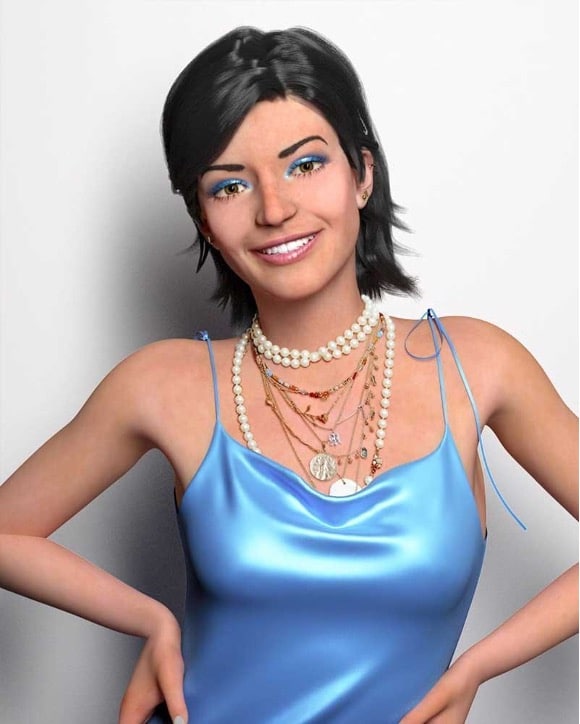 Brazilian firm’s virtual influencer Lu. Jonckheere attributes far too great an influence to Lu and other avatars
© Wikimedia Commons
Similarly, there is sometimes a critical, ideological layer missing. Jonckeere does make mention of the dangers of the aesthetic theories, like physiognomy – the pseudoscience that claims to be able to derive an accurate sense of a person’s character from their appearance – but barely explores the political implications of these, like the legitimisation of racial or social hierarchies based on physical features. What is missing is the confrontational and consequential argument that, for example, John Berger’s Ways of Seeing makes so powerfully: the undermining of the illusion that art is neutral, and the explicit naming of the (often patriarchal or capitalist) worldviews that are embedded in artworks. By contrast, Jonckheere never critically discusses the technological optimism that resounds in some of his chapters. Yes, sure: AI and face-tuning software use techniques that recall the portrait painters of the fifteenth and sixteenth centuries. But don’t these tools also perpetuate the beauty ideals that have been questioned and critiqued in recent decades, particularly concerning gender, race, and age?
Stylised aesthetic ideals rooted in classical Western visual culture circulate on social media
AI can’t wield a paintbrush or stretch a canvas: it can only imitate what others have previously made, often without permission. Aptly, Jonckheere observes “that that became, like a creeping poison, a component of European visual culture, caused–first in the sixteenth-to-seventeenth–and again in the nineteenth centuries a painful confrontation with the visual cultures of other parts of the world”. With this ‘creeping poison’, Jonckheere targets the notion of a universal aesthetic ideal, rooted in Western norms such as whiteness, symmetry, youth, and restraint, which has deeply ingrained itself in European art history. The confrontation became painful when European colonists met other cultures and labelled their images as ‘primitive’ or ‘impure’, often with racial undertones.
Jonckheere’s analysis could be a perfect opportunity to connect these historical discussions to the present day. Today, too, stylised aesthetic ideals rooted in classical Western visual culture circulate on social media; ideals that have already been critiqued, but that are becoming dominant once more in a digital context. How this imagery contributes to the resurgence of reactionary ideas about gender, race, or social status remains under-examined.
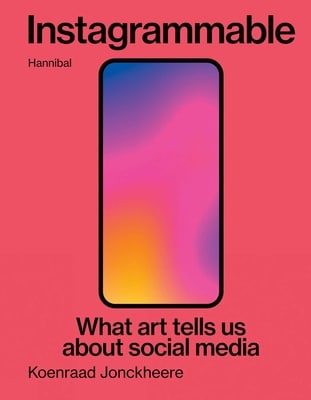
The role of images in our digital culture cannot be overestimated, and Instagrammable could have been sharper and more relevant had Jonckheere developed this dimension further. Instead, it remains a book that promises much and boasts beautiful design, but falls short in terms of its content. What could have been an analysis of social media and visual culture remains largely a lesson in art history that struggles to translate itself to the present day.
Koenraad Jonckheere, Instagrammable – What Art Tells Us About Social Media, Hannibal Veurne, 312 pages



Leave a Reply
You must be logged in to post a comment.