
Bonnie and Clyde in Medieval Deventer
In the fifteenth and sixteenth centuries, stealing a piece of jewelry or a coat could be fatal. So, why would people risk stealing such things? Janna Coomans has delved into centuries-old criminal records and confessions to find out, and in Country of Thieves (Dievenland), she offers a unique glimpse into crime and punishment in the late Middle Ages.
Purses and money bags from landlady Hille’s inn, along with some coats and bags. Milk and spinach from the nuns’ garden. A silver spoon and six cakes from Jan Smit’s – all stolen property from long ago that resurfaces briefly in Country of Thieves: Surviving in the Middle Ages. With this book, shortlisted for the Libris History Prize and the Boekenbon Literature Prize, Utrecht lecturer and historian Janna Coomans offers a unique glimpse into the lower echelons of fifteenth- and sixteenth-century society in the Netherlands.
The focus is on ‘ordinary’ people struggling to survive, who steal because they have no other choice, because they’ve suffered setbacks or because they are on the fringe, viewed with disgust by society and almost forced to disregard all the social rules. Coomans tracked down a host of thieves: one hundred and fifty-eight for Kampen and Deventer alone, in populations of only eight- and five-thousand, respectively. She focuses on the period from 1450 to 1550, as the Middle Ages transitioned to the early modern period. Like most researchers in the Netherlands, Coomans places this transition at the start of the Dutch Revolt (1568) whereas, in Belgium, historians would use the start of Emperor Charles V’s reign (1506) as their anchor point. A fine demonstration of how biased transitionary dates can be….
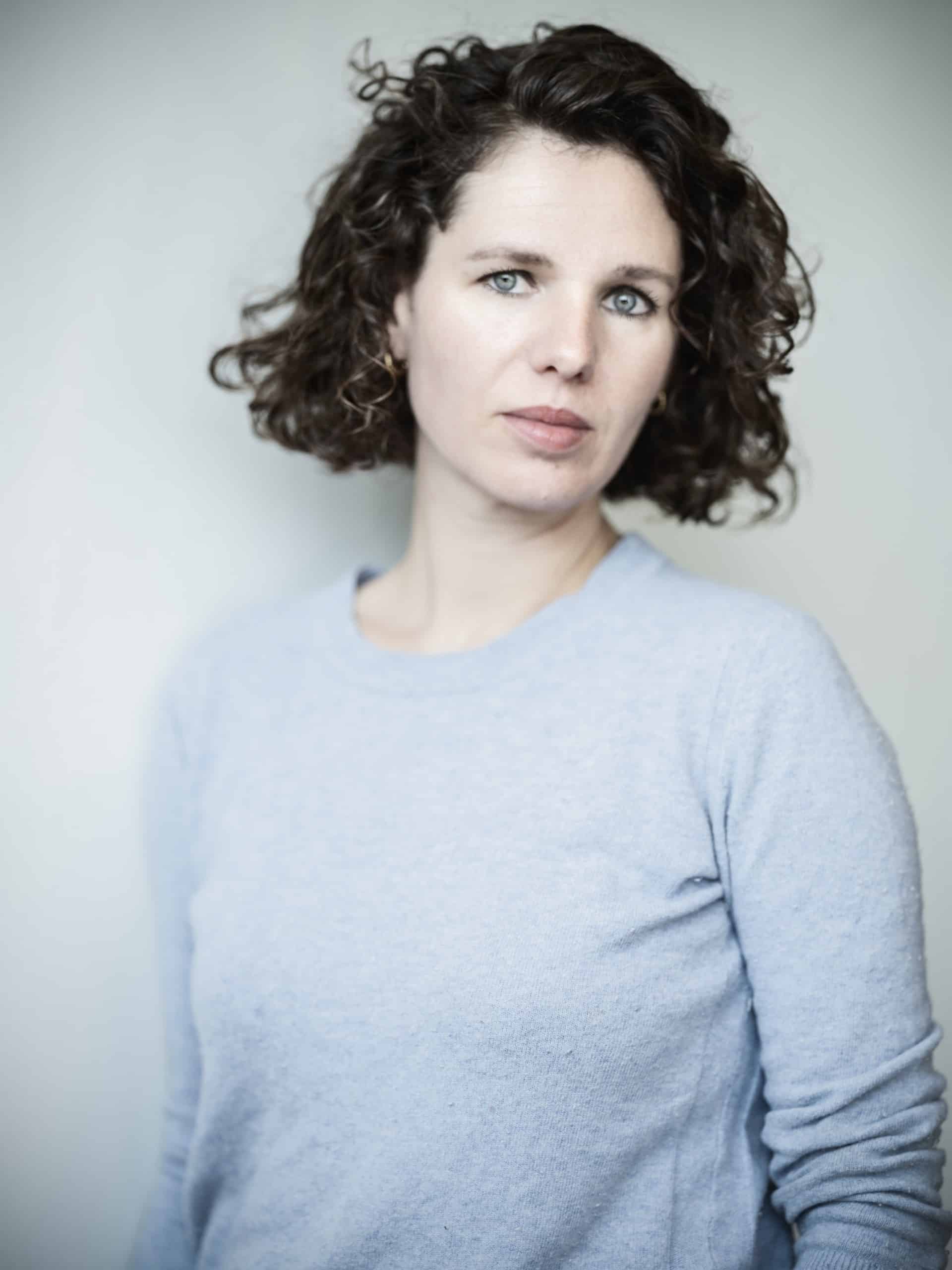 In Country of Thieves, Janna Coomans brings the Middle Ages closer to today's reader
©Keke Keukelaar
Coomans scoured criminal records and other legal sources from archives in both the Netherlands and Belgium, but in Country of Thieves she focuses primarily on the Dutch region. The cities of Deventer, Kampen, and ‘s-Hertogenbosch (Den Bosch) are central, with case studies from Brussels, Antwerp and other cities also included. She explains how her parameters were influenced by the sources and their availability. In Kampen, for example, detailed thieves’ confessions have been preserved along with lengthy lists of the stolen goods, the victims and the locations of the crimes… providing a goldmine for historians. Yet, the only information available about the thieves is basic information about their convictions. We know little about their family backgrounds or their work. In this way, Coomans reveals how much (yet often also how little) we can glean from medieval sources. Her research experience and background are evident in the transparency with which she writes about the possibilities and limitations of her source material.
Coomans repeatedly weighs and compares medieval society against our own era to make her readers understand how different life was in 1500 and she also draws many parallels between today’s activities and the lives of people who lived some five hundred years ago. “People are still the same species,” she argues. “We have to sleep, work, cook, eat, heat our living spaces, wash, relieve ourselves; and we need social contact every day.” Some modern social services – think garbage collections and hospitals – are recognisable in the Middle Ages, and there were some social safety nets for orphans, the poor, and widows within crafts and fraternities.
People are still the same species," Coomans argues. "We have to sleep, work, cook, eat, heat our living spaces, wash, relieve ourselves; and we need social contact every day."
There are, of course, crucial differences. Coomans describes how differently medieval people felt about their possessions. In our current throwaway society, it’s unimaginable to be sentenced to death for taking the wrong coat home from a party, but although forms of credit already existed, medieval people didn’t have bank accounts. Their possessions and animals were their wealth and fortunes. This explains the harsh measures taken against theft of any item of personal property.
Coomans, unlike most academic historians, who would shudder at the idea of converting prices and wages into modern euros, doesn’t flinch. She employs enough nuance to avoid offending an academic audience. The fact that she writes about objects that are still familiar in our modern lives appeals to the imagination, especially when it comes to clothing. In the Middle Ages, a person had to work more than six months to have enough money to buy a tabard (an overcoat), which cost, on average, the equivalent of more than a thousand euros. Maybe you are envisioning that one expensive designer piece in your own wardrobe, bought for a great occasion, but, no: for person in 1500, that coat was the only one they owned, and they wore it daily. Having that coat stolen from an inn would constitute a serious economic loss. Clothing cost a fortune, so it’s no wonder it was often stolen.
Of the 158 thieves from Kampen and Deventer, only six were women. Were medieval women rarely involved in thefts, or do criminal records paint a distorted picture?
Coomans highlights an interesting concept with regard to the manufacturing process. Today, we rarely see the process involved in the producation of the coffee cup on our kitchen table or the suede sofa in our living room. Our coats, bags, clothes, and furniture are often made in China. Though many products were being imported in the Middle Ages, during a walk through a medieval city, a person would still see, hear and smell the workshops of crafts and industries. It was only after the butcher slaughtered a cow for meat that the tanner or parchment maker got to work on the hide, while the bones were carved into buttons and dice. According to Coomans, proximity to the process evoked a deep sense of ownership over materials and objects. Coomans connects this with a statement: if we had more insight into how much work goes into making a table or coat, we as consumers would make more conscious choices. Knowing that, for centuries, things can – and have been – done differently, is an important first step. With concepts like this, Coomans brings the Middle Ages closer to today’s reader.
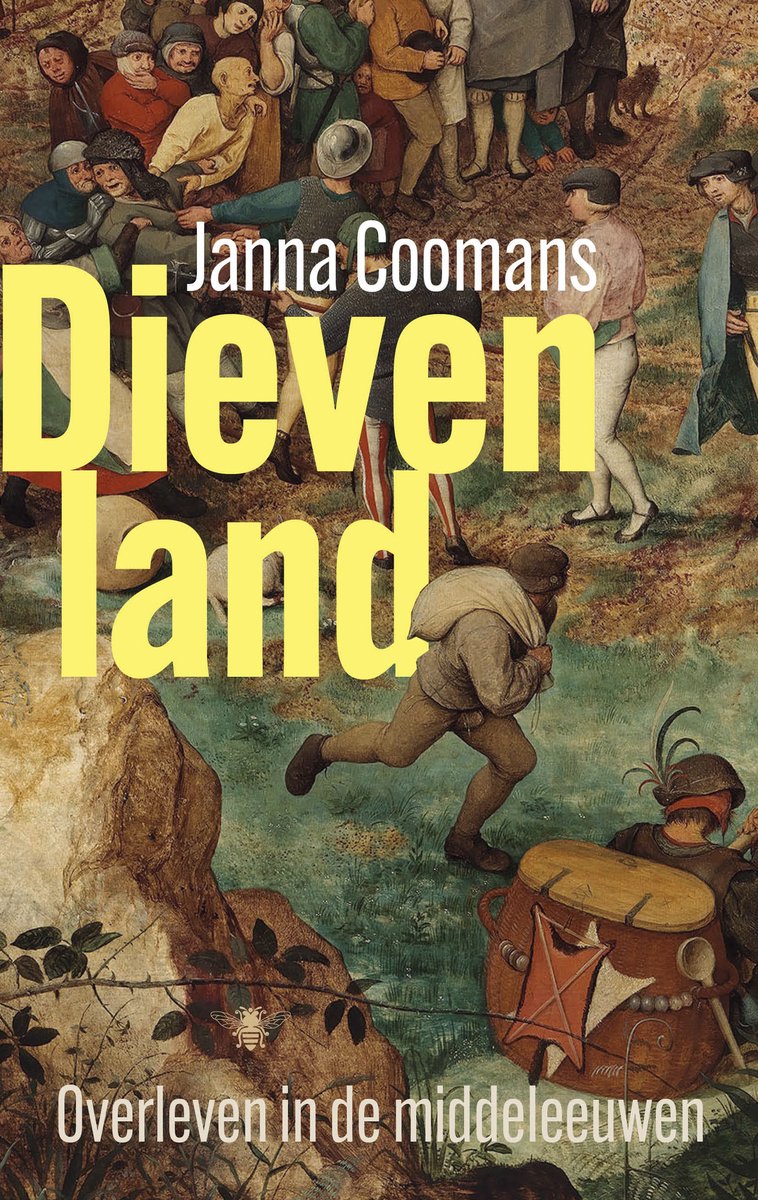 Cover of 'Dievenland' by Janna Coomans
She is also able to highlight a gender issue in historical research that still remains relevant today. Of the 158 thieves from Kampen and Deventer, only six were women. Were medieval women rarely involved in thefts, or do criminal records paint a distorted picture? Were women punished less severely than men? What we can say for sure is that the relationship between gender and crime goes back more than five hundred years.
Some of these women’s stories are tailor-made for a modern crime drama. Slum landlord Femme, in partnership with the city executioner Hendrick Kock, made life difficult for sex workers in Kampen. ‘Big’ Mette op de Berg was the wife of a miller, but also the sweetheart of goldsmith, thief, and master manipulator Henrik Tekelenburg. The charismatic Henrik charmed Mette with beautiful jewelry he had stolen from (mostly female) clients. Like Bonnie and Clyde, they crashed a wedding party, stealing dishes and coats from the unsuspecting guests.
Back then, it was quite normal to offer a room to a complete stranger who knocked late at night. People consistently opened their homes to unfamiliar travelers
Before he was caught in Deventer, charming Henrik traveled throughout the regions of Friesland, Lower Saxony, and North Rhine-Westphalia. Another one of the central themes in Country of Thieves is the mobility of (poor) people in the Middle Ages, who traveled from village to village, town to town, in search of a better life. Back then, it was quite normal to offer a room to a complete stranger who knocked late at night. People consistently opened their homes to unfamiliar travelers. At inns, people often slept in the same room with strangers; sometimes even sharing a bed.
Coomans describes that it was around 1500 when the word ‘vagrant’ gradually acquired a negative connotation and growing suspicion of others led to ever-increasing persecution of the good-for-nothings, the vagabonds, from then onward. Those in power viewed the poverty and mobility of the poor as a moral problem: these were people unwilling to contribute to decent society. Ordinances and laws against the mobile poor came into force everywhere. Always, two criteria were central: origin (was the accused a city resident?) and health (was the accused able to work?). The number of regulations increased, and the punishments became increasingly severe.
In Country of Thieves, Coomans holds up a dark mirror to our current culture – our throwaway society and fear of the foreigner. It’s almost as if we can only truly understand a society by looking at how it treats its most vulnerable groups.

You might also like


It’s all double Dutch to ChatGPT





Leave a Reply
You must be logged in to post a comment.