
The Lost Treasure of the Fagels: Biblioteca Fageliana’s Journey from Amsterdam to Dublin
The Fagel collection, with its precious cartographic works, hand-coloured botanical books and one-of-a-kind polemical pamphlets contains a wealth of unique information. With approximately 20,000 items, it is one of the largest, completely preserved Dutch private libraries from before 1800. The collection was built up by the powerful Fagel family, regents from The Hague until Hendrik Fagel had to sell it for financial reasons. Today the Fagel collection is one of the showpieces of the library of Trinity College in Dublin.
The Biblioteca Fageliana, held by the library of the prestigious Trinity College in the Irish capital, contains a large collection of rare books and manuscripts dating mostly from the eighteenth century that once belonged to the Dutch Fagel family. The collection includes an estimated 10,000 books, 6,000 loose maps and 142 atlases dating from 1600 to 1800, collected by five generations of the Fagel family between 1670 and 1795. One of the descendants, Hendrik Fagel (1765-1838), was forced to sell the collection in 1802.
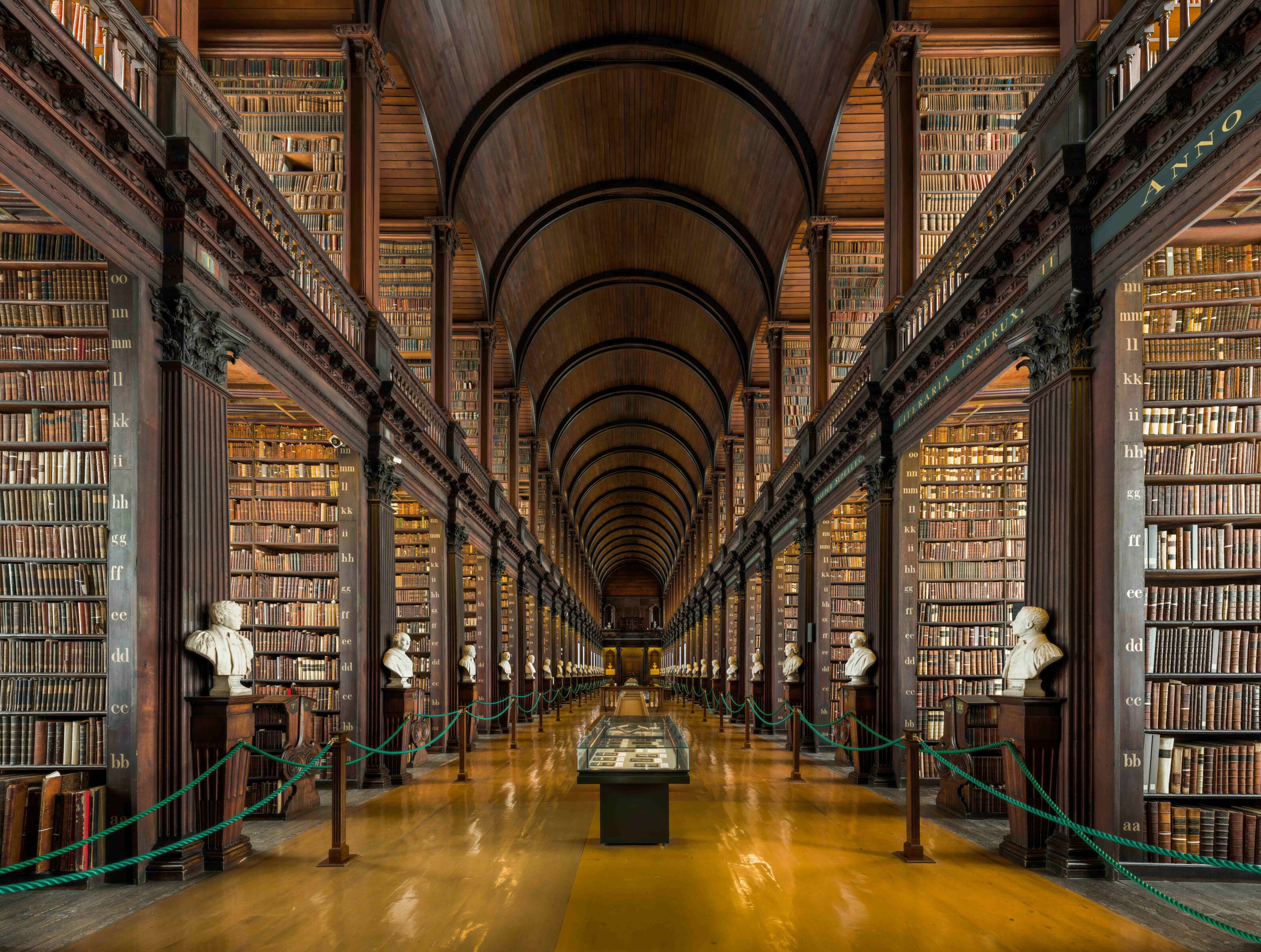 The Long Room of the Old Library at Trinity College Dublin
© Diliff / Wikimedia Commons
Young Hendrik
Hendrik Fagel the Younger was born in Amsterdam into a rich regent family of clerks and councillors of the States General on 21 March 1765. His ancestor François Fagel (1543-1587), originally from Lokeren in East Flanders, became an alderman in Bruges and a merchant in Antwerp. But after the Fall of Antwerp in 1585, the Protestant François had to flee to Amsterdam, later settling at Noordeinde in The Hague.
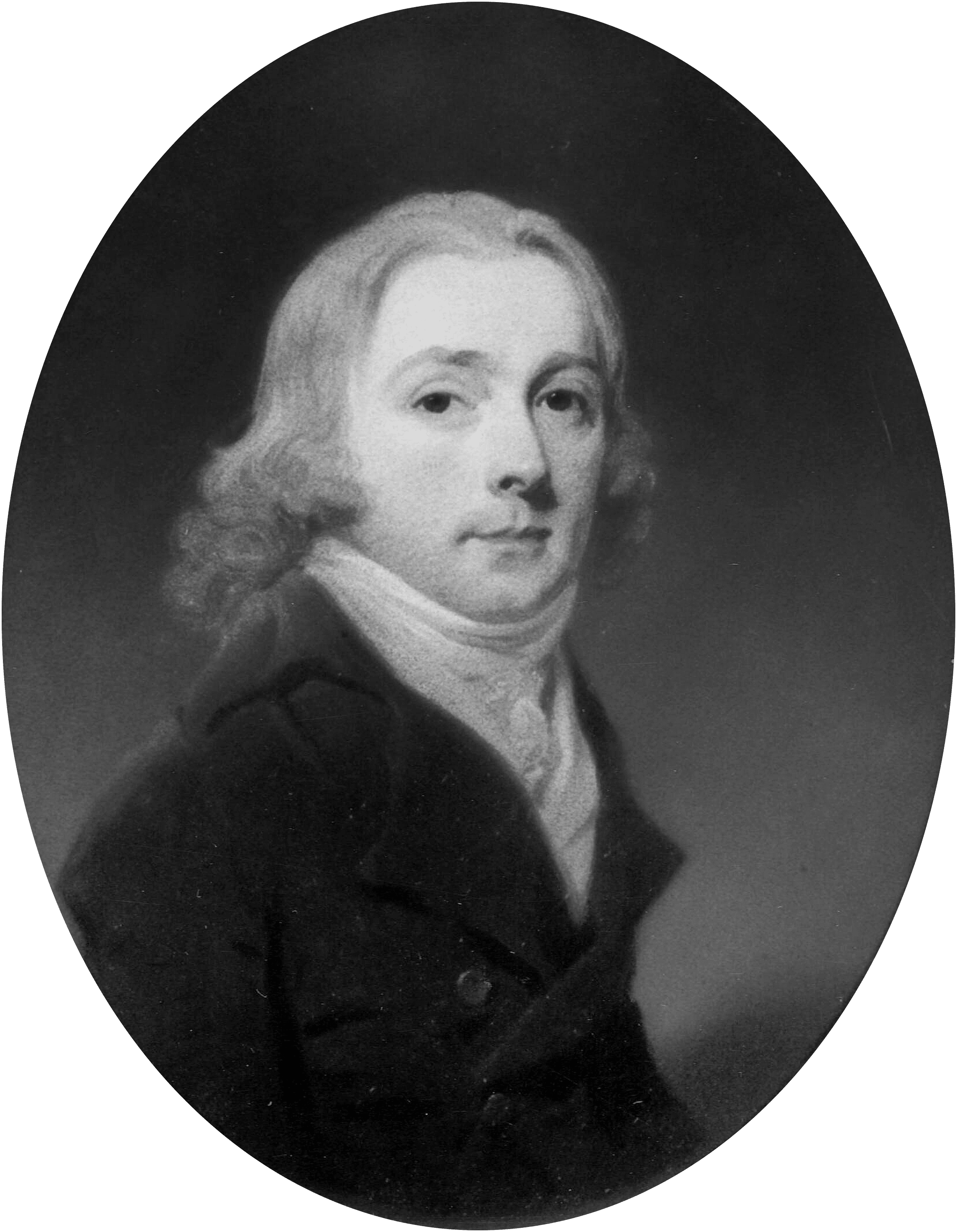 Portrait of Hendrik Fagel by Charles Howard Hodges
© public domain / Wikimedia Commons
Like many of his forebears, Hendrik Fagel studied law in Leiden. He received his doctorate at the age of twenty, after which he worked as a clerk of the States General. In 1790, Hendrik married the twenty-year-old Agneta Boreel, who was the lady-in-waiting of princess (later queen of the Netherlands) Anna Paulowna. In 1794 he left for England and later that year he obtained a ministerial post serving the House of Orange-Nassau. However, the French invasion of 1795 during the Napoleonic era led to a great upheaval. Fagel lost his position and could not return to his homeland. He lost more and more of his possessions and also had to sell his valuable collection of paintings. He had his library transferred to England but was forced to sell his unique collection of rare books.
Trinity College
In 1802, Christie’s auction house in London launched a catalogue of the Fagels’ rare book collection, with more than 20,000 titles from the year 1400 to the end of 1700. Approximately half of the private collection consisted of Dutch books. In addition there were books in English, French and Latin. The auction never took place, however, because the Erasmus Smith Schools Trust, a charitable organization supporting educational institutions and founded by the wealthy Protestant cheese and oat merchant of the same name, bought the entire collection. The Erasmus Smith Schools donated the Fagel collection to the library of Trinity College Dublin. The books were transported to Dublin in 115 chests, doubling the library’s holdings overnight.
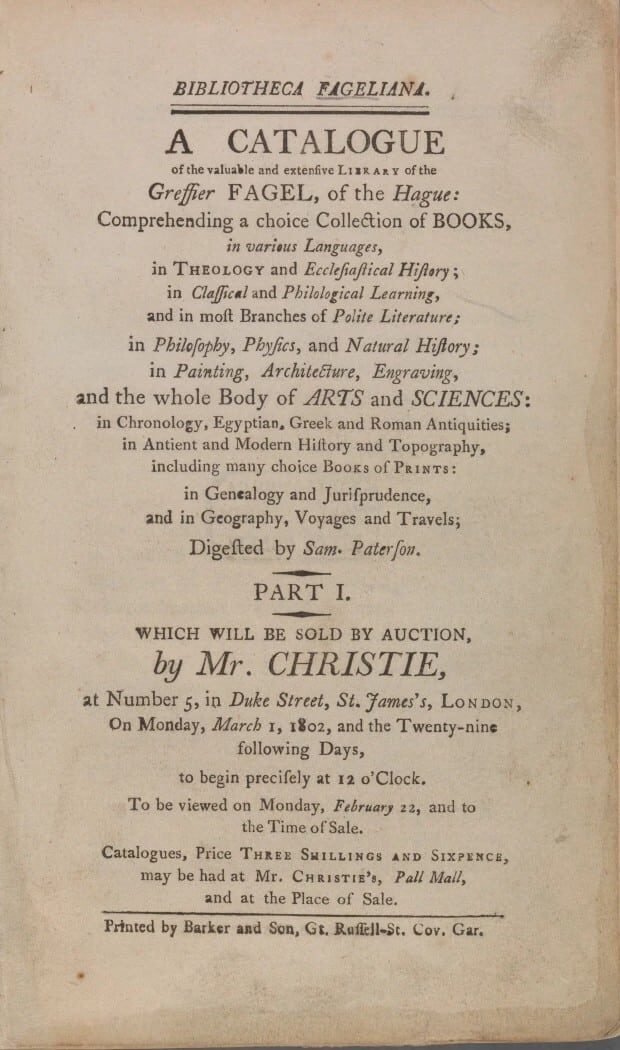 Christie’s catalogue of the Fagels' rare book collection
© Wikimedia Commons
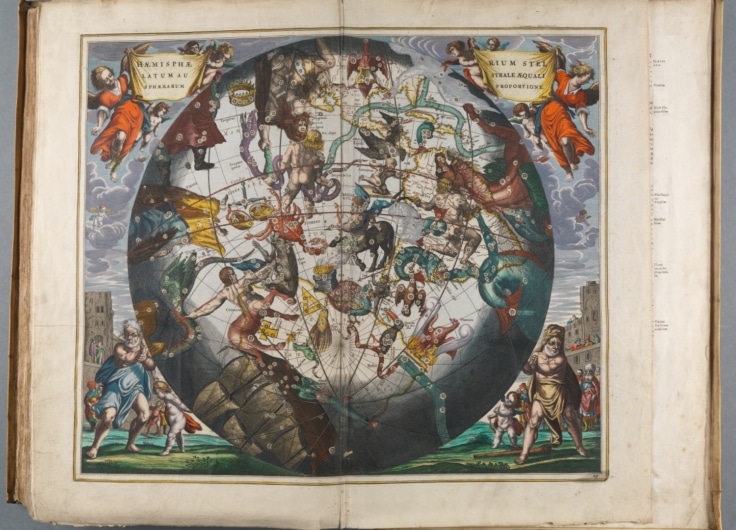
The Biblioteca Fageliana, as the collection is known today, is partly housed in the Fagel Room while the remainder of the collection is in storage. It has never been fully described to date. The cartographic works, especially, are of exceptional quality and among the best preserved in the world. In addition, there are unique botanical books, polemical pamphlets, atlases – including Blaeu’s hand-coloured Atlas Major – travel documents, images of fortifications in the overseas territories and collections of voyages of discovery by Henry Hudson (the English sea explorer who discovered Manhattan Island in 1609) and Abel Tasman (Tasmania is named after the Dutch explorer, who made the first reported European sighting of the island in 1642). The collection also contains medical, physics and (art) historical works.
Biblioteca Fageliana
Most of the books are printed on simple vellum (parchment made from animal skin) and were intended for long-term practical use, as was typical of the 18th century. It is not always clear which family member purchased which book or which Fagel owned which item, though the provenance of some works is known because they are specifically dedicated to François Fagel or because, as in the case of Doorlughtige Weereld from 1703, they contain the coloured double coat of arms of Cornelis Fagel (1663-1746) and his wife Elisabeth Dierkens.
There are also exceptional botanical specimens bound in Morocco leather with gilt tooling that actually had no real taxonomic purpose. During their lifetime, the Fagels were also known for their hortus botanicus or collection of rare plants, which was partly made possible by their close contacts with authorities who worked in the Dutch overseas territories. It is quite possible that the Fagels entertained guests by showing them around the garden then allowing them to browse through the collection of botanical books.
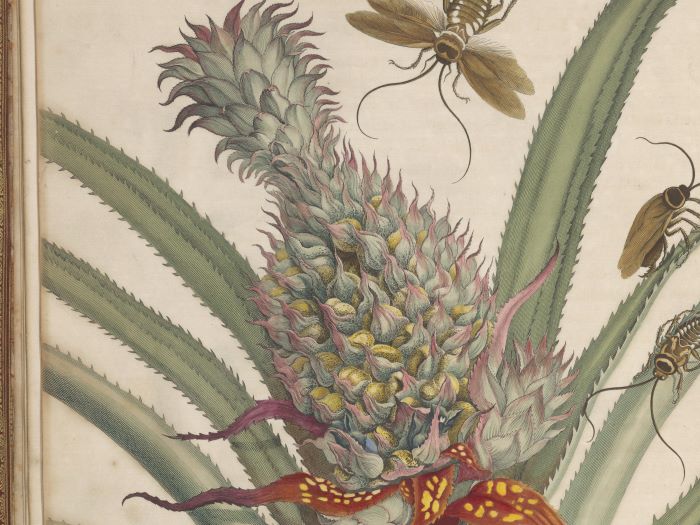 During their lifetime, the Fagels were also known for their hortus botanicus or collection of rare plants, which was partly made possible by their close contacts with authorities who worked in the Dutch overseas territories
© Unlocking the Fagel Collection - Trinity College Dublin
The 1802 auction catalogue is the only source describing the collection, making access difficult for researchers. With the support of the Dutch Ministry of Foreign Affairs and the Royal Library, Trinity has started an ‘Unlocking the Fagel Collection’ project. The project is ongoing, and once completed, scholars will be able to access and research the entire collection.
Fagel's Dome
In the 17th century, one of Hendrik’s ancestors, François Fagel, lived at Noordeinde 138-140 in The Hague, next to Noordeinde Palace, where the current King Willem-Alexander has his office. Around 1700, he had a Baroque tea dome built at his former home, which was based on a design by the famous French architect Daniël Marot, who also designed the Het Loo palace.
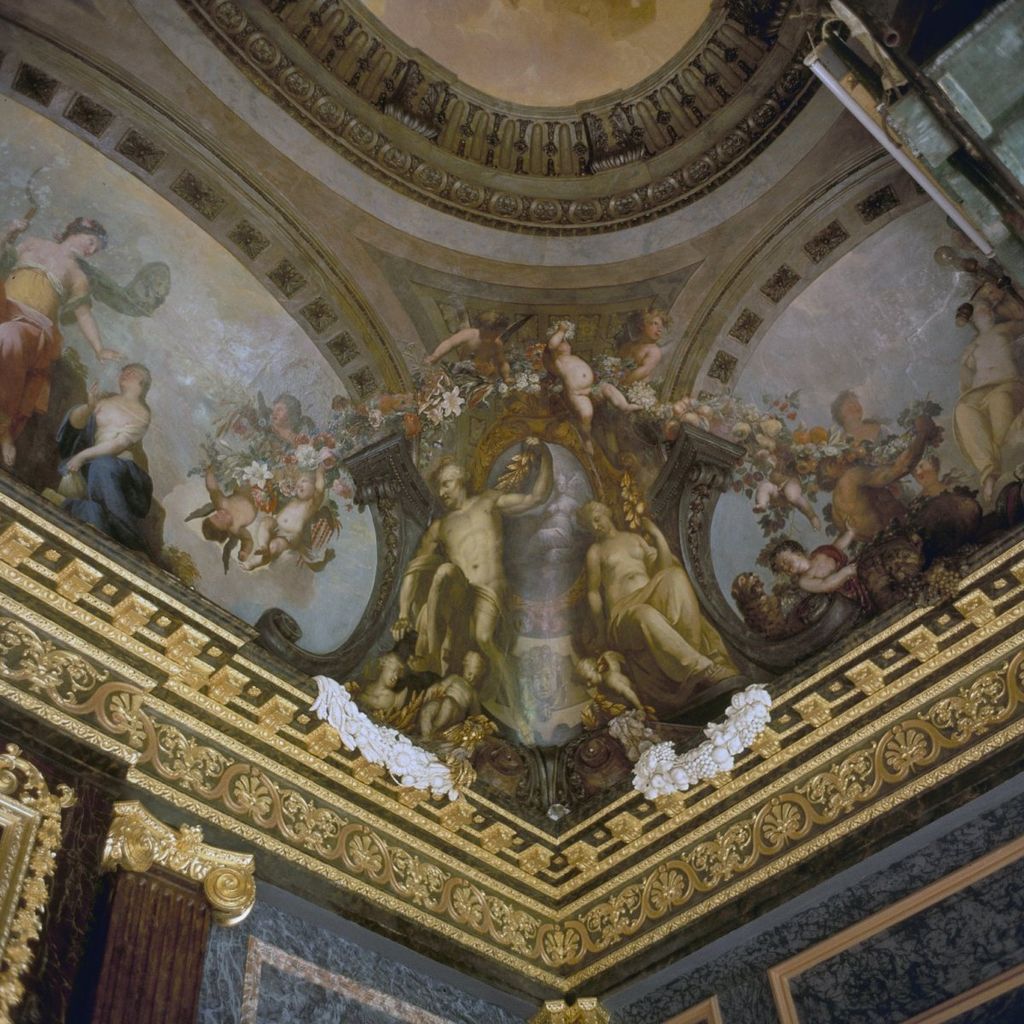 Detail from the Fagel Dome in The Hague
 © Rijksdienst voor het Cultureel Erfgoed / Wikimedia Commons
The tea dome was connected to the 17th-century house in Noordeinde by a 26-meter-long gallery where the famous collection of books and manuscripts was originally located, and it was from here that the collection was shipped to London. Today, the lavishly decorated tea dome, now known as Fagel’s Dome, belongs to Noordeinde Palace, where it has taken on a completely different function: after her death in 2019, Princess Christina, the sister of Queen Beatrix, was laid out in the dome.
A diplomatic career after all
After selling his unique book collection, Hendrik continued to pursue a diplomatic career. In 1813, he signed the proclamation alongside Prince Willem Frederik when Willem I was installed as the first sovereign ruler of the Netherlands. A year later Fagel worked as the extraordinary ambassador in London and in the same year was ennobled with the title of jonkheer (esquire). A year later he was made a baron. Hendrik worked as a minister plenipotentiary in London until 1823, where he mainly dealt with colonial issues. He then returned to the Netherlands and became a member of the Provincial Executive. In 1830, Hendrik was appointed Minister of State. He died in 1838 in The Hague without leaving descendants. Fortunately, the famous Fagel collection was preserved for posterity.







Leave a Reply
You must be logged in to post a comment.