
Museum Speelklok takes Visitors on an Amazing Journey Through Mechanical Melodies
Anyone feeling down or overwhelmed by the constant digital overload would do well to visit Museum Speelklok in Utrecht. Spanning nearly five centuries, the museum’s collection features mechanical clocks and musical instruments, each more richly decorated and melodiously enchanting than the next. But beyond entertainment and spectacle, the museum also highlights the mechanical ingenuity that risks being forgotten in our digital age.
If you don’t know what a ‘pierement’ (street barrel organ) is, don’t worry: few people do. This was reason enough for the Nationaal Museum van Speelklok tot Pierement (National Museum for Musical Clock to Street Barrel Organ) to rebrand itself as Museum Speelklok (Musical Clock Museum) fifteen years ago. The new name is short, snappy and perfect for the marketing department. Yet the archaic-sounding original name better reflected the scope of the museum, located in Utrecht’s city centre. Its collection isn’t limited to musical clocks, but also includes monumental carillons, lavishly decorated organ clocks, reed organs accompanied by fully mechanical puppet orchestras, pianolas and serinettes used to teach canaries how to sing in the 18th century. And, of course, it also boasts the large street barrel organs that are now rarely seen in markets and shopping streets.
In addition to the name, the museum’s old slogan – ‘the happiest museum in the Netherlands’ – was also dropped during its most recent rebranding. But it also still fits perfectly. The combination of lavish design and cheerful chiming leaves no visitor untouched. Even the biggest sourpuss will leave with a smile. The relaxed atmosphere helps. Signs with text and pictograms at the entrance make it clear that while touching the displayed antiques is not allowed, dancing is not only permitted but actually encouraged.
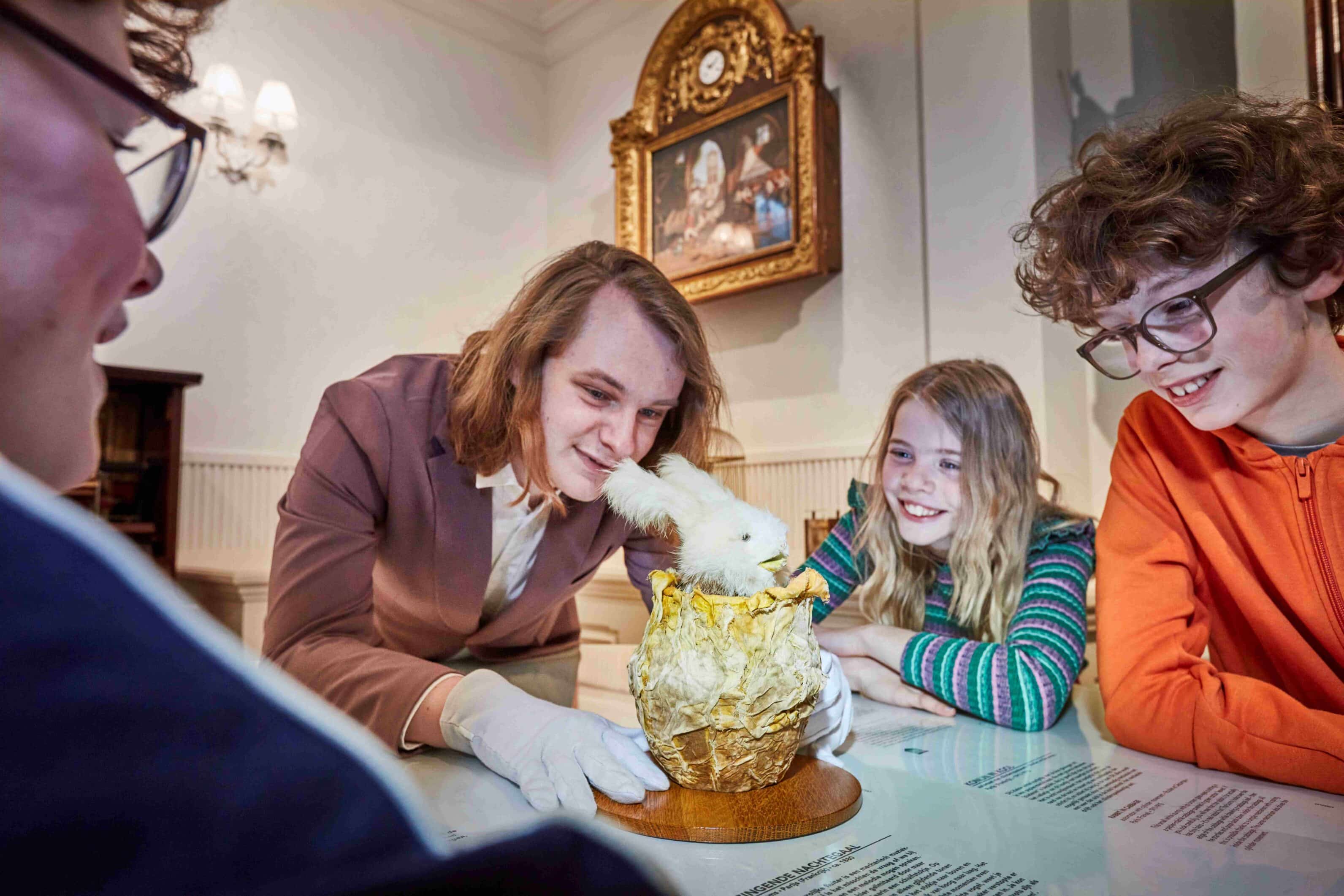 Kids having fun with 'Konijntje in de Kool' or 'Rabbit in the Cabbage.'
© Museum Speelklok
The enchanting effect of the mechanical musical instruments is as powerful today as it was in 1956, when Utrecht hosted the exhibition Van Speeldoos tot Pierement (From Music Box to Barrel Organ). In the first eight days alone, the event drew more than fourteen thousand visitors. The organising association of barrel organ enthusiasts quickly realised that such success called for a more permanent continuation. Two years later, the museum opened in a wing of the Catharijneconvent.
Since the new organisation focused on preserving heritage that was rarely collected elsewhere, offers from collectors and retired barrel organ professionals poured in
Since the new organisation focused on preserving heritage that was rarely collected elsewhere, offers from collectors and retired barrel organ professionals poured in. The available space was rapidly filled, as was the former main post office, which became the museum’s home in 1971. Thirteen years later, former Queen Beatrix inaugurated the current location: the Buurkerk, in the heart of Utrecht.
A historic location
The history of this early Gothic basilica dates back to the 10th century. It is the oldest of the four parish churches that Utrecht had in the Middle Ages. It served as a hub for guilds and played a significant role in city life. The ‘Banklok’, was a bell tolled to announce verdicts or council decisions, while the ‘Waakklok’ was a curfew or warning bell that signalled when the city gates should open or close. The Buurkerk’s most significant historical claim to fame, however, is the life story of Sister Bertken. In 1457, she had herself immured in a sixteen-square-metre cell, where she lived as a hermit for 57 years, devoting her days to prayer and writing poetry.
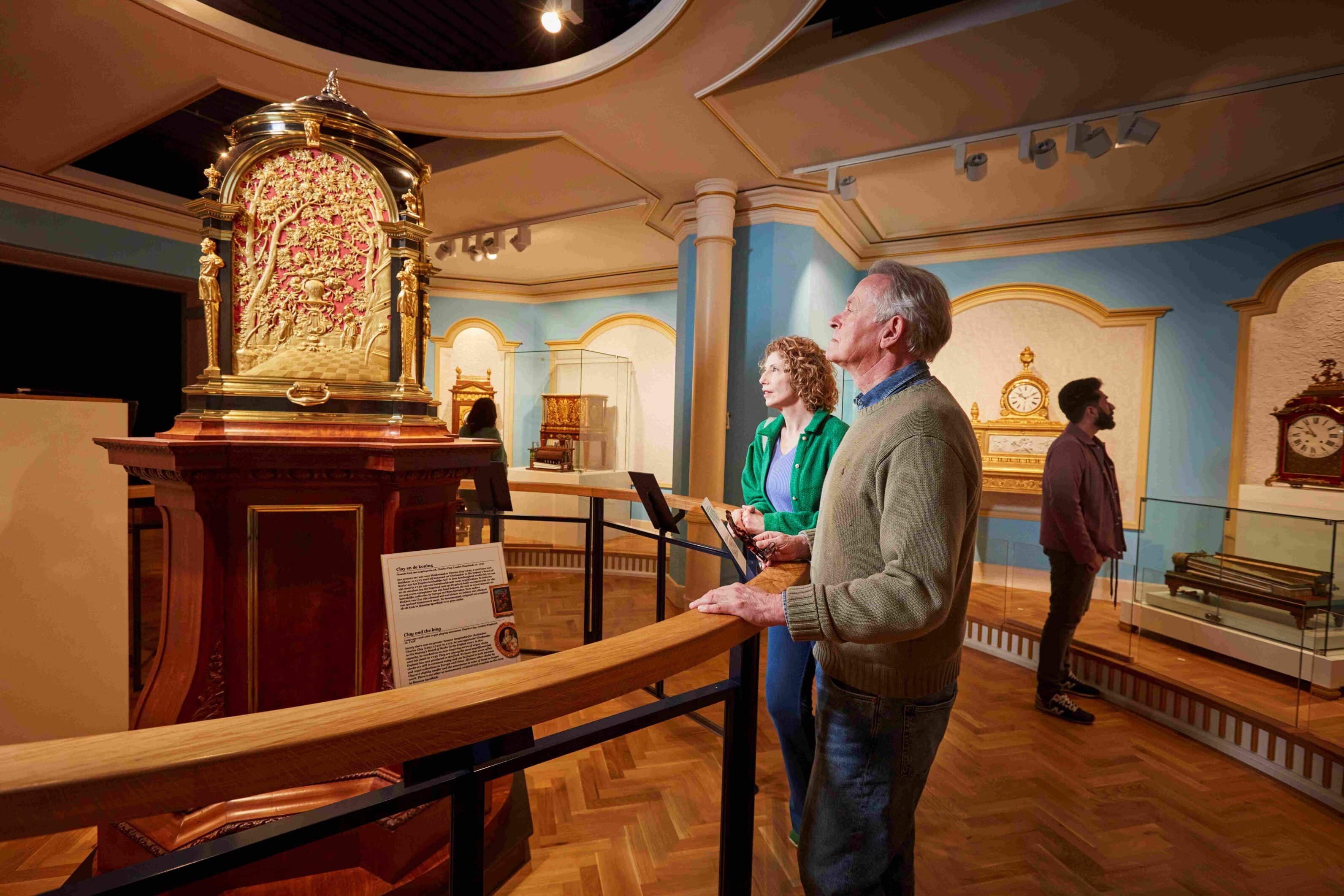 Visitors looking at the Clayclock in bewilderment
© Museum Speelklok
A ticket to Museum Speelklok is, essentially, a pass to two attractions for the price of one. Despite enduring several fires, restorations and renovations, the Buurkerk remains an impressive monument. And that’s palpable when you step inside. The museum is housed within a so-called ‘box-in-box’ structure, ensuring optimal climate control for the exhibition rooms while preserving the church’s original interior.
When standing in front of Museum Speelklok, the church facade is largely obscured by shopfronts, with only its tower peeking above them. But once inside, past the sliding glass doors, the church and its dual function are revealed. A circuit of museum galleries surrounds a central courtyard. Those who look up are treated to the breathtaking sight of the church’s vaulted ceiling.
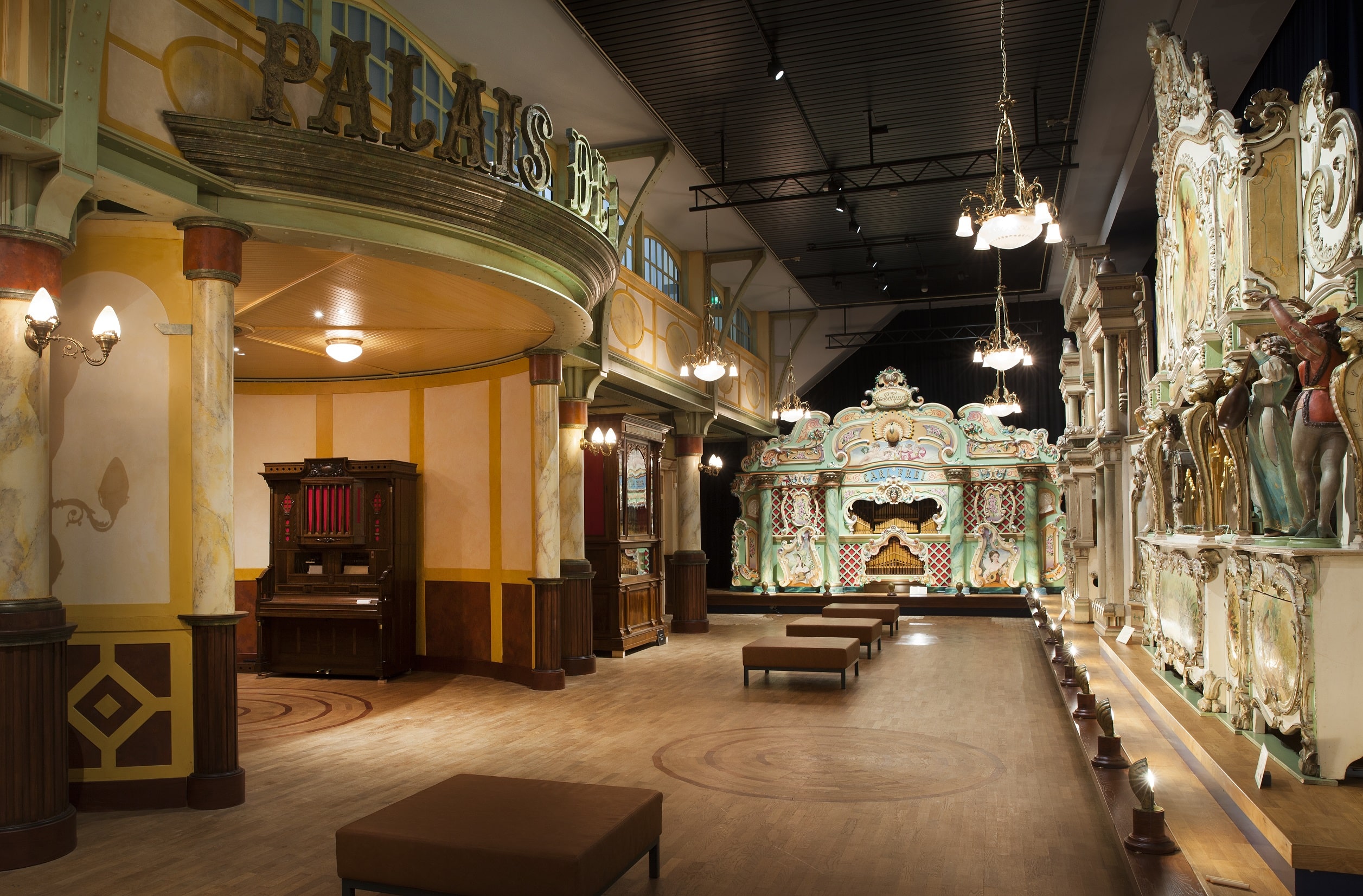 Danspaleis met de Schuyt - The Dancepalace with de Schuyt
© Museum Speelklok
This central gathering spot is where groups meet for guided tours, which are particularly popular with international tourists, especially visitors from the United States and China. The guides, mostly students from the local conservatory, are brimming with enthusiasm, a genuine love for the collection, expert knowledge and amusing anecdotes. Wearing gloves, they carefully operate the museum pieces, ranging from a clock under a glass dome adorned with taxidermied birds that burst into song when wound, to the carillon from 1550 – the oldest piece in the collection.
The tour builds to a literal and figurative crescendo in a hall filled with XXL-sized organs
The tour builds to a literal and figurative crescendo in a hall filled with XXL-sized organs. One of them, made by the firm Th. Mortier (which, during its heyday, produced several of these mechanical giants weekly) is ‘fed’ organ books with 101 rows of perforations that control 564 pipes, producing quite a few decibels. Fairground organ De Schuyt is outfitted with a MIDI system that enables it to play contemporary tunes, including the Pokémon theme song.
Child-friendly interactive activities
Another hit with children is the Escape Room, where they can playfully test your knowledge of mechanical musical instruments through questions and assignments. The walkway, accessible via a spiral staircase, offers more of these child-friendly interactive activities (for example, ‘How do I make my own musical box?’) but is largely filled with display cases. This classic arrangement is interrupted by a contemporary installation by Jelle Mastenbroek. On the shelves of a circular, partially open cabinet, the designer has placed myriad skateboards, lunchboxes, alarm clocks, globes and other consumer goods that are ‘played’ by metal hammers when you press a button. The ironic message: there’s music in this excess.
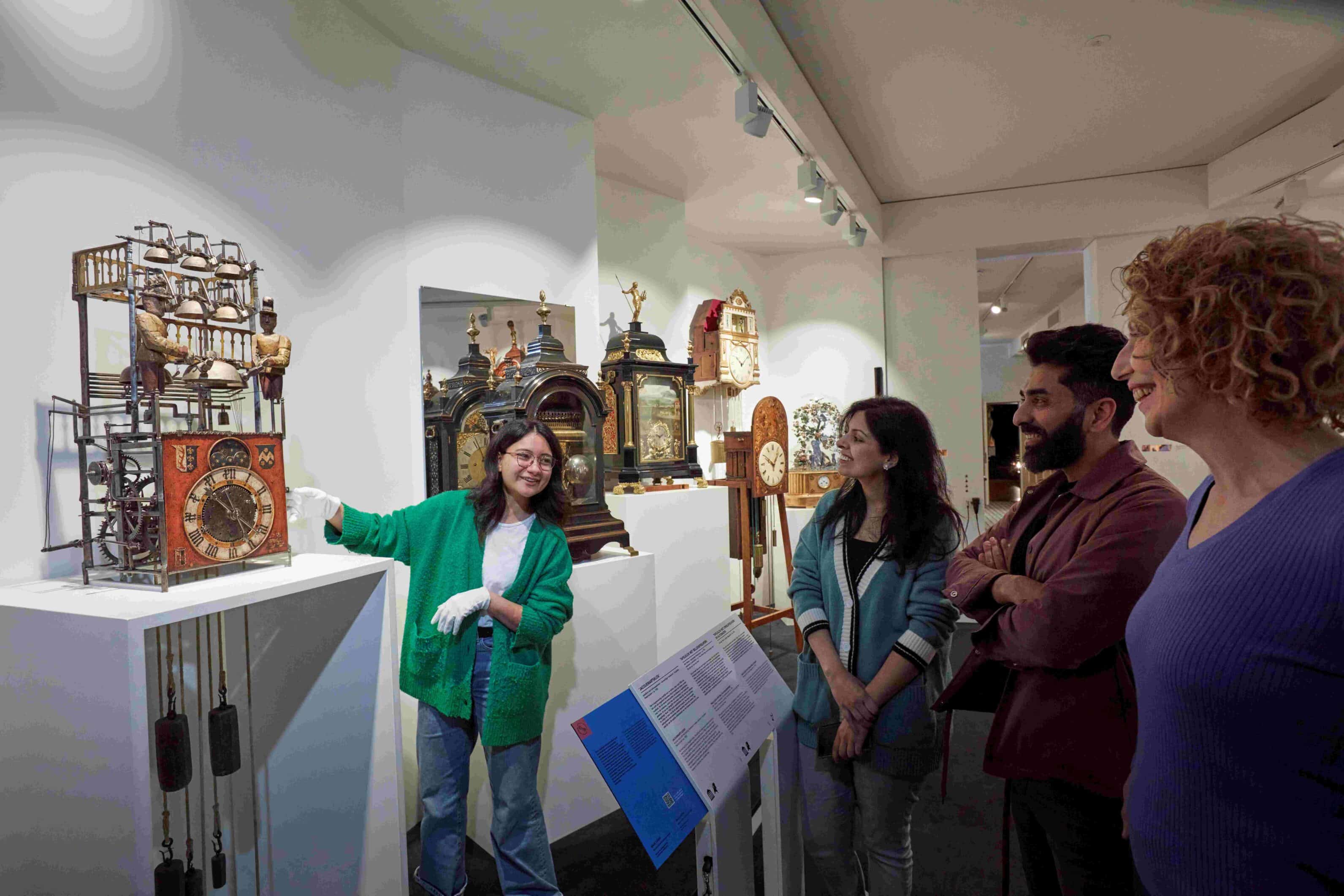 Guided tour at the Jacquemarts clock
© Museum Speelklok
The walkway under the roof of the church aisles will be converted into an interactive promenade this year, making it a worthy addition to the period rooms on the ground floor. Suitable furniture, carpeting with a print of cobblestones or black-and-white tiles and other decorative elements create the ambiance of a mansion, palace or square. Observant visitors may notice a pillar or a piece of gravestone peeking through the staging in the transitions between different rooms.
This setup has been in place for over a decade, which is quite long for contemporary museum design. However, everything still looks remarkably fresh, and a few small interventions show that the museum is keeping up with the times. For example, in the ‘vending machine room’, the machine featuring the image of a stereotypical Black fruit vendor is accompanied by a warning sign and a QR code that links to an explanatory text. The same applies to the Orientalist depictions. The museum has chosen not to remove or alter these racist works, but instead explains that such historical pieces reflect a worldview that is no longer relevant.
Interactive in another way are the working models. Using a key punched out of cardboard – your own miniature organ playbook – visitors can bring the displayed machines to life. Levers and wheels can also be turned to set crankshafts, gears and counterweights in motion. This causes bellows to fill with air and metal rollers to rotate along combs with a dull pling-plong sound.
Authentic mechanics
In an era where most people listen to music on Spotify’s shuffle mode and other forms of entertainment are digitised and stored in a black box, these mechanical constructions exude an appealing authenticity. Cause and effect are clearly connected. The energy of movement is transformed into the energy of sound. It’s a delightfully straightforward world, which we are increasingly losing touch with. For this reason, the popularity of Museum Speelklok is only expected to increase.
However, there is also plenty to enjoy for museum purists, and that will remain the case. Take, for example, the early 18th-century Clay Clock, considered the absolute highlight of the collection. Only six of these royal colossi exist worldwide. Extensive research is currently being conducted on this piece, which will eventually culminate in a dedicated exhibition. While it is unlikely to match the visitor numbers of the museum’s first-ever exhibition, it certainly promises to be spectacular.

You might also like


It’s all double Dutch to ChatGPT

The Struggle to Establish Dutch as the Language of Business in Flanders






Leave a Reply
You must be logged in to post a comment.