

The North Sea is not only a source of recreation, but also of economic activity. Every day, fishing boats, cargo ships, wind farms, marine farms and tourists engage in a complex water ballet on these 575,000 square kilometres. So, who manages all this activity? And do we take sufficient account of the sea itself? ‘There is surprisingly little public debate.’
British author James Attlee once called the North Sea “the oldest highway in the world”, and there is a lot to be said for that. After the last ice age, which ended some 11,500 years ago, ice caps melted and formed the North Sea as we know it today.
This vast, timeless expanse of water, covering 575,000 square kilometres, is the largest nature reserve in Europe. To put it into perspective, the area of Belgium is 30,688 square kilometres, and that of the Netherlands is 41,543. Above and below its immense surface, seahorses dance, cod swim and mussels rest, gannets and petrels dive and dolphins caper. A unique and rich ecosystem, comprising about 90 trillion cubic litres of water that is almost completely refreshed every two years, as Jan Stel, emeritus professor of Ocean Space and Human Activity at Maastricht University, wrote in an article in Eos magazine.
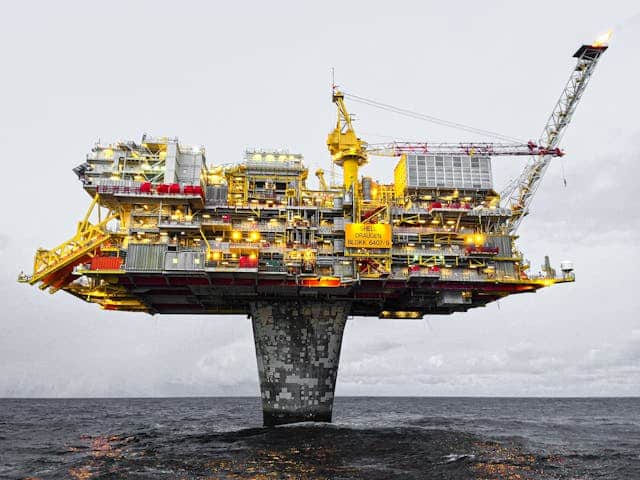 With its water surface of 575,000 square kilometres, the North Sea is not only the largest nature reserve in Europe, but also a vast hub of human activities.
© Jan-Rune Smenes Reite / Unsplash
But humans, too, leave their mark in the North Sea. There is not only fishing, there is also drilling for gas and oil, sand extraction and wind farms providing for the required energy transition, not to mention the many cargo ships that call in at the various ports. “Besides being a rich nature reserve, the North Sea is also important for numerous human activities”, says emeritus professor Frank Maes, the former director of Ghent University’s Maritime Institute, who researches international environmental law, the law of the sea and marine spatial planning.
Listening to the North Sea
“The sea belongs to itself, and life in the sea belongs to itself too”, says Thijs Middeldorp about the laws of the sea. Thijs is the managing director of the Embassy of the North Sea, an organisation that was set up in The Hague in 2018 to give the North Sea a better place in the political arena. “We are a group of people who think about how the North Sea can participate at the political negotiating table. We run campaigns, give performances and do research to create awareness around it”, says Middeldorp. We organise lectures, for instance, and collaborations with artists who focus on the fragility of life on the border between land and sea, and the consequences of factors like climate change.
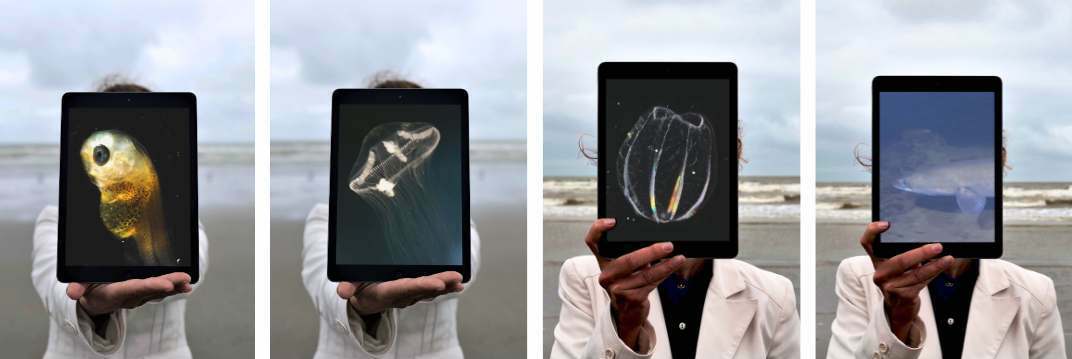 The Embassy of the North Sea wants to give a voice to everything that lives in the sea.
© Embassy of the North Sea
“There are laws and treaties, and there are environmental movements, it’s just that, in our opinio,n that form of representation just doesn’t work. There is a game being played with nature, and on dry paper, a lot seems to be well-regulated, but in watery reality, people always fall short. We look carefully at the developments around rights for nature, for example, and investigate what legal innovations might be useful for our relationship with the North Sea.”
Thijs Middeldorp (Embassy of the North Sea): 'The sea belongs to itself, and life in the sea belongs to itself too'
In October 2022, for example, fictitious legal proceedings were held by the North Sea against the Dutch state. The Embassy of the North Sea acted as an advocate in this practice court case. Although the judge did not ultimately deliver a verdict, some reflections were shared. The trial invites a different perspective on nature. Although it is not up to the judge to decide who gets legal status or not, in a democracy, this sort of decision is ultimately up to the policymakers, who are elected by us all.
Fifty years ago, American lawyer Christopher Stone caused quite a stir when, in an article titled ‘Should Trees Have Standing?’, he argued that nature should have rights. What at the time was dismissed as a ludicrous idea is gaining traction these days. As humans, we all too often look at nature as serving humanity, whereas we should be more or less on a level with nature, not above it; that is the philosophy.
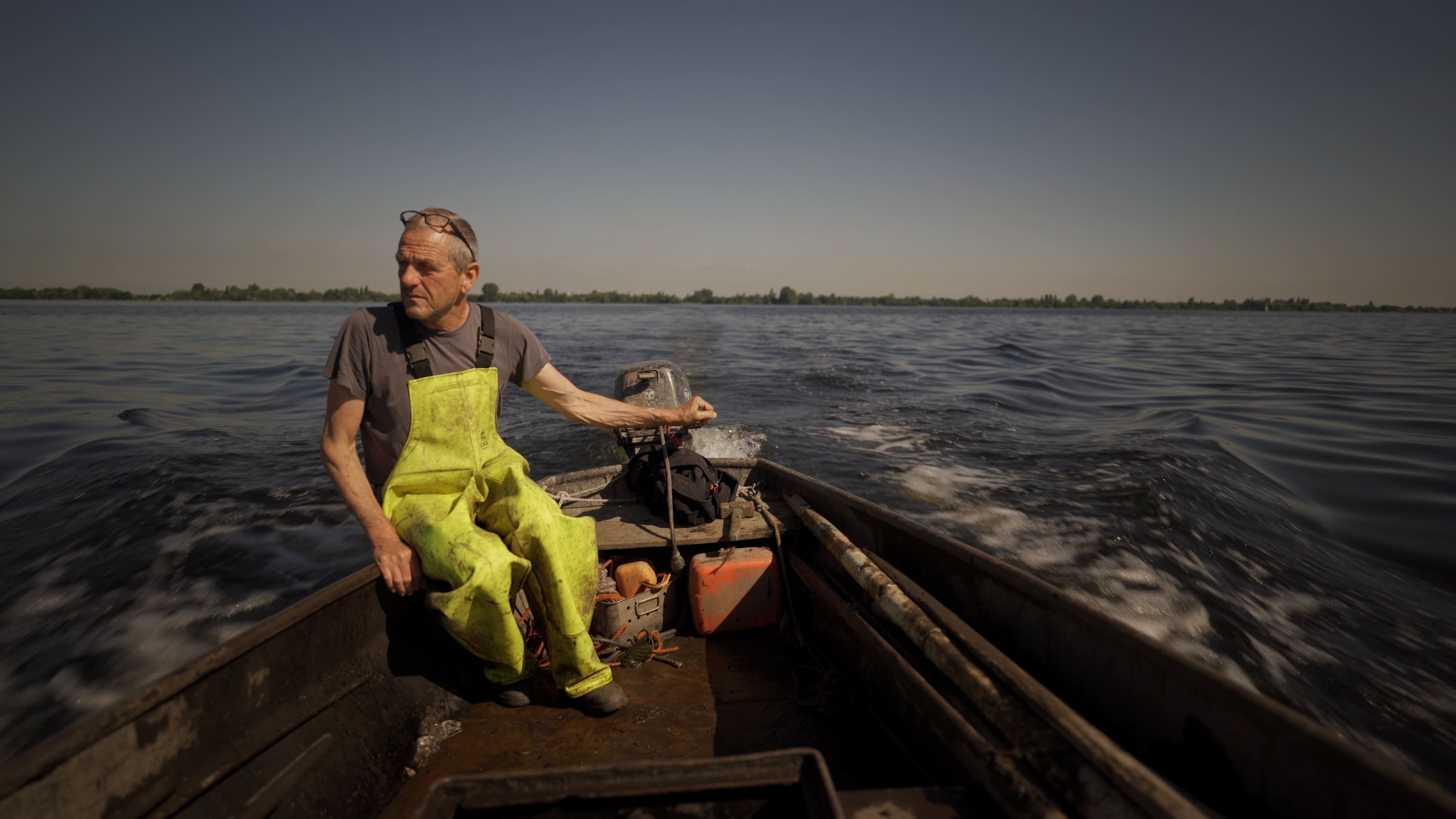 Eel fisherman Theo Rekelhof was portrayed by environmental sociologist Darko Lagunas at the request of the Embassy of the North Sea in the project Anguilla anguilla. The central question was: what can humans learn from the eel?
© Embassy of the North Sea
What is the legal translation of this? At least thirty-nine countries currently have court decisions or forms of legislation that recognise the rights of nature. New Zealand, a pioneer in this area, has granted legal personality to the Te Urewera Forest, the Whanganui River and the sacred Mount Taranaki. In Ecuador, the rights of Pachamama (Mother Earth) have been anchored in the constitution since 2008. And Spain’s Mar Menor was the first European nature reserve to get legal entity status.
Not the high seas
“The North Sea belongs to everyone”, proclaims the Belgian government website enthusiastically. Professor Frank Maes is more nuanced, “Every coastal state has jurisdiction over the part that borders on their coast. Boundary treaties have been concluded, and the sea is divided into zones.” The most important maritime zones are the territorial sea (up to twelve nautical miles from the coast), the contiguous zone (up to twelve nautical miles from the territorial sea) and the exclusive economic zone (up to two hundred nautical miles from the coast). The Belgian exclusive economic zone (EEZ) is 3,454 square kilometres in size, the Dutch 58,500. That is 0.6 and 10.2 percent, respectively, of the total area of the North Sea. Everything beyond those zones is, in principle, the high seas, except that the North Sea has no high seas in the strict sense of the words. “There aren’t two hundred nautical miles freely available. You always come up against the boundary of another coastal state”, says Maes.
So, these treaties are necessary, because every coastal state has increasing business on its part. To avoid them encroaching on each other’s water, so-called delimitation agreements have been concluded with the coastal states next to or opposite each other. Usually, these are based on the “equidistance principle”, a legal concept that places a country’s maritime boundaries at an equal distance from the coasts of the neighbouring countries.
 Frank Maes (Maritime Institute): 'There aren’t two hundred nautical miles freely available. You always come up against the boundary of another coastal state'
© Wikimedia Commons
“Germany objected to this because the equidistance principle favours countries with a spherical coastline, like the Netherlands and Denmark, over countries with a concave coastline like Germany”, says Professor Maes. “Germany was vindicated by the International Court of Justice in 1969. The court delineated the boundaries, taking into account the principles of equity, including coastal configuration.” This made the Entenschnabel or duckbill a reality, the form of the boundary demarcation with the Netherlands, Great Britain and Denmark, which gave Germany extra space.
“In theory, there are no boundary disputes in the North Sea now”, adds Maes. “It’s rather different worldwide. Just look at the disputes in the South China Sea, to mention just one area of contention.”
The Count of East Frisia
In practice, the situation is a bit more nuanced. There is the Ems-Dollard issue, for example, a dispute between the Netherlands and Germany for the German-Dutch boundary in the estuary of the River Eems. Germany refers to a bill of enfeoffment from 1464 (!) between Ulrich I, the Count of East Frisia, and the German Kaiser Frederik III, which the Netherlands rejects. The difference of opinion has already led to problems, including over the distribution of revenues from gas extraction in the area and the regulations concerning mussel fishing. As a result, representatives of Rijkswaterstaat (the Dutch ministry of waterways and public works) and its German counterpart try to manage the area jointly.
Belgium and France are also in conflict over a wind farm that is going to be put up right in front of the coast of Dunkirk
Belgium and France are also in conflict over a wind farm that is going to be put up right in front of the coast of Dunkirk, in the north of France. Resentment about this has been dragging on for more than seven years and is mainly to do with free passage to the ports and “visual pollution”, in other words, the sea view of residents on the west coast of Belgium.
The boundary discussions are mainly driven by economic interests. Coastal states are free to exploit their own territorial zone provided, of course, that the necessary permits and authorisations have been granted to the operators – private entities such as fishers, sand and gravel miners, and wind farm operators.
The “innocent passage” of foreign ships must be permitted in territorial seas. A ship on its way to a port may only lie idle in this zone while waiting for permission to dock in the port. “The passage of a leaking oil tanker is not innocent, so a coastal state may intervene”, says Frank Maes.
In the case of fishing, the North Sea coastal states have been overruled in their jurisdiction. Fishing is now a European competence. Member states are allocated the right to fish in certain areas by the Commission, even if these areas fall under other coastal states. For this purpose, quotas are set that can also be traded. For example, Belgium trades herring for sole with the Netherlands.
There is habitat protection, too, which is supposed to protect ecosystems and the seabed. Maes explains, “Such zones are usually also very interesting areas for fishing, but ideally they should not be fished using techniques that disturb the seabed. In practice, this does occur, which causes rancour between the fishing industry and environmental organisations. In that respect, offshore wind farms are positive from an environmental point of view, as access is prohibited for certain forms of fishing and for commercial and recreational shipping. This offers protection for existing as well as new forms of biodiversity.”
North Sea coalition
Similar rancour also surfaces as a result of the energy transition, which increases demand for space for the generation of renewable energy, thereby clashing with the mandatory protection of certain areas. The various interests – economic, ecological and social – have to be reconciled, and each activity has to be given its place in the North Sea. This is laid down in a marine spatial plan (MSP), which is comparable to the spatial planning we are familiar with on land. It is an approach that Belgium pioneered worldwide in 2014. At the moment, MSP 2020-2026 is in force.
In a fragmented country like Belgium, with its many layers of government, an MSP like this is no mean feat. The competencies fall under various government departments. Shipping, for example, is a matter for the Federal Public Service (FPS) Mobility, while FPS Economy deals with sand and gravel mining, and FPS Energy is competent for wind turbines, but then Environment also has to have its say. And finally, with the exception of marine aquaculture at sea, fishing is a Flemish competence. So, above all the clamour and the different interests, Belgium has a minister of the North Sea, who acts as a sort of super coordinator and oversees all these government departments. “He observes whether all the different activities are carried out in a safe, orderly fashion and with respect for the environment”, say his cabinet.
Belgium has a minister of the North Sea, who acts as a sort of super coordinator and oversees all these government departments
In the Netherlands, there is no super minister, but there is the IDON, or Interdepartmental Directors North Sea Consultative Body. This body coordinates policy development and prepares decisions on the management of the North Sea. “All the ministries with duties and responsibilities in the North Sea work together within IDON, which also includes two implementing organisations, the Directorate-General for Public Works and Water Management (Rijkswaterstaat) and the Coast Guard”, says the Dutch Noordzeeloket, which gathers all government information on the North Sea. While Belgium has its MSP, the Netherlands has its North Sea Programme 2022–2027 for the spatial development of its part of the North Sea.
“The Dutch government doesn’t take enough control”, believes Thijs Middeldorp of the Embassy of the North Sea. “In the Netherlands, you have the typical polder model, whereby a North Sea agreement has been established. Various stakeholders, such as representatives of the gas, oil and energy sector, nature, fisheries, defence, you name it, huddled together in a backroom. The whole agreement was depoliticised, with surprisingly little say or public debate. The discussion of energy transition was narrowed down to a debate about the view for tourism and the access area for fisheries. The impact for the sea itself was barely discussed, and there was not a word in government tenders about the raw materials required, and yet the wind turbines don’t grow out of the sea by themselves.”
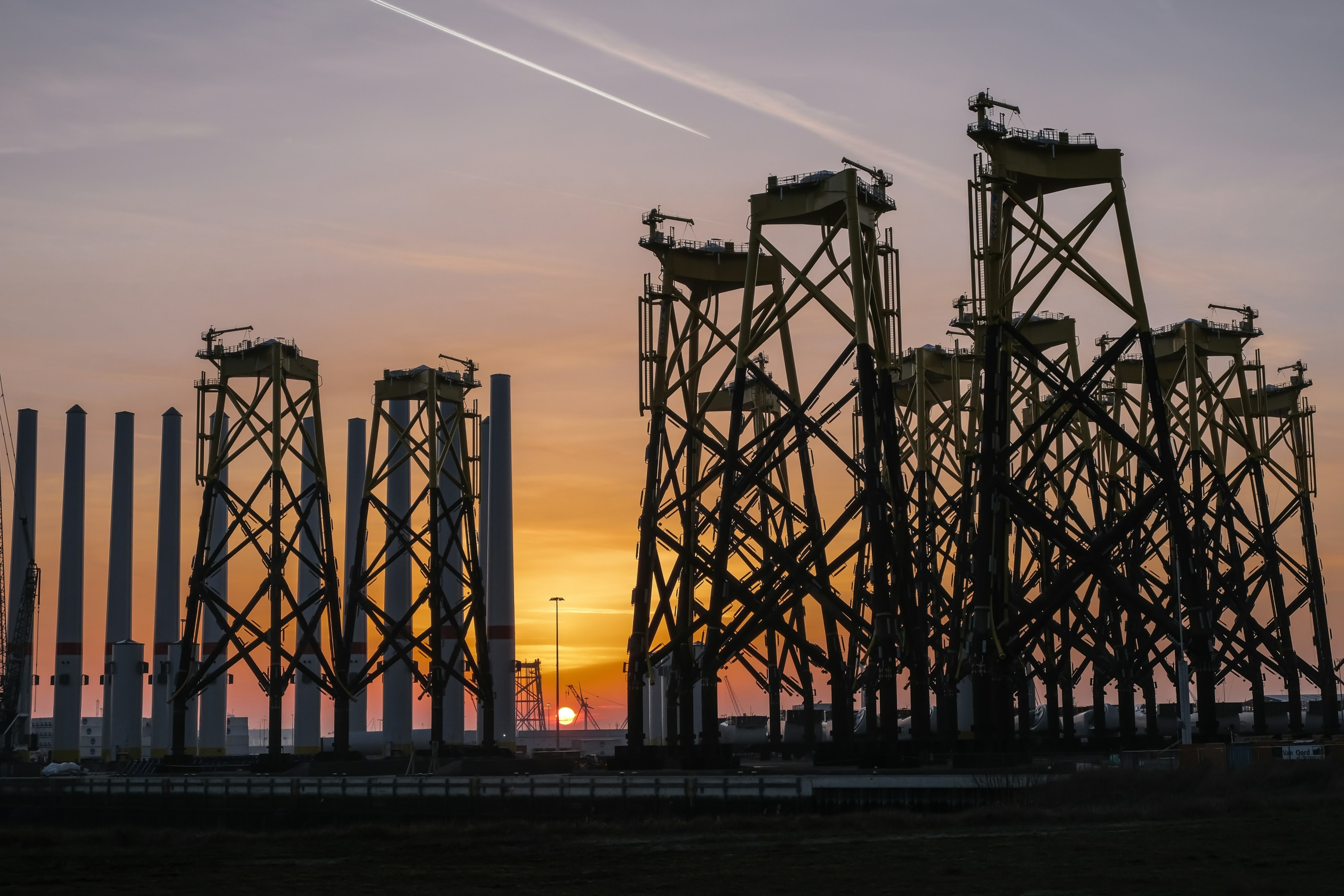 Wind turbines under construction in Vlissingen. Belgium, Denmark, Germany, the Netherlands, France, the United Kingdom, Ireland, Norway, and Luxembourg have reached an agreement to increase wind turbine capacity tenfold by 2050.
© Eric Krull / Unsplash
There are many more of them to come, too. Belgium, Denmark, Germany, the Netherlands, France, the United Kingdom, Ireland, Norway and Luxembourg formed the North Sea Coalition in 2023. They agreed to increase wind turbine capacity tenfold by 2050 and turn the North Sea into a huge green energy plant.
The North Sea is tired
“It is still largely unclear how all these wind farms will affect the ecosystems”, contends the Embassy of the North Sea. Thijs Middeldorp: “The scientific consensus is that we have no idea what the impact will be. Those who suggest it will all turn out well should be distrusted just as much as those who say it bodes ill. We don’t know, so it’s one big gamble. Based on the precautionary principle, which is a legally enforceable term, we should decide that we would therefore be better not to build wind farms like this. At least from the point of view of the North Sea. And if you do go ahead with them, you should build in much more binding rules for the benefit of the North Sea.”
Thijs Middeldorp (Embassy of the North Sea): ‘The North Sea is tired and yet we’re asking it to run another marathon’
Only this is not happening, fears the Embassy. The hard-won demands are about kilowatt hours and how many euros it can all cost. Modest demands like the protection of mussel beds and the ecosystems are mainly fended off with “We’re going to investigate that”. “So we’re playing a dangerous game”, sighs Thijs Middeldorp. “The North Sea is tired and yet we’re asking it to run another marathon.”

You might also like

The Struggle to Establish Dutch as the Language of Business in Flanders





Leave a Reply
You must be logged in to post a comment.