
Sharing a language is not necessarily sharing a view of culture
In 1995, the Netherlands and Flanders signed a cultural treaty, but twenty years later, the commission responsible for implementing the treaty threw in the towel. So, what is the state of Flemish-Dutch cooperation now? Four experts discuss the sense, vitality and shortcomings of cultural exchange in the Low Countries. ‘You have to let what emerges from the field bloom.’
The oldest preserved city palace in the Netherlands is in Bergen op Zoom. It is one of the most beautiful in the Low Countries and the courtyard, the Grote Hof, is “a feast for the eyes”, writes Bart Van Loo, author of the international bestseller The Burgundians, in Stoute schoenen, another of his books. The building now houses the Markiezenhof museum. Cultural entrepreneur Koen Brakenhoff is a pioneer of its privatisation. The impoverished municipality that manages the museum wants it to stand on its own two feet and Brakenhoff is paving the way.
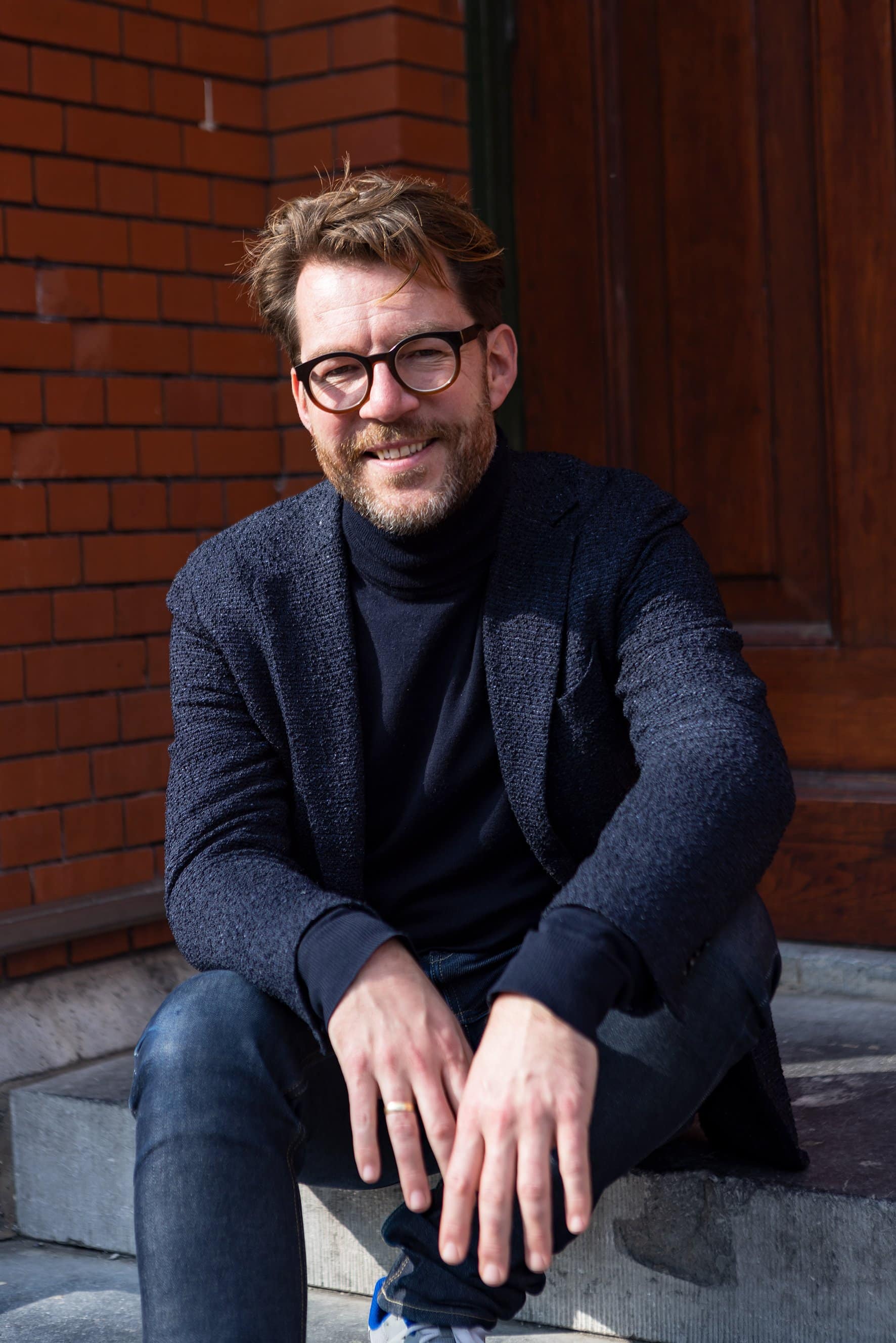 Koen Brakenhoff (Markiezenhof in Bergen op Zoom): ‘The Dutch know a thing or two about entrepreneurship. Flemings are at the forefront of public engagement and inclusion’.
© Druckerfonds
Brakenhoff previously worked as director of development and marketing at Opera Ballet Vlaanderen, and as head of public relations at the Museum Hof van Busleyden in Mechelen. For this Leiden native, Bergen op Zoom also feels like part of Flanders. “For a start, the architectural style of the building where I now work is Flemish. It was designed in the fifteenth century by the same architects as Hof van Busleyden.”
The culture manager is now busy establishing contacts with museums in Flanders. “For a very long time, there has been cooperation with the Rijksmuseum in Amsterdam, which loans out pieces from its collection and allows them to travel to smaller Dutch museums. But if you look at it in terms of content and history, collaboration with the Flemish hinterland is much more obvious. It is where our shared Burgundian history lies. This is a place with enormous potential, but residents struggle to see it. For that reason, too, it is fantastic that Bart Van Loo has devoted fourteen pages to the Markiezenhof and has talked about it in the theatre too.”
Koen Brakenhoff (Markiezenhof in Bergen op Zoom): 'I sometimes miss a capacity on the part of the authorities to think communally instead of nationally'
In his experience, it is no easy task to organise cooperation with Flemish museums. “There are arrangements to allow artists to work on the other side of the border. But I sometimes miss a capacity on the part of the authorities to think communally instead of nationally. I want to promote the mobility of collections across the border. There is still a lot to be gained there.”
Paper tiger
Brakenhoff is one of the people I talked to about cultural cooperation between Flanders and the Netherlands. Thirty years ago, the two neighbours agreed to work together as closely as possible, not only in the cultural field but also in education, science and welfare, pursuing a common policy wherever possible. But little became of those burning ambitions. In 2015, the commission responsible for the implementation of the treaty gave up. The chairman, then mayor of Maastricht Onno Hoes, said he no longer saw the point of it. The governments never again asked the Flanders-Netherlands Cultural Treaty Commission, as it was called, for advice and when they offered good advice on their own initiative, no one took any notice of it. The treaty was a paper tiger, according to the commission members. The fact that they had not even been asked to play a role in the celebration of the twentieth anniversary of the cultural treaty was the last straw.
Another ten years later, there were no festivities. So, is there nothing to celebrate, I want to know from Brakenhoff and my other interviewees. Did Flemish-Dutch cultural cooperation come to an end as well, with the dissolution of the commission? Or is the north-south exchange happily going its own way, independent of solemn texts and official commissions? And why should we even care about Flemish-Dutch cultural cooperation?
Testing ground
For Eva Vereecke, director of the Flemish Arts Centre De Brakke Grond in Amsterdam, the latter is a given. “If you want to develop more professionalism as a young creator, journalist or writer, the step is much bigger if you have to do it in another language”, she says, on a Monday morning in a café close to Antwerp’s Central Station, before travelling to Amsterdam.
That our neighbouring country is an ideal testing ground was also apparent from interviews that Flemish House in Amsterdam conducted on its fortieth anniversary in 2022. “We wanted to hear from theatre makers, artists and musicians what it meant for them to have a stage in De Brakke Grond”, says Vereecke. “A great deal. It has often been the crucial step to other stages in the Netherlands, to cooperation with other artistic creators, to more self-confidence and an international career.”
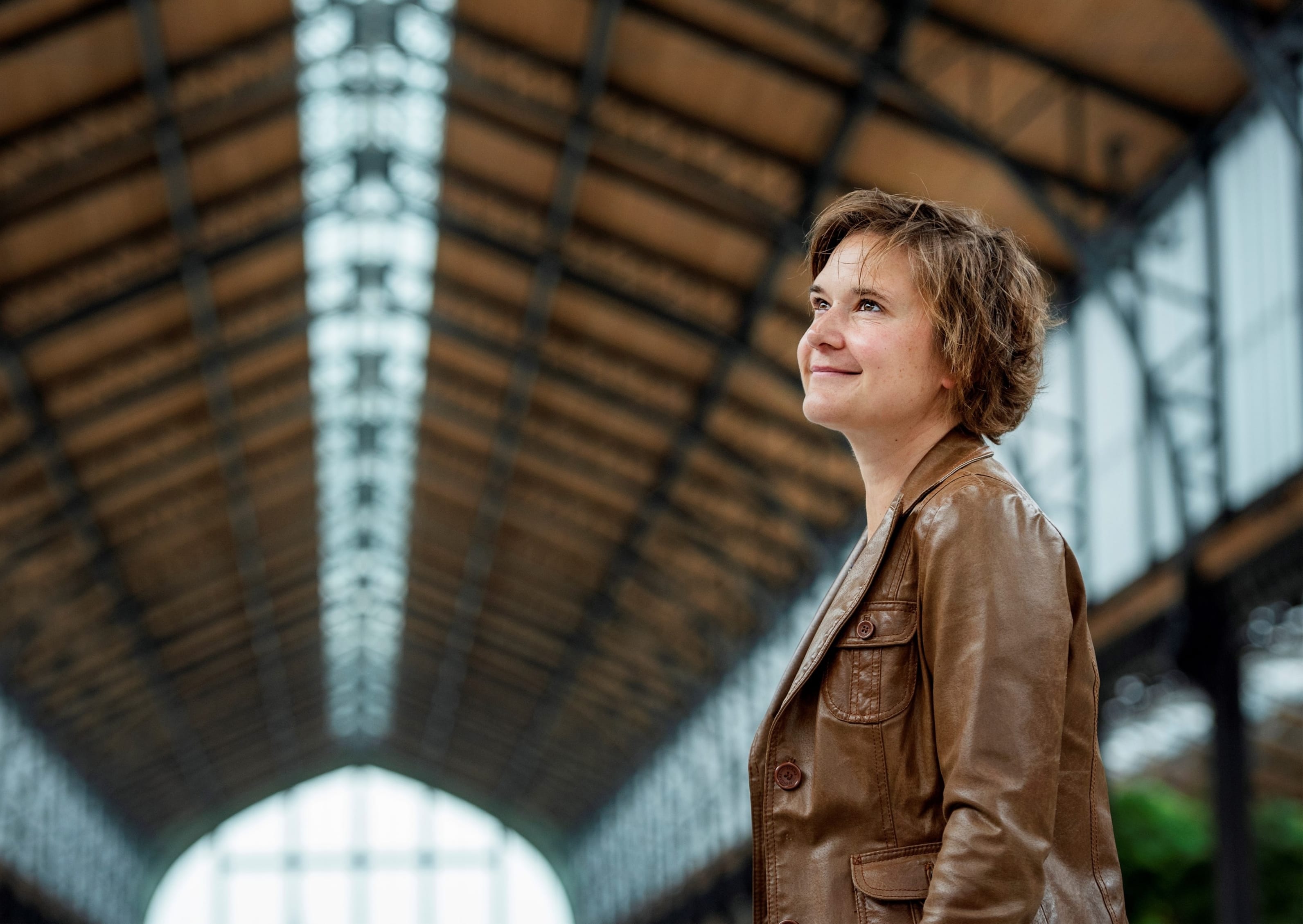 Eva Vereecke (de Brakke Grond): 'There is incredible interest in crossing the border and working together. But there are huge barriers'
© de Brakke Grond
Her colleague Willem Bongers-Dek, director of the Flemish-Dutch Cultural Centre deBuren in Brussels, also stresses the convenience of the shared language. “You can have a conversation in your mother tongue with people who have a slightly different view of the world than you, who have a slightly different canon than you and a slightly different frame of reference. That tension works; it leads to discovery.”
The Flemish-Dutch collaboration can also function as a springboard for a European project, believes Bongers-Dek. Connecting Emerging Literary Artists (CELA), a writers’ network, is a good example of this. “Flemish and Dutch authors who are ready for an international adventure can take that step immediately in a large international forum, thanks to us”, explains the director of deBuren. “An important added value of our house lies in the creation of an ecosystem of specific places where people who are at the beginning of their careers can meet each other, people for whom it is natural to do that in a Flemish-Dutch space and, when they’re a step further, at a European level.”
The best of both worlds
The tension between two areas that share a language can have an enriching effect. Piet Menu thinks so too. He was director of De Brakke Grond from 2011 to 2015, then head of Het Zuidelijk Toneel in Tilburg and now manages the Antwerp Conservatory. “You can learn a number of things from your neighbours and explore and reflect on them. The Netherlands is still the number one foreign country for Flanders. The reverse is less true”, he says.
Although we share a language, we are in many respects very different, in Menu’s opinion. This is also reflected in the objectives of our cultural policy. “In Flanders its value is very much about identity and community forming. In the Netherlands, people have been thinking in economic terms for much longer. It has to yield results.”
The behaviour of Flemish and Dutch people can also be very different in the workplace. After twenty years in the Netherlands, Menu returned to the land of his birth. “That is certainly a cultural transition. Indirectness is definitely characteristic of Flanders. I also recognise the risk-averse behaviour of the Flemish in all its intensity. I have definitely become Dutchified and sometimes I think, oh no, I really don’t have time to play postman between five different people, come on, let’s just sit down together.”
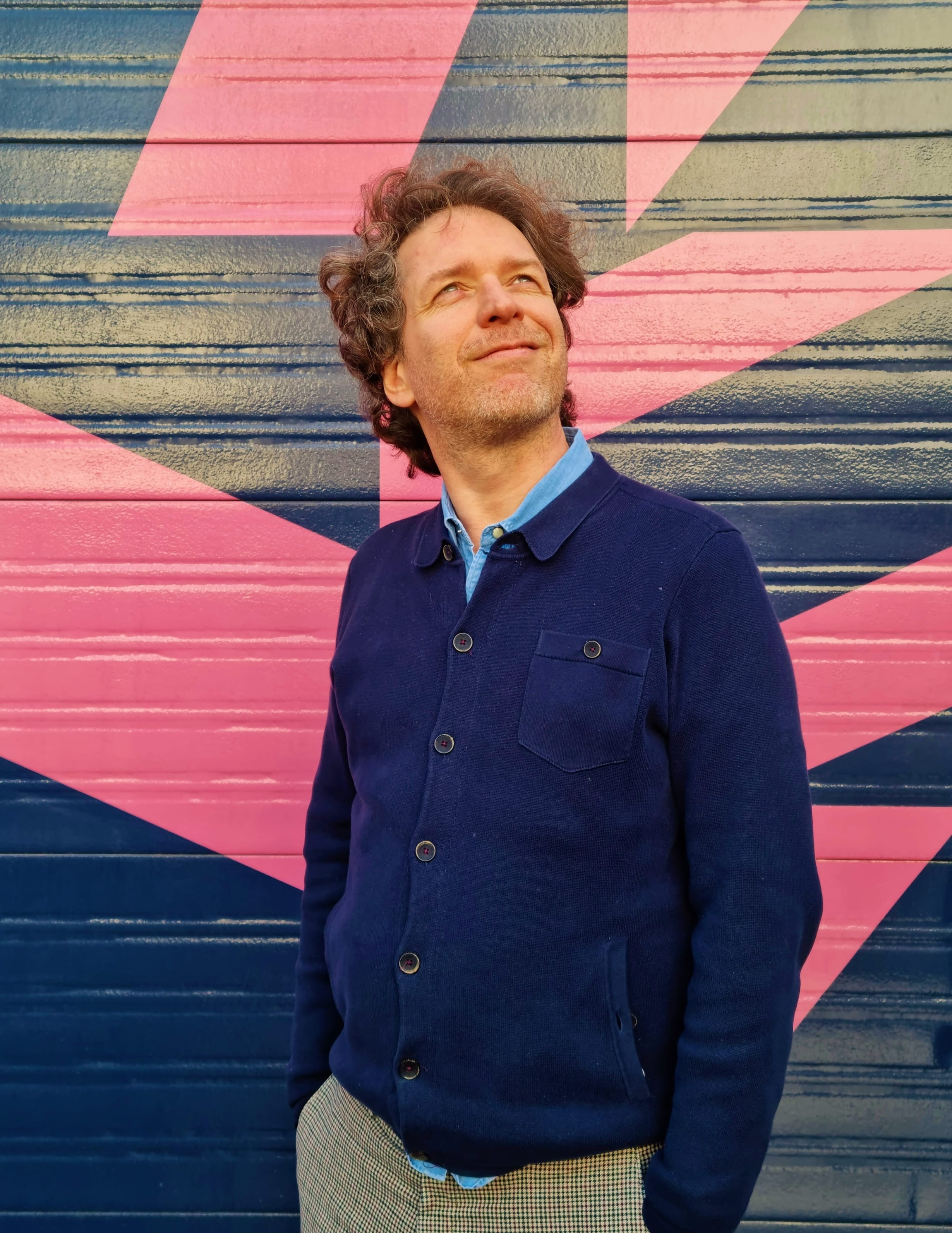 Piet Menu (Antwerp Conservatory): 'The Netherlands is still the number one foreign country for Flanders. The reverse is less true'
© Het Zuidelijk Toneel
This sounds familiar to Brakenhoff from his time at Opera Ballet Vlaanderen. “I noticed that Flemings often said, ‘How nice, you’re from the Netherlands, you’re agreeably direct, ’ but at the same time they found it difficult to deal with.” He liked to present brand new ideas, in the hope of refining them in discussion with his colleagues. But they were followed by silence and the reaction, if the boss wants to do it like that, we’ll do it like that. “I had to spend quite a lot of time explaining that it really was okay not to agree with me.”
In their turn, Brakenhoff thinks his compatriots could learn something from their southern neighbours. “The Dutch have little sense of political and cultural relations. They deliver their message and don’t look at what’s going on behind the scenes.”
Piet Menu (Antwerp Conservatory): 'Knowledge of cultural Flanders was minimal in the Netherlands. Nowadays it’s commonplace to see Dutch people on Flemish television'
We can learn a lot from one another, precisely because the cultural landscapes are so different, says the culture manager, who has gained his experience in both the north and the south. “In Flanders, the government still plays a dominant role in the cultural field. Boards of directors are political. The Dutch have a lot more experience of cultural entrepreneurship. But Flemings are ahead when it comes to inclusion and public engagement. At the Hof van Busleyden, for example, I saw how strongly the heritage community and volunteers were involved in setting up the new museum depot.”
Brakenhoff found his years in Flanders enriching. “You learn that your perspective is not the only one and that there are other ways of looking at history and the world.” The Dutchman also learned something of the mentality in the south. “Curiosity isn’t the right word, perhaps it’s more about being open-minded and daring to let things happen, whereas a Dutch person immediately says, ‘this is it, this is how we’re going to do it’ and looks for results faster.”
Piet Menu sees similar differences in artistic practice as well. “In the Netherlands, everything must be right – the dramaturgy, the narrative thread, the choice of form. There is a sort of straightforwardness and consistency of style. In Flanders, it has to work. Dutch actors have learned more technical skills and act from there. In co-productions they sometimes look enviously at Flemish actors. ‘You just try something and see whether it works.’” Both approaches have their strengths and weaknesses, thinks Menu. “A combination is the best.”
Great curiosity
The current director of the Antwerp Conservatory started at the Brakke Grond as an intern, in 2000. “In those days, if you approached the controversial Dutch television chat programme De wereld draait door about something that was all the rage in Flanders, the answer was invariably no. There was no interest. Knowledge of cultural Flanders was minimal. Urbanus was about it. I’ve seen that change dramatically.” The other way round too. “Flanders used to be rather closed. Nowadays it’s commonplace to see Dutch people on Flemish television.”
On a popular social level, the Flemish-Dutch exchange may be livelier than it was before, but when it comes to professional collaboration, the director of the Antwerp Conservatory sees exactly the opposite trend. “My feeling is that the artistic world has become more closed. That is, for a large part, to do with the fact that creators are more focused on ‘can we come and show ourselves to you’ instead of collaboration.”
There is no lack of goodwill, thinks Eva Vereecke rightly. “There’s an incredible amount of interest in crossing the border and working together. But there are lots of barriers to making coproductions and especially to performing in multiple places in the Netherlands.” In that respect, we have taken a big step backwards compared to the days when her father, Guido Vereecke, was director of the Brakke Grond. “In the 1990s, the Brakke Grond asked a theatre company to come and perform and invited lots of Dutch theatre programmers. And hey presto, the company could go and perform in twenty or thirty places. Since then, a lot of subsidy schemes have changed, and it has become too expensive for Dutch theatres.” That is because more money goes to the theatre companies in the Netherlands than in Flanders, and the theatres themselves just have less money. Flemish theatre companies, which receive less money, have to ask more for a performance to make ends meet.
How can we remedy this? “In the past, there was the Lighthouse subsidy”, says Vereecke. “A few theatres on either side of the border received money to allow companies from the other side to perform. This sort of incentive for a few theatres to book each other’s companies would be useful again. You could also invest in coproductions and give theatre companies the opportunity to sign up for a co-production scheme.”
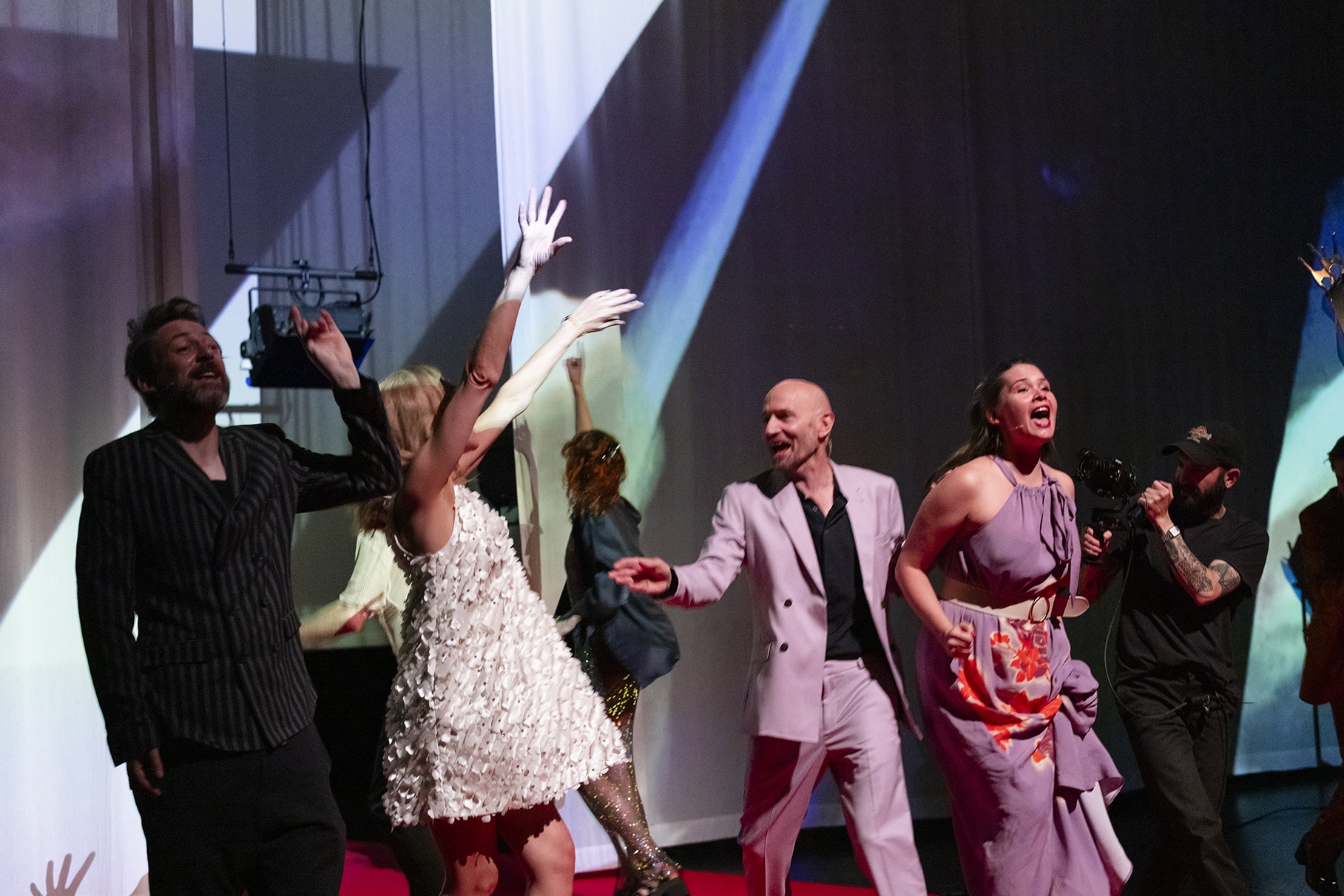 Opening night of De Hoe, a performance that could be seen at both the Flemish and the Dutch Theatre Festival 2024
© Koen Broos
A few years ago, the Overbruggen (bridging) project was launched with much fanfare. Its purpose was to identify and remove the practical obstacles that artistic creators encounter when they want to cross the Flemish-Dutch border. In the meantime, however, Overbruggen is also defunct. “The problem was that there were no structural resources for it”, says Willem Bongers-Dek. “What you need is sustained effort.”
Plus a place where you can go, thinks Koen Brakenhoff. “In practice, what people need is a place where they can say, “Listen, this is my plan, but I’m running into these obstacles.’ I don’t believe in general regulations. You have to make sure that you help what emerges from the field to flourish.” It ties in seamlessly with what Vereecke says about the closure of Overbruggen. “You notice that creators need much more intensive support for their own particular needs, which can’t be solved with a database.”
Encouragement and networking
Who or what should take on this role? A revamped Commission for the Flanders-Netherlands Cultural Treaty (CVN)? “No, I wouldn’t do that”, says Vereecke resolutely. Her predecessor, Menu, also sees little point in that. “In everyday practice, you don’t really miss it, because neither the government nor public opinion attach much importance to it.” Bongers-Dek is not an advocate for reinstating the CVN either. “The idea of an institution that can give solicited and unsolicited advice has failed. Ideally, it would have been a place where people systematically reflected on the Flemish-Dutch space and commissioned research into it.”
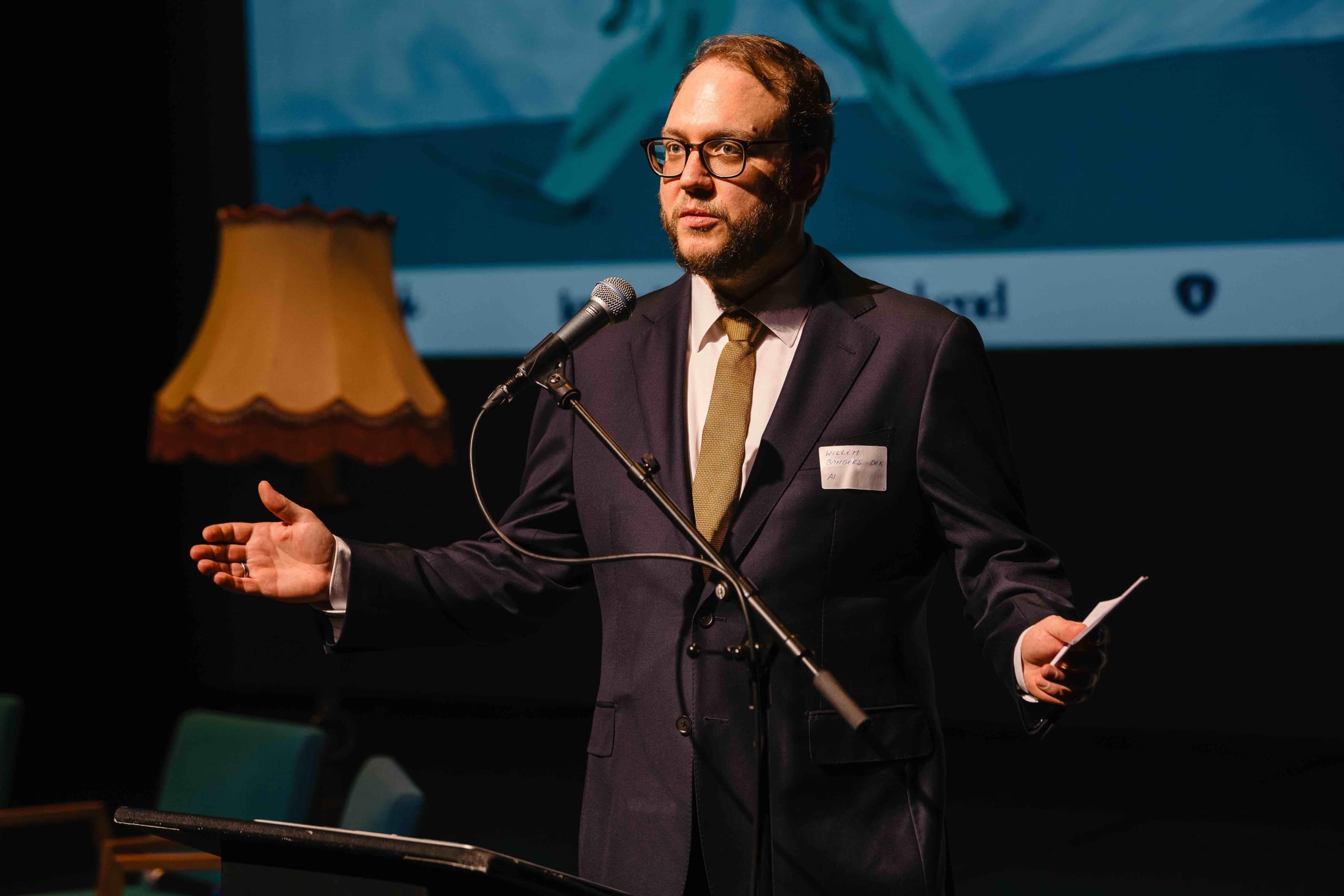 Willem Bongers-Dek (deBuren): ‘We know less than ever about Flemish-Dutch cultural exchange. At the same time young creators are very curious about each other’
© Nick Decombel
Yet both, in their own way, miss an umbrella organisation that oversees the entire field of cultural exchange between Flanders and the Netherlands. “When relations are under pressure or there is a fuss concerning the Dutch Language Union, for example, or the Netherlands wants to stop subsidising the low countries (de lage landen), it would be a good thing if there were this sort of commission”, says Menu. Bongers-Dek does not want to return to the CVN itself, but to the role it should ideally play, picking up on issues that are important to professionals in the Flemish-Dutch cultural field.
He suggests that the current consultations between the directors of the six organisations that are each in their own way active in Flemish-Dutch collaboration – deBuren, the Dutch Language Union, de Brakke Grond, Flanders Literature, the Dutch Foundation for Literature and de lage landen – could take on this role themselves. “But then they must be given a research budget for it.”
Eva Vereecke (de Brakke Grond): 'The six institutions involved in Flemish-Dutch collaboration should jointly set priorities for Flemish-Dutch collaboration each year'
Vereecke, too, thinks that this sextet should work together more to raise their profile. “The Cultural Treaty is one instrument, the six institutions involved in Flemish-Dutch collaboration are the other. We already work well together, but I think we should have a common vision of our overall goal, and we should jointly set priorities for Flemish-Dutch collaboration each year.”
According to Bongers-Dek, knowledge of the field is certainly one of those priorities. “We know less than ever about Flemish-Dutch cultural exchange.” So, whether this has become more intensive or weaker in recent years, he does not dare say. “What I do know is that there is great curiosity about each other among young creators and emerging voices. I see this in the podcast world, too. People there very clearly think Flemish-Dutch. That is related, of course, to the linguistic form of expression and the market. That sounds banal, but it is crucial. As a creator, you have greater reach in the whole Flemish-Dutch area.”
What we need, he is convinced, is encouragement and networking in all kinds of fields. His organisation plays that role for young writers and opinion makers, in particular. But in other fields, such as Dutch-language music, there is still a world to be won. “At the moment, I don’t see anyone whose mission it is to drive that forward. Flanders and the Netherlands are primarily strongly focused on what is happening internally. If you make an effort to bring them together, so that people see that there are enough similarities to make conversation possible and enough differences to give it substance, then it will happen. That makes me optimistic about what is possible in the years to come.”
You might also like
The Struggle to Establish Dutch as the Language of Business in Flanders


Leave a Reply
You must be logged in to post a comment.