
The Pressure of the Present on Old Art
Two approaches to art and culture are vying for precedence at the moment. There is a demand for diversity, sustainability and democratisation, and there is a call for more pride in our history and traditions. Both approaches view the past, our art and heritage very much from the present. Does old art only have a future if it can be directly and clearly linked to the present day, wonders Samuel Mareel, a curator of 15th and 16th century art.
In 2015, the Rijksmuseum in Amsterdam, together with the Louvre, bought a pair of portraits painted by Rembrandt from the French Baron Eric de Rothschild. The portraits are of Marten Soolmans, a sugar merchant who emigrated from Antwerp to Amsterdam during the Dutch Revolt, and his wife Oopjen Coppit. Despite the astronomical price of one hundred and sixty million euros, the purchase was positively received in the Netherlands. “They’re Golden Age!”, the happy director of the Rijksmuseum, Taco Dibbits, was quoted in the newspaper Het Parool. “Two wealthy twenty-somethings who, after their marriage, had themselves painted by Rembrandt, the most successful and best-paid artist in the largest and most important city in the Republic of the Netherlands.”
Among both the press and the public, pride prevailed that the Rijksmuseum and the Dutch state had managed to raise the money to bring this heritage back to the Netherlands. Only the fact that the Netherlands would have to share ownership with the French state engendered some disappointment.
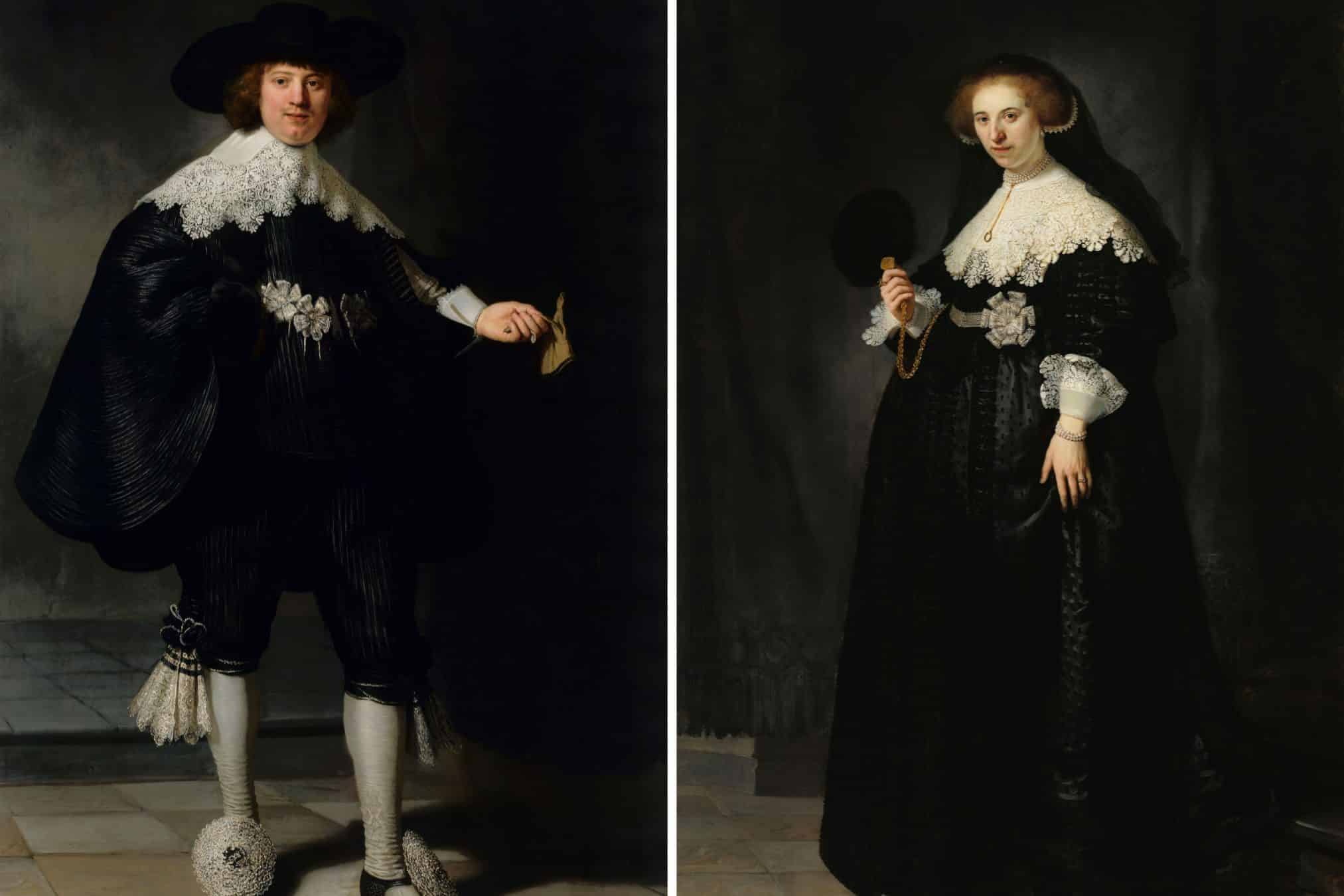 When the Rijksmuseum bought Rembrandt’s portraits of Marten and Oopjen in 2015, the reactions were positive. ‘They’re Golden Age!’, said director Taco Dibbits.
© Rijksmuseum, Amsterdam
In 2021, the Rijksmuseum bought another work by Rembrandt from the same Rothschild family. This time it was a single painting, a self-portrait of the artist as a standard bearer, and the price paid was one hundred and seventy-five million euros. But that is where the parallels end. The Dutch press was largely negative about the purchase. “Do we need another Rembrandt?” asked de Volkskrant. It is the forty-fifth in a Dutch museum and the twenty-third in the Rijksmuseum. Are there no other artists in Dutch art history – women, for example, or people of colour? And one hundred and seventy-five million euros is almost ten times the total acquisition budget of Dutch museums in 2020. Would it not have been better to spend a sum like that on supporting contemporary Dutch artists, “the Rembrandts of tomorrow?”, commented Trouw. One of the experts interviewed also wondered whether Rembrandt is still a “symbol of our national identity, which has become rather more multicultural in the meantime. Do today’s Dutch people still see Rembrandt as a symbol of the Netherlands?”
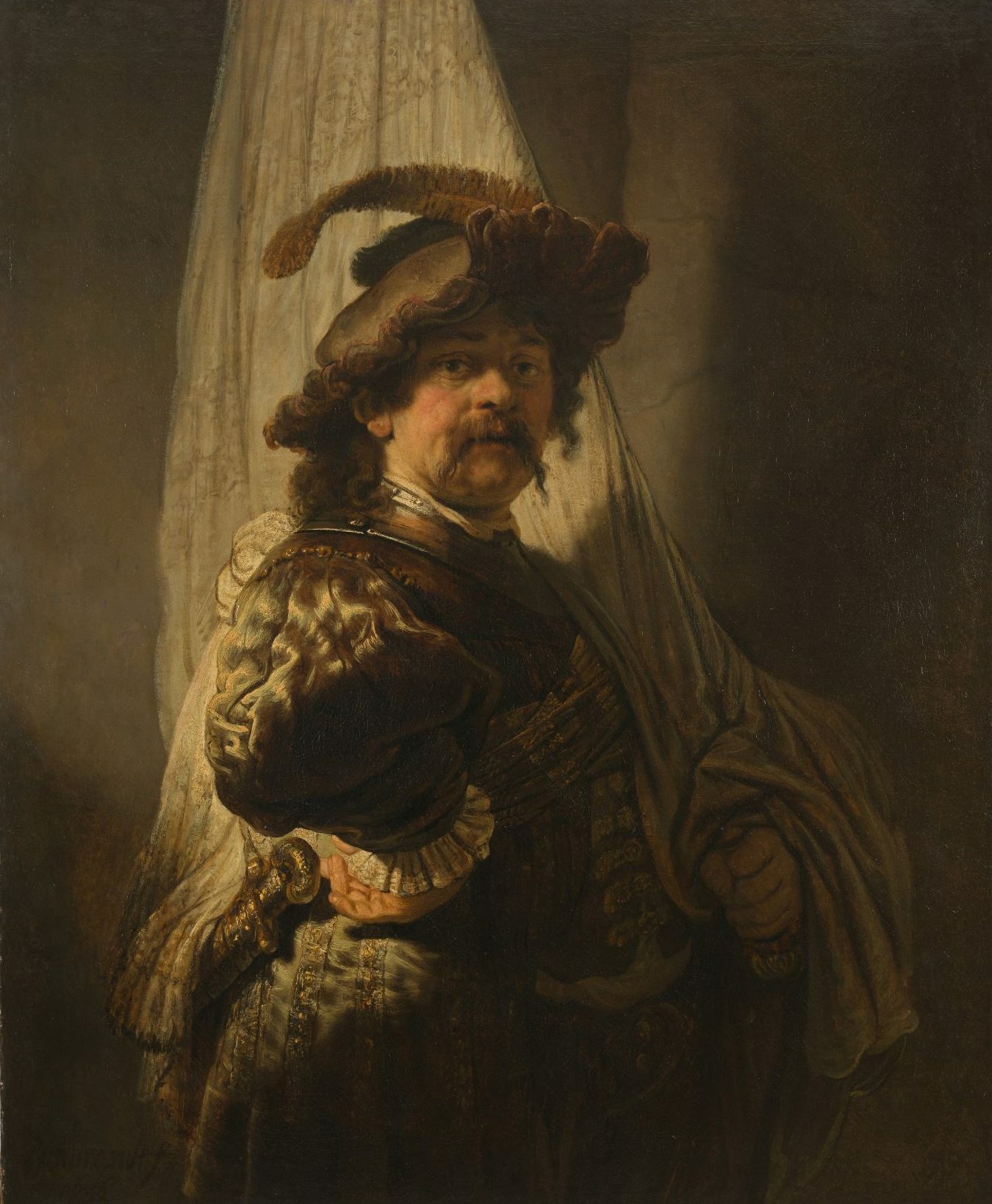 In 2021 the Rijksmuseum bought another Rembrandt: The Standard Bearer. The reaction, ‘Do we need another Rembrandt?’ was considerably less positive than six years earlier, with the purchase of Marten and Oopjen.
© Rijksmuseum, Amsterdam
Diversity, participation and sustainability
What was it, then, that happened between 2015 and 2021 that so changed the attitude in the Dutch press toward the acquisition of these very similar 17th-century paintings? How has Rembrandt’s art evolved in six years from a source of national pride to a symbol of a white, elite, male monoculture?
The points raised after the purchase in 2021 are not new. In the mid-1980s already, the Guerrilla Girls in the United States drew attention, with posters bearing the caption “Do Women Have to Be Naked to Get into the Met. Museum?”, to the fact that women in the modern art section of the Metropolitan Museum of Art in New York make up less than five percent of the artists exhibited there, but eighty-five percent of those depicted nude in an artwork.
What was it that happened between 2015 and 2021 that so changed the attitude in the Dutch press toward the acquisition of these very similar 17th-century paintings?
Yet the call for more diversity and democratic representation seems to have gained momentum precisely in the period between 2015 and 2021. That happened not only in modern and contemporary art, but also in the world of old art, customarily a bastion of tradition and continuity. Obviously, the most important reason must be sought in current affairs where, exactly in the period 2015-2021, some important events, such as #MeToo, the corona pandemic and Black Lives Matter, sharpened awareness and consciousness widely and internationally about themes like diversity, representativeness, inclusion and ecology.
The penetration of these themes into the world of old art and museums was certainly not limited to the Netherlands. The call for more diversity and a more democratic use of public funds in cultural policy, and the underlying perception of a lot of art as too elitist, white and masculine, resonates in the wider, international museum field as well. An interesting gauge here is the International Council of Museums (ICOM). Since its inception in 1946, this professional association has been drafting – and regularly updating – the definition of what a museum is. The evolution between the last two versions is telling. The penultimate one (from 2007) described a museum as “a non-profit, permanent institution in the service of society and its development, open to the public, which acquires, conserves, researches, communicates and exhibits the tangible and intangible heritage of humanity and its environment for the purposes of education, study and enjoyment.” In 2022 that became:
“A museum is a not-for-profit, permanent institution in the service of society that researches, collects, conserves, interprets and exhibits tangible and intangible heritage. Open to the public, accessible and inclusive, museums foster diversity and sustainability. They operate and communicate ethically, professionally and with the participation of communities, offering varied experiences for education, enjoyment, reflection and knowledge sharing.”
Between 2007 and 2022, the ICOM definition evolved largely along the same lines as the responses to the Rijksmuseum’s purchase of the Rembrandts, between 2016 and 2021: more diversity, participation and sustainability.
Pride
Besides the international call for more diversity, sustainability and democratisation in the museum sector, a second striking trend has been observed in Flanders in recent years. From 2014 – the year in which the Rijksmuseum began negotiations on the purchase of Marten and Oopjen – to 2024, the region was governed by a coalition of Flemish nationalists (N-VA), Christian democrats (CD&V) and liberals (Open VLD), in which the N-VA was (and is) the largest party and provided the minister-president. Culture, including a significant amount of heritage and old art, is an important priority for the N-VA. In the Bourgeois government (2014-2019), competence for tourism was given to the N-VA minister Ben Weyts. Between 2015 and 2019, Tourism Flanders invested seventy-five million euros in so-called “tourism leverage projects”. As part of this, initiatives round old art and the so-called Flemish Masters were endowed generously.
From 2019 to 2024, in addition to tourism, responsibility for culture was also in the hands of an N-VA minister and then-minister-president, Jan Jambon himself. The passage on culture in the Flemish coalition agreement clearly shows the Flemish-nationalist slant:
“Culture is in the DNA of the Flemish people. We have inherited a rich culture from previous generations that inspires us today and provides a window on the world. We are making Flanders a strong and self-assured nation of which Flemings and visitors are proud, focusing on a rich range of cultural experiences and even international diplomacy. Flanders can only truly shine when it also shines culturally. The Flemish Masters – of the past and the present and in all creative directions – must become the beacon of the greatness inherent in Flanders”.
The cultural intentions of the Jambon government, in which the past and the art it produced were above all a source of pride and inspiration, translated into a number of concrete initiatives, such as a Flemish canon and FAAM, a virtual museum of Flanders.
It would be wrong, a priori, to contrast too strongly the call for more diversity, sustainability and democratisation in the museum sector, on the one side, and the initiatives of the previous two Flemish governments to make the Flemish people more familiar with and proud of their own past and heritage, on the other. Diversity and sustainability were also key concerns for former minister of Culture Jan Jambon.
Yet the two approaches to culture are not really completely consistent either and some polarisation even is unmistakable. These contradictions were brought into sharp focus by Bart De Wever’s publication Over woke (about woke), Borgerhoff & Lamberigts, 2023. In his book, the chairman of N-VA and former mayor of Antwerp* denounces the fact that what he calls the “intellectual elite” divides society too much into perpetrators and victims. The result is not the pride in one’s own culture and history that De Wever considers so important, but shame and a veritable war of self-destruction.
A unique now
Despite their contradictions, the call for more diversity, sustainability and democratisation in the arts, on the one hand, and the call for more pride in our history and traditions, on the other, also share an important characteristic with each other: they both approach the past and our heritage very much from the present. In one case, the past is critically tested against values and norms that are of great concern in our contemporary society, such as gender, diversity and ecology; in the other, the past is meant to cast the present in a glorifying glow and create a sense of belonging.
The past is always interpreted from the present. It is the contemporary gaze that adds structure to an essentially chaotic mass of historical data and material relics, thereby ensuring their preservation. It is the contemporary gaze that glues together the fragments of the past and turns them into history.
The past is critically tested against values and norms that are of great concern in our contemporary society, such as gender, diversity and ecology
Yet the extent to which the present weighs on our historical interest is not always equal. At certain times, the weight of the present on the past seems heavier than at others. “Because any image of the past, in which each present does not see itself reflected, risks disappearing irretrievably”*, wrote the German philosopher Walter Benjamin. Despite its prima facie universal appeal, this statement is deeply rooted in the moment when Benjamin wrote it down, at the beginning of 1940, in his Über den Begriff der Geschichte (On the concept of history). In the years between the First and Second World War, there was a succession of revolutions in Germany, major technological developments and the emergence of the modern metropolis of Berlin. For many German thinkers from this period, it created the feeling that their own time was unique and, above all, constituted a break with history and tradition. People felt they were living in a unique “now”, which Walter Benjamin referred to as the Jetztzeit.
Benjamin’s experience of the Jetztzeit, the sense of the now as a moment that no longer fits into the continuum of tradition, is recognisable in the realisation that has been growing in part of the population today, that there are ingrained forms of injustice in our culture, especially towards minorities in society. This realisation is often referred to as woke. Tradition and the idea that certain things must be accepted because they have been handed down to us from the past are, very largely, what woke opposes. Many people feel that our tradition, for example, in the way minorities are treated, has reached a kind of breaking point.
It is the contemporary gaze that glues together the fragments of the past and turns them into history
The extent to which the experience of Jetztzeit is also present in the arts today is evident if we contrast interest in old art with interest in contemporary art. A significant indicator for this is the art market. In 2022, only five percent of the total amount spent on art in auction houses was for Old Masters (art from around 1300 to 1800). Forty-five percent went to post-war and contemporary art, and the remaining fifty percent to the art of the Impressionists and Modernism. ‘Obsessed by the Present, Who’s Got Time for Old Masters?’, was the headline in The New York Times.
The motives for the limited interest in old art at major auctions put its dramatic nature into perspective somewhat, although they are at the same time telling. It is a very small and specific group that buys artworks in this context. The most active and wealthy buyers are in Asia or are tech millionaires from the West Coast of America. These people are both geographically and culturally further removed from the episodes of European history, classical mythology and the Bible that are often depicted in the works of the Old Masters. Moreover, it is a group that perceives the ideas of social class, gender and race that are expressed in much of the old art as old-fashioned and often even downright offensive. Contemporary art is not by definition more diverse, but it does have an aura of modernity, it is more fashionable and often contains explicit references to today.
Old art and diversity
In museums, old art is still doing a lot better than on the art market. The three most-visited institutions worldwide (the Louvre, the Vatican Museums and the British Museum) mainly show old art and heritage. Monographic exhibitions of Christian male artists like Jan van Eyck or Johannes Vermeer continue to attract massive numbers of visitors. Yet it seems that mainly older people are interested in old art and heritage. Contemporary art museums have considerably more success with younger people. There is, therefore, a real chance that the trend towards greater interest in contemporary art that is evident in the art market will eventually manifest itself in museums as well.
Museums in Flanders that have a lot of old art are showing themselves to be anything but insensitive to our society’s greater interest in the present and the related reflex to consider the past from the present. It is now very common to combine old and contemporary art in a transhistorical display. There is also a clear trend to make displays more diverse. For example, female artists from the Southern Netherlands, such as Michaelina Wautier, Clara Peeters, Catharina van Hemessen and Maria Faydherbe are increasingly the subject of exhibitions. Museums also include their work in the permanent collection as much as possible.
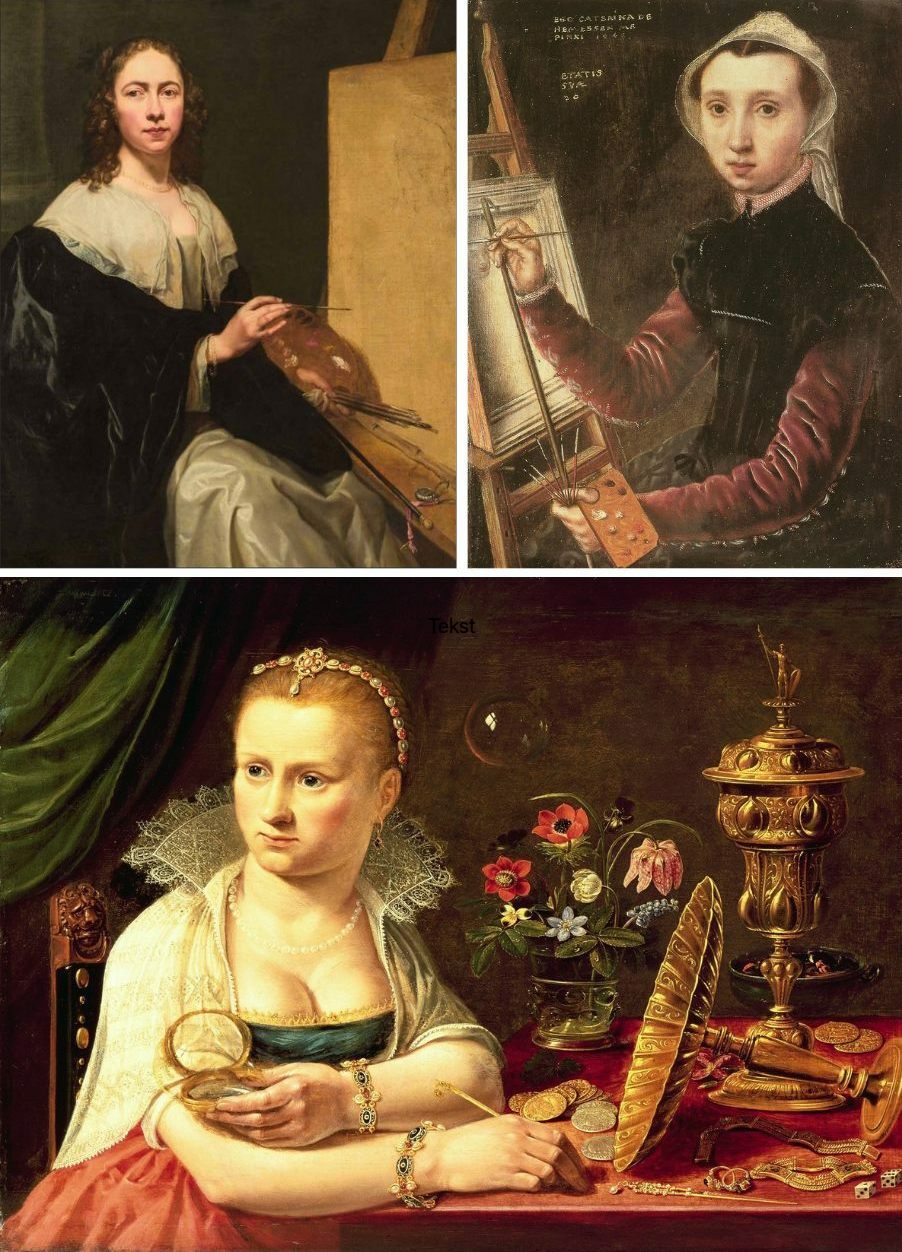 There is a clear trend to make displays more diverse. Female artists from the Southern Netherlands, such as Michaelina Wautier, Catharina van Hemessen and Clara Peeters are now much more frequently the subject of exhibitions than they used to be.
© Private collection / Kunstmuseum, Basel
Diversifying what is shown is fascinating and necessary, but the possibilities with old art are definitely more limited than with contemporary art. At the end of 2022, the British art historian Katy Hessel published The Story of Art Without Men, a survey of European art history featuring only female artists. The title is a reference to The Story of Art, by Ernst Gombrich (1950), the first edition of which did not include a single female artist – in fact, it was a ‘Story of Art Without Women’. Hessel makes a very valid point. Her book convincingly shows how important women have been in art history and how incomprehensible it is that their work has been so overlooked in the past.
Obviously, Hessel also includes female Old Masters. But a notable difference from Gombrich’s book is that Hessel has already reached the end of the nineteenth century by page 110 (of about 450). All-in-all, the period from 1500 to 1600 takes up ten (lavishly illustrated) pages. In the first edition of Gombrich, the reader has got through more than half the book before reaching the year 1600. In Hessels’ book, old history becomes a prelude to a phenomenon that appears particularly relevant in modern times. In this sense, she gave her first chapter, ‘Paving the Way’, a meaningful title. A European ‘Story of Art Without White People’ would presumably have reached 1900 even faster than Hessels’ book.
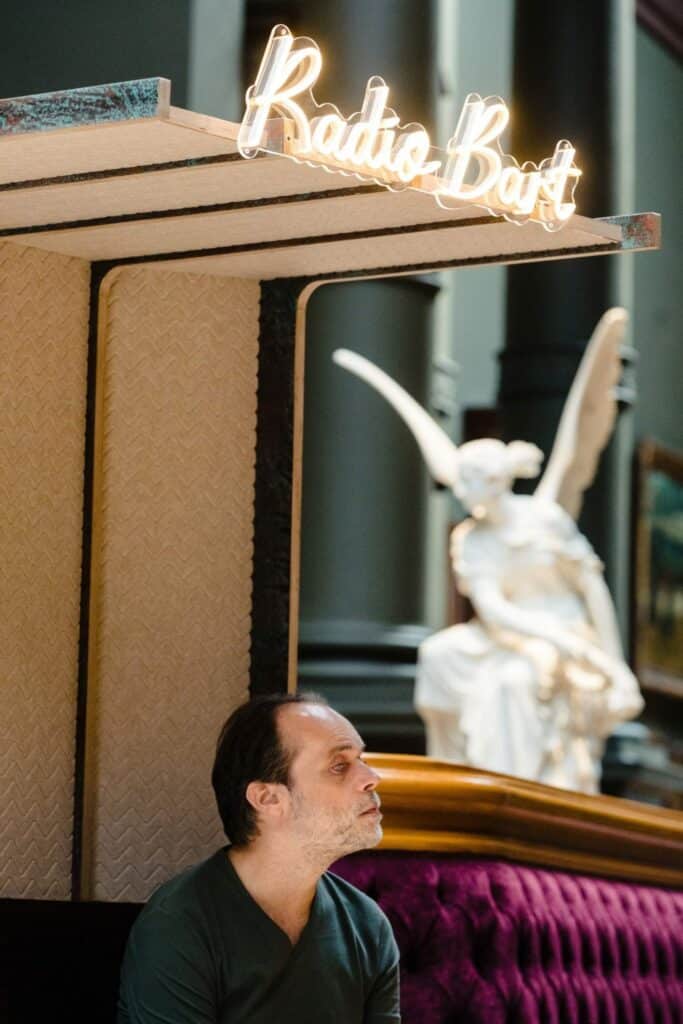 Radio Bart lets visitors dive deep into a specific artwork in conversations with a blind or visually impaired person
 © Anne De Block / KMSKA
A more productive method for museums to make old art more diverse and more relevant today is to ensure that the people involved in running them are more diverse, rather than the objects on display. By working with different social groups, museums can provide new perspectives on old artworks. The MSK in Ghent, in close collaboration with the local LGBTQ+ community, organises a walk through the museum’s vast permanent collection, highlighting the queer history literally hanging on the museum’s walls that has never been told before. In the KMSKA (in Antwerp), Radio Bart lets visitors dive deep into a specific artwork in a conversation with a blind or visually impaired person.
Collaborations with people from non-white and non-Western backgrounds show that old art is often more layered than a strongly critical-ideological approach might suggest. In an exhibition at Museum Sint-Janshospitaal (St John’s Hospital Museum) in Bruges in 2022, the Nigerian-Belgian Otobong Nkanga let her work dialogue with historical pieces from Bruges museums. It brought the unequal historical power relations between Europe and Africa to the surface, as well as a – literally – shared culture (through trade) round textiles, dyes and spices. In 2023, curator Magali Elali’s new display at the Museum Hof van Busleyden in Mechelen created a counter voice with work by young artists of colour. These both illuminated the elitist nature of the Burgundian-Habsburg art and echoed forgotten and rebellious voices of figures often depicted in the margins of an artwork.
A foreign country
Do art from the past and the museums in which it is exhibited only have a future if they can be directly related to the concerns of the present? Not necessarily. Walter Benjamin’s view, cited above, whereby the past is only valuable to the extent that it reflects the concerns of our own time, is not the only one possible. The past can be attractive not only because what is intrinsic to it is recognisable, but also because of the other, the foreign. This characteristic is often referred to with the French philosopher Emmanuel Levinas’s term ‘alterity’ (altérité). Levinas defined alterity as having “the quality of being other” (le caractère de ce qui est autre). The Other is often beyond our understanding, because we can never reduce it entirely to ourselves.
Museums with old art can best diversify the people they work with, rather than the objects they display
Levinas thought of alterity primarily in terms of persons, but the term is also applicable to history. Perhaps the most famous expression of this is in a quote from the novel The Go–Between (1953) by the British writer L.P. Hartley, “The past is a foreign country; they do things differently there.” The comparison is still very illuminating today, because we usually seem to be more lenient towards the other of foreign countries than towards the other of the past. The huge social differences in India or the place of women in certain Muslim countries are usually considered as a part of the culture that you must respect (within certain limits, such as those of human rights). But the strong role of religion, the dominance of masculine and white in the art of the past, seems increasingly to stand in the way of that art.
Let our dealings with the past, and the museums in which particular material relics of it are exhibited, once again become less of a walk in our own back garden and more of a journey in a foreign country that is rich and fascinating but also substantially different.
* Walter Benjamin: „Denn es ist ein unwiederbringliches Bild der Vergangenheit, das mit jeder Gegenwart zu verschwinden droht, die sich in diesem Bild nicht wiedererkannt hat.“

You might also like

The Struggle to Establish Dutch as the Language of Business in Flanders




Leave a Reply
You must be logged in to post a comment.