
The Netherlands’ Supposed Superiority: An Excuse for Exploitation and Exclusion
The Calvinistic ally inspired self-image of the Dutch as sober, frugal and tolerant? Away with it, say Saskia Pieterse and Janneke Stegeman. For far too long the Dutch have abused their status as God’s people to enrich themselves at the expense of other communities and cultures.
We know the clichés in The Netherlands and Belgium. The Dutchman is a thoroughbred ‘Calvinist’, even if he is not protestant, nor churchgoing, or in fact altogether an atheist. He – for centuries she had no place in the Dutch identity – is hardworking, sober, frugal, matter of fact, and rational. He is concerned with amassing wealth and possessions, but in a responsible manner. He is economical and cares not for luxury. He is a strict but righteous father to his children, and warm and generous to the poor.
Behold this upright Dutchman: there really isn’t much wrong with this good soul. Despite his many virtues, he is never boastful. He works himself to the bone for family and for society, he is true to his wife, friendly to his subordinates, and he obeys the law. But he knows his place: he knows that humans are fundamentally sinners and small in God’s eyes. And yes indeed: the Dutchman is tolerant. He respects all people, regardless of their different beliefs, races, cultures, or political ideologies.
These are greasy, stale clichés: they are not true now and never have been, but they did come from somewhere. They came to lead their own lives; many Dutchmen have internalised them without much mind, including Catholics. I grew up myself in an open-minded, Catholic family who used the word ‘Calvinist’ archly to describe somebody miserable and prudish, somebody who could not enjoy the nicer things in life, and would be quick to scold those who could. My mother called such folk ‘stiff Jesuses’.
Many Dutchmen have internalised the stale clichés of Dutch tolerance and respect without much thought
I thought our church, with all of its colourful images and dramatic depictions, was much more inviting than the naked church of my protestant friends. And much more inviting than those foundationalist pictures that were hung in their homes, called ‘The Narrow Path’, I shudder to remember. That narrow path was frequented by married couples walking stiffly arm-in-arm, their mouths squeezed firmly shut, straight into heaven past boring, grassy fields. Life on the wide road was more like our home: there were card games, and plenty of drinking and laughter – much more fun. Why should we, as enjoyers of life, go to Hell?
And yet the positive image of the righteous Dutchman was successfully drilled into us too, both at school and at home. And my parents, notwithstanding their ridiculing of it, valued the Calvinistic virtues.
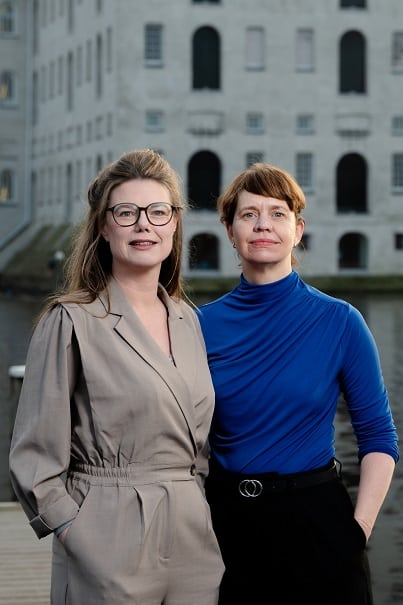 Janneke Stegeman and Saskia Pieterse don’t engage with other researchers or viewers; these are simply the facts, they contend
 © Maarten Mooijman
By maintaining his ingrained, humble self-image, the Dutchman performs an unbearable act of superiority. He deserves a little more than any other mortal; prosperity and happiness are simply his due. This paradox is the subject of razor-sharp analysis in Uitverkoren. Hoe Nederland aan zijn zelfbeeld komt (Chosen: How The Netherlands Formed Its Self-Image), by Saskia Pieterse and Janneke Stegeman. Pieterse is a historian of literature, Stegeman a theologian. Both, they write, “were socialised from an early age in a White [they consistently capitalise ‘White’ and ‘Whiteness’, which seems ironic] Christian environment”, and have “consciously written a navel-gazing book”.
They describe the history of The Netherlands, from the Reformation in the early sixteenth century up to 1920, the year in which the anti-revolutionary reformist statesman Abraham Kuyper died. The overarching theme of their book is the ‘chronically positive self-image’ of the people in power in The Netherlands.
By maintaining his ingrained, humble self-image, the Dutchman performs an act of superiority
Calvin’s followers regarded themselves as the new chosen people. Once upon a time, God had chosen the Jewish people, but the Jews had ruined that role by not recognising Jesus, even going so far as to murder him. Incidentally, the authors make no clear distinction between Calvinists, Reformers and orthodox Christians and occasionally it appears that they mean Protestants in a broader sense. A more precise definition would have been valuable.
According to Stegeman and Pieterse, the Dutch have long managed to successfully mask their practices of exploitation, colonialism and racism. “Looking directly at this fact is essential to us”, they write. Other key sentences in the book include “Tolerance is never something that occurs between equals. Tolerance is always granted to a subordinate group by a dominant one.” This is an observation that is difficult to deny.
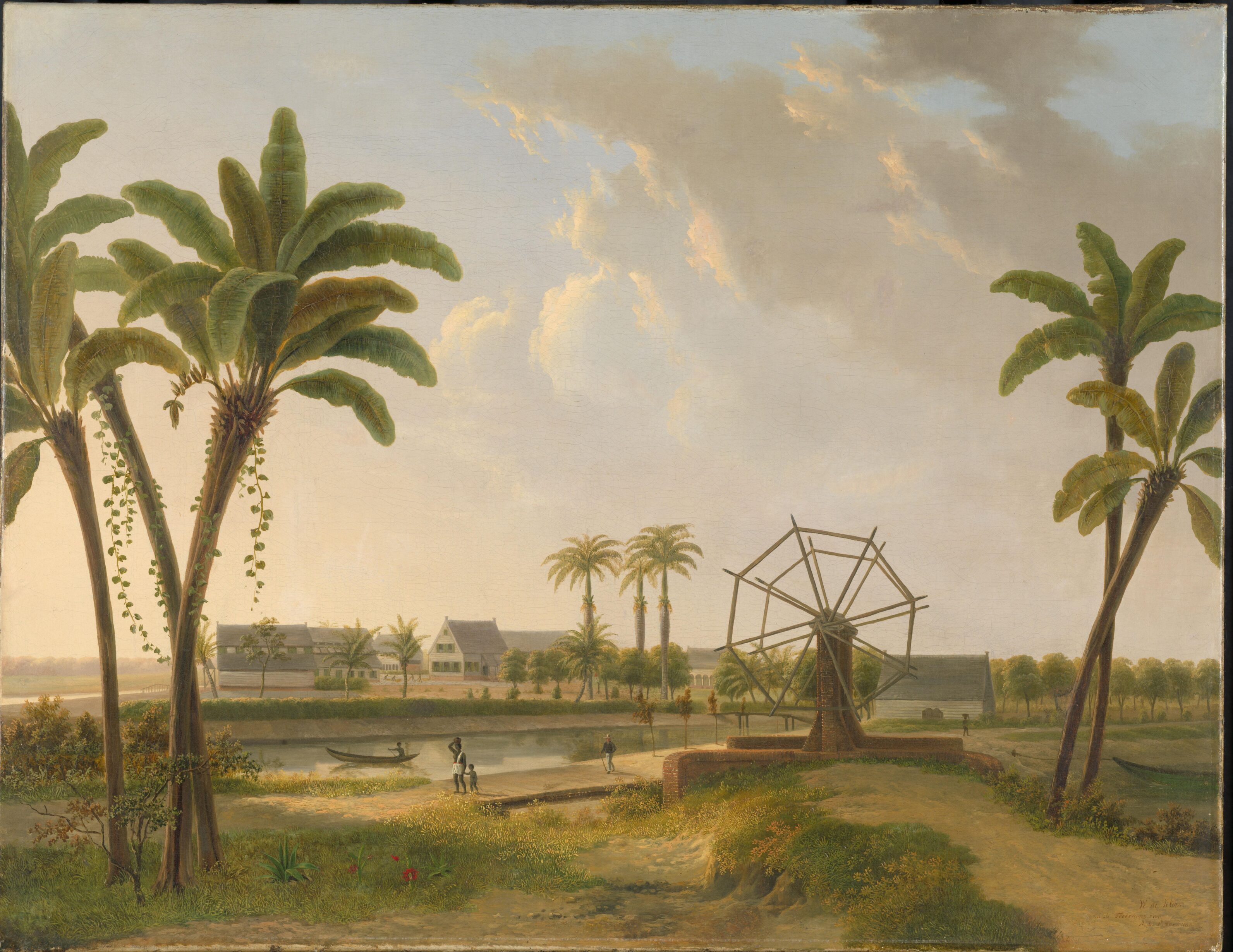 Willem de Klerk, view of the coffee plantation Marienbosch in Surinam, nineteenth century. The shameless theft of riches in the colonies and slave holding in Surinam took place under the guise of spreading the true faith and the introduction of ‘civilisation’, write Pieterse and Stegeman in Uitverkoren
 © Rijksmuseum, Amsterdam
We have known for a long time that the positive self-image of the Dutchman doesn’t track with reality. In recent times we have seen it again. Since the rise of Pym Fortuyn at the start of this century, examples of rationality and sobriety are few and far between in Dutch politics, and many Dutch allow themselves to be led by emotion and gut feeling. They follow radical right-wing politicians en masse and with enthusiasm–false prophets who preach not tolerance, compassion and generosity but instead “Dutch people first” and “fewer, fewer Moroccans”, and who decline asylum to these persecuted refugees, preferring to send them back. And all of this takes place with an appeal to ‘Judeo-Christian’ values.
Since the rise of Pym Fortuyn at the start of this century, examples of rationality and sobriety are few and far between in Dutch politics
Opponents are abused with little or no respect on social media. And very little needs to happen; take for example the late 2024 riots in Amsterdam that involved fighting between supporters of the Israeli football club Maccabi and Moroccan youths, and even our own ministers begin talk of ‘failed integration’ or ‘baked-in anti-Semitism’ with regard to various social groups. But nobody wants to be called racist.
In the epilogue of their book, Pieterse and Stegeman arrive at this depressing present, which leads them to stress the importance of the history that they write. But in this last portion of the book they move through time in seven-league boots, in the process skipping the horrific twentieth century. During the Second World War and the Holocaust, in which neither protestant nor catholic leaders let their noblest or most courageous sides show, this positive self-image was ludicrous. Maybe they will address this in their next book.
Above all, Pieterse and Stegeman have chosen to show how the Dutch misused their status as God’s chosen people to enrich themselves and exercise power. The shameless theft of riches in the colonies in the East and West, and the keeping of slaves in Surinam all took place under the disguise of charity, the spreading of the true belief, and the introduction of ‘civilisation’.
Naturally, those involved assumed the inferiority of people of other races and cultures, not only the original inhabitants of Africa, South America and Southeast Asia, but also Dutch Jews. All such people held a lower position in the hierarchy, closer to nature, less able to control their tempers and instincts. ‘Natives’ in the colonies couldn’t possibly govern their own communities. They needed wise leadership; luckily the Dutch could offer this.
Is it really true that the haughty, Dutch self-image is cut solely from Calvinistic cloth?
Dutch men took a similarly condescending, paternalistic attitude toward women; like underage children and domestic staff, women lived under the authority of the man of the house. The authors do not pay much attention to this Christian-inspired sexism; this would be a further choice topic for their next book.
Pieterse and Stegeman have written a pleasant, readable book that is passionate and a little dogmatic in tone, one in which they rather unceremoniously present the Dutch reader with the unflattering facts at hand. They claim convincingly that the alleged Christian superiority has led to degrading exploitation, humiliation, and exclusion, both in The Netherlands and in the colonies. Subsequent cultural movements like the Enlightenment and liberalism fitted seamlessly with Christian values, because these too centre reason and liberty – albeit those of the aforementioned. The authors do not engage with others researchers or viewers; these are simply the facts, they contend. We Dutchmen should simply be deeply ashamed.
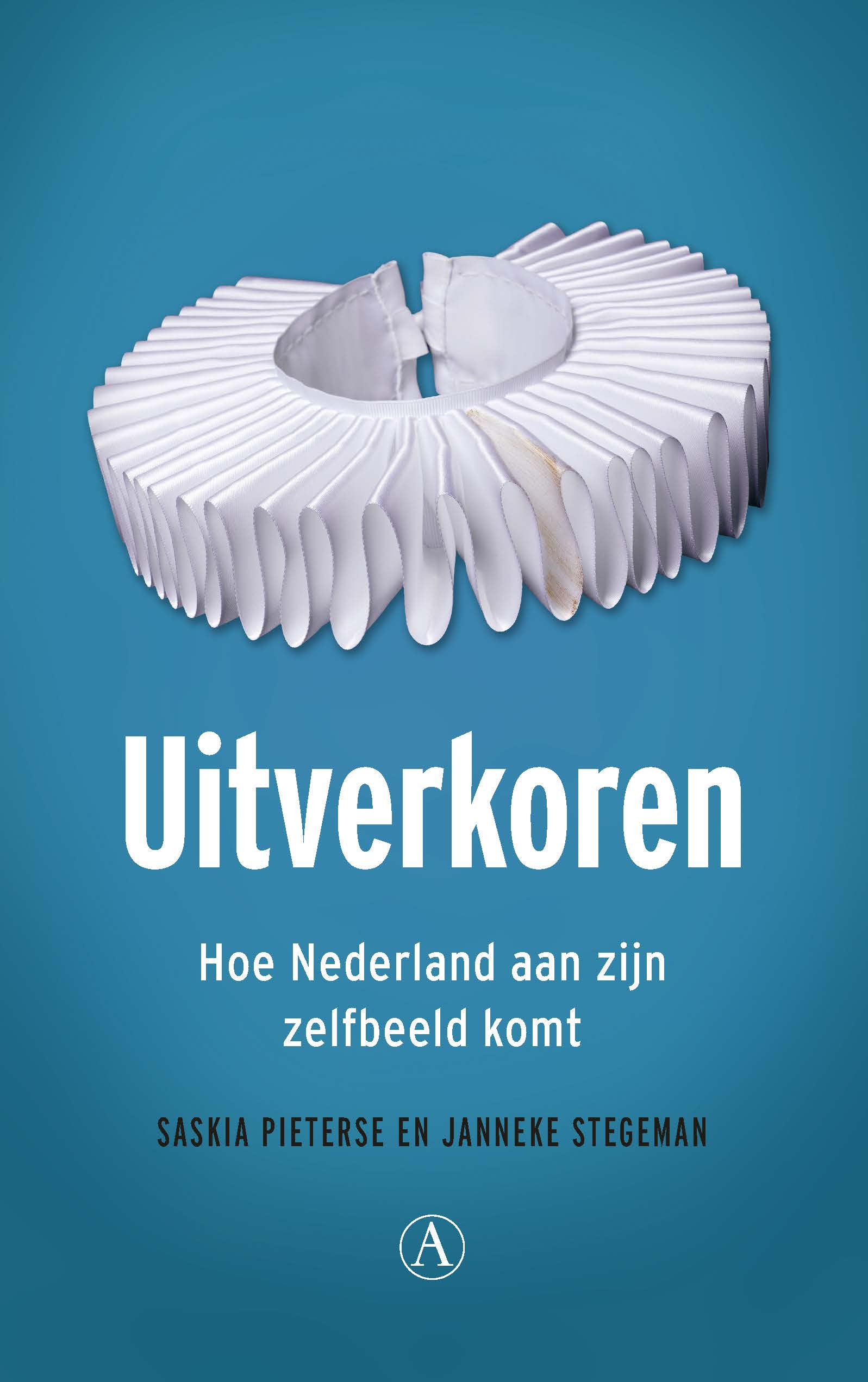
And yet for me Pieterse and Stegeman don’t quite realize the book’s subtitle – Hoe Nederland aan zijn zelfbeeld komt (How The Netherlands Formed Its Self-Image). Is it really true that the haughty, Dutch self-image is cut solely from Calvinistic cloth? Have Catholics among the population – which remain to this day the largest single religious group in The Netherlands, and was also active in the colonies – not contributed anything to this? Has this self-image not been shaped under the pressure of socialists and social democrats? And did Western elites elsewhere in the world not develop a comparable self-image?
Only a bold book that makes an honest attempt to establish the truth–a book like this one–conjures such questions. The unmasking of the ‘great’ of The Netherlands has only just begun.

You might also like

It’s all double Dutch to ChatGPT


Leave a Reply
You must be logged in to post a comment.