
Jozef Deleu, master of his own destiny
Throughout his life and work, Jozef Deleu (1937-2026) knew what he stood for and pursued his goals with unwavering dedication.
Jozef Deleu was born in Roeselare on 20 April 1937. He was the youngest of seven children in a farming family. His father came from French Flanders and was French-speaking by upbringing. His mother, Germaine Demytenaere, came from a very Jansenist family in Geluwe. After their marriage, his parents settled in Roeselare. The language spoken in the Deleu-Demytenaere household was Dutch, though Deleu’s father, Louis, always spoke it with a heavy French accent. When he retired, Louis Deleu read voraciously all the books from the local library, first the French titles, then the Flemish titles. He, without a doubt, influenced his youngest son’s literary interests.
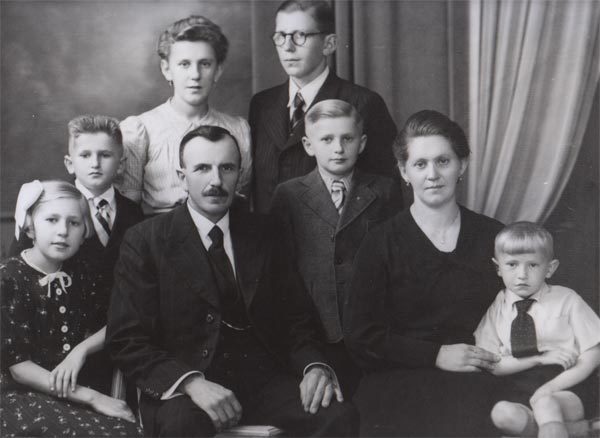 The Deleu household in 1943, met f.l.t.r.: Denise, André, Zelie-Anne, father Louis, Daniël, Frans, mother Germaine and Jozef
© Archief Jozef Deleu
Jozef Deleu attended a small neighbourhood elementary school near Roeselare, but in mid-1949, during his first year of secondary school, his parents moved to a new farm, in Rekkem. Deleu continued his studies, the first years in French, at St. Joseph College in Mouscron, until he was old enough to begin teacher training at the Torhout Normal School. (This campus is now known as VIVES Campus Torhout). Deleu obtained his teaching diploma in 1956 and, in the same year, his teaching certificate in French. He worked as a teacher from 1956 to 1970, first as head of the “septième préparatoire” at St. Joseph College in Mouscron and from 1960 to 1970 in the “seventh preparatory year” at St. Aloysius College in Menen. He married Annemarie Deblaere in 1960.
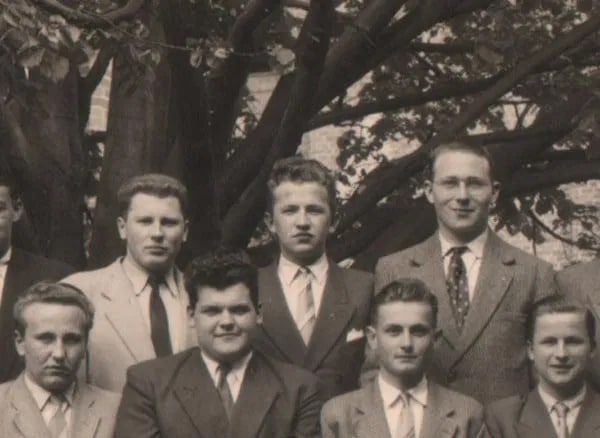 Jozef Deleu (top center) studied to become a teacher at the Torhout Normal School in 1956.
© Archief Jozef Deleu
Deleu was already writing poetry as a young student. He sent it for evaluation to the only author of any reputation he knew in his region, namely André Demedts from Kortrijk. Demedts responded, assessed his poems and offered advice. On 19 December 1956, Deleu received a letter in which Demedts wrote that he was looking for someone living near the border who would be willing ‘to take the lead of a small group of Flemish boys from Flanders and French Flanders, the core of a Flemish youth movement (outside of all politics, of course!) in French Flanders.’ ‘If we succeed in this,’ wrote Demedts, ‘we would consider the publication of a small youth magazine to appear in France.’ ‘If this means nothing to you,’ Demedts continued, ‘I will give up on the idea.’
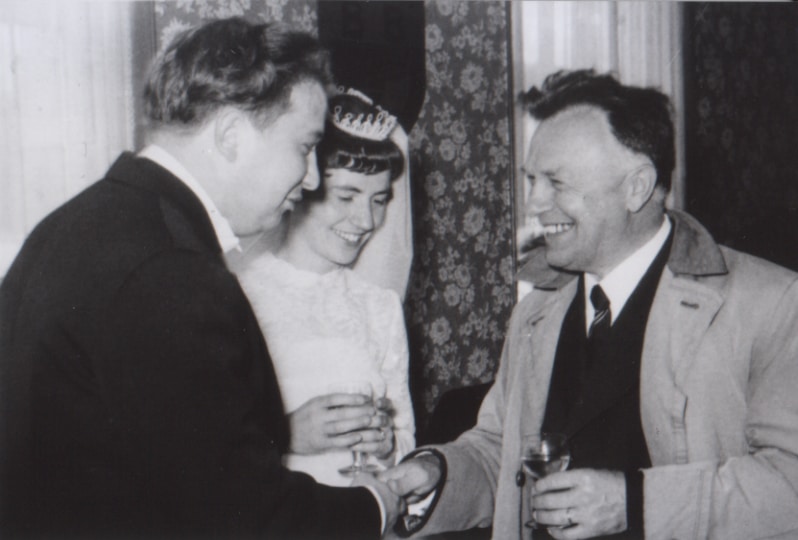 On October 22, 1960, Jozef married Annemarie under the approving eye of André Demedts
© Archief Jozef Deleu
The idea certainly meant something to Deleu and he immediately began, together with his friends from the Rekkem student club ’t Can, to prepare the first issue of the magazine, which appeared in August 1957 and initially bore the bilingual title Ons Erfdeel – Notre Patrimoine.
Because of Deleu’s unbridled dedication, the magazine grew very rapidly. From the second issue onwards though, due to the arrival of several Dutch editors, it was no longer exclusively devoted to French Flanders. Subjects from the entire Dutch-speaking region were covered from then on. Deleu also managed to unite a series of prominent figures from the cultural worlds of Flanders and the Netherlands around the publication. Upon the appearance of the first issue of the 13th volume, readers were informed that the print run had reached 10,000 copies. Until then, the magazine had been produced entirely at the Deleu household, with Jozef’s wife handling the administration for years. When the success grew beyond their capacity, Deleu decided to further professionalize the magazine. In 1970, the Ons Erfdeel Foundation was established.
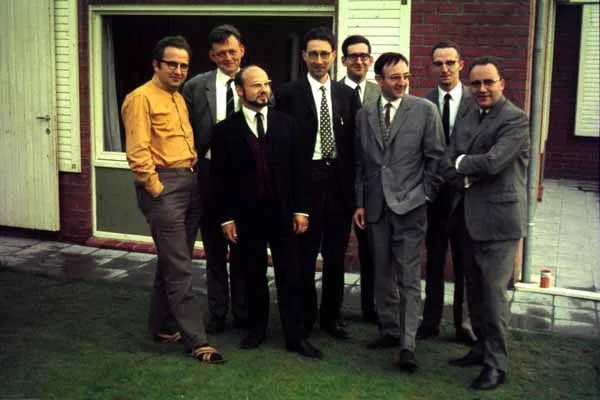 The editorial board of Ons Erfdeel at Huize Oranje (Deleu’s private residence). From left to right: Jozef Deleu, Arie Willemsen, Jacques Fermaut, Jan Deloof, Frits Niessen, Josef Kempen, Erik Vandewalle, Gaston Durnez, 1969
© Archief Jozef Deleu
Deleu exchanged the safe environment of education for an uncertain existence in the cultural world. Some felt that, as the father of three young children, he was quite irresponsible to do so, but he was not easily deterred. He knew very well what he stood for; every step he took was well prepared, and he was willing to work very hard to make Ons Erfdeel vzw a success. He managed to surround himself with influential people from Flanders and the Netherlands who not only supported the Foundation’s objectives but, above all, had faith in Deleu’s work ethic. And that work ethic was immense.
The greatest beggar of Flanders
For years, he went begging for money for his foundation in Flanders and the Netherlands. He sometimes called himself ‘the greatest beggar of Flanders.’ The objectives of Ons Erfdeel vzw were: ‘to promote cultural cooperation among Dutch speakers and to promote the culture of Flanders and the Netherlands abroad.’ To realize that last objective, he founded the journal Septentrion, arts, lettres et culture de Flandre et de Pays-Bas in 1972. This was followed in 1976 by the bilingual yearbook De Franse Nederlanden/Les Pays-Bas Français and in 1993 by the yearbook The Low Countries.
Ons Erfdeel vzw, which started as a small private initiative, gradually grew into a genuine SME with its own offices in Rekkem and several permanent staff members. Deleu was, to quote himself, a ‘restless and demanding boss.’ He could be tough and had a deep dislike for people who did not do exactly what had been agreed upon, but on the other hand, he was also grateful for the work delivered. Deleu never spoke of “staff”, but always of “colleagues”.
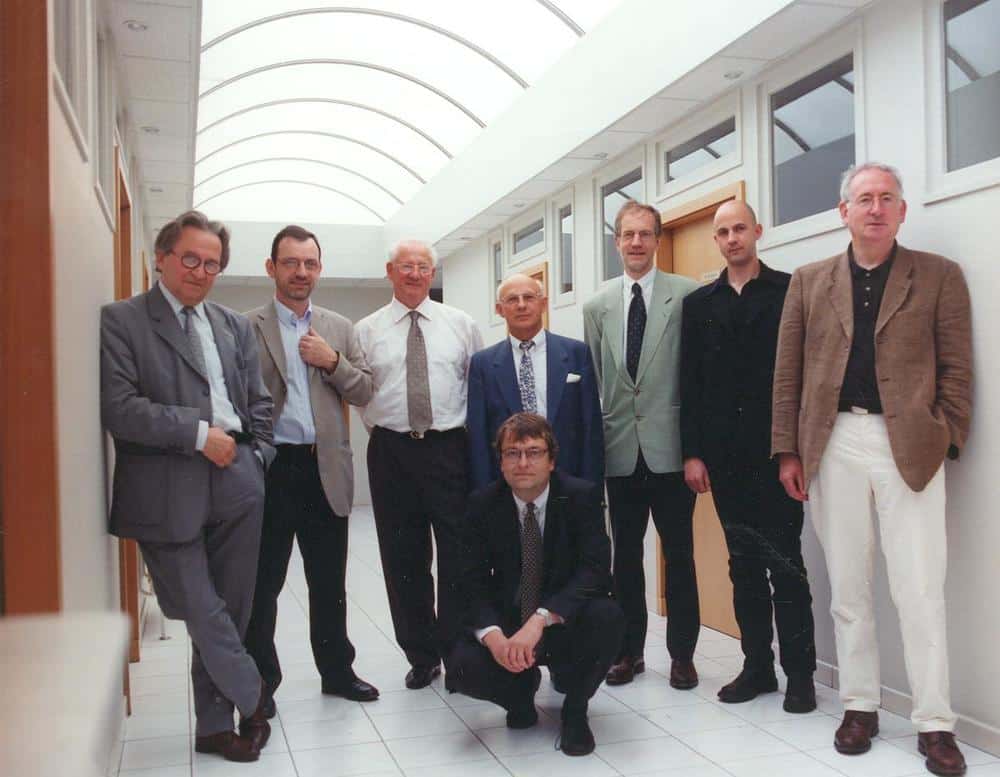 The last editorial meeting of Septentrion under the editorship of Jozef Deleu
© Ons Erfdeel / de lage landen
As an entrepreneur, he was cautious, sometimes even hesitant. He could be quite suspicious of new trends but was always very well prepared and decisive when necessary. For both the various editorial teams and the Board of Directors, he always managed to engage people who could make a significant contribution to the work of the foundation. He also used the remote location of the office in Rekkem as an asset. Many important people made the ‘pilgrimage to the border.’ Prominent authors, academics, ambassadors, politicians of all persuasions and even various royal highnesses made the trip to Rekkem.
Uncompromising
Deleu was also active outside of Ons Erfdeel. He continued to publish sporadically: poetry, novellas, stories, essays, etc. To the general public, he is presumably best known for his Groot Gezinsverzenboek (Big Book of Family Verse), an anthology of poetry in Dutch, first published in 1976. In 2021, the 19th edition appeared under the title Nieuw Groot Verzenboek. Gedichten over leven, liefde en dood (The New Great Book of Verse. Poems about Life, Love and Death), which has become the reference work for Dutch-language poetry. In addition, he published eight of his own poetry collections, with yet another selection of his own poetry published in 2007.
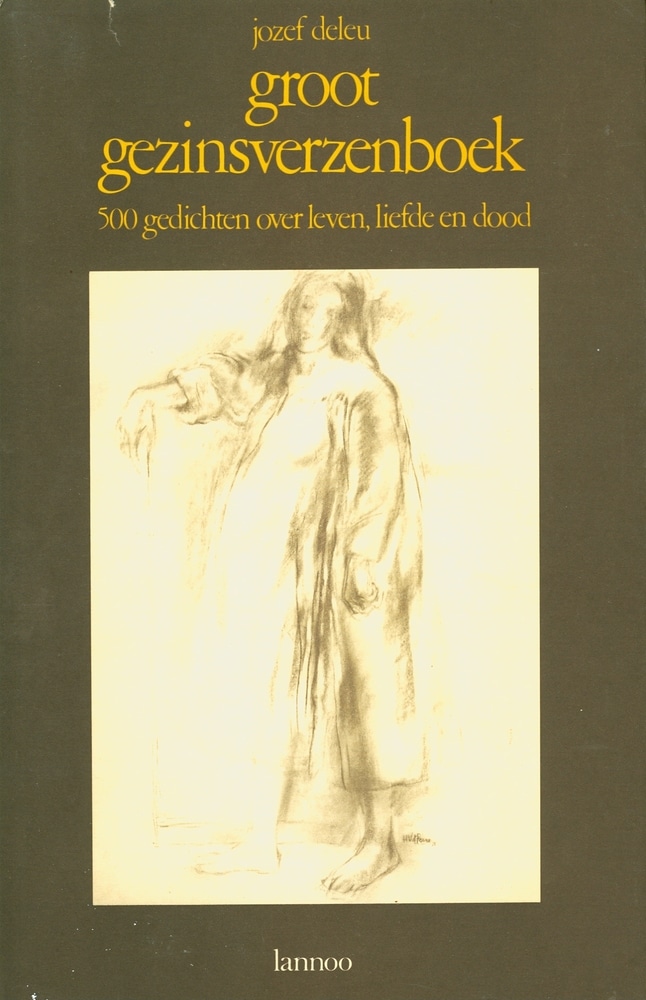 First edition of The Great Family Poetry Book, 1976
© Poëziecentrum
More than a poet, Deleu also made a name for himself as a bold, provocative and passionate cultural politician. He acquired this reputation primarily through his speeches. Nine of these were collected in 1993 under the title De pleinvrees der kanunniken (The Fear of the Canons), which was also the title of a lecture he delivered in Antwerp in 1985. This lecture made a great impression. Deleu was disturbed by an increasing tendency towards complacency and narrow-mindedness in an increasingly independent Flanders, and he was particularly critical of what he called a lack of cultural policy. His view was that Flemish intellectuals are insufficiently critical and succumb to the habits of the easy consumer society; they do not sufficiently play their rebellious role as corrective commentators on policy.
His lectures portrayed Deleu as a combative figure who fought for his ideals without accepting any compromise. He swam against the current and was not afraid to make enemies. That image of the independent, critical cultural politician is further confirmed in the book Monologen met Jozef Deleu (Monologues with Jozef Deleu), compiled in 1993 by journalist Filip Rogiers. In 2017, Professor Hans Vandevoorde collected four texts by Jozef Deleu and two by August Vermeylen in the book Hoe Vlaming te zijn? (How to be a Fleming.) According to Vandevoorde, both Vermeylen and Deleu held up ‘a powerful emancipatory ideal before Flanders’.
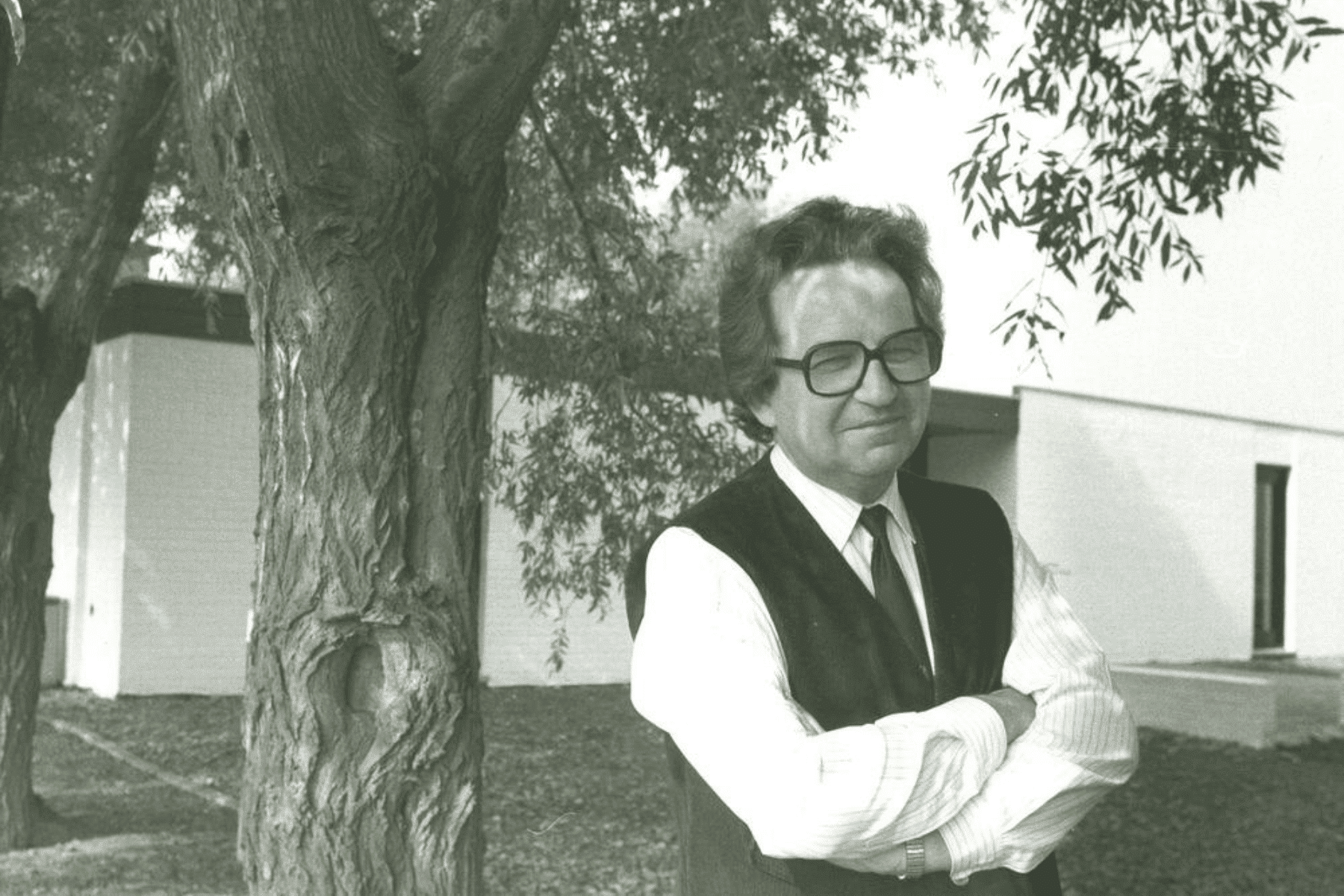 Jozef Deleu in front of the Ons Erfdeel Dialogue Centre in Rekkem, 1987
© Ons Erfdeel / de lage landen
It is clear that Deleu was a major advocate of Flemish-Dutch cooperation. He was, moreover, also one of the first to abandon the romantic idea of integration and replace it with a more pragmatic cultural cooperation. Deleu was a member of the Council for Dutch Language and Literature of the Taalunie (1984-1997 and 2007-2012), a member of the Cultural Treaty Commission between Flanders and the Netherlands (1998-2006), and a board member of the Genootschap Onze Taal (1992-1998) and of the Flemish-Dutch House deBuren in Brussels (2004-2012). From 2005 to 2014, he served on the Board of Directors of the VRT on behalf of the Flemish Social Democrats.
Deleu was also one of the four members of the editorial board of the first edition of the Encyclopaedia of the Flemish Movement (1973-1975), which he initiated with journalist Gaston Durnez.
Epitaph
For his work, Deleu received numerous awards, such as the Order of the Flemish Lion (1972), an honorary doctorate from Ghent University (1994), the medal of the Dutch Language Union (1996), the Prize of the Flemish Government (2002), the Ark Prize of the Free Word (2020), and the Language Medal of the Royal Academy of Dutch Language and Literature (2023), as well as several French awards and a Dutch distinction and – together with Jeroen Brouwers (1940-2022) – the Prize for Flemish-Dutch Cultural Cooperation (2009). Jozef Deleu was an honorary citizen of the city of Menen. He was also once offered a noble title, but he declined the honour.
In 2002, Jozef Deleu retired as Managing Director and Editor-in-Chief of Ons Erfdeel vzw. Anyone who thought he would then enjoy his well-deserved rest did not know him very well. In 2003, he founded a new poetry magazine, Het Liegend Konijn (The Lying Rabbit), with which he was able to realise a dream he had long cherished, but which he found difficult to bring forth within the framework of the vOns Erfdeel foundation. The magazine is exclusively dedicated to poetry and includes no interviews or essays. Jozef Deleu is the sole editor. In its 22 years of existence, the magazine has become the reference point for poetry in Flanders and the Netherlands. Through the magazine, Jozef Deleu could continue to put poetry on the map.
The one word that summarises Deleu is probably “independence”. He always maintained personal control of his professional life. Independence, and especially political independence, was therefore one of his basic principles. In addition, there was the cooperation with the Netherlands because, in his opinion, the Flemish cultural pool was far too small. Through cooperation with the Netherlands, the bar for quality standards could be raised. And finally, he believed it was imperative to present Dutch culture as much as possible to the three major language areas surrounding us.
In 1982, on the 25th anniversary of the magazine Ons Erfdeel (now De Lage Landen), Deleu published Het Roddelgraf (The Gossip Grave), a small booklet in an edition of 25 copies. The booklet contains epitaphs for the members of the editorial board at the time. His own epitaph was written by his Dutch friend and ally Frits Niessen:
Hier rust Deleu
Un peu, un peu.
Sources:
Personal archive
Anne Marie Musschoot, ‘Jozef Deleu’, VWS-Cahiers, vol. 36, no. 3, May-June 2001.
Van Nu & Toen. Sample of articles from Ons Erfdeel, Ons Erfdeel vzw, Rekkem, 1990.
Jozef Deleu, De pleinvrees der kanunniken, Uitgeverij Kritak, Leuven, 1987.
Hans Vandevoorde, ‘Hoe Vlaming te zijn? Six texts by August Vermeylen – Jozef Deleu’, Polis, 2017, p. 176
Het Roddelgraf. Epitaphs organ of the editors of “Ons Erfdeel”, Rekkem, 1982.




Leave a Reply
You must be logged in to post a comment.