
Building the World: The Influences of Dutch and Belgian Architecture

‘God created the world, but the Dutch created the Netherlands’, so the famous saying goes. Building is in some sense in the DNA of the Dutch and the Belgians, as they have fought for hundreds of years to protect their lands from the sea and reclaimed marshy land on which to build towns and cities. The Dutch and Belgians have developed many different architectural styles over the centuries and have often exported these styles to other parts of Europe and the world to which they have travelled.
Building is in some sense in the DNA of the Dutch and the Belgians
The dominant architectural style in late medieval Europe was Gothic with its distinctive spires and pointed arches. In the province of Brabant, which includes Brussels, a variety of Gothic, known as Brabantine Gothic, was developed. Among the buildings in this style are Brussels Cathedral, the Sint Rombout Cathedral in Mechelen and Leuven town hall, with its profuse decoration. Several town halls in the northern Netherlands, such as Gouda and Middelburg, were also built in this style. Many of the Gothic churches in Eastern England were constructed by craftsmen from the Low Countries or decorated with ornaments made there.
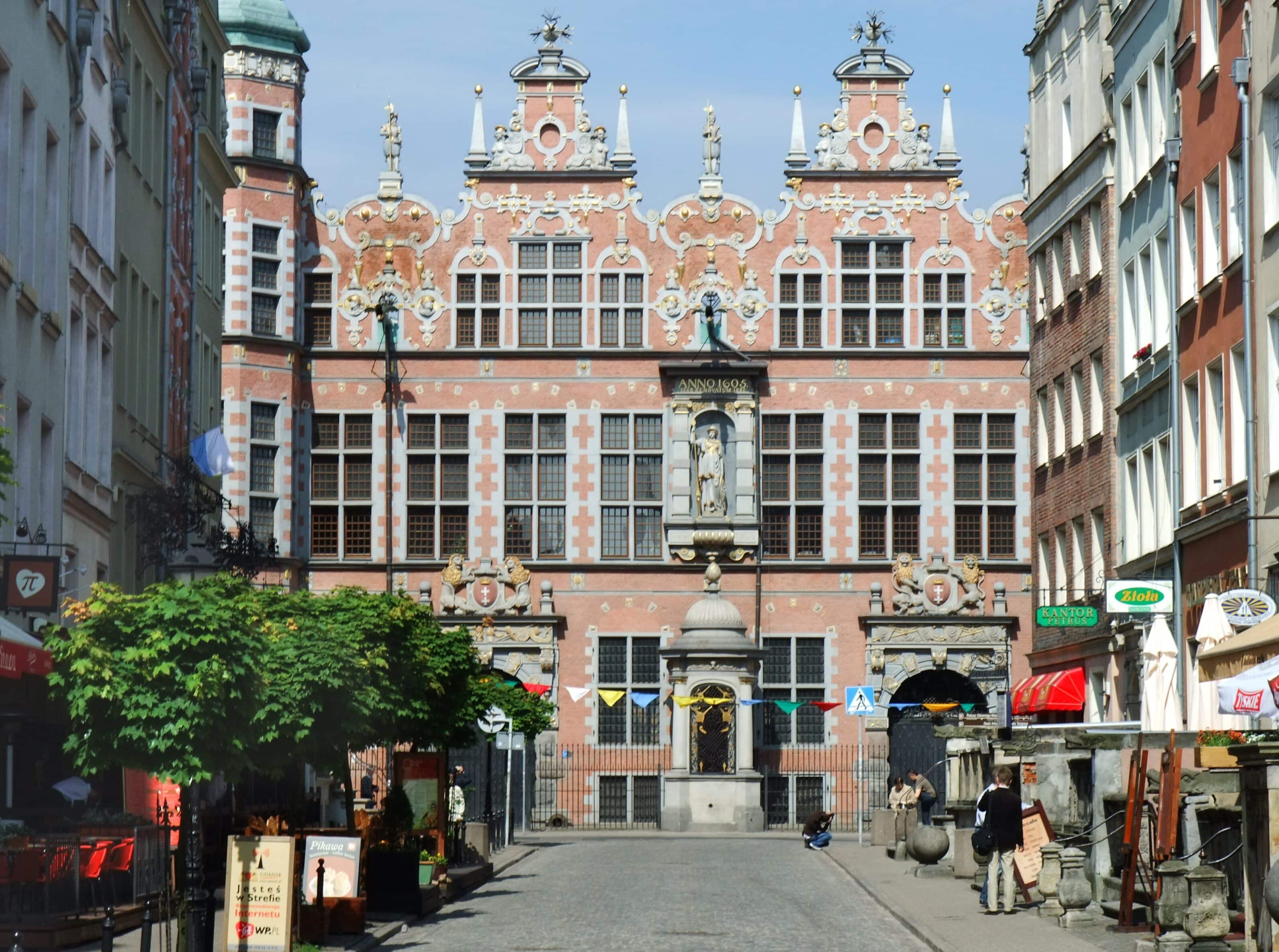 The Great Armoury in Gdańsk/Danzig, Poland
© www.gdansk.pl, Gdansk City Hall
Antwerp or Netherlandish Mannerist
In the first half of the sixteenth century, Antwerp was arguably the most important commercial city in northern Europe. As well as trading with many other cities, Antwerp exerted a cultural influence across much of northern Europe. One city with which its merchants traded was Danzig, now Gdańsk in Poland. One of its most impressive structures, the Green Gate (Brama Zielona), was inspired by Antwerp City Hall. It is described as Antwerp or Netherlandish Mannerist, an exuberant style that reacted against the balance and proportion of High Renaissance art and architecture. Antwerp did much trade with London. Another of its signature buildings, the Bourse, was the model for the London Royal Exchange, commissioned by Sir Thomas Gresham, which opened in 1565.
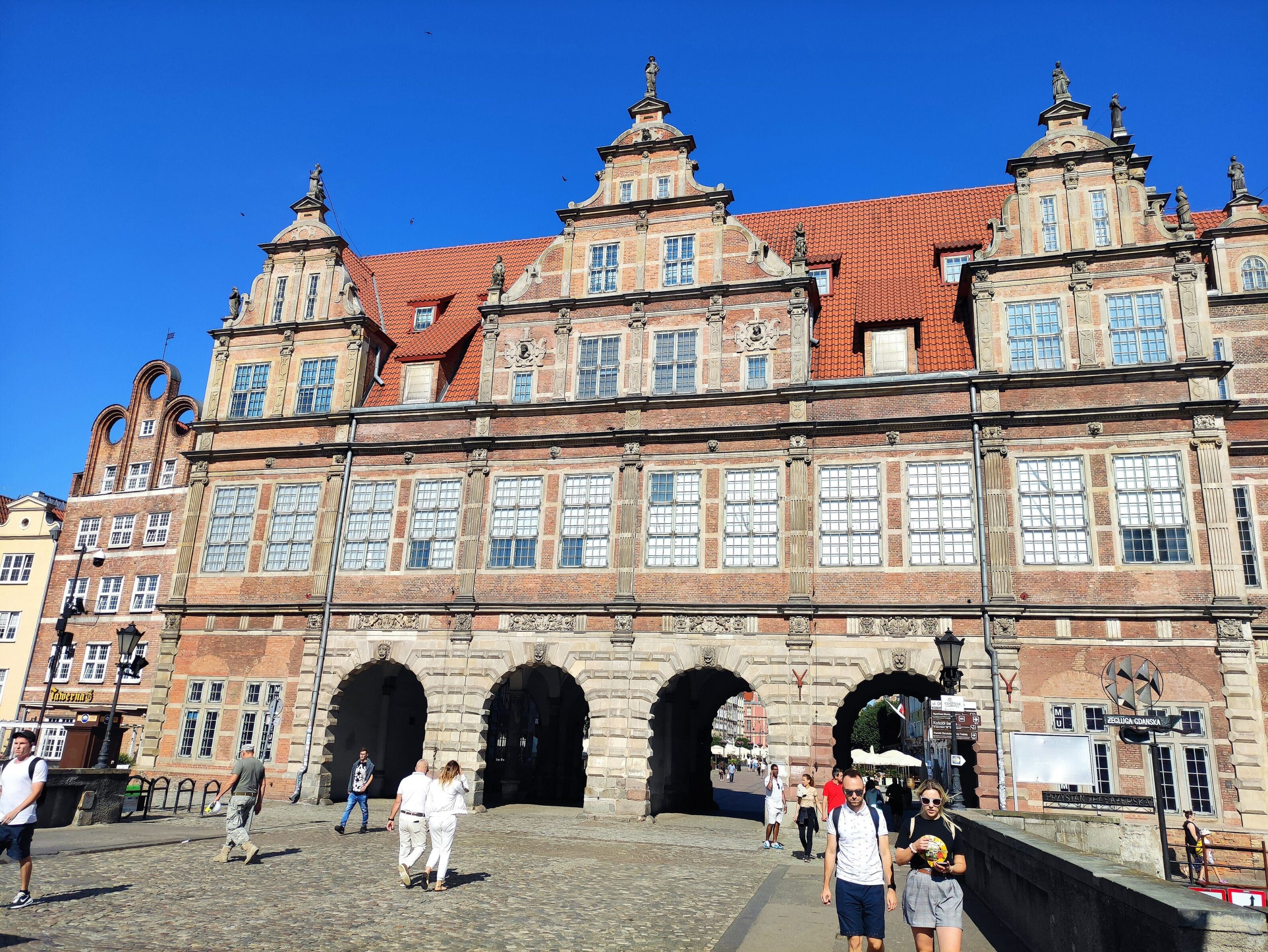 The Green Gate (Brama Zielona) is one of the most notable tourist attractions in Gdańsk, Poland
© Karel Frydrýšek / Wikimedia Commons
Mannerist buildings often incorporated distinctive gables. Examples of buildings with gables in the Netherlandish Mannerist style can be seen across northern Europe. Frederiksborg Castle at Hillerød in Denmark was built as a royal residence for King Christian IV of Denmark. The majority of the present castle was designed by members of the Flemish family of architects, the Van Steenwinckels, and was built between 1600 and 1620 in Dutch Mannerist style with exuberant gables. Two other examples of buildings with Dutch Mannerist or Renaissance gables are the House of Blackheads in the Old Town of Riga, the capital of Latvia, and the Great Armoury in Danzig/Gdańsk, an arsenal designed by the Flemish architect, Anthonis Van Obbergen. These buildings are often built of brick, which while not unique to Dutch architecture, is certainly a common material in buildings inspired by Netherlandish architecture. Simpler stepped-gables, which are found on houses across northern Europe, again owe something to Netherlandish models.
Cape Dutch style
In the seventeenth and eighteenth centuries, the Dutch began to trade beyond Europe in areas such as south-east Asia and southern Africa. They soon incorporated architectural forms from the Low Countries in the buildings they constructed in those areas. Perhaps the most famous example of this is the Cape Dutch style developed in the western cape of South Africa. The most distinctive feature of this style is its ornate rounded gables, which echo those found in townhouses in the Dutch Republic. In the late nineteenth and twentieth centuries, the style enjoyed a Renaissance and it influenced architecture in other countries such as Australia and New Zealand.
The Dutch exported the classical style to areas over which they exerted influence
The classical style, often fused with Dutch elements, was frequently used in the Dutch Republic in the seventeenth century. Amsterdam Town Hall and Huis ten Bosch are just two examples of buildings in this style. The Dutch exported the classical style to areas over which they exerted influence. One example is the town hall constructed in the capital of the Dutch East Indies, Batavia, now Jakarta. The building now serves as the Jakarta History Museum. In the eighteenth century, the summer residence of the Governor-General, named Buitenzorg (‘Without a Worry’), in modern-day Bogor, was built in this style. Today it serves as the summer retreat for the Indonesian President.
As the Dutch expanded their influence across the Indonesian archipelago they constructed commercial and administrative buildings inspired by those in their homeland. One religious building which shows a Dutch influence is the Baiturrahman Grand Mosque in the centre of Banda Aceh city, Aceh Province, on Sumatra. This mosque, built in the late nineteenth century, includes the distinctive Dutch stepped gables. It also includes stained glass from Belgium.
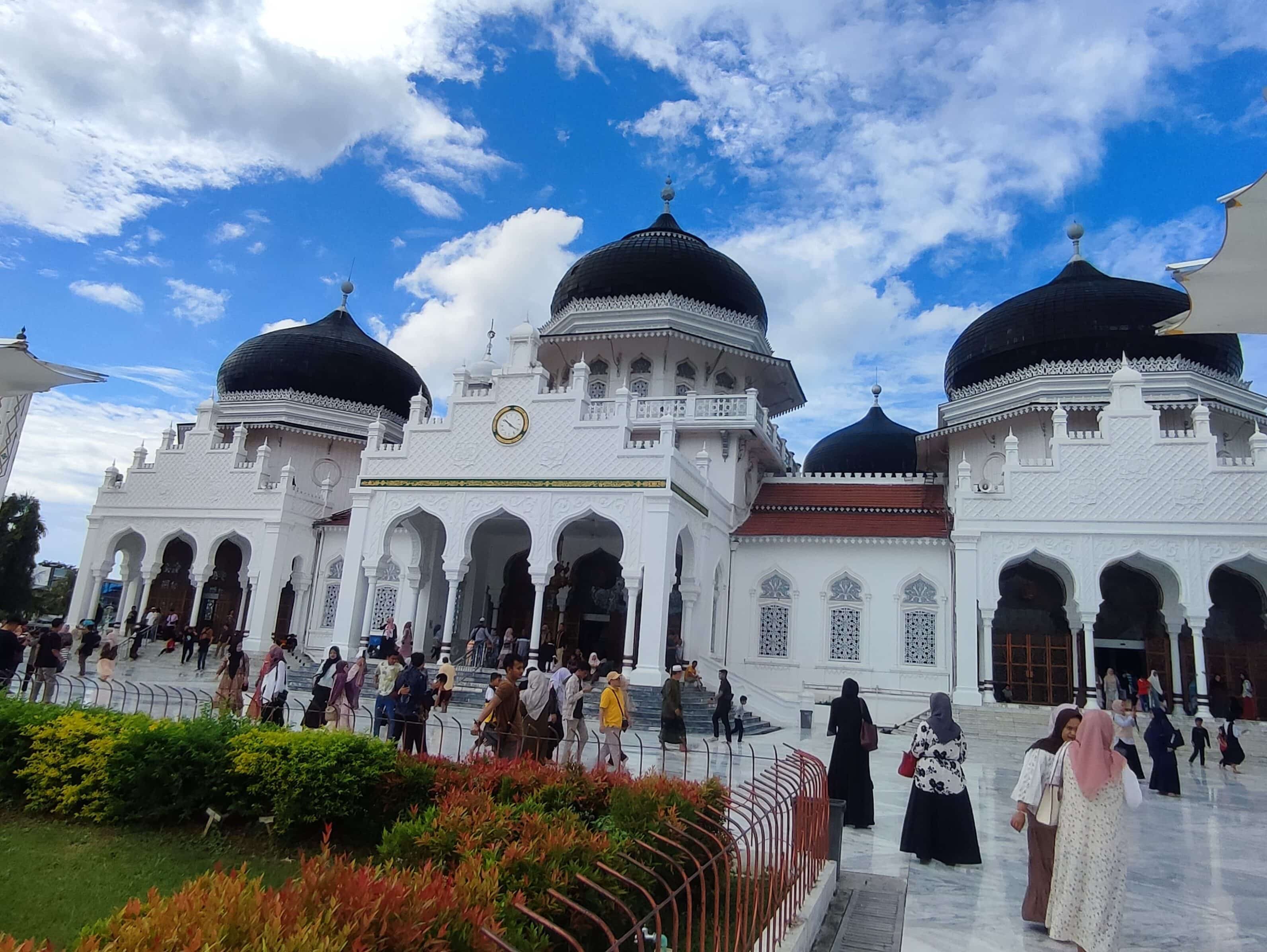 Baiturrahman Grand Mosque in the centre of Banda Aceh city, Sumatra
© ROFIQOHHASAN / Wikimedia Commons
Amsterdam School of architecture
In the early twentieth century, the Amsterdam School of architecture emerged with its distinctive use of brickwork, seen in buildings such as the Olympic Stadium in Amsterdam. It, too, had an influence on Dutch colonial architecture. De Stijl emerged during the First World War as an artistic and architectural movement that attempted to point the way to a new world devoid of the madness of war. Its distinctive minimalist approach, which employs rectilinear lines and planes, was used in signature buildings such as the Rietveld Schröder House in Utrecht and later the Rietveld Pavilion at the Kröller-Müller Museum near Otterlo. Most of the buildings that Gerrit Rietveld designed are in the Netherlands. One Dutch architect who has worked across the world is Rem Koolhaas. He is intimately associated with his bold architectural statements such as the Kunsthal in his home city of Rotterdam, and numerous buildings in many countries including in the United States, Japan, South Korea, China, the UK and Germany. Meanwhile, around the turn of the millennium a new generation of Dutch architects emerged, nicknamed the Superdutch generation, who are reconceiving urban landscapes with inventiveness and a creative use of materials.
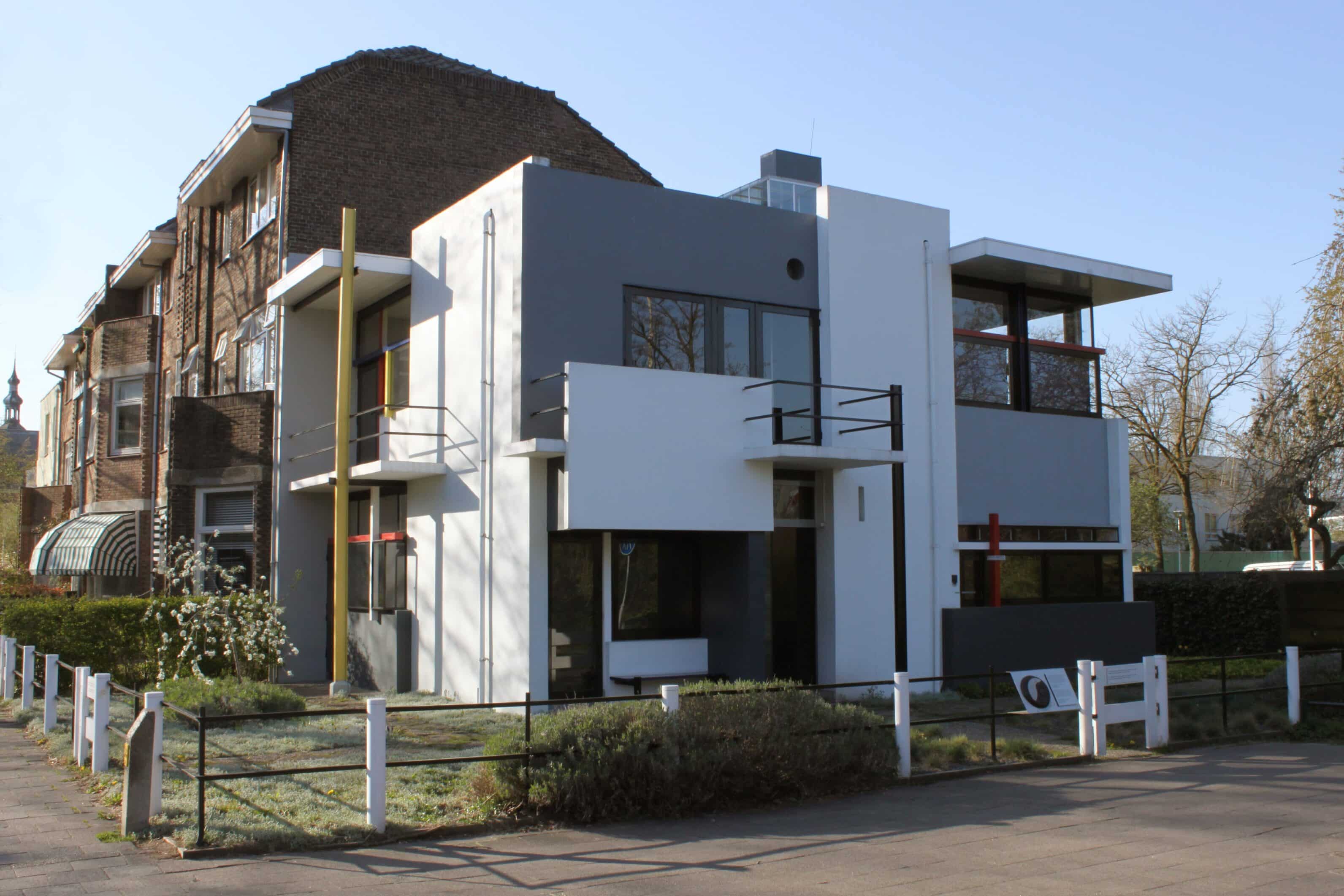 Rietveld Schröder House, an example of De Stijl architecture from 1924
© Husky / Wikimedia Commons
An interesting footnote to the influence of Netherlandish architecture worldwide is the Hausu ten Bosu in Sasebo Japan. It is a theme park that recreates many of the famous buildings in the Netherlands, including the Royal Palace at Huis ten Bosch, and can be seen as an homage to the creativity and versatility of the architecture of the Low Countries. It is a poignant reminder of how influential this architecture has been, which adds another chapter to the story of what the Dutch and Belgians have ever done for us.











Leave a Reply
You must be logged in to post a comment.