
‘Wolf’ by Lara Taveirne: Reality Won’t Be Moulded
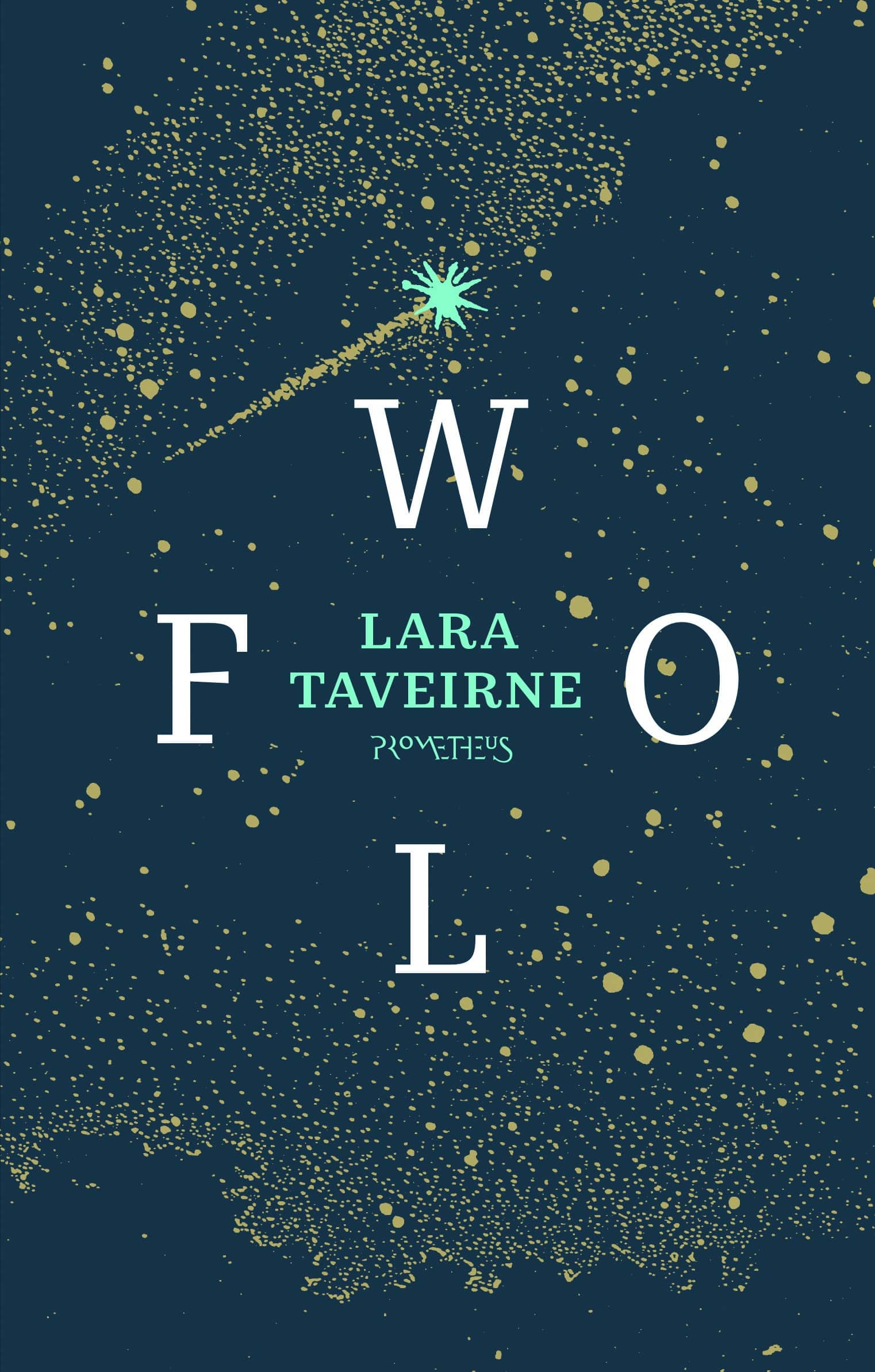
Writer Lara Taveirne lived with the mystery around the disappearance of her youngest brother Wolf for ten years, before she found the strength to open his diary. In looking back on their shared childhood and describing her grief, Taveirne outlines how literary thinking can be both a blessing and a curse.
If writing is a part of you, it never lets you go. Not even when your brother, more than ten years younger than you, catches a train to northern Sweden without warning and buries himself in the cold. That’s what happened to Lara Taveirne (1983), known for various books including De kinderen van Calais (‘The children of Calais’, 2014) and Pluto (2021). After years of skirting around the issue, she decided that it was time to give this life event that overshadowed everything a place in her writing. The result is Wolf, a literary retrospective on the life of her eighteen-year-old brother, his sudden disappearance and the impact of that event on their large family.
 Taveirne finds herself at a crossroads between history, egodocument and grief
© Carmen De Vos
It’s clear from the book’s opening paragraph that it’s not easy for a fiction writer to tell that story while sticking completely to the facts: “You pulled the door of your student bedroom closed, tossed the key over your shoulder, spent the last of your money on a ticket up north and you were gone. In a false memory you took one look back from the end of the street and waved.”
There’s a strong tendency to make a filmic story of such a dramatic event, with a gripping start and a fitting conclusion. But reality doesn’t allow itself to be so easily kneaded, especially when it concerns such raw grief as that in Wolf. Nevertheless – or perhaps because of that – Taveirne succeeds in delivering a very strong book about grief: a story that shows how enormous an emptiness a loved one can leave behind, especially when they just disappear.
In Wolf Taveirne returns to themes and modes of working that previously gripped her. She based her debut De kinderen van Calais loosely on historical events: in 2005 two fourteen-year-old girls really did leap from the rocks. In Kerkhofblommenstraat (2018), too, she dipped into old diaries to tell the historic coming-of-age story of a young woman who goes to work on her father’s nursery garden. The loss of a loved one was also a theme in Pluto, in which a girl finds her mother’s diaries and in doing so learns more about the particular importance of an abandoned dike house her mother visited.
In short, in her writing Taveirne has often found herself at a crossroads between history, egodocument and grief. Never before, however, has her work been as personal as in Wolf: she reads the diary her brother kept in the period leading up to his disappearance. In it he describes in minute detail the preparations he is making for his final trip: the books he buys (besides his Moleskine notebook, fittingly enough, also Jack Kerouac’s On the Road), the messages he sends to his parents beforehand to explain why he won’t be home in the weekend (he says he needs to revise for his exams, we readers know better), the people he meets on his train journey to Sweden. It’s a confrontational reading experience, both for Taveirne and for us: you ask yourself along with her whether he could still have been moved to turn back, if someone had attentively looked him in the eye.
With at least that same sense of oppression Taveirne describes the months of waiting for a sign of life when it became clear that Wolf wasn’t simply coming back. Together with her family she looks for indications: the messy state of his student bedroom, the dreams in which she sees his potential hiding places before her. When his body is found, new questions arise: did he ever express a wish to end his life? Was he even unhappy?
There is little to suggest that: Wolf seemed surrounded by friends and family who loved him very much. Even in his diaries note little in the way of dark thoughts. His death appears more of a puzzle he decided to set out for those around him, a way of outsmarting the world. Or was he trying to be the main character in his own bloodcurdling novel?
Taveirne reveals extremely skilfully how time continuously reshapes her grief
Taveirne doesn’t answer any of the questions, but reveals extremely skilfully how time continuously reshapes her grief and that of her family members: from secret hope for his return to a need for reconstruction of his final days and hours. Sometimes her descriptions threaten to become a little sentimental (family members falling into one another’s arms and crying their eyes out). Yet we forgive the writer instantly, because there’s so much gripping material to counterbalance it: boots filled with rainwater, the white gloves belonging to the undertaker (who has such a serious look to him that he evokes a magician who can magic Wolf back up), the search for her beloved brother’s final resting place using Google Maps (with a Street View function that won’t reach to the inhospitable woods where he’s eventually found in the snow.
The narrator of Wolf ponders every memory: from the moment she heard that a child was growing in her mother’s belly to the looks in the eyes of the people joining the long line offering condolences. The guilt also continues to gnaw at her: Wolf too had literary ambitions, which unmistakeably shine through in his diary. You’d hope the description of all those thoughts would allow Taveirne space for acceptance, with less rumination and guilt.
Wolf is the account of a humble grief process, seen through the eyes of a writer who constantly catches herself wanting to mould reality. That deepens this vulnerable narrative on a universal theme.
Lara Taveirne, Wolf, Prometheus, Amsterdam, 2024, 224 p.








Leave a Reply
You must be logged in to post a comment.