
Suriname and the Netherlands Cannot Let Go of Each Other

Every day, lots of people, money, goods and services make their way from the Netherlands to Suriname. While often indispensable, this aid also makes it more difficult for Suriname to break free from its former coloniser.
“When Suriname isn’t doing well, I’m not doing well.” These are the words of John Brewster, chairman of the Diaspora Instituut Nederland (DIN), an organisation that fosters links with Suriname. Brewster has lived in the Netherlands for years but cannot let go of his native country. “I see the opportunities and the potential, and I have the networks, the education and the skills. So I feel I ought to give something back to a country that needs it,” he says.
John Brewster (Diaspora Instituut Nederland): 'I have the networks, the education and the skills. So I feel I ought to give something back to a country that needs it'
Rosemary Samadhan, treasurer of the Dutch Stichting Eerherstel Mariënburg (foundation for the restoration of Mariënburg), also travels back to Suriname every year. She still has family in the country. Her father, an Indian indentured labourer, used to work in the factory at Mariënburg, a former sugar plantation. All that is left these days are a few old workers’ houses and an abandoned factory hall with trees growing through the windows. Last year, Samadhan started raising funds to restore the terrain with the aim of “turning an industrial and cultural heritage site into a tourist destination” and boosting employment in the area. “It’s only right that we in the Netherlands make this happen. We are thriving here, and we want the same for people over there.”
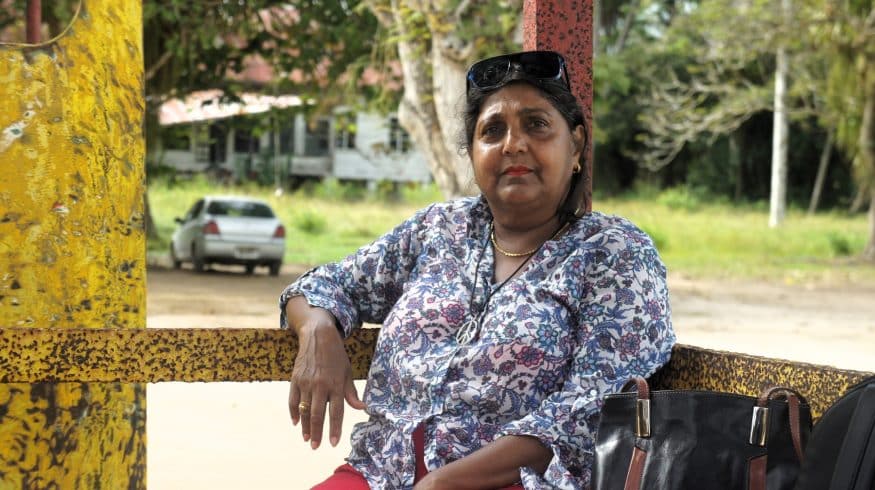 Rosemary Samadhan (Stichting Eerherstel Mariënburg): ‘We are thriving here in the Netherlands, and we want the same for people over there.’
© Zoë Deceuninck
Taken for granted
Whether it is for health care, education, one’s family or home village: all year round, Dutch and Dutch-Surinamese people organise bigger and smaller donation campaigns and projects for those in need in Suriname. They hear about shortages in the former Dutch colony through colleagues, family, friends, the media or acquaintances. Doing nothing is usually not an option. “When it comes to aid for Suriname, the Netherlands has almost more organisations than people,” Brewster acknowledges. Containers full of books, chairs, medicines, razor blades and food cross the ocean daily.
According to figures from the General Bureau of Statistics in Suriname, every day some 615,000 euros worth of money, goods and services enters Suriname from the Netherlands. Medical specialists are regularly flown to Suriname to carry out complex, life-saving operations, legal experts help draw up new legislation, and pensioners share their knowledge through workshops and projects.
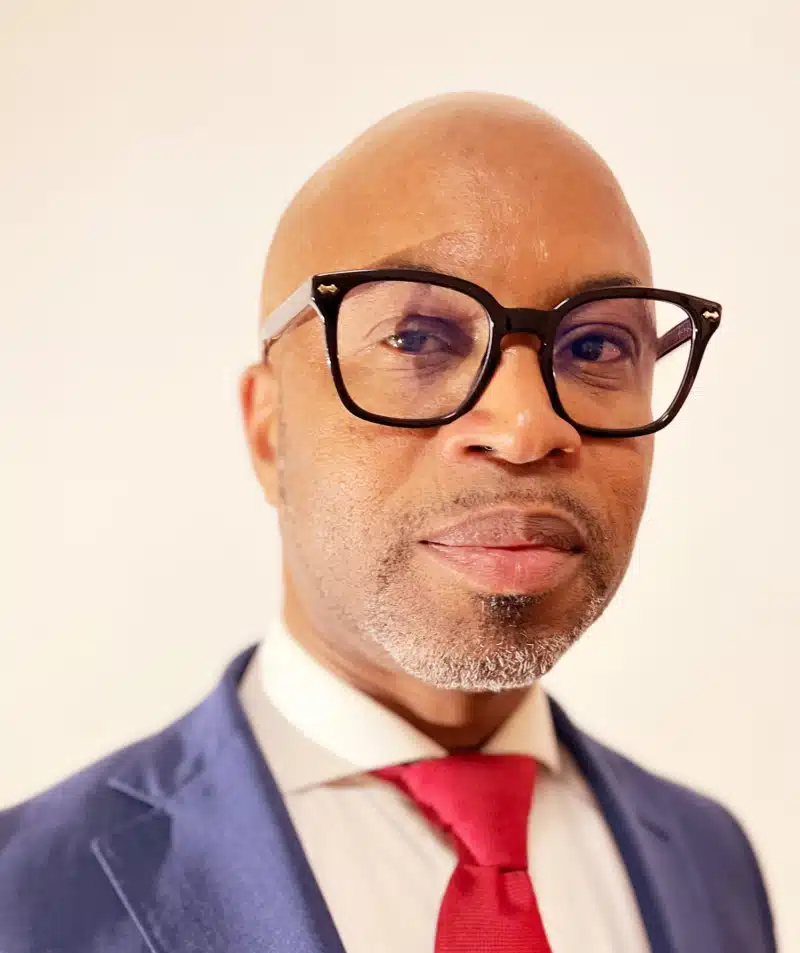 John Brewster (Diaspora Instituut Nederland): ‘When it comes to aid for Suriname, the Netherlands has almost more organisations than people.’
© DIN
Every month, 46-year-old Sahairah Bhattoe, who has lived in Amsterdam since 2006, sends money to her mother and younger brother in Suriname. She does this together with her sister, who also lives in the Netherlands. “We send 300 euros every month, and a parcel of toiletries and food once every three months,” Bhattoe explains. She has been doing this for 18 years. Likewise, 47-year-old Chin A Pauw, who has spent half her life in the Netherlands, frequently sends money to family in Suriname. “My future is in the Netherlands. But I hope that the little money I send will make my family’s life in Suriname a bit easier,” she tells me.
Every day some 615,000 euros worth of money, goods and services enters Suriname from the Netherlands
Without a proper social safety net, these remittances are often seen as a form of benefit in Suriname. Many Surinamese households rely on this support for their day-to-day living expenses. The remittances amount to around 160 million US dollars’ worth of “extra” income annually. Most of the money comes from the Netherlands, with the remainder sent from the United States, Curaçao and China.
This system of remittances is self-perpetuating: as ever, Surinamese students make their way to the Netherlands for further studies, which brings a new generation of Surinamese people to Dutch shores. Many of them will stay on to work after their degree, because the standard of living and social security are much better there. They in turn initiate a new wave of remittances and other support for (their family in) Suriname.
Without a proper social safety net, these remittances are often seen as a form of benefit in Suriname
Dutch aid is so ingrained in Surinamese society that it is in fact taken for granted. When 27-year-old Joshua Ritfeld moved from Suriname to the Netherlands in 2023, the student did not initially earn enough to send money to his mother in Suriname. “My mother didn’t understand why I couldn’t send anything. She compared the Surinamese dollar with the euro and wondered why I was struggling to make ends meet,” Ritfeld says. One Surinamese dollar is 0.024 euro.
Bhattoe also gets stressed when her mother and younger brother in Suriname suddenly need more money. “As soon as they run out of something, they pick up the phone to me in the Netherlands and expect cash in no time,” she sighs. Still, it has never crossed her mind to discontinue the financial contributions to her mother. “She’ll always be my mother. I feel it’s my duty to support her.”
Political influence
The Dutch government is also prepared to contribute when Suriname needs it. This started following independence in 1975, when the Netherlands made 3.5 billion Dutch guilders available. The money was meant for structural development, but soon the spending became more erratic and subject to Dutch interests. The treaty funds became “a Dutch policy tool for influencing the political situation in Suriname,” claims Marten Schalkwijk, Surinamese professor of social change and development, in his book Suriname, het steentje in de Nederlandse schoen (Suriname, the pebble in the Dutch shoe, 1994).
Schalkwijk (the current ambassador to the US) has been studying the relationship between the two countries for over 40 years. “Relations between the Netherlands and Suriname have often been informed by needs and interests, occasionally by other things,” he said in 2002 during a talk at the Scientific Institute, the think tank affiliated with political party ChristenUnie in the Netherlands. He speaks of “unequal partners” and “a relationship of donor and beggar, producer and buyer”. Whenever the Netherlands did not like the political developments in Suriname, there was a marked drop in money crossing the ocean. Shortly after the military coup in 1980, Suriname could still count on Dutch support, but when 15 citizens who had been critical of the military regime were murdered in December 1982, the Netherlands suspended all aid. Following another coup in 1990, a similar situation arose. Aid would not be resumed until democracy was reinstated.
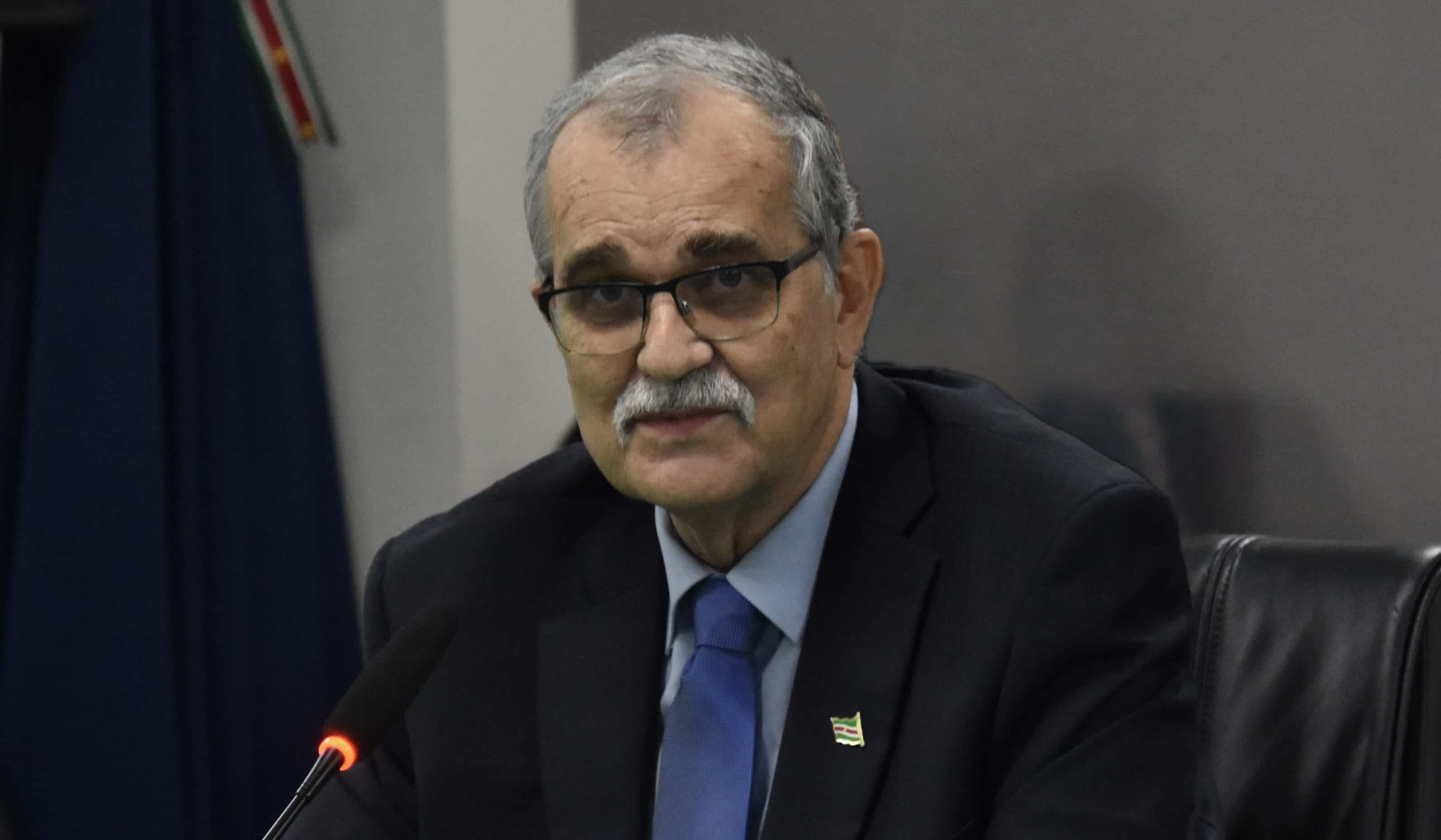 Marten Schalkwijk, Surinamese professor, describes Dutch-Surinamese relations as ‘a relationship of donor and beggar, producer and buyer’
© Kaori Media
Enriching the Netherlands
Suriname has always remained financially dependent on other countries. This is hardly surprising, according to Jerry Egger, Surinamese historian and lecturer at the Anton de Kom University in Paramaribo. “Suriname was made to enrich the Netherlands,” he says. “The plan was never to create wealth in Suriname – the country was just expected to supply raw materials.”
Jerry Egger, Surinamese historian: 'The plan was never to create wealth in Suriname – the country was just expected to supply raw materials'
Raw materials, most notably oil and gold, continue to be the driver of the Surinamese economy. “The development of natural resources is an obvious ambition,” says Danny Lachman, chairman of Planning Office Suriname. As the least populous country in South America, with a small market and barely any local competition, Suriname has to make do with what it has. That has always been the message coming from the Netherlands as well.
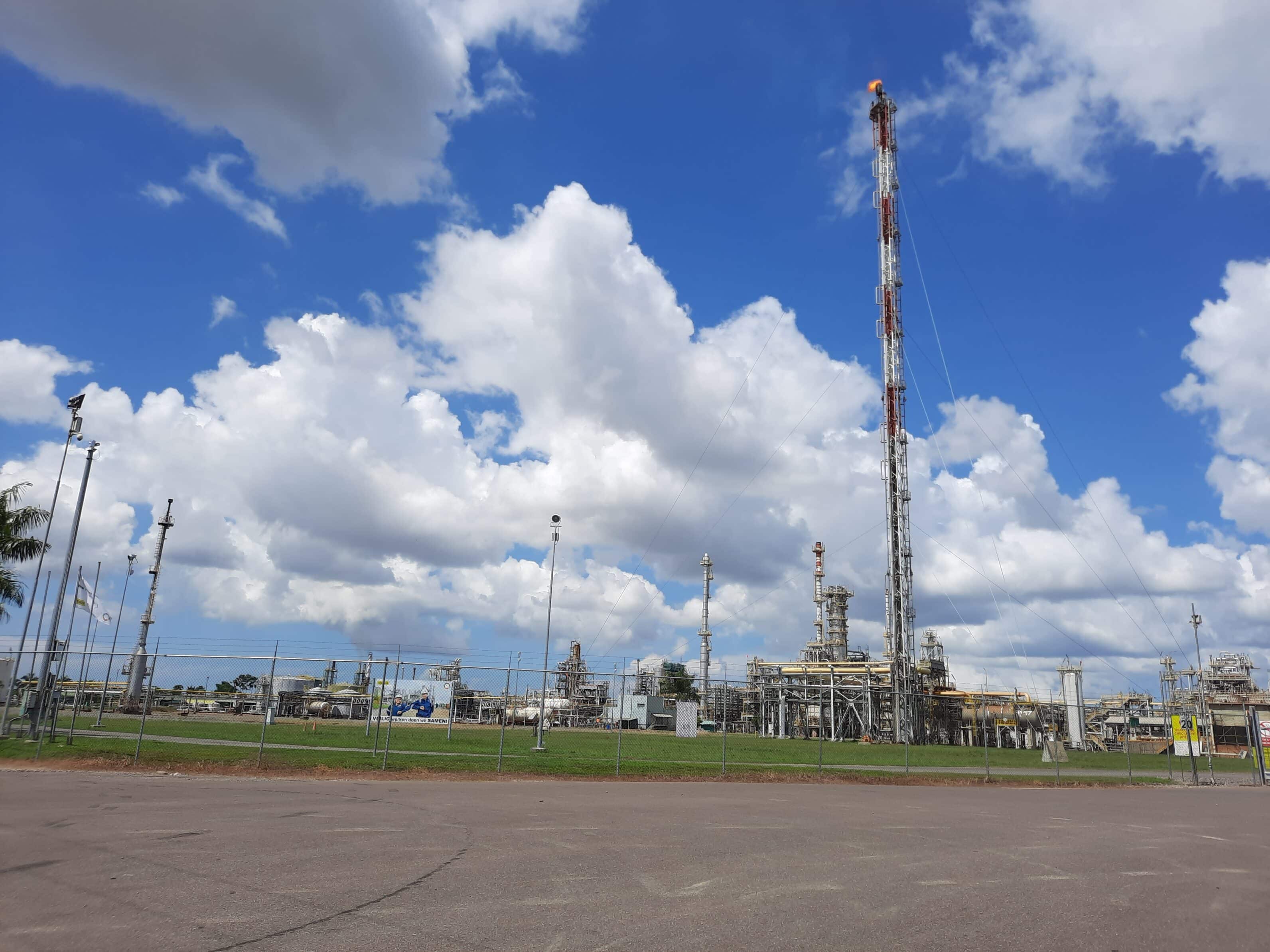 Surinamese oil refinery Tout Lui Fait. Raw materials, most notably oil and gold, continue to be the driver of the Surinamese economy.
© Wikimedia Commons
“The focus on extractives is a legacy from the Netherlands,” Lachman says. “For years, we were told to invest in mining and agriculture; it was rammed down our throats.” But it is precisely those industries that are showing unstable revenues and diminishing returns, Lachman notes. “The longer the industry has been around the less money it generates.” When the international prices of raw materials fall, public finances suffer and shortages follow. The Netherlands is still prepared to step in when things get really bad, as seen recently during the coronavirus pandemic.
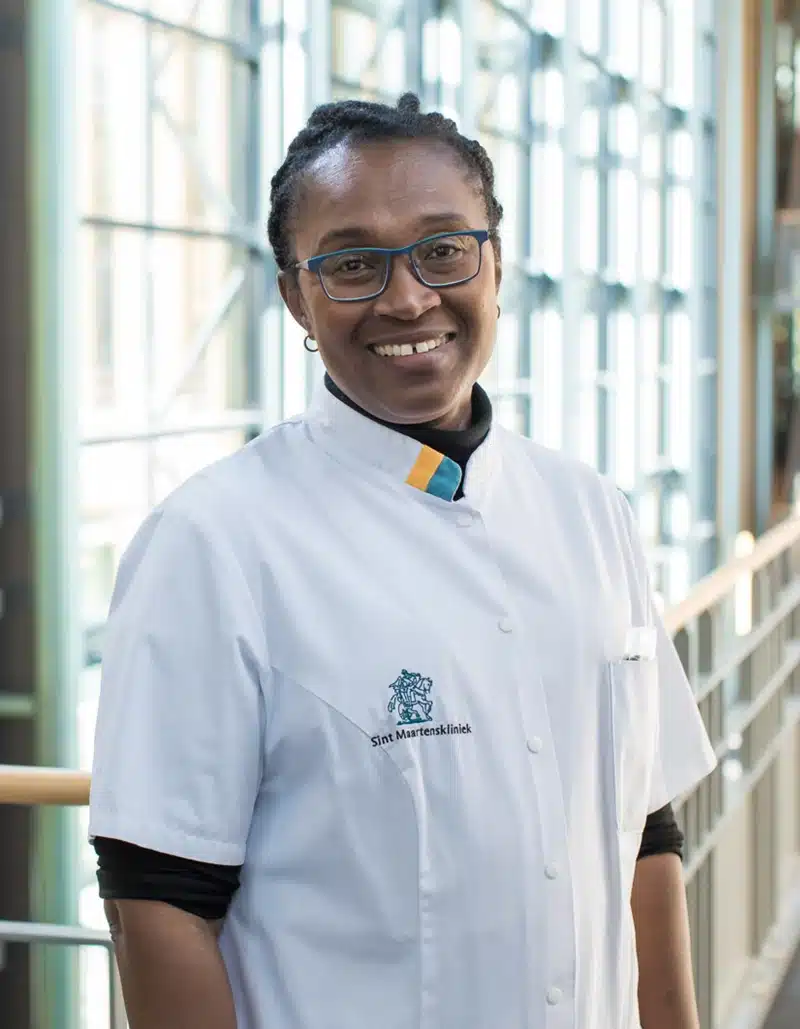 The Surinamese-Dutch infectious disease specialist Denise Telgt coordinated the medical missions from the Netherlands to Suriname at the time of the first wave of Covid infections. They came to a sudden end during the second wave. ‘They lost interest.’
© Sint-Maartenskliniek
In 2020, during the first wave of Covid infections in Suriname, the Dutch Ministry of Foreign Affairs spent 55,000 euros on medical missions and vaccines for Suriname. A year later, during the second wave, this came to a sudden halt. “They lost interest,” says Denise Telgt, the Surinamese-Dutch infectious disease specialist who coordinated the medical missions to Suriname at the time. She never really understood why. With a national debt amounting to the equivalent of 4.5 billion euros, Suriname could not cope with the consequences of the pandemic. As a small developing nation, it was also not eligible for the first vaccines, which were in short supply. The support from the Netherlands was a lifeline.
In the end, Telgt managed to get the Ministry of Health to agree to fund a second mission. The Dutch Lower House stressed the government’s “historic responsibility” to help Suriname. In 2021 the Netherlands donated some 6.5 million euros’ worth of medical and personal protective equipment in addition to the (in)formal – one-off – giving campaigns launched by private individuals. Soon after, the aid was stopped. In short, Suriname still relies on the goodwill of a random government minister or organisation.
Putting the brakes on development
At the same time, the ad-hoc assistance from the Netherlands is putting the brakes on development in Suriname itself, as it reduces the need. “You’re not given an incentive to innovate under your own steam,” says Michel Blokland, former Health Minister. “It’s like having children who live alone, but who still phone home when they can’t afford to pay the rent. Of course you help out, but the child won’t learn to manage their finances.”
“The Ministry of Health in Suriname is unaware of the great need,” adds Jimmy Fernandes, a Surinamese-Dutch urologist who for 24 years has been travelling back and forth between the two countries to offer medical support. “They think it’s all going pretty well.” The aid from the Netherlands may be fragmented and supplied on an ad-hoc basis, but it feels structural because of the sheer scale.
'You’re not given an incentive to innovate under your own steam,' says Michel Blokland, former Health Minister about the assistance from the Netherlands
That said, Suriname is trying to free itself from the Dutch colonial yoke. In 1995 it joined the CARICOM (Caribbean Community), the political and economic union of the Caribbean. With the help of a loan from the Caribbean Development Bank, Suriname is also currently working on a new professional education curriculum, so students can access the Caribbean labour market. But for that Suriname will have to change its legislation first. The Surinamese education system is modelled after the Dutch colonial system and does not meet the requirements of the Caribbean labour market. “There are different educational standards within the CARICOM,” explains Susanna Eduards-Verveer, deputy director of professional education at the Ministry of Education, Science and Culture. While the emphasis in Suriname is still very much on cognitive education – the idea that pupils ought to be filled with knowledge – the Caribbean labour market asks for specific, technical skills in areas such as IT and the oil and gas industry. The focus on the region can only be successful if Suriname invests heavily in foreign language education – especially English and Spanish, the two most widely spoken language in the Caribbean. Again, this calls for amendments to the law.
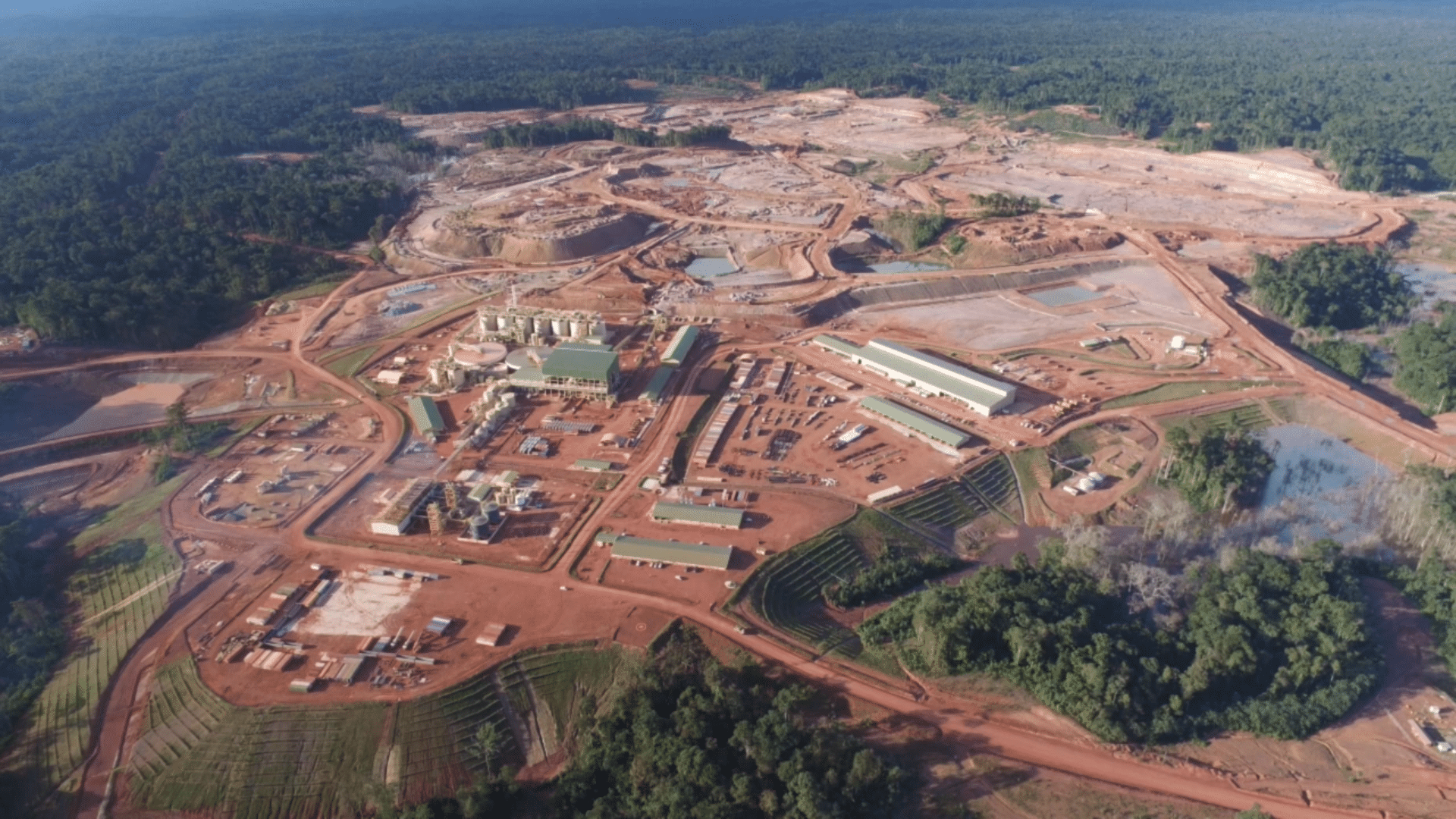 The Merian gold mine in Suriname
© RV
But with Suriname not having its own legal drafters in the area of education, it turned to the Netherlands. “It’s easy because we speak the same language,” Eduards-Verveer explains the choice for the Netherlands. “And the Netherlands is always prepared to help.” But, Egger fears, it pushes access to the CARICOM to the background again. “With the focus shifting back to the Netherlands, integration with the Caribbean is delayed.”
A new chance
Fifty years post-independence, Suriname is given another chance. French and American oil companies TotalEnergies and APA Corporation are investing the equivalent of 14 billion euros in the development of the first oil field off the coast of Suriname. Shell and oil companies from Norway, Spain, Qatar, Malaysia and the United States are also frantically searching for oil off the Surinamese coast. Depending on the oil price, the TotalEnergies-APA Corporation project alone could net Suriname between 16 and 26 billion dollars in the coming years. The developments are overseen by Staatsolie, Suriname’s national oil company.
Historian Jerry Egger calls it a game changer: a chance for Suriname to become less dependent on the Netherlands. “The oil companies that are active off the coast of Suriname are from several different countries. There’s a lot less Dutch influence here,” he predicts. Besides, the sector does not consider historical and/or emotional relationships when doing business.
The huge investments from the oil companies are a chance for Suriname to become less dependent on the Netherlands
The historian believes this is an “excellent development”. “For quite a lot of Surinamese people the Netherlands is still the most important – or only – foreign country, but this is starting to change,” Egger says. “Suriname is also trading with, among others, Guyana, Trinidad & Tobago, the United States and India. Quite a lot of our diplomats were educated in Brazil and some of our doctors come from Cuba. Our dentists leave to work in French Guiana and our ophthalmologists in Sint Maarten. Students apply to universities in Jamaica. The past twenty years have also seen economic and political relations with China intensify. The country is spreading its wings and reaching out to other countries, as you’d expect,” Egger observes.
He points out that the focus on the Netherlands can sometimes make us forget that Suriname also has a long history with the likes of China, India and Indonesia. It was from these countries that migrant workers were imported around the time of the abolition of slavery in 1863. Likewise, Suriname has a close relationship with the United States. In the early twentieth century, American aluminium company Alcoa managed huge bauxite mines in the east of the country and turned Suriname into what was then the biggest bauxite producer in the western world. “Integration with the region may be progressing more slowly because of our colonial history with the Netherlands, but it’s happening right under our noses. It’s just not getting the same attention.”
Jerry Egger, Surinamese historian: 'The integration of Suriname with the region may be progressing more slowly, but it’s happening right under our noses'
What will never change is the emotional bond with the Netherlands, Jerry Egger concludes. “It will endure because of the past, the people and the language. It’s part and parcel of colonial history.”
This publication was made possible with support from the Fonds Bijzondere Journalistieke Projecten (Dutch Fund for Investigative Journalism, fondsbjp.nl).

You might also like
In Jozef Deleu’s Poetry, Nothing Was Lost

Leave a Reply
You must be logged in to post a comment.