
Boni: the Resistance Fighter Who Became an Icon in Suriname

Boni is portrayed in colonial source documents as a rebel against Dutch authority, whose mother gave birth to him in a coastal marshland after having fled the plantation around 1730 when pregnant. In Surinamese tradition, he is considered a saint. With her book Boni, Tessa Leuwsha explores what this man means for Surinamese identity and as a symbol of resistance. In this way, she fills in the stolen history of her ancestors. This is an excerpt from the second chapter.
There is no known document yet that describes the experiences, the toil and suffering, as well as the hope and striving, from the perspective of an enslaved person in Suriname. However, there are records, logbooks, reports, ship journals, and wills in which Black people are noted in terms of their purchase, sale, torture, death, and inheritance. Mainly in numbers and figures, recorded by the white colonial rulers. These “official” sources tell the following life story of Boni.
After his birth around 1730, as the child of his enslaved mother and presumably a white plantation owner, Boni grew up in a maroon camp led by Asikan Sylvester. Maroon is the term in Suriname for a descendant of escaped plantation slaves. Sylvester, who had managed to take advantage of the confusion in the colony following a French attack during his escape from the plantation, had established his maroon camp in the coastal swamp area. Boni must have stood out there with his light-coloured skin and must have possessed leadership qualities. Around the age of thirty-five, Boni took over the authority from Sylvester. The Dutch administration had firmly regained control over Suriname and intensified the hunt for escaped enslaved people. From the Dutch perspective, the Maroons were not only a financial burden on the budget due to the loss of free labour, but they also posed a direct threat to security. Maroons raided plantations to steal weapons and food and to free enslaved people. In 1769, colonial soldiers managed to capture Sylvester, who was killed in Paramaribo. His head was displayed on a pole at Fort Zeelandia as a warning to the enslaved population. Boni led his people, who were named Boni’s after him, deeper into marshland, until he decided to build a fort in the middle of the swamp […]
Boni resisted colonial rule for nearly thirty years, an exceptionally long period, also known as the Boni Wars, but he is little known in the Netherlands. And in so far as anything that does appear in history books about him is concerned, it all comes from the written “official” sources referred to above. The colonial authorities mainly saw Boni as a rebel, as an insurgent. They still shape our image of him in that way. At the same time, these sources tell us almost nothing about his personality, or about the role of his mother and the influence she may have had on him.
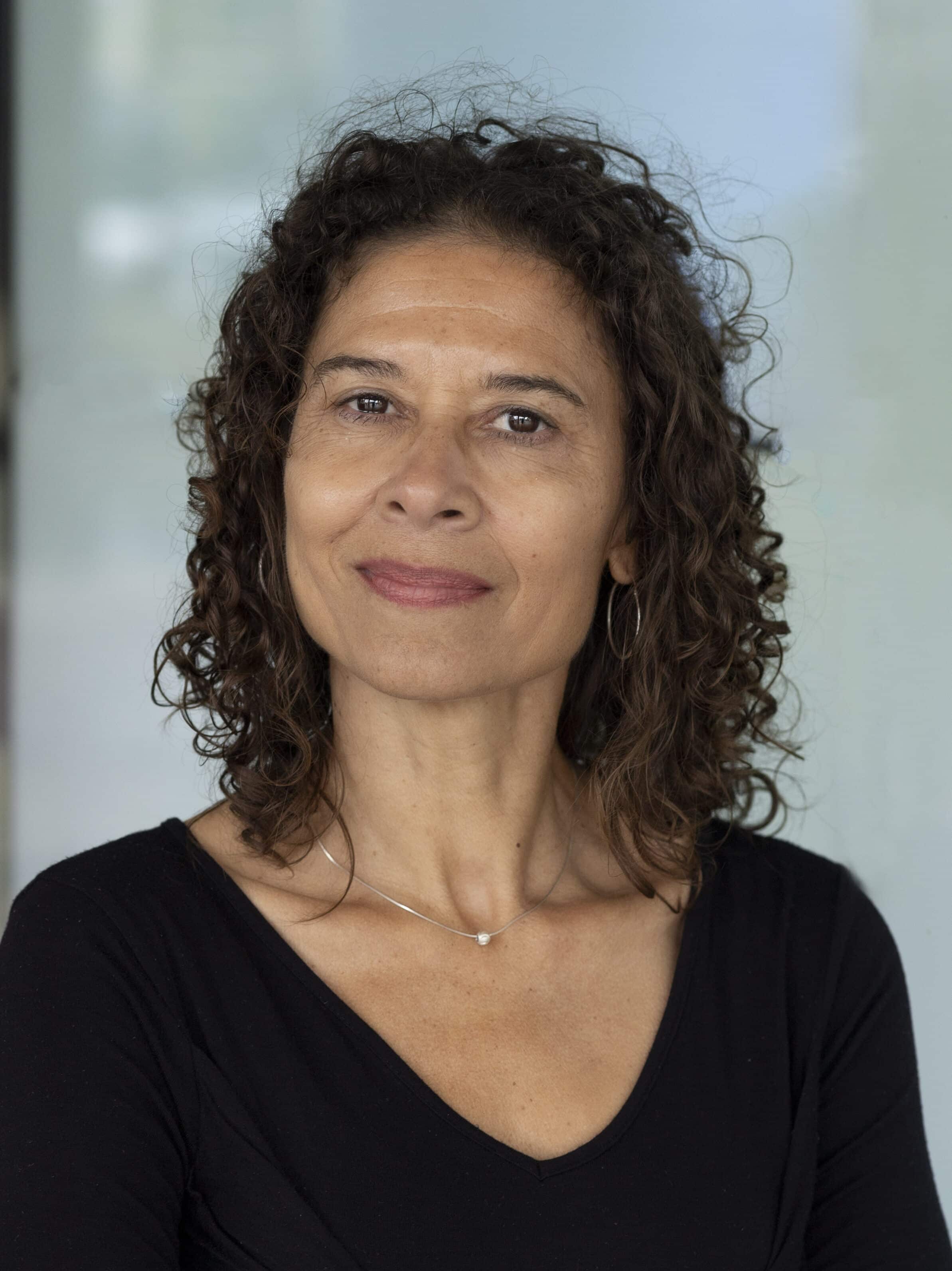 Tessa Leuwsha
© Bob Bronshoff
But there are also other sources, another history: that of traditions, ancestral experiences, myths, and legends that live among Surinamese Maroons. Here, in his homeland Suriname, descendants of escaped enslaved people and other Surinamese regard Boni more as a saint, as someone who possessed special gifts.
A huge gap yawns between a portrayal of Boni as rebel and saint, as well as that between archival and narrative accounts. I want to know more about his life than what has been preserved in colonial sources and from which a one-sided image has emerged.
In my youth in Amsterdam, we ate mashed potatoes, pot roast, and Brussels sprouts at home, and we spoke Dutch with each other, even though my father was Surinamese. I knew almost nothing about my father’s country […]. In the family in which my brother and I grew up, it seemed completely normal to be part of two worlds: the Dutch world outside and the more hidden world of our father, with his buttons of the African American activists, the heroes he could look up to since he didn’t know any Surinamese ones. From secondary school onwards, however, I began to realize that you also need heroes to relate to your own history, and therefore to yourself.
What does Boni’s legacy entail? What impact did he have with his acts of resistance? How important was and is Boni for the Surinamese identity, and generally as a symbol of resistance? And how important is he to me?
In my search for answers, and to get as close as possible to Boni, I travelled through Suriname and the Netherlands. I spoke with people, asked them about stories that been passed down to them, and searched archives. And I travelled to Ghana. How are stories about slavery told there? I discovered that on the west coast of Africa, in present-day Ivory Coast and Ghana, the name Boni still belongs to a prominent family, which goes back centuries and still commands respect.
How do we deal with a background interrupted by slavery? As a writer, it is my task to create or recreate worlds
But before I could start this book, I was confronted with the question of whether it was even permissible to fill in the gaps in the archives with stories. How do we deal with the lives of ancestors who were not allowed to live? Could that be done with a background interrupted by slavery, with a piece taken out of our identity? Is it possible, as a descendant, to fill in your own interrupted history by giving your ancestors a soul and character? In short, who really has the right to speak when it comes to history, I wondered. And in what way? Because can you really convince the “master” of a different kind of story by continually following his way of telling it? Why, after all, strive for that established Western recognition? Isn’t the key to liberation precisely in rejecting it? In doing your own thing?
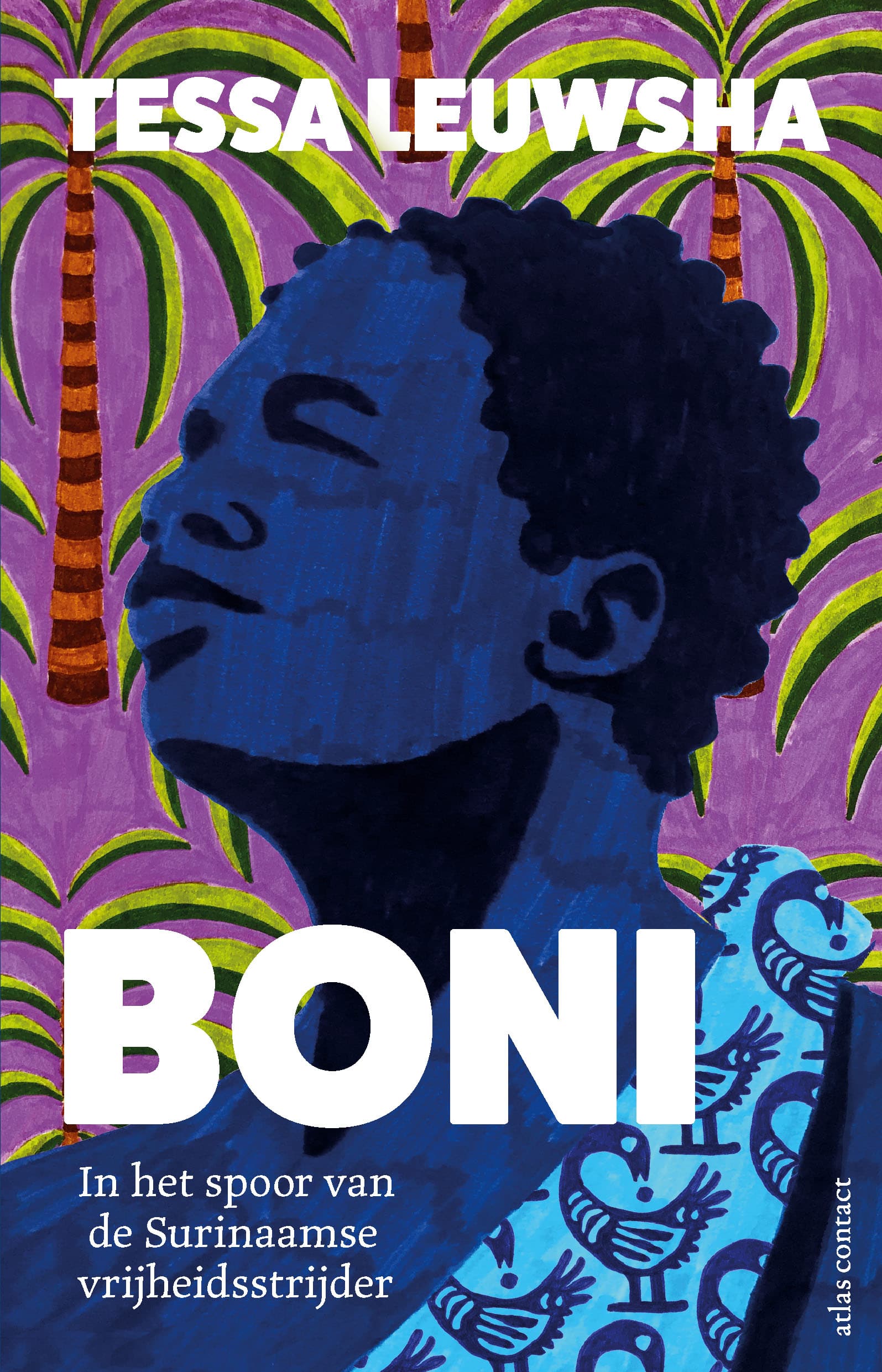
I decided that, as a writer, it was precisely my task to create or recreate worlds. To build a bridge between my ancestors and myself, to fill the gaps of our stolen history. In this, I ventured further as a storyteller than the American scholar Saidiya Hartman, who focuses on African American studies and coined the term critical fabulation: a way of writing against the grain, infusing historical archival materials with empathy and realism.
Based on facts and stemming from recognizable emotions and feelings, I want to create Boni in this book as a flesh-and-blood person and make his story relatable. Boni’s story may also possibly help me gain a clearer understanding of who I am, as a child of Suriname.
Tessa Leuwsha, In het spoor van een Surinaamse verzetsstrijder [In the Footsteps of a Surinamese Resistance Fighter], Atlas Contact, Amsterdam, 2025, 224 p.





Leave a Reply
You must be logged in to post a comment.