

The richness of Surinamese music remained under the radar in the Netherlands for a long time, but that is changing quickly. More and more artists are drawing inspiration from kaseko and kawina, danceable genres that tell stories of pride, struggle, and identity. In this way, forgotten voices resonate in modern melodies, resulting in packed concert halls.
Rapper and singer Typhoon (1984) went to his family in Suriname during a difficult period, where he found peace and inspiration in the tropical rainforest, just a few hours’ drive and boat ride from Paramaribo. Along the Upper Suriname River, he became so captivated by the musical traditions and sense of rhythm of the Maroons that they would form the basis for his successful 2014 album Lobi da Basi. In various songs, percussion and brass are clearly audible, directly inspired by the music of Lieve Hugo (1934–1975). For decades, Hugo has been regarded by Surinamese of all ages as the undisputed King of Kaseko. In doing so, Typhoon – although born and raised in Zwolle in the Netherlands – expresses his strong connection to his parents’ country and his debt to Surinamese musical culture.
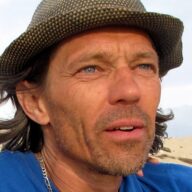
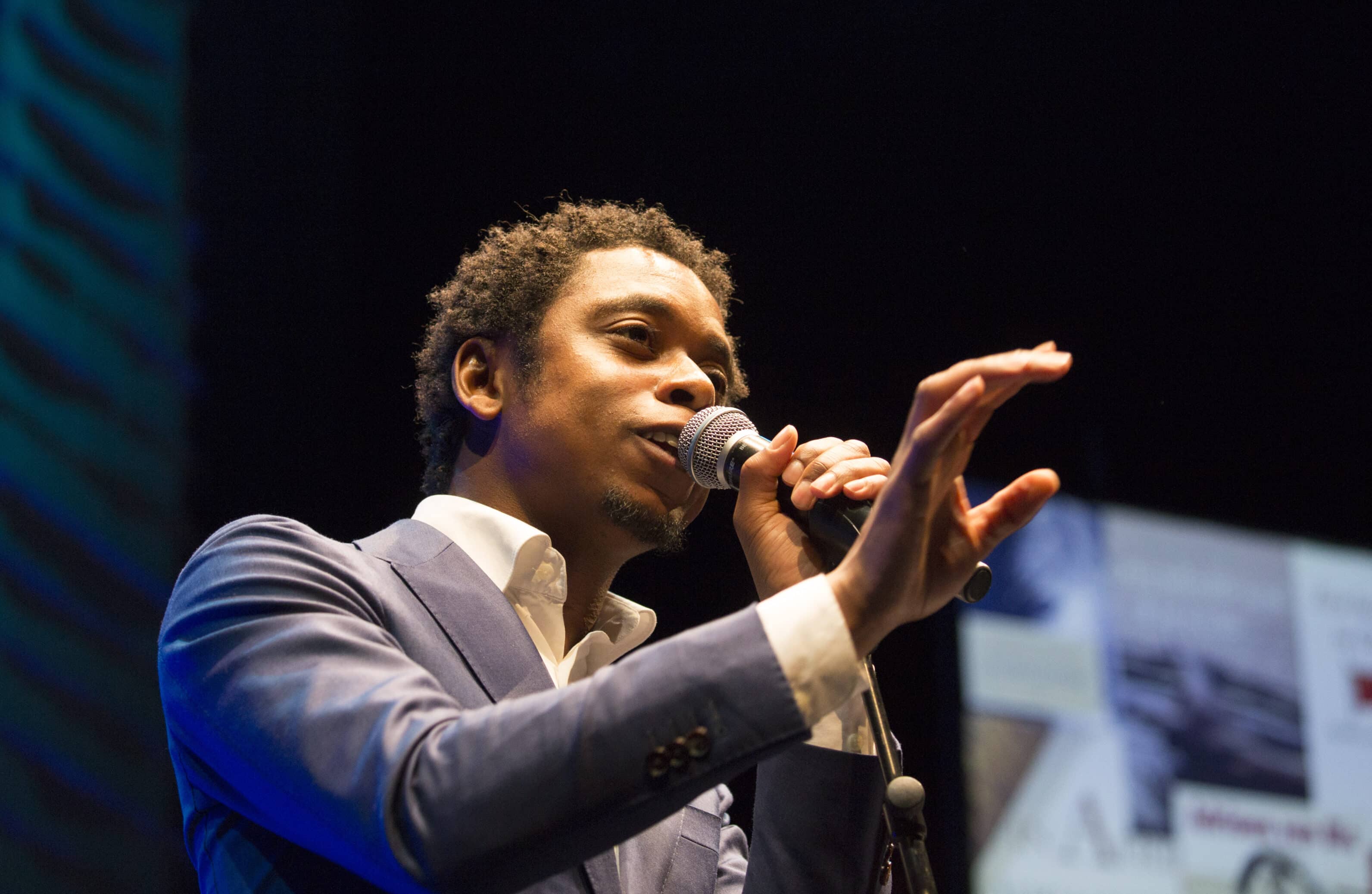 With kaseko influences in his music, Typhoon, born and raised in Zwolle, expresses his indebtedness to Surinamese music culture
© Serge Ligtenberg / Wikimedia Commons
With another Surinamese musician who is achieving great success in the Netherlands, it is exactly the opposite. Jeangu Macrooy (1993) lived in Paramaribo until he was nineteen. Although he considers himself “one hundred percent Surinamese,” he claims not to have been influenced by kaseko and kawina from his homeland. The singer-songwriter, who represented the Netherlands at the Eurovision Song Contest in 2021, was mainly inspired in his youth by divas like Whitney Houston and Mariah Carey, older soul music, folk, and indie rock. Yet it is precisely that mix of musical styles that characterizes Macrooy as a Surinamese musician. When you grow up in a country where Caribbean soca, calypso, and dancehall dominate the charts, where some cafes are practically upholstered with Brazilian samba, where taxis sway to the beat of American rap and hip-hop, and where the voice of torch song singer Corry Konings drifts over the estates, you absorb all the music around you.
Unique fusion
The character and power of Surinamese music had already aroused the interest of American researchers. In 2011, a team led by anthropologists and music ethnologists from Columbia and Harvard Universities conducted several months of research into the origins of kawina and kaseko. They visited clubs and concerts in Paramaribo as well as venturing into the interior. There, in the Maroon villages, they experienced the rituals based on the Winti culture, driven by percussion and singing. Ultimately, the researchers concluded that the “unique fusion of musical cultures in Suriname, with kawina and kaseko as pillars, can be considered the best kept secret in music history.”
Researchers consider the unique fusion of musical cultures in Suriname the best kept secret in music history
The musical styles kaseko and kawina have existed for over a century, in their purest form, as well as in various mixed forms. The kawina music style originated on the plantations along the Commewijne River in Suriname, from which the name is also presumably derived, in the years following the abolition of slavery in 1863. On paper, the enslaved were free, but their contracts stated that they still had to work for ten more years for a meagre wage on the cotton, sugar, coffee, and cocoa plantations. Music was one of the few sources of entertainment. This was done through singing, clapping, and drumming, with feet, sticks, or on drums stretched with animal skins, including the kawina drum itself.
And kaseko, also sometimes used as a collective term for Surinamese dance music, is characterized by driving, rolling percussion in 4/4 time. The skratyi, literally a “trestle” on which the large drum is mounted, and the snare drum define this style. The combination of percussion, lead singer, choir, and koprotu, a type of tuba, is called bigipoku: or big music. The difference with kawina is that the singing and percussion are supplemented with other instruments, for example the sound of a military brass band. When off duty, there was almost daily time for a cheerful jam session, which resulted in a fuller but equally rhythmic genre. Add to that a (electric) piano or Hammond organ, bass and rhythm guitars, and you have a fully fledged kaseko band.
Like the American researchers, Rosita Leeflang (1970) also chose a scientific approach to the musical tradition of her native country. In 2024, she finished her bachelor’s degree in history at Anton de Kom University in Paramaribo with a thesis on the development of kaseko. Before that, she had already been intensively involved with the genre. Three years ago, she founded the Kaseko Foundation, with concrete goals: placement on the World Heritage List and a kaseko museum in Paramaribo. Through her foundation, Leeflang succeeded in having 13 December, the birthday of Lieve Hugo, officially declared National Kaseko Day. She is determined to do everything to ensure that the genre continues to thrive: “We want to prevent the basic principles of kaseko from fading. Younger generations must continue to practise it, so we connect them with older musicians.”
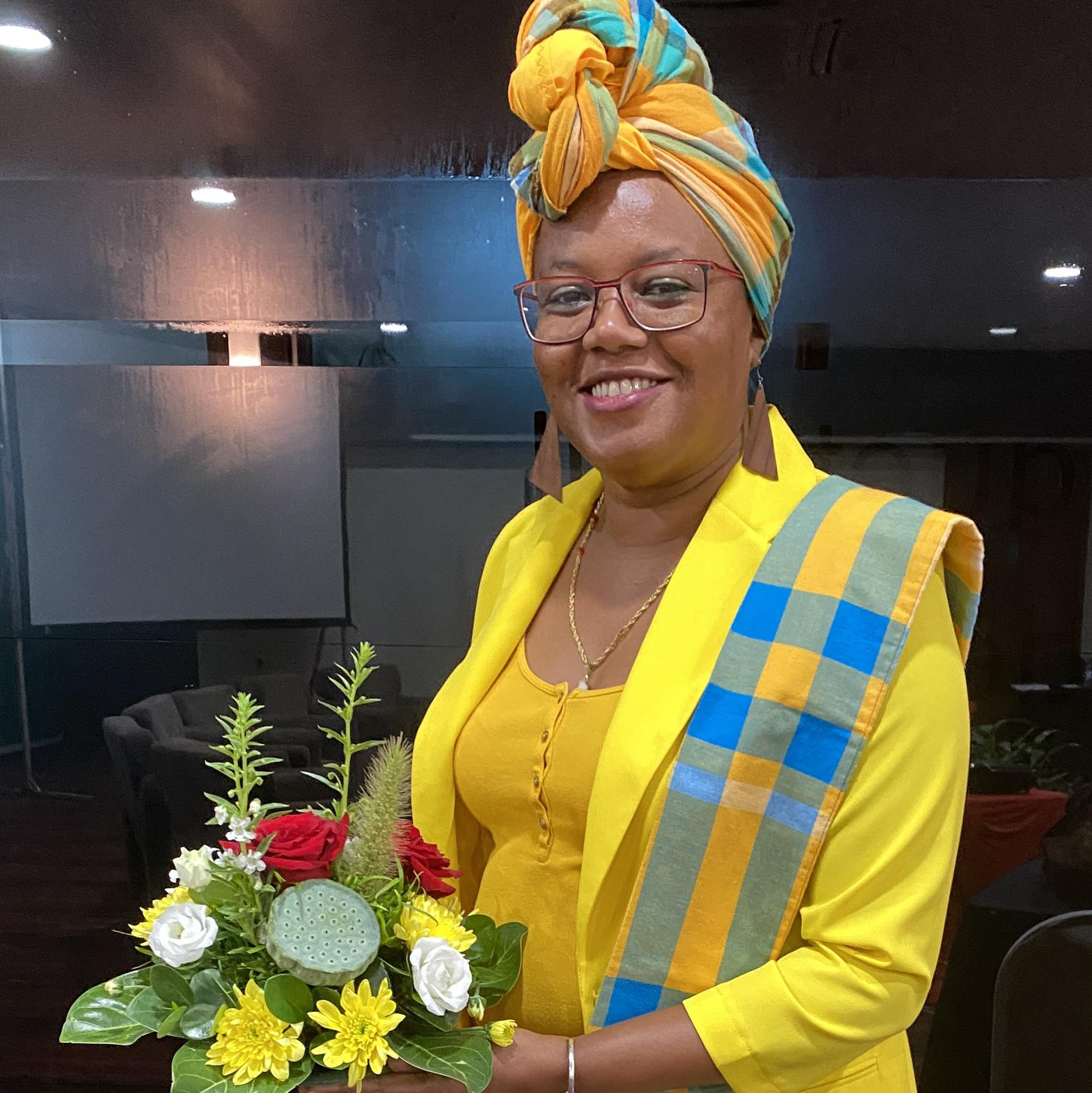 Researcher Rosita Leeflang: ‘Younger generations need to continue practising kaseko, and that’s why we put them in contact with older musicians’
Leeflang brought in veteran kaseko performing artists to Suriname to rehearse and jam, including multi-instrumentalist Walther Muringen and drummer Eddy Veldman, who have made careers in the Netherlands. During such sessions, it becomes clear that young people can effortlessly play the latest hits, but do not master the bass lines, rhythms, and chords of kaseko. “Whereas they can cover a Beyoncé song in no time. That’s because music has become a kind of fast food nowadays.”
Opinions differ on the origin of the term kaseko. According to some, it comes from the French casser le corps, (literally, break the body) in the sense of tormenting it, through long and intense dancing. In the indigenous language, the word means ‘woman’. Leeflang herself has not yet reached a definite conclusion and plans to investigate further.
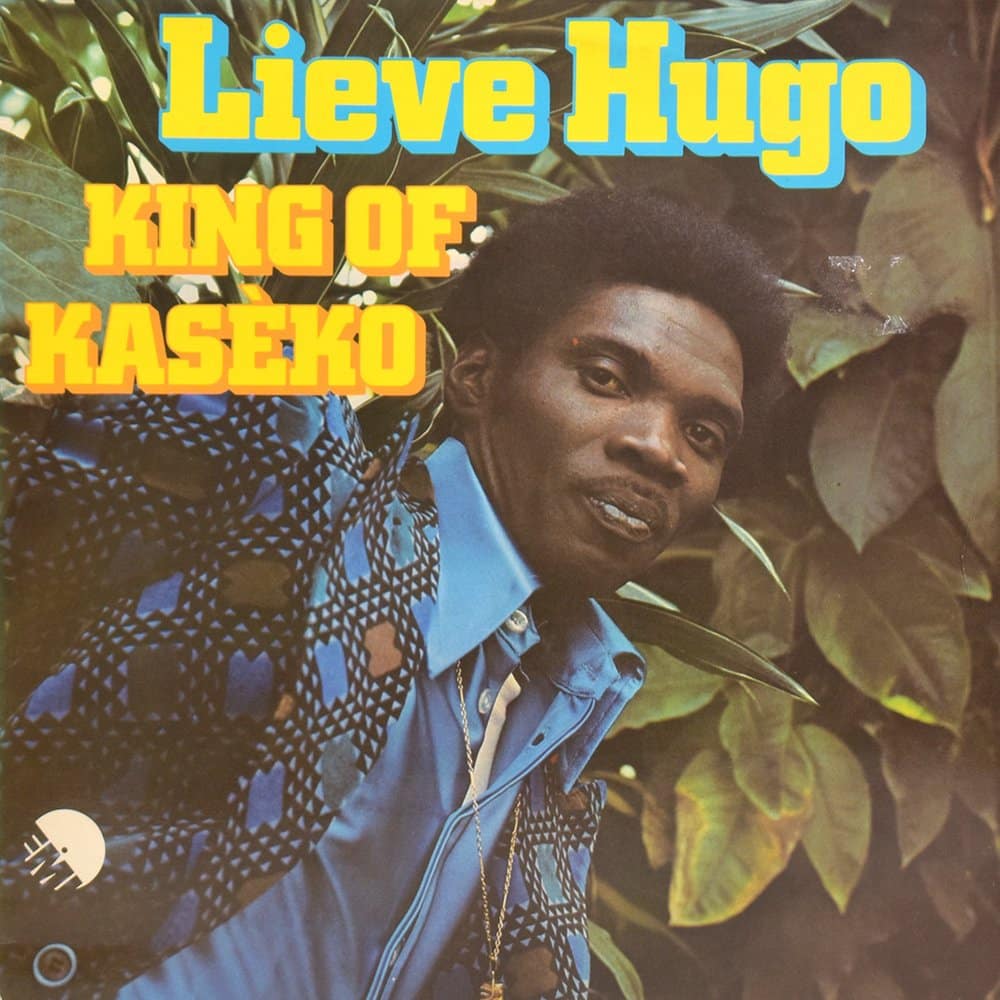 Lieve Hugo (1934–1975) is regarded by Surinamese people of all ages as the undisputed King of Kaseko
She calls it typical of kaseko that it is constantly influenced by other genres: from jazz, soul, funk, and disco to salsa, samba, soca, calypso, and even Bollywood music. Surinamese musicians don’t usually play by reading sheet music, but a few chords and his or her sense of feeling are enough to quickly make new songs their own and put a completely personal spin on them.
And even though there is a glaring lack of cultural awareness in Suriname and subsidies are scarcely available, Leeflang does notice that the hospitality industry in Paramaribo is once again embracing the old tradition: “On weekends, there are plenty of gigs for younger musicians where kaseko is played. This way they can hone their skills.”
Leeflang notices that kaseko bands are once again playing in the hospitality industry in Paramaribo
Singer and actress Sarah-Jane Wijdenbosch (1986) does virtually nothing else, but on Dutch stages. Wijdenbosch, with the starring role in the family musical Princess Arabella in the autumn of 2025, had already been singing in a kawina band when she met Marlon “Mr. Jetfly” Francis. He was the keyboardist of La Rouge, one of the Surinamese bands that made a name for themselves in the Netherlands from the 1990s onwards. Among Surinamese people, La Rouge is especially beloved because they played kaskawi (a mix of kaseko and kawina) or kaskawina, an up-tempo and more sensual variant of kawina. As a young girl in the Netherlands, born to Surinamese parents, Wijdenbosch was a big fan of their music. She immediately clicked with Francis due to their shared love of kawina. During the coronavirus pandemic, when there were virtually no performances, they went into the studio together. The session was originally meant to support an English-language project Wijdenbosch was working on. But because of the empty performance schedule during the pandemic, she saw her chance to record a cover of one of her favourite La Rouge tracks. “Their songs contain such beautiful chords and vocal lines. The music video made of it went viral in no time.”
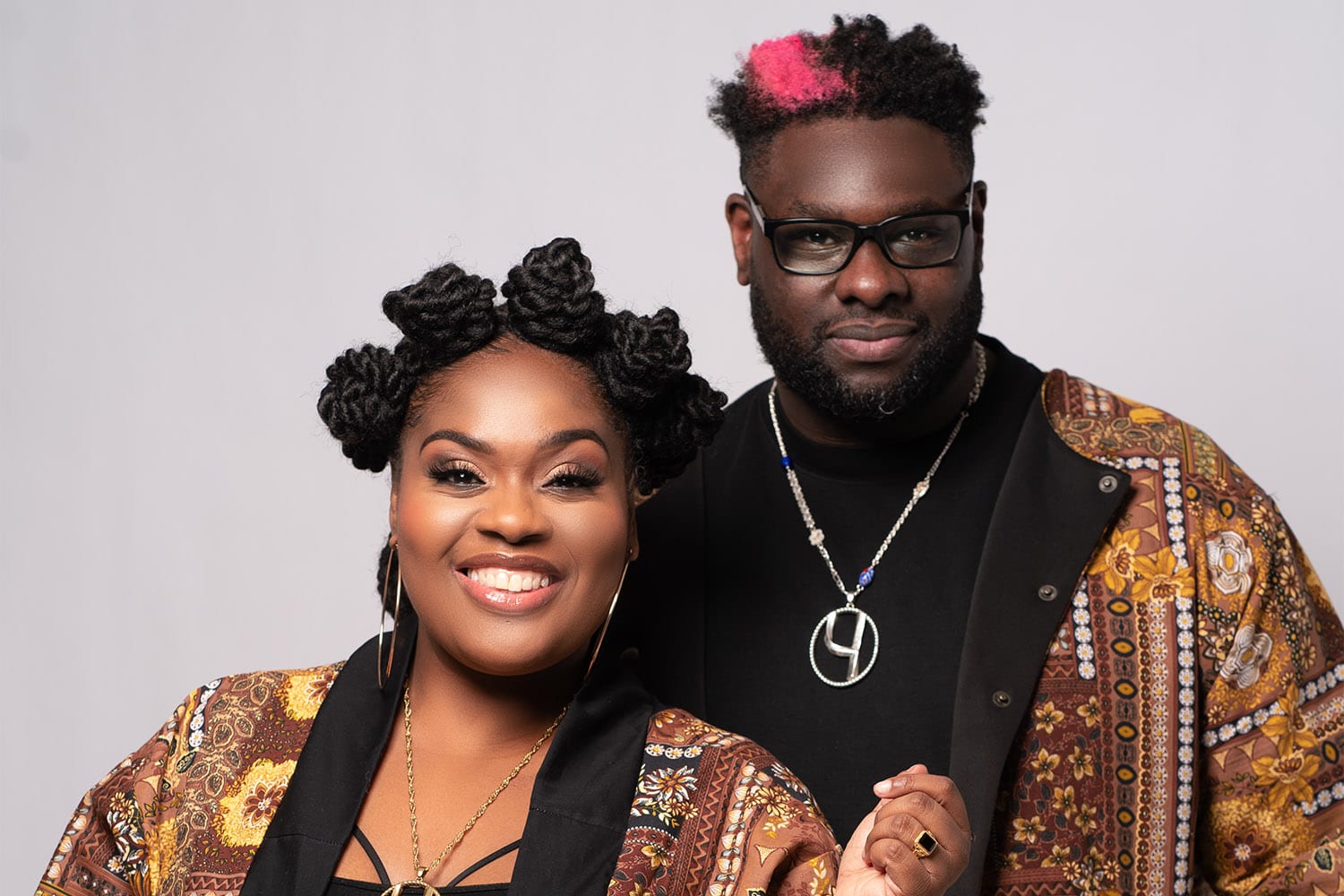 Singer Sarah-Jane Wijdenbosch (here with Marlon “Mr. Jetfly” Francis): ‘Kawina conveys a deep passion. You can always hear call and response in the lyrics, and it comes directly from the slavery era’
© North Sea Jazz
Encouraged by this enthusiasm, they decided to cover Surinamese classics weekly and founded the 4 the Culture foundation. Under that name, Wijdenbosch and Francis, who is also the bandleader of the Surinamese Dutch singer Kenny B, now fill venues, including Amsterdam’s Theatre Carré. “For me, kawina is also a way to continually learn something new about Surinamese culture. I really seek that out. For example, I visited older artists to talk with them about their lyrics, which are often not officially documented. On top of that, much of the language of the Maroons is incorporated, from Aukan, for example. Another characteristic of kawina is that during a live performance, the lead singer sometimes uses completely different lyrics from those of the original song.”
A kawina band consists of at least ten percussionists, each with a different percussion instrument: apinti, conga, sekseki, or bangi. African rituals form the basis, always with a lead singer and a choir. The basic version, consisting of only singing and percussion, was spontaneously practised by the second generation of Surinamese in the Netherlands on the streets, squares, and in parks from the end of the last century. They drew an important part of their identity from it, using self-created and improvised lyrics in Sranan Tongo.
What makes kawina so special for Wijdenbosch? “For someone who doesn’t know the music, it might be best compared to salsa. It’s super rhythmic, uplifting, and immediately evokes strong emotions. It warms you; it moves you. And even if you don’t understand the language, the music conveys a deep passion. You always hear call and response in the lyrics, which comes directly from the history of slavery. In some songs, you hear a primal scream, representing the desire for freedom.”
On the plantations, plenty of singing took place during the hours of gruelling slave labour. The songs were about nature, beautiful women and men, but often also about the cruel behaviour of the master and his henchmen. This way, the enslaved could secretly pass messages to each other through singing because the overseers could not understand their language.
Proud Surinamer
Sarah-Jane Wijdenbosch suspects that the influence of kaseko and kawina in the Netherlands and Belgium is much greater than most people think. According to her, a highly sought after producer like Architrackz incorporates forceful kawina rhythms into his tracks for the rappers Keizer and Chivv, who became known with the group SBMG. “And in Ronnie Flex’s songs, you especially hear him as a proud Srananman (Surinamer.). Both in his lyrics and in his music.”
Singer Sarah-Jane Wijdenbosch suspects that the influence of kaseko and kawina is much greater than most people think
Will kaseko eventually appeal to a large, white audience as well? Leeflang figures that is only a matter of time: “Lieve Hugo already proved it in the 1970s with his performances in the Netherlands.” She is referring, among other things, to the legendary concert during the Holland Festival at the Concertgebouw in Amsterdam. During it, Lieve Hugo had put a couple of white men in black tie and tails into such a state of trance that he had to fly out from behind his set of drums to bring both gentlemen back to their senses.
According to Edgar “Boegroe” Burgos, bandleader of the Surinamese Dutch party band Trafassi, appreciation for Surinamese musical styles in the Netherlands has been around for quite some time. He became famous for his 1985 smash hit Wasmasjien (Washing Machine), in which he covered a song originally from Curaçao, giving it Dutch lyrics and a “light kaseko beat”.
Burgos underlines the cross-pollination between musicians on both sides of the ocean, for example with the song Tuintje in mijn hart (Garden in My Heart) by Surinamese singer Damaru: “That was a huge hit in Suriname, which also did exceptionally well in the Netherlands and later moved up another level when Damaru made it into a duet with Jan Smit. And otherwise take Willem Barth. With Zakken met die kont tot de grond (Bend Your Booty Down to the Ground), he recorded a cover of Wittie visie (Wittie vision) by Iwan Esseboom and The Funmasters, reaching upwards of eighteen million listeners. That is more people than live in the Netherlands. Some Surinamese people said it was a shame that a bakra (white Dutchman, DS) had ripped off our poku (music, DS). Because the song is really considered a classic. But that shows tunnel vision. Isn’t it nice that our music lives on?”
Eighty percent of Sarah-Jane Wijdenbosch’s audience is Surinamese at her shows. Yet she also notices that the appreciation for kaseko and kawina is growing among the white Dutch audience. “Although it’s still in the baby step stage. At least… in summer 2025 we performed with 4 the Culture at the North Sea Jazz Festival. And who knows, in a few years we might be booked at Pinkpop or Lowlands. That would be amazing, wouldn’t it?”
You might also like

In Jozef Deleu’s Poetry, Nothing Was Lost



Leave a Reply
You must be logged in to post a comment.