
‘The Collective Breakdown of the Hofmeyer Family’ by Julie Cafmeyer: Escaping the Trap

In theatre maker Julie Cafmeyer’s debut novel, a woman attempts to escape the patriarchal traps that make her life less free. Cafmeyer’s account is full of humour and imagination.
The opening scene from De collectieve inzinking van de familie Hofmeyer (“The Collective Breakdown of the Hofmeyer Family”) is one that merits rereading once you’ve finished the book. All elements from the story come together there. It’s simultaneously a look ahead and an apotheosis, the moment in which all family members experience their breakdown together, although in some cases you might view it as a full-blown collapse.
“This is the escape,” the mother shouts during the chaotic scene and the entire family roars with laughter. You’re dying to know how things reached this point, and in the rest of the book Julie Cafmeyer (1987) neatly brings together the pieces of the puzzle one by one.
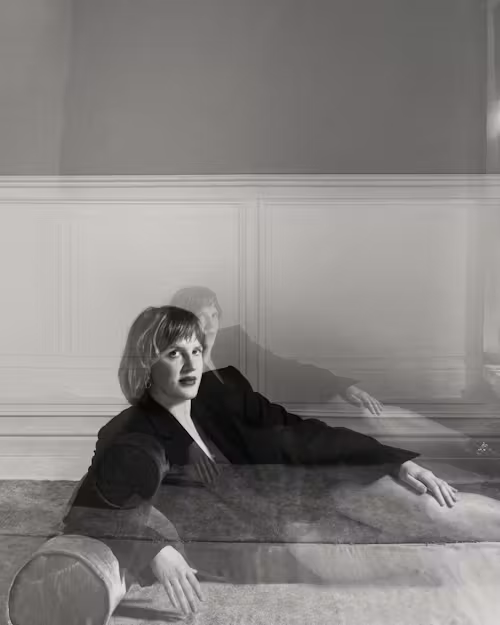 Julie Cafmeyer
© Athos Burez
Julie Cafmeyer’s debut tells the story of Julie Hofmeyer, a woman in her thirties who is a performance artist (any resemblance with the author can hardly be coincidental) and after a failed romantic relationship goes in search of a new place in her life, literally and figuratively. In this process she is not spared unsolicited advice from men, beginning with her father. He advises her that the main thing is to invest in property and also offers her money to have her eggs frozen. You never know as a woman whether you’ll only meet the love of your life after turning forty and might still want to have children.
Cafmeyer tells her story with humour and imagination. The passage in which she hires an actor to play the role of estate agent in order to lead her father and his new love interest up the garden path is not only funny but also well written. The father has to be persuaded to cough up the necessary cash for the purchase of an apartment the value of which is, to put it extremely mildly, suboptimal. The father’s macho tendencies, the real estate agent’s boasting, the world in which men move as if they know everything, have already seen it all, that need to pass it on to those otherwise helpless women – it’s all subtly woven in.
All this recognisable humour conceals a deeper layer describing what it’s like to survive as a single woman in a traditional society
Julie has actually had enough of a modest spot and a handful of “heirlooms” that she takes with her to each new accommodation. A watch, a little mirror and a pointer: they’re the three things that offer her existence some certainty and in which she takes pleasure. She flaps around, while her sister Olga neatly gets married, has children and renovates a house, all of which is met with more enthusiasm than Julie’s creative stage arts. One afternoon in the parental home, when Olga announces that the renovations are done, she receives a barrage of eager questions: “What’s the EPC rating? Did you opt for induction? Which way does the patio face?” The concerns of the average citizen of Flanders.
All this recognisable humour conceals a deeper layer describing what it’s like to survive as a single woman in a traditional society. Julie’s mother, too, struggled with her role as a housewife, the reason she left her husband. Her bold mother is young Julie’s first role model, although immediately after the divorce Julie feels little understanding, as she is dragged along from one shabby flat to the next.
This book is a sharp sketch of this time, beautifully structured and revolving around the question of what is really important in life
The mother, along with her children, ends up with another man, beginning the cycle of misery all over again. It only illustrates how difficult it is as a woman to be truly independent, as Julie would like. After a while her mother also serves as a reverse role model. Julie remembers the fits of rage and knows that children don’t love unhappy women. “The images of desperate housewives influence us. All our lives we remain vigilant. We can’t grow up to be like our mothers.”
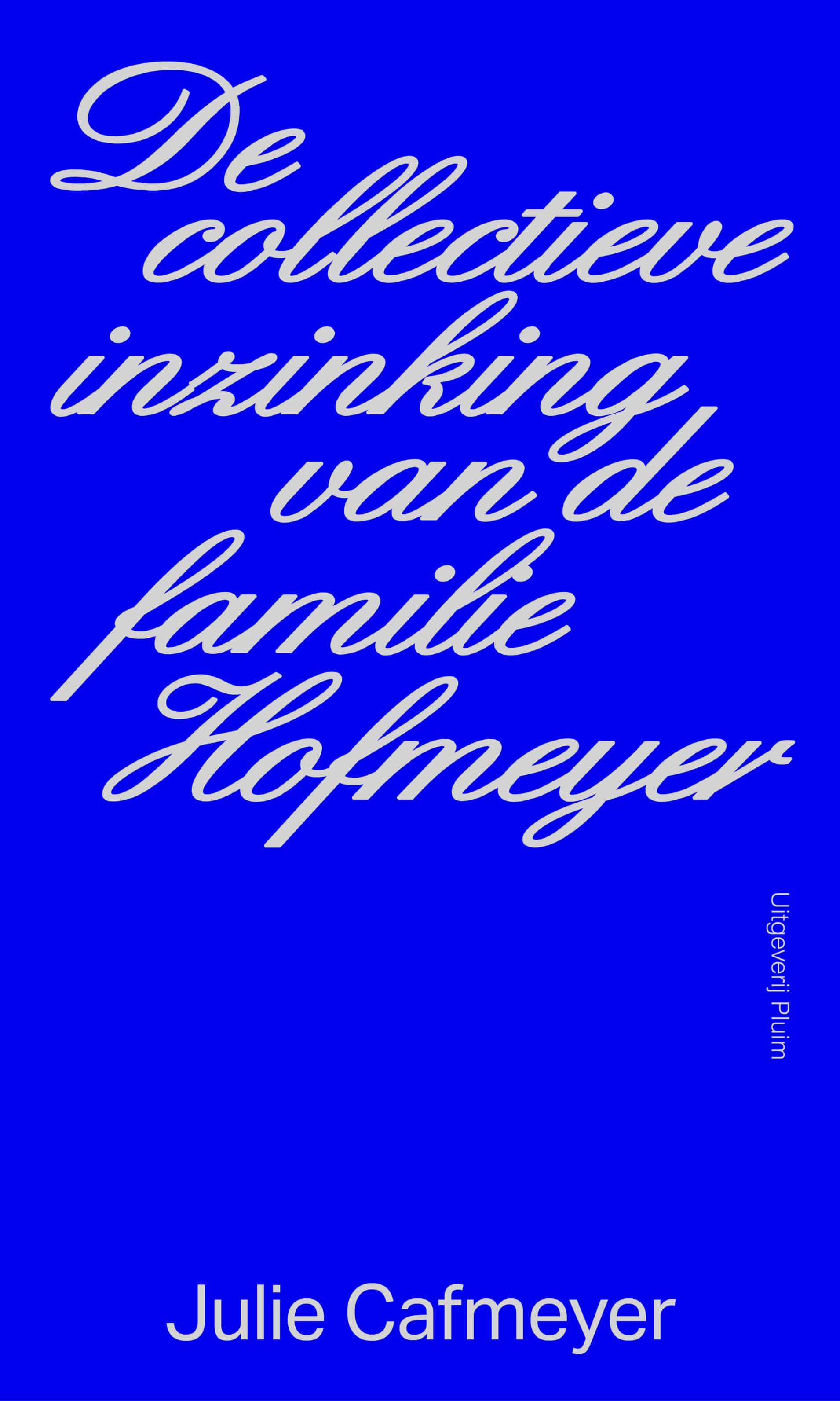
In the end even the amenable Olga slowly but surely transforms, and in this book that can be taken literally. She too confronts her father with the way she really is, or would like to be, and what she really needs. “Tell us about your ancestors’ romances instead of the interest rate. Tell us about your grandmothers instead of egg cells. Nourish us,” she says. Like Julie she wants some peace, some control, to escape the hectic performance society: “If you’d taken a full second to look at us, you’d have seen how burnt out we are. Your world of persistence and progress no longer exists. It’s not enough anymore to simply keep going.” In this way, without becoming nagging, the story turns into one of sisterhood in the end, about “Antigones who rewrite the king’s laws”.
De collectieve inzinking van de familie Hofmeyer is a sharp sketch of this time, beautifully structured and revolving around the question of what is really important in life. At the end you don’t just want to reread the opening scene, but you’re also left with the existential question: what “heirlooms” do I want to preserve and pass on to future generations?
Julie Cafmeyer, De collectieve inzinking van de familie Hofmeyer (“The Collective Breakdown of the Hofmeyer Family”), Pluim, Amsterdam, 2024, 216 p.






Leave a Reply
You must be logged in to post a comment.