
The Optical Revolution: Made in Holland

Look up at the night sky, or down into a drop of water, and you’re seeing the world the way the Dutch taught us to see it. In the early seventeenth century, refinements to lenses and advances in mathematics let people see further into the distance and deeper into the impossibly small than ever before. Much of it happened in the Dutch Republic, at the height of what’s still commonly, if increasingly contentiously, called its Gouden Eeuw, and the consequences rippled far beyond its borders.
Let’s start with the macro-world. The early seventeenth century saw the emergence of the optical telescope, and there is little doubt it was invented in the Dutch Republic, though more than one person has laid claim to it. One candidate is Hans Lippershey (1570-1619), a German-born spectacle-maker who settled in Middelburg in Zeeland and filed a patent for a refracting telescope in 1608.
Zacharias Janssen is another, born in The Hague around 1580, though his claim is less certain. Despite this, most people associate the telescope not with the Dutch but with the Italian Galileo Galilei (1564-1642). Galileo didn’t invent the telescope, but he did improve on the early Dutch models enough to see heavenly bodies invisible to the naked eye, such as the four “Medici” satellites of Jupiter, and to confirm Copernicus’s theory that the earth revolves around the sun, not the other way round.
Most people associate the telescope not with the Dutch but with the Italian Galileo Galilei
Another Dutchman, Christiaan Huygens (1629-95), refined the telescope further still. It let him identify Saturn’s rings and discover its largest moon, Titan. The Dutch carried their telescopes far and wide, not least for military use: armies and navies could spot the enemy long before the enemy spotted them, a real strategic edge. The Dutch also gave them away: the Dutch East India Company introduced telescopes to Japan, where they quickly caught on.
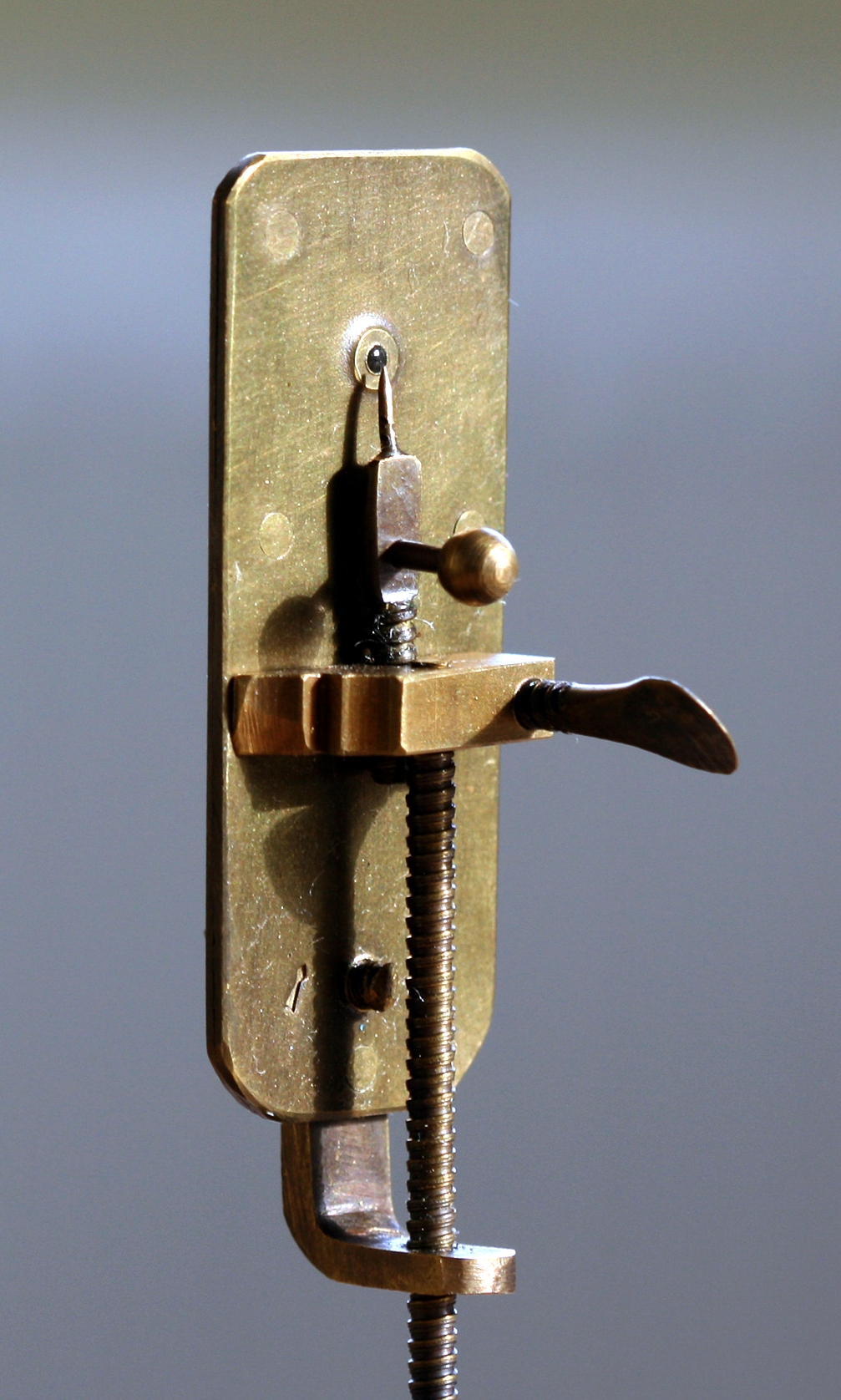 Replica of the Van Leeuwenhoek microscope
© Public Domain
Going the other direction, the Dutch helped us see the micro-world in far greater detail. As with the telescope, who exactly invented the optical microscope is disputed. Zacharias Janssen is again a candidate, though far from a certain one. What’s clearer is that Dutchmen drove the improvement of lens and microscope quality through the seventeenth century. Christiaan Huygens worked in this field too, as did the Delft-born lens grinder Antonie van Leeuwenhoek (1632-1723).
Van Leeuwenhoek had no university education, but his curiosity pushed the boundaries of science anyway. His most famous discovery — bacteria in water, made possible by his improved microscopes — has shaped the life of nearly every human being since, and saved countless lives. He wrote up his findings in Dutch and sent them to the Royal Society in London, which eventually made him a Fellow.
Then there’s the maths behind it all. One thing I remember from school is Snell’s Law. What I wasn’t told at the time is that we owe it to the Dutchman Willebrord Snel (Latinised as Snellius, 1580-1626), professor of mathematics at the University of Leiden. He worked out the law of refraction, which explains why light appears to bend when it hits water.
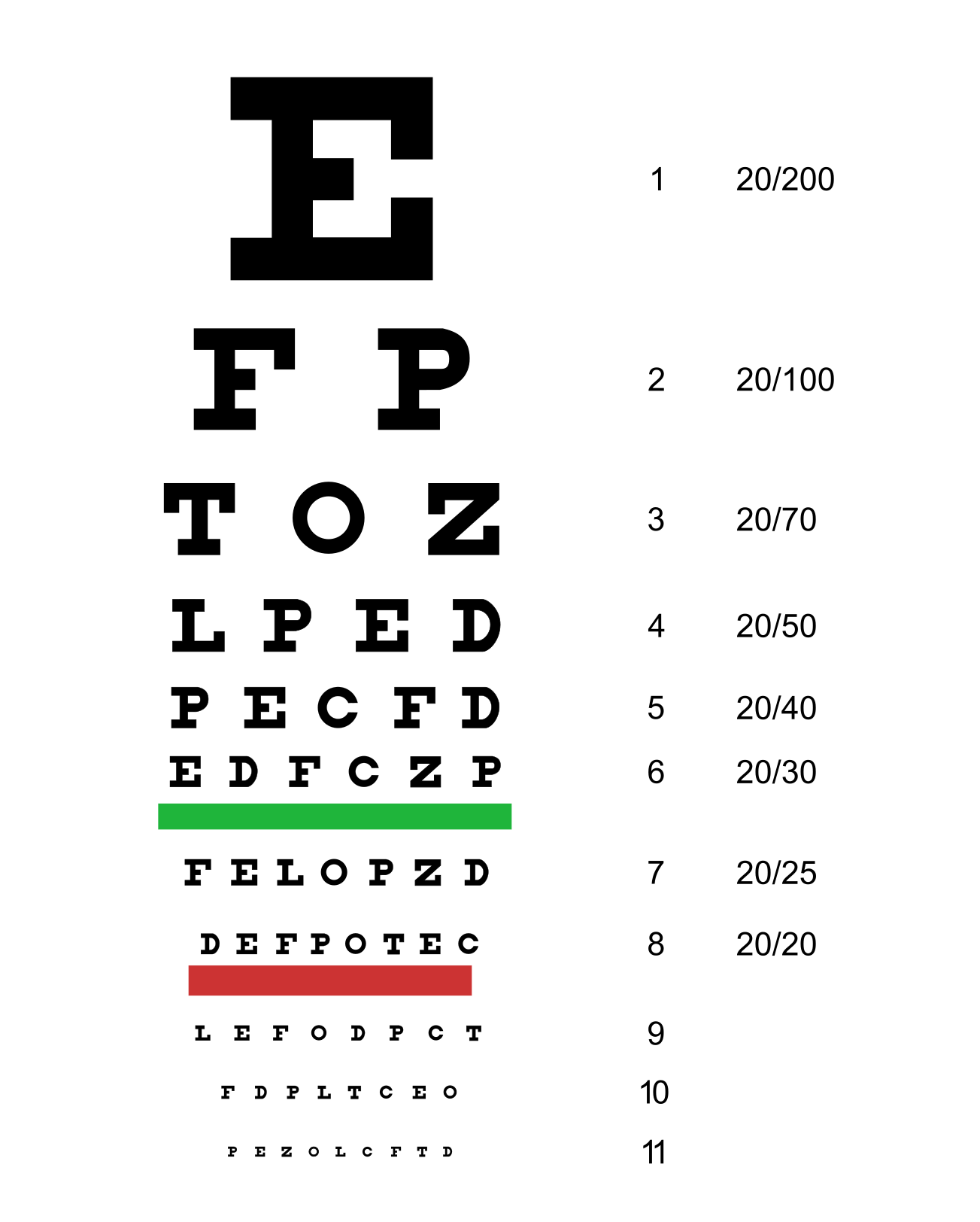 Snellen Chart
© Public Domain
The Dutch didn’t stop seeing better after the seventeenth century, either. In the nineteenth, Hermann Snellen (1834-1908), professor of ophthalmology at the University of Utrecht, developed the eye chart that still bears his name, the one with rows of ever-smaller letters. As someone who wears glasses, I know that chart a little too well. I’m also, grudgingly, grateful for it.
So the next time you look up at the stars, peer into a basin of water, or squint at letters on a wall during an eye test, spare a thought for the Dutch. They got there first.

You might also like

In Jozef Deleu’s Poetry, Nothing Was Lost







Leave a Reply
You must be logged in to post a comment.