
Deep Waters Still Separate the Netherlands and the Caribbean Islands
Relations between the Netherlands and its former colonies can be described as difficult, at best, as is the Dutch relationship with the six Caribbean islands that comprise the Kingdom of the Netherlands: Aruba, Curaçao, Sint Maarten, Bonaire, Sint Eustatius and Saba. The book Ongemak (“Discomfort”) situates today’s difficult relations in their historical context and formulates perspectives for the future.
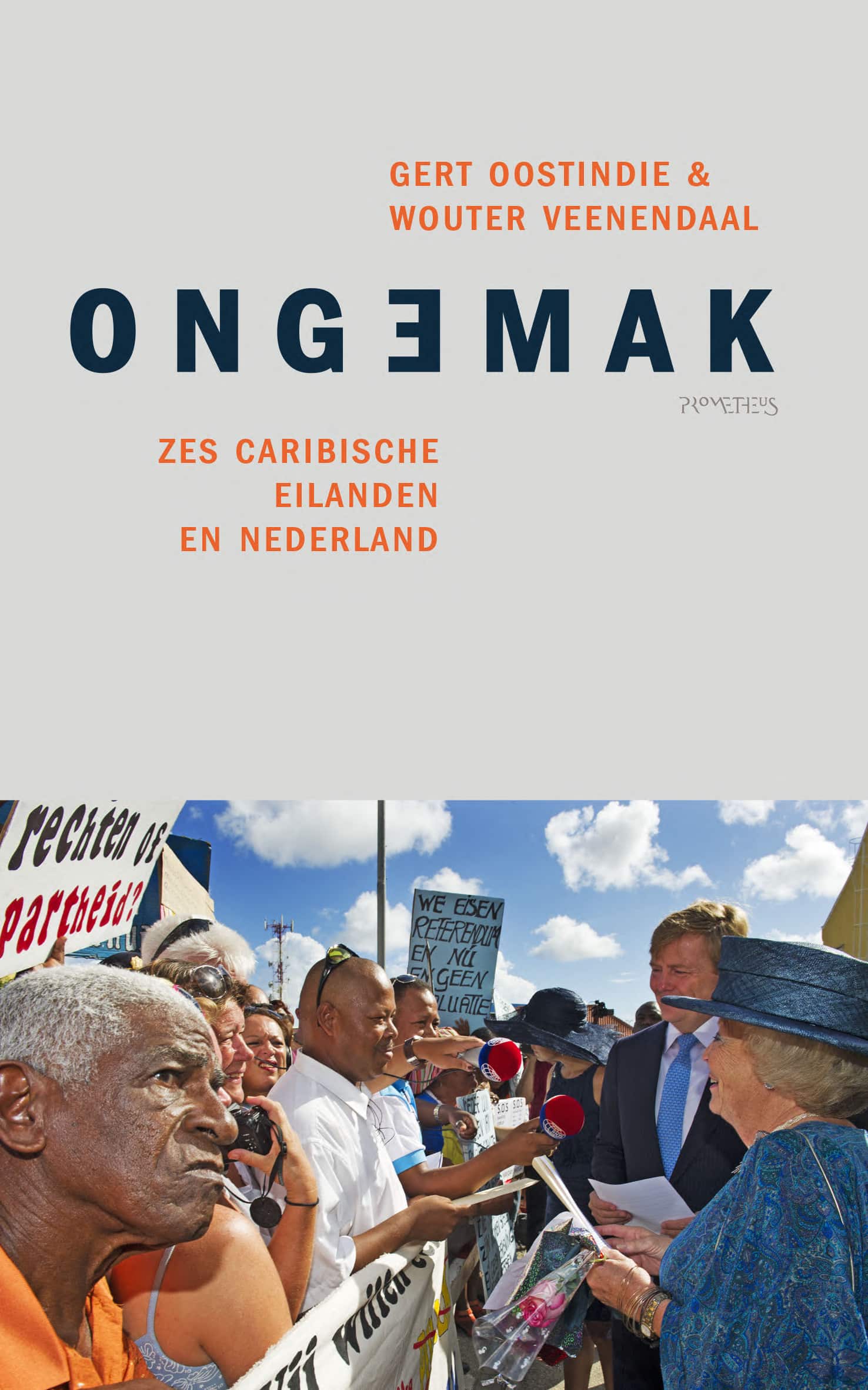
In their book Ongemak – “Discomfort” – Gert Oostindie (Emeritus Professor of Colonial and Postcolonial History at Leiden University) and Wouter Veenendaal (Associate Professor at the Institute for Political Science in Leiden) sketch a harrowing portrait of the Kingdom of the Netherlands today, and its inability to forge a harmonious postcolonial relationship with its six overseas islands in the Caribbean.
On October 10th, 2010, Curaçao and Sint Maarten were granted independent status within the Kingdom of the Netherlands, comparable to the status granted to Aruba in 1986. The smaller islands of Bonaire, St. Eustatius and Saba were made special municipalities of the Netherlands on the same day. The authors suggest that since 10/10/10, island administrators have not been able to successfully convert this new status into economic growth or political stability.
Why is that? Oostindie and Veenendaal argue that “the best explanation lies in the small size of the islands, which makes it extremely difficult for local politicians – if that is indeed what they want – to establish good governance”. The follow-up question is, of course, whether small-scale islands are de facto ungovernable, or whether the administrative structure itself is ineffective. The book is conceived as a triptych in which considerations of past, present, and future development merge in the search for an answer to these questions. Taking historical development as a starting point, they analyse the current strained relationship between Netherlands and the six islands, and formulate guidelines for a more workable future.
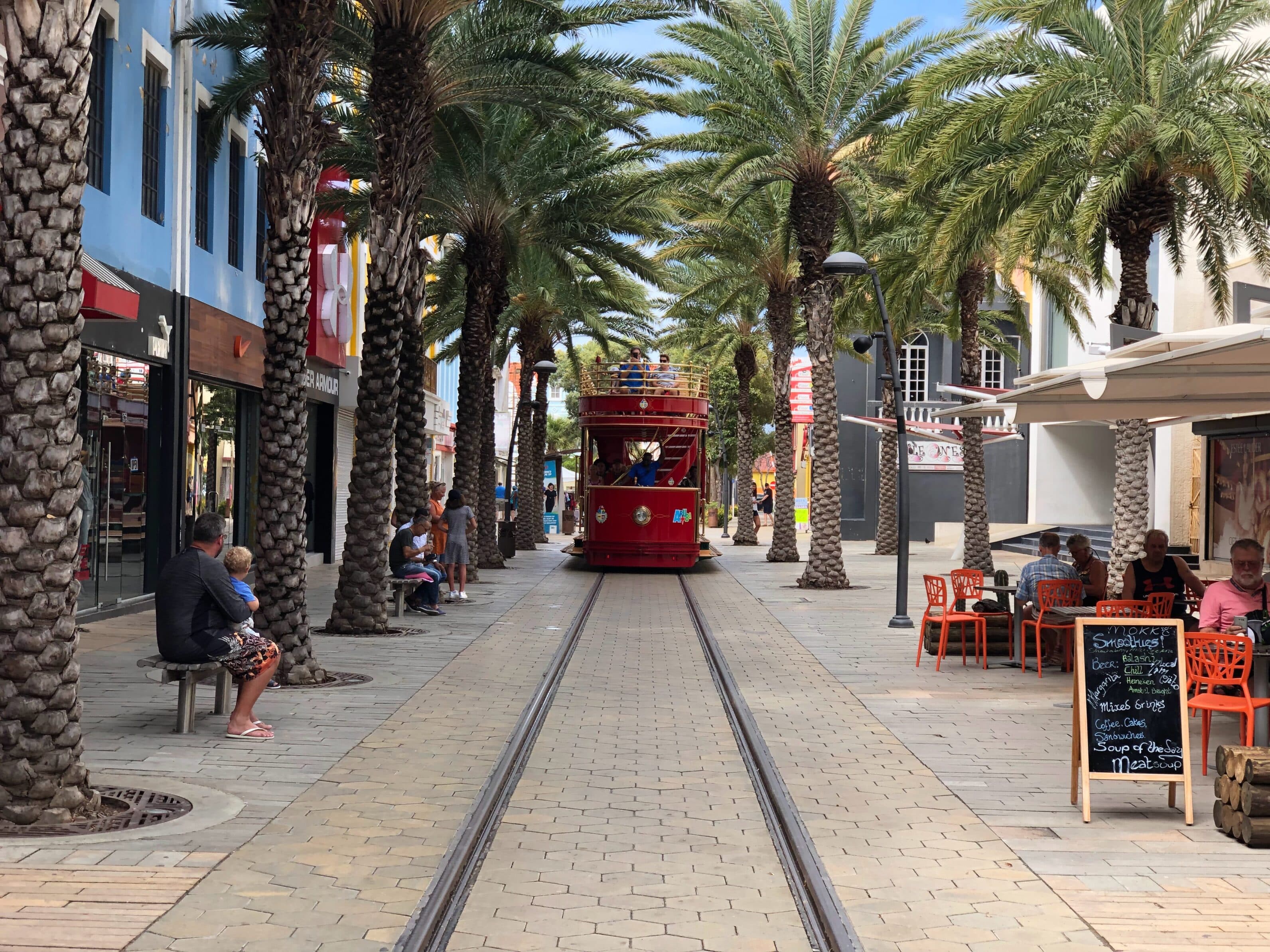 Oranjestad, capital of Aruba. The discontent with Dutch interference on the Caribbean islands is accompanied by bitter references to the colonial period.
© Unsplash
The first part of the book describes the colonial history of the islands and the complex development of the Netherlands Antilles as a unique compromise within the framework of the Statute for the Kingdom of the Netherlands (1954), at a time when old colonial structures were being questioned and ultimately dissolved. That compromise (based on the equivalence of the countries within the Kingdom) turned out to be unstable, and the book goes on to describe the turbulent, 56-year-long history of the Netherlands Antilles, the secession of Aruba in 1986, and the run-up to its dissolution in 2010. Brief sketches of the context and history of the six individual islands follow: first the Leeward Antilles (Aruba, Bonaire and Curaçao), then the Windward (Saba, Sint Eustatius and Sint Maarten).
In response to economic crises, The Hague has sharply intervened in the management of the islands’ government finances
The second part of the triptych focuses on developments after 2010. The key message here is that initial enthusiasm for independent governance after 10/10/10 has since evaporated, and that the politically and economically unstable islands have been unable to withstand the impact of Hurricane Irma (2017) and the pandemic. In response to economic crises, The Hague has sharply intervened in the management of the islands’ government finances. The structure of the Kingdom of the Netherlands makes this possible: Aruba, Curaçao and Sint Maarten, like the Netherlands, are autonomous countries within the Kingdom of the Netherlands, but above them lords the Council of Ministers, an umbrella institution that deliberates and decides on matters affecting the entire Kingdom of the Netherlands. But, the authors argue, when it comes to human rights violations or environmental issues, the Netherlands swiftly shifts the responsibility back to the island governments.
In short, the Netherlands’ interventions are inconsistent, and in the Netherlands debates on the Kingdom rarely come to the fore. In their analysis of this imbalance, the authors assume a contradiction between head and heart, or reason and emotion, reigns in the Caribbean. Dissatisfaction with Dutch meddling is accompanied by bitter references to the colonial period. In their hearts, inhabitants of the island territories yearn for equality and social justice within the Kingdom, which translates into uncomfortable discussions about the history of slavery, democratic representation in Dutch parliament, and climate justice. On the other hand, island inhabitants also see the benefits of belonging to the Kingdom.
Partly spurred by comparisons with other countries in the region, and certainly with Suriname, the authors argue that the six islands are better off within the constellation of the Kingdom based on the economic and administrative benefits that the Dutch connection brings. This rationale would thus be the islands’ primary motivation for eschewing full independence. In their research the authors show that island administrators play to the heart in their argumentation about neocolonial Dutch interventionism, when this issue is in fact viewed with more nuance amongst islanders themselves – in part also because of the low levels of confidence they place in their administrators in the first place.
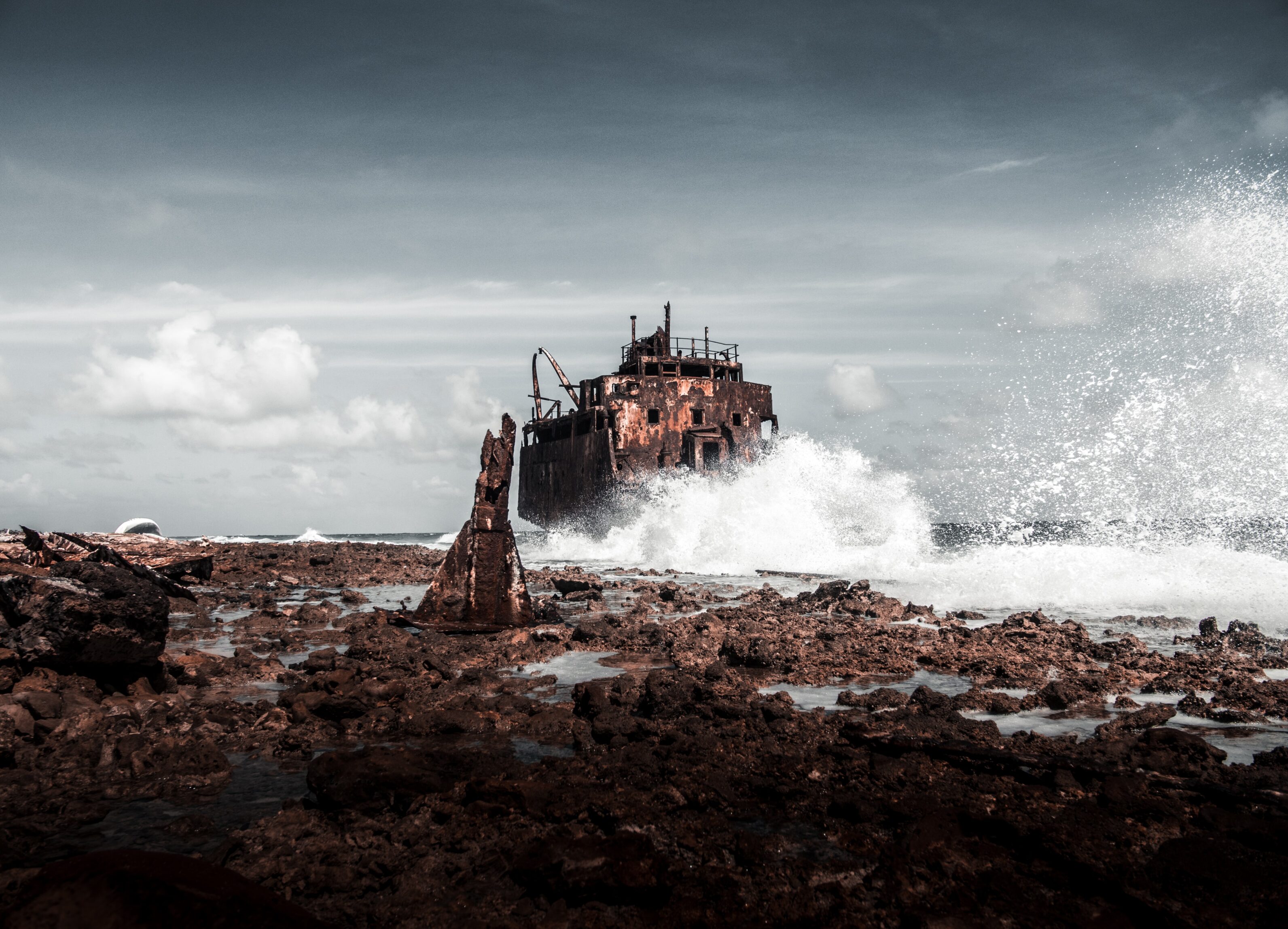 Abandoned ship off the coast of Curaçao. Oostindie and Veenendaal dare to take controversial positions on political, social and economic subjects that are heavily charged in the Caribbean region.
© Bruno van der Kraan / Unsplash
The third and final part of the book focuses on the future. The authors present a comparative analysis of the relationships between non-sovereign territories worldwide and the larger states of which they are part, ranging from the eleven former French colonies, some of which have been fully integrated into France as Départements d’Outre Mer, to examples from Denmark and New Zealand which have offered their non-sovereign territories a great deal of autonomy. The authors not only present an analysis of how the different areas are or are not autonomous, but also how these areas deal with the tension between head and heart. They conclude that independence movements in these non-sovereign regions, with the exception of Greenland and New Caledonia, are relatively irrelevant, and that their non-sovereign status is a permanent given. The authors therefore argue that politicians on both sides of the ocean should simply accept the permanent non-sovereign status of the Dutch Caribbean islands. This can be the basis upon which Kingdom relations improve (relations between the Netherlands, Aruba, Curaçao and Sint Maarten) and for developing future opportunities for harmony that break through the current deadlock.
The islands are small and therefore also vulnerable, and the distances and differences within the Kingdom are great. Nevertheless, Oostindie and Veenendaal see opportunities to reduce the discomfort within the Kingdom through political reforms, for example by facilitating parliamentary representation of the Caribbean regions in the Dutch House of Representatives. In addition, they argue that Kingdom relations should not be limited to one ministry but should be addressed more holistically. In doing so, the ministries in The Hague would not so much represent Dutch interests, but rather put the entire Kingdom’s interests and relations first.
The discomfort described in this book is mainly the discomfort of the administrators involved in Kingdom relations and in the Caribbean Island communities
Oostindie and Veenendaal are not afraid to take controversial positions on political, social, and economic issues that are heavily charged in the Caribbean, such as the environmental damage of the Curaçao Isla refinery, the waste problem in Aruba and Sint Maarten, or the financing of political parties on the Islands. However, sources that substantiate these views are often lacking, which means that this book in itself is likely to be a new source of controversy. The authors’ views on the relative level of Island debt, on the impact of the refineries on the island communities, or on the role of different languages in education are presented in a rather journalistic manner without citing sources, which means it is the authors of this book who will be taken to account for them.
The authors have mainly based their book upon research that describes the actions and opinions of people in the Islands, where the Netherlands remains largely unaffected. At the same time, they wrote the book mainly from a Dutch perspective: they consider it necessary to clarify the context of the islands, but to them the Dutch context seems to be a given. The responsibility for the very idea of the Kingdom thus seems to be placed outside the Netherlands and onto the islands themselves. The discomfort described in this book is mainly the discomfort of the administrators involved in Kingdom relations and in the Caribbean Island communities. The European Dutchman – who according to the authors sees the islands either as a holiday destination, a source of difficulties, or simply as foreign – is not extensively involved in this.
This book therefore mainly serves as the starting point for a dialogue within the Dutch communities to find their own position within the Kingdom and to work on equality and social justice as basic principles of living together in the twenty-first century postcolonial reality.
Gert Oostindie en Wouter Veenendaal, Ongemak. Zes Caribische eilanden en Nederland [Six Caribbean Islands and the Netherlands], Prometheus, Amsterdam, 2022, 296 p.

You might also like



In Jozef Deleu’s Poetry, Nothing Was Lost






Leave a Reply
You must be logged in to post a comment.