
Surinamese People: Srefidensi! Show Them We Can Do It Ourselves

The colonial era never fully ended, says Kathleen Ferrier, daughter of the first president of independent Suriname. To this day, the Netherlands looks to the country, wondering: what’s in it for us? But it’s also high time that the people of Suriname themselves recognise what they can offer the world.
It was a slap in the face, the remark in 2021 by then-Foreign Minister Stef Blok that Suriname is a failed state. What was hurtful was not the statement in and of itself, as it kind of made sense given what happened in Suriname from 1980 onwards, when the military toppled the government and then suspended the constitution. What made it offensive was the reason Blok cited for the failure: the country’s ethnic makeup.
It proved once again that a Dutch member of parliament is clueless about Suriname, about what the country is really like, and what it has to offer. Concluding, from a Eurocentric perspective, that a multi-ethnic society simply cannot be successful shows a great short-sightedness, a lack of genuine interest and curiosity. It suggests a contempt for the country based on an unwarranted sense of superiority.
Misunderstood
It was also a blow because, for the umpteenth time, the Netherlands failed to recognise what Suriname has to offer.
Something similar happened during World War II. The fact that Suriname experienced an economic boom at the time had nothing to do with Europe. It was the United States’ doing. It was the latter that recognised the country’s value and potential, starting with the enormous bauxite reserves needed for war purposes. Troops were dispatched, and infrastructure was built, including roads and an airport, to transport raw materials. It allowed the economy to grow.
The fact that Suriname experienced an economic boom since WWII had nothing to do with Europe. It was the United States’ doing
But even though this growth was not prompted by a Dutch vision, the Surinamese continued to feel committed to the country. With the Netherlands at war and therefore lacking the financial resources to buy a Spitfire, the people of Suriname launched a fundraiser. Less than three months later, the necessary funds could be transferred from the colony to the Netherlands.
During World War II men and women signed up to fight the Nazis alongside Dutch forces. But when it emerged that they might have to rub shoulders with white South African troops they were sent back home. You see, at the time those soldiers could not possibly be asked to wage war on an equal footing with black people…
Blessed country
Stories like these – about Suriname’s commitment to the Netherlands, the courage of the Surinamese and the Netherlands’ lack of understanding of what Suriname had to offer – were drummed into me by my parents from a young age.
Johan Ferrier and Edmé Vas were both teachers through and through. They believed in the emancipatory power of education, which raises people to be democratic citizens who respect the rule of law and should always centre on the equality of all. They were proud to be Surinamese and passed this on to their children and pupils.
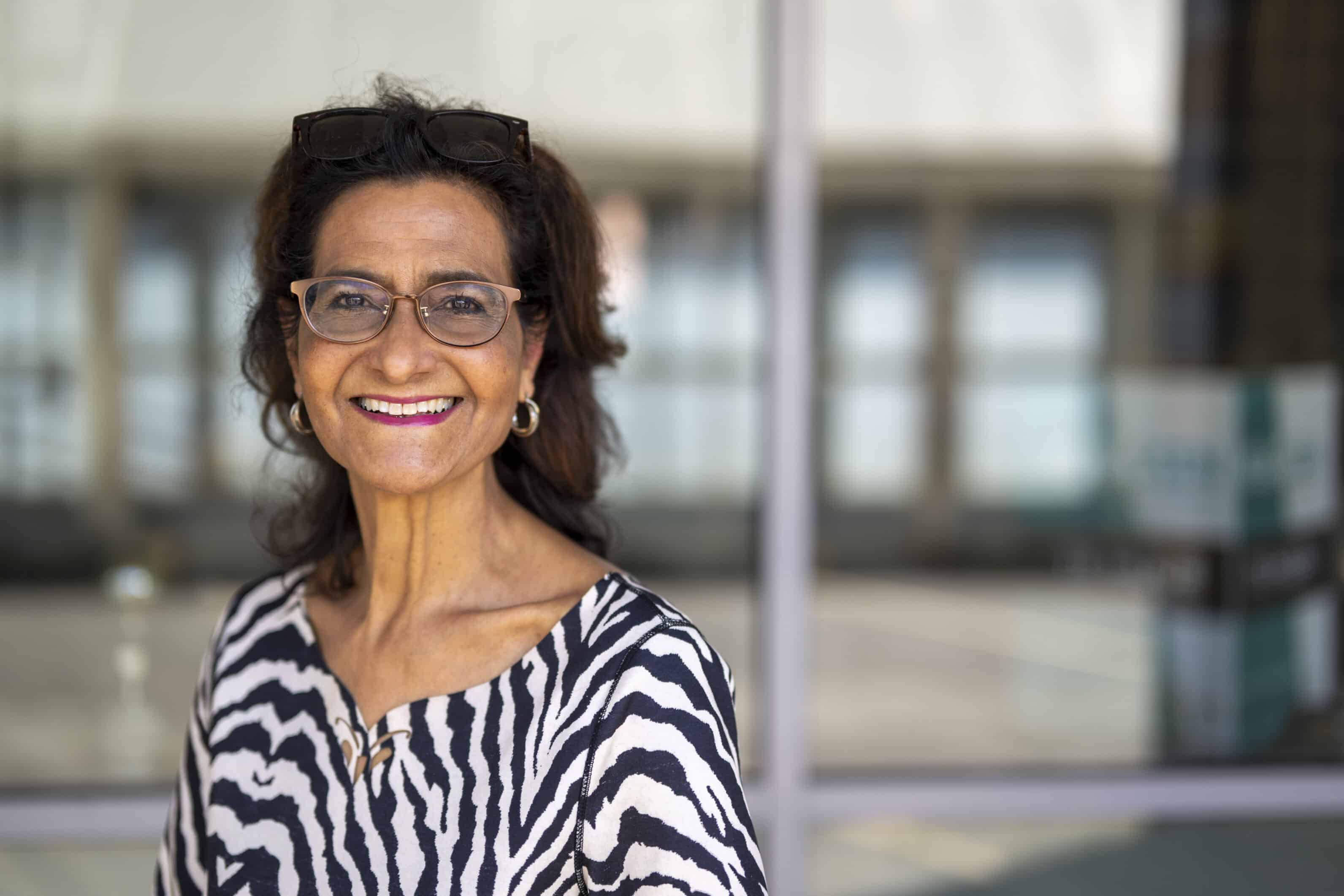 Kathleen Ferrier: ‘The people of Suriname are descended from the strongest: those who survived slavery and indentured labour’
© Anke van der Meer
At home, we were told that Suriname is an extremely blessed nation. It is rare for the country to be hit by severe natural disasters such as earthquakes, floods, or drought. It has exceptionally fertile soil (this is true: leave a walking stick in the jungle, and within weeks it will sprout leaves), and the ground is also full of valuable resources: bauxite, gold, oil, and gas. We were told about the beauty of nature and taught to respect it.
The country also forms part of the continent of South America and of the Caribbean. Instead of always staring out across the ocean to Europe, Suriname ought to focus much more on its own culturally rich region. The effect of this is illustrated by artist Marcel Pinas. To begin with, he produced mostly art aimed at tourists, which sold well. But during his studies in Jamaica, he was taught about the wealth of his own maroon culture and that this ought to be his source of inspiration. Only then was he able to develop his true voice and his own distinctive expression.
Independence
The year 1973 was another moment when the Netherlands did not get it. In his government’s policy statement, Prime Minister Joop den Uyl announced that Suriname and the Dutch Antilles would have to become independent during the upcoming term of government. It came as a complete surprise to Suriname. No consultation had taken place. It had been a unilateral decision, one that was not in keeping with the parity between the three constituent countries of the Kingdom of the Netherlands – Suriname, the Netherlands and the Dutch Antilles – set out in the Charter of 1954.
Suriname decided to save face and not let itself be ‘kicked out’ by the Netherlands: it would leave of its own accord. This independence finally came about on 25 November 1975, fifty years ago.
Srefidensi
Johan Ferrier – my father, the last governor and first president of Suriname – never used the word independence. He always talked about self-reliance because, ‘no man and no country is independent. You always need others. But you can be self-reliant. As a human being and as a country. You determine your own course, based on your own convictions, your own strength and abilities.’
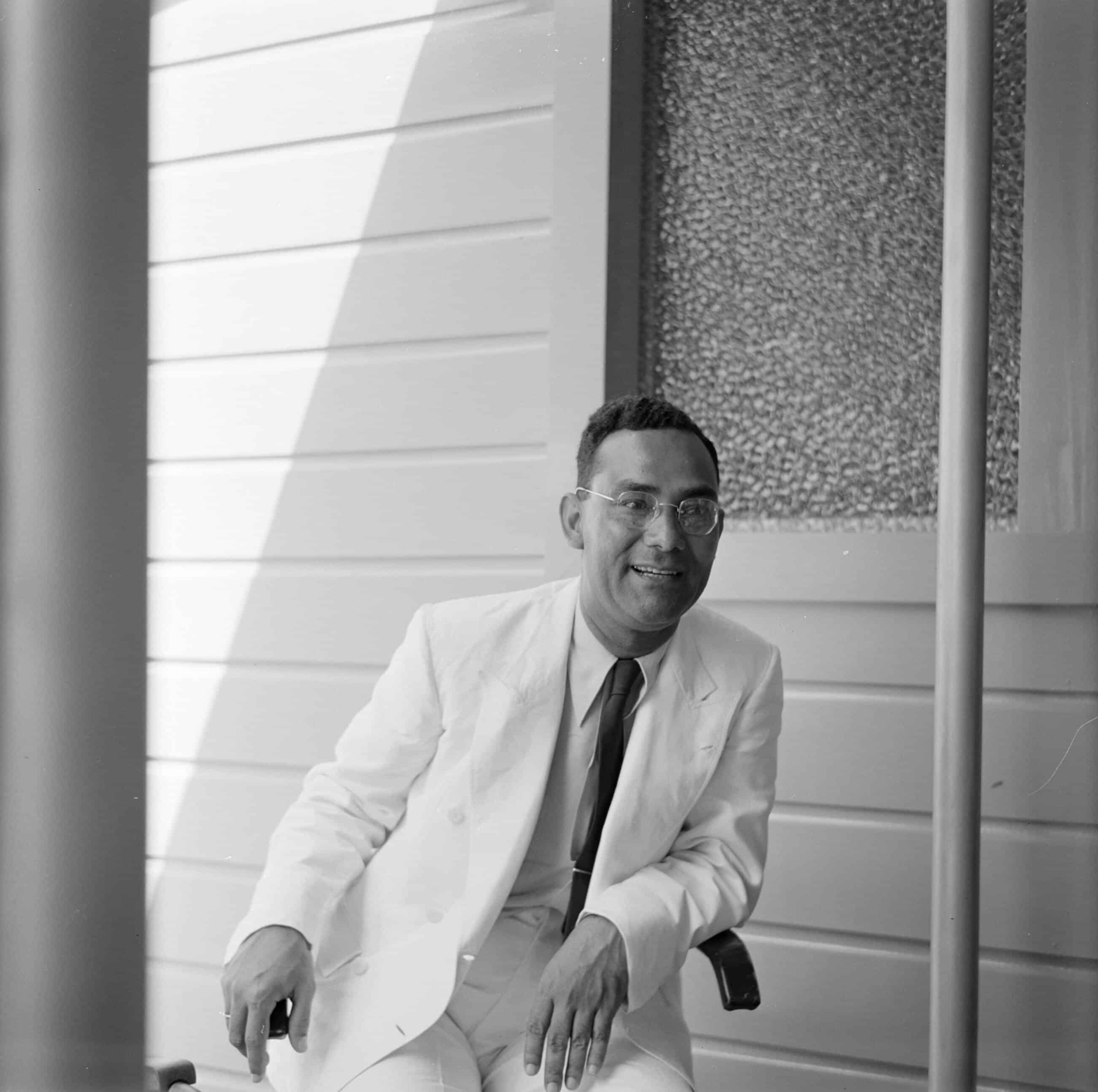 Johan Ferrier, Suriname’s first president, never used the word independence. He spoke of self-reliance, because ‘you always need others’
© Anefo / Wikimedia Commons
During the night of 24-25 November 1975, at exactly midnight, the Dutch flag was slowly lowered at the National Stadium in Paramaribo, alongside the old Surinamese flag on which the various ethnic groups were represented by different colours. Amid loud cheers, the new Surinamese flag was hoisted: green with a radiant yellow star in the centre – to symbolise the unity of Suriname’s people. At that same moment, political rivals Jagernath Lachmon and Henck Arron embraced. Johan Ferrier, the first president to serve independent Suriname, threw his arms in the air, so exuberantly that he very nearly hit Princess Beatrix in the face. Everybody at the stadium was euphoric. The overriding emotion was one of great confidence: we can do this!
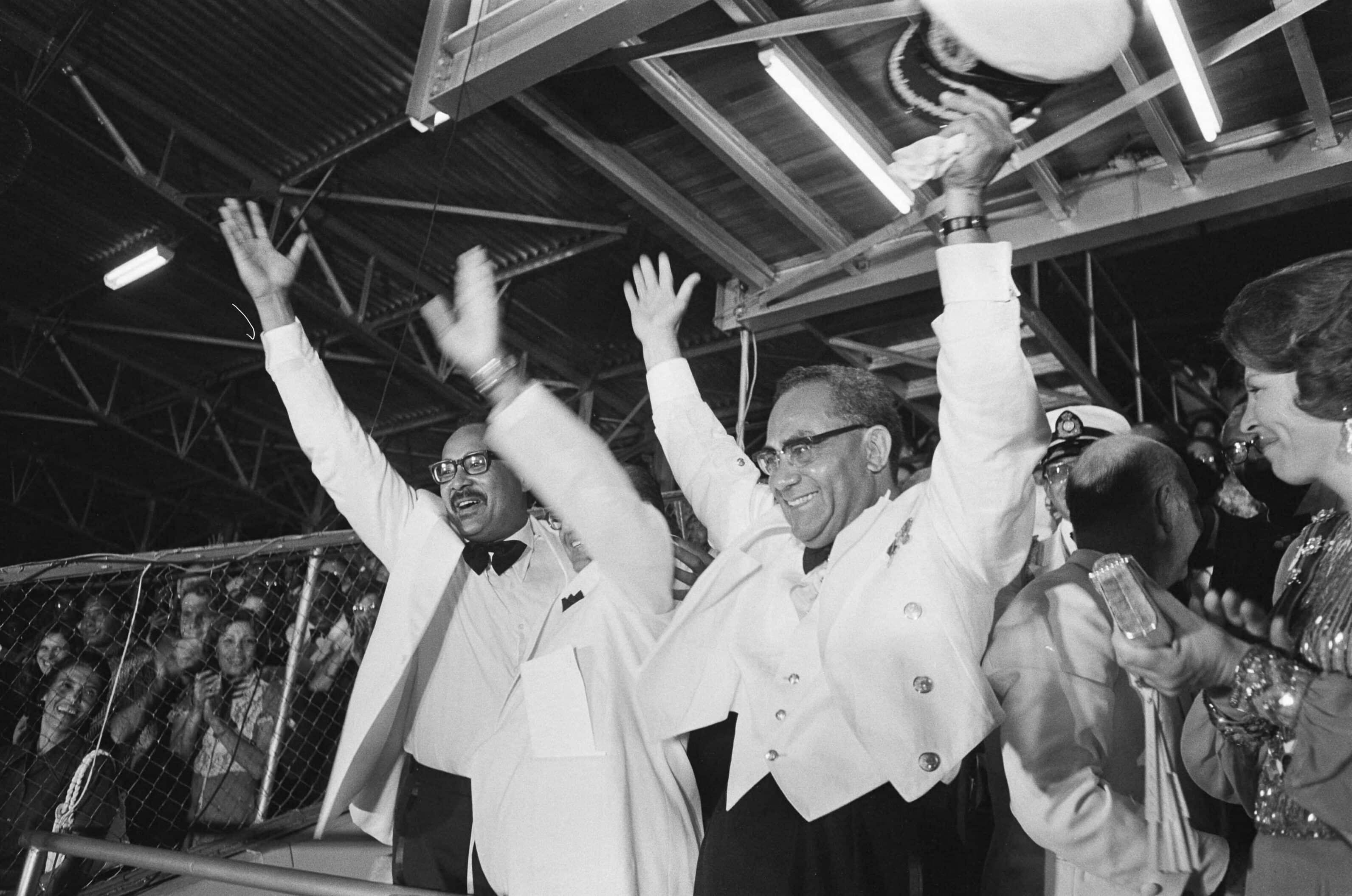 Joy in 1975: For pure joy, Johan Ferrier, the first president to serve independent Suriname, threw his arms in the air, so exuberantly that he very nearly hit Princess Beatrix in the face
© Bert Verhoeff / Anefo / Wikimedia Commons
We are going to rebuild this country, we will show them: Srefidensi! That’s the Surinamese word for self-reliance, coined by author and poet Henny de Ziel (known as Trefossa). It consists of three parts: srefi – den – si, meaning self, show, it. Show them that we can do it ourselves. The word conveys strength and pride, and in 1975, the people had the hope and confidence that they could pull it off.
Colonial relationship, close ties
Fifty years on, a whole lifetime. Looking back, it is evident that the expectations at the time were not met. Suriname is a rich country and yet there is poverty. Every visitor to Suriname can tell by the broken-down roads, the dilapidated houses, the people living on and off the streets, the buildings in the historic inner city of Paramaribo – a UNESCO World Heritage Site – in a state of disrepair. The medical sector lacks all kinds of things, while the quality of education is lagging because teachers have to work three jobs to make ends meet and sometimes even sell soft drinks to their pupils to supplement their still meagre income.
Suriname is a rich country and yet there is poverty
At the same time, there is vast wealth, as shown by extravagant houses and cars, private jets, and luxury resorts. Income inequality has increased in the past fifty years. Much has been said and written about how we got to this situation. There is no doubt that the aforementioned events of 1980 and the December Murders of 1982 did a lot of damage and opened the door to a political culture of distrust. It became the rule rather than the exception for people to enrich themselves at the expense of others, while corruption and the unlawful granting of land and gold concessions became rife.
It is no wonder then that the relationship with the Netherlands has frequently come under severe pressure and on some occasions has broken down altogether. The title of the inquiry into twenty-five years of self-reliance in 2000 is telling: ‘A charged relationship’. True, the relationship is charged. Or rather: the relationship between the two countries’ governments is charged because of the colonial past, which continues to make its legacy felt in both societies. That much is clear from statements by officials such as Stef Blok and also from other practices, as I will clarify below.
Despite these difficulties, Suriname and the Low Countries have undeniably close ties. Firstly, some 380,000 people with roots in Suriname have settled in the Netherlands (and Belgium) and contribute to these societies while also maintaining warm family relations with Surinamese society. They send money and food parcels and frequently travel back and forth.
There are less positive aspects to the shared Dutch language too: human capital is all too readily taken from Suriname when it is needed elsewhere
At the same time, the Dutch language plays a key role in the relationship between the nations. From a decolonisation perspective, it makes sense that there are occasional calls for the abolition of the former coloniser’s language in favour of Sranang. It is Suriname’s lingua franca, the language everybody speaks, the language of the street. At home, people speak Sarnami, Wayana, Chinese, Javanese, or Afaka, among others, but everybody also speaks Sranang. That said, Dutch remains the official language taught in schools and the language used by the government and the media. And that’s a good thing: it means that Suriname is a member of the Dutch Language Union, which facilitates interesting cultural exchanges, such as connections between (secondary) school pupils through essay writing assignments and competitions, as well as cooperation at the university level.
Dutch also offers people access to higher education degrees that are not offered in Suriname and access to online knowledge. And of course, like elsewhere in the world, the use of English is on the rise, especially among young people.
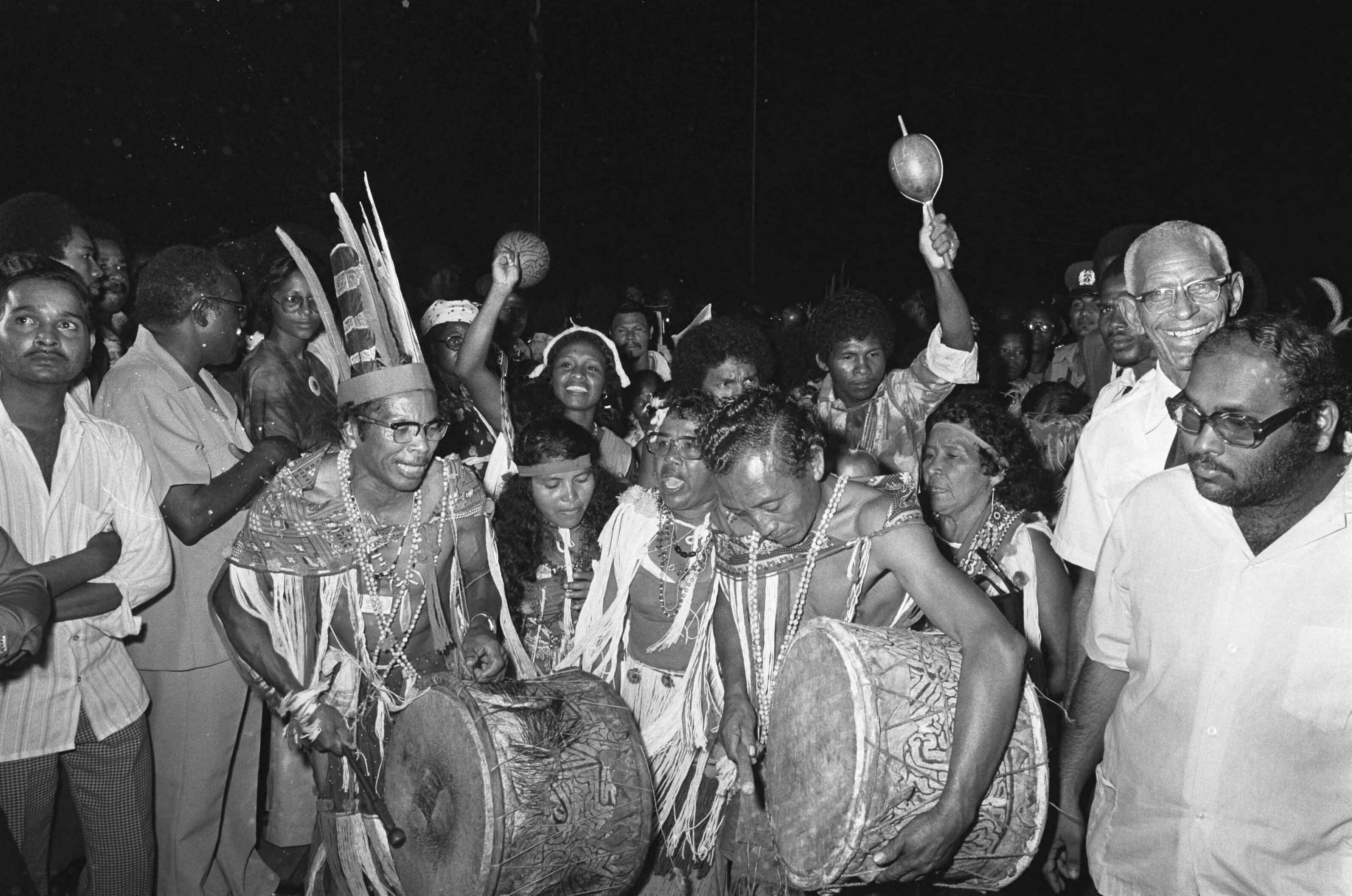 Celebration in 1975 to mark independence
© Anefo / Wikimedia Commons
There are fewer positive aspects to the shared Dutch language, too: human capital is all too readily taken from Suriname when it is needed elsewhere, in the Dutch Antilles or in the Netherlands, for instance. Given that Surinamese people speak perfect Dutch, they can be readily deployed in education and healthcare sectors that have severe labour shortages, especially in the Netherlands (and Belgium). Healthcare facilities and educational institutions will not hesitate to bring people to the Netherlands to fill the gaps in the labour market when they are so badly needed in Suriname itself. It is big business, as evidenced by the large number of employment agencies that have entered this market in recent years. Nursing staff were recruited in Suriname long before, in the late 1950s. The difference now is that these workers are also urgently needed in Suriname itself, something that applies to the education sector as well. In 2000, then Socialist Party MP Agnes Kant asked questions in the chamber. Els Borst, Minister of Health, Welfare and Sport at the time, described the recruitment of nurses from countries where they are badly needed and a lot of money has gone into their training as ‘ethically irresponsible’.
And so we see that the colonial era has made a comeback, even though it never really went away: removing from a country what you need with scant regard for the consequences for the local population. Of course, there is a lot of sympathy for people who choose to leave: salaries in Suriname are abominable. To start with, it is up to the Surinamese government to ensure decent wages and working conditions. But I also think it is reasonable to expect healthcare facilities and educational institutions in the Netherlands to act more responsibly: when you take people away, at least do something in return. This can take different forms, including investment in capacity building in Suriname or financing vocational training in healthcare and education.
Suriname’s strength
Does that mean it’s all doom and gloom? Not at all! Suriname’s greatest strength is its people. We were always told that the Surinamese are a people with roots all over the world. It’s what makes our culture and society so immensely rich and varied, from our cuisine to our literature, and from painting to music and theatre. Everywhere you look you can see the added value of having this melting pot.
Add to this the fact that the Surinamese are descended from the strongest – those who survived slavery and indentured labour – and you end up with an extraordinary strength as well as a responsibility: to make the world a better, more equitable place for everybody, with equal opportunities for all.
Synagogue and mosque
I am often asked why diversity is so readily accepted in Suriname. It is the only country in the world where a synagogue and a mosque stand side by side and where the visitors to both places of worship also socialise harmoniously whenever they can.
That’s because people in Suriname are well aware that they need one another. When the plantation owners – grown rich on the back of hard work by the enslaved from Africa and indentured workers from countries such as India, Indonesia, and China – returned to Europe because there was nothing more to gain from Suriname, the populace remained behind. Regardless of where they came from or how their paths crossed, people looked at each other and knew: if we want to move on, we will have to do so together. So sometimes you have to set your ego aside because there are interests that eclipse your self-interest.
People in Suriname are well aware that they need one another
This thought prevails in Suriname; in fact, it is one of the country’s distinguishing features. On those occasions when I attended the United Nations and told people that I was born in Suriname, I always saw eyes light up: ‘Ah! Suriname, the role model for the world. Thanks to its population.’
In a world of increasing polarisation and fear of multiculturalism, multi-religiosity, and diversity, Suriname can indeed be a shining example. In the first place, for the countries whose language it shares: Belgium and the Netherlands. Thanks to Dutch, they can come into direct contact with the country’s cultural and spiritual wealth, either by visiting the country or by exploring its literature, poetry, music and theatre. And Suriname’s voice is equally loud and clear in the diasporic arts and culture sector in the Netherlands and Belgium.
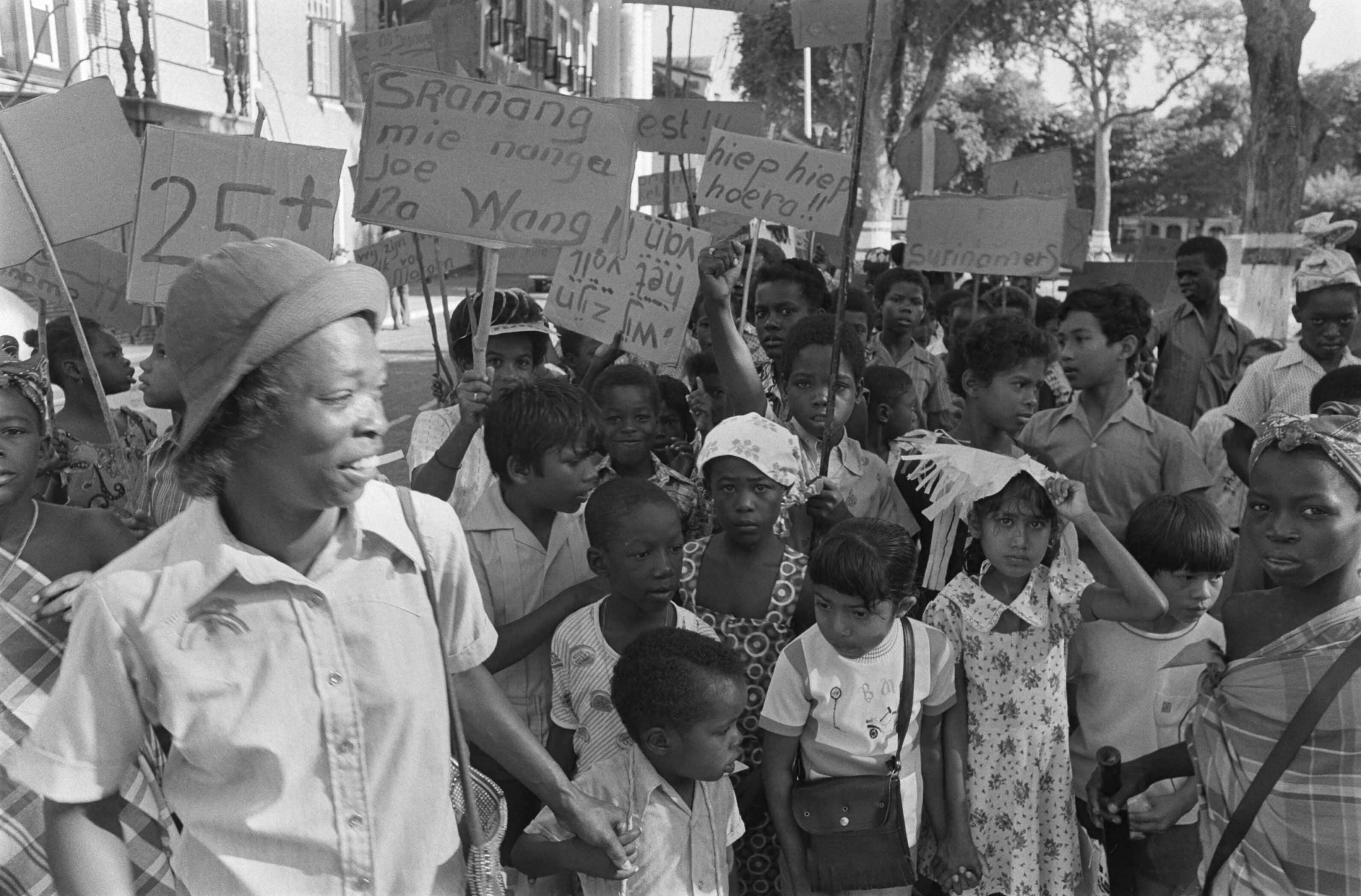 In a world of increasing polarisation and fear of multiculturalism, multi-religiosity and diversity, Suriname can be a shining example
© Anefo / Wikimedia Commons
Let us hope therefore that the Surinamese government does not just focus on the cultivation and export of raw materials such as oil and gas. We also need to make a concerted effort to maintain that which sets Suriname apart from all other countries: its population and the way these people, with roots from all over the world, treat one another. Holding on to that is key for the government of Suriname. If it can do that, a golden future awaits the country.
On 25 November 1975 Suriname looked to the future with confidence. The people knew: we will show that we can do it ourselves. And what we have to offer is special. Fifty years on, the world is so much bleaker than it was back then. Populist leaders, authoritarian regimes, rapid geopolitical changes and the threat of violence are making people around the world insecure, fearful and despondent. It makes what Suriname has to offer in this day and age all the more urgent.
The strength that’s in the people and the country of Suriname: show it to the world!

You might also like
The Struggle to Establish Dutch as the Language of Business in Flanders

Leave a Reply
You must be logged in to post a comment.