
Why Flemish and Dutch Deaf People Don’t Always Understand Each Other
People from different countries may speak the same spoken language, but that does not mean they share the same sign language. The Deaf communities in the Netherlands and Flanders, for example, each use their own sign language, with their own lexicon and grammar: Dutch Sign Language (NGT) and Flemish Sign Language (VGT). In fact, Flemish signers usually understand signers from Wallonia better than their Dutch neighbours.
Sign languages are not transmitted from one generation to the next in the same way as spoken languages. Most deaf children (90 to 95 percent) have hearing parents who are not likely to know a sign language. Until the mid-1990’s, deaf children in Flanders and the Netherlands were therefore often only exposed to sign language when they started to attend a school for the deaf. At school, learning their sign language primarily happened outside the classroom, and through contact with other (older) deaf children, as sign language was usually not taught in class nor used as a language of instruction. Nowadays, many deaf children in the Low Countries attend mainstream schools, where they have no deaf peers (of deaf adults) as linguistic role models.
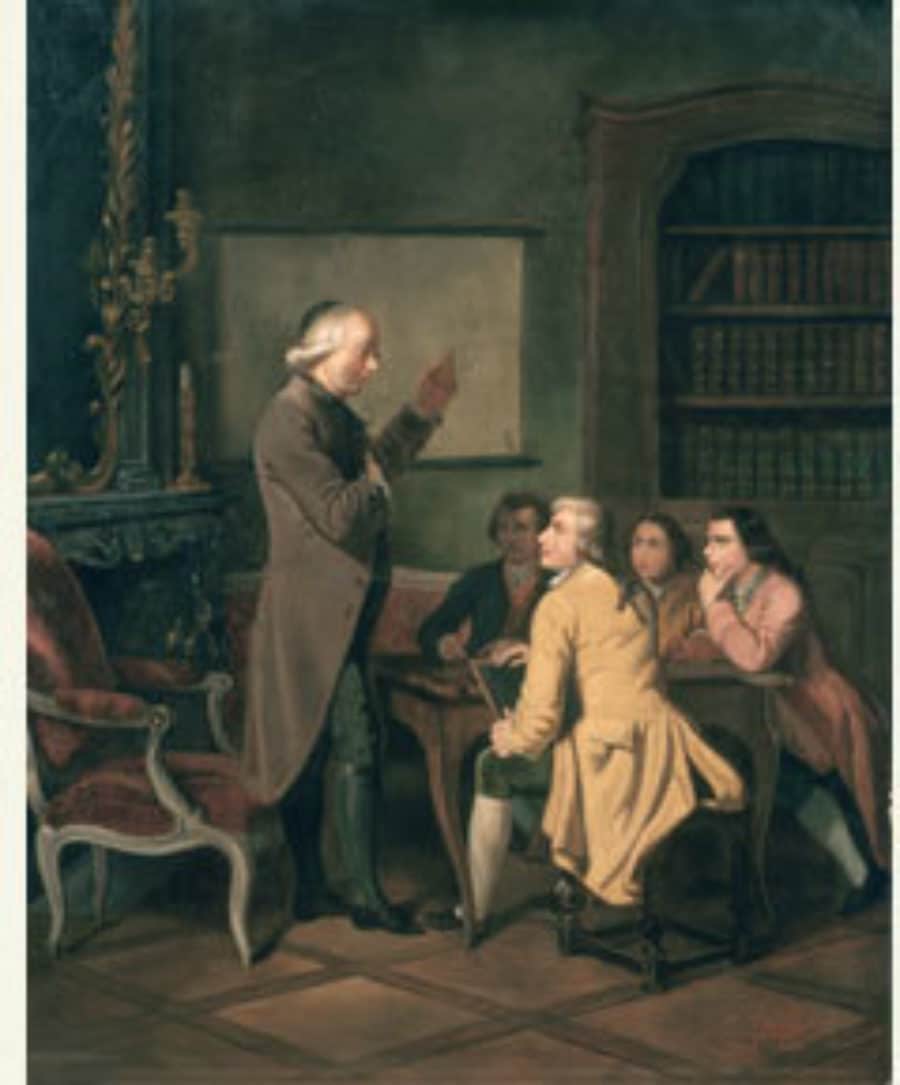 Nachor Ginouvrier, Une leçon de l'abbé de L'Epée, 1891, after a sketch by Frédéric Peysson
© INJS Paris
An important figure for deaf education, also in the Netherlands and Belgium, was the French priest Charles Michel de L’Epée. He began teaching deaf children in Paris in 1764. His approach was unique in that he used signs. De L’Epée and his Parisian school for the deaf attracted considerable interest: Many interested visitors came to observe and subsequently established deaf schools in their own countries, based on the French model. Among them was Henri Daniel Guyot, who established the first Dutch school for the deaf in Groningen in 1784. The founding of the first deaf schools in Belgium also shows a clear influence from Paris, and as in many countries, the adoption of the French method was accompanied by the adoption of (aspects of) Old French Sign Language. Relatively quickly, however, the Flemish and Dutch deaf schools replaced the “manual method” with the “oral method”. The focus came to lie on learning to speak and understand spoken language and signs disappeared from the classroom.
In and around each school for the deaf, a regional variant of Dutch or Flemish Sign Language was used that differed from other variants primarily in its lexicon
In the past, exchange between the different schools for the deaf was limited. This, combined with the fact that deaf children learned signs primarily from one another, led to regional variation. In and around each school for the deaf, a regional variant of Dutch or Flemish Sign Language was used that differed from other variants primarily in its lexicon.
Influence of the modality
Research suggests that unrelated sign languages differ less from one another than unrelated spoken languages, partly due to the influence of the visual-gestural modality on sign language structure. For example, signers make use of space and employ multiple articulators (both hands, the mouth, eyebrows…) simultaneously. When signing that a car is approaching a person standing upright, both Dutch and Flemish signers may use the following manual construction:
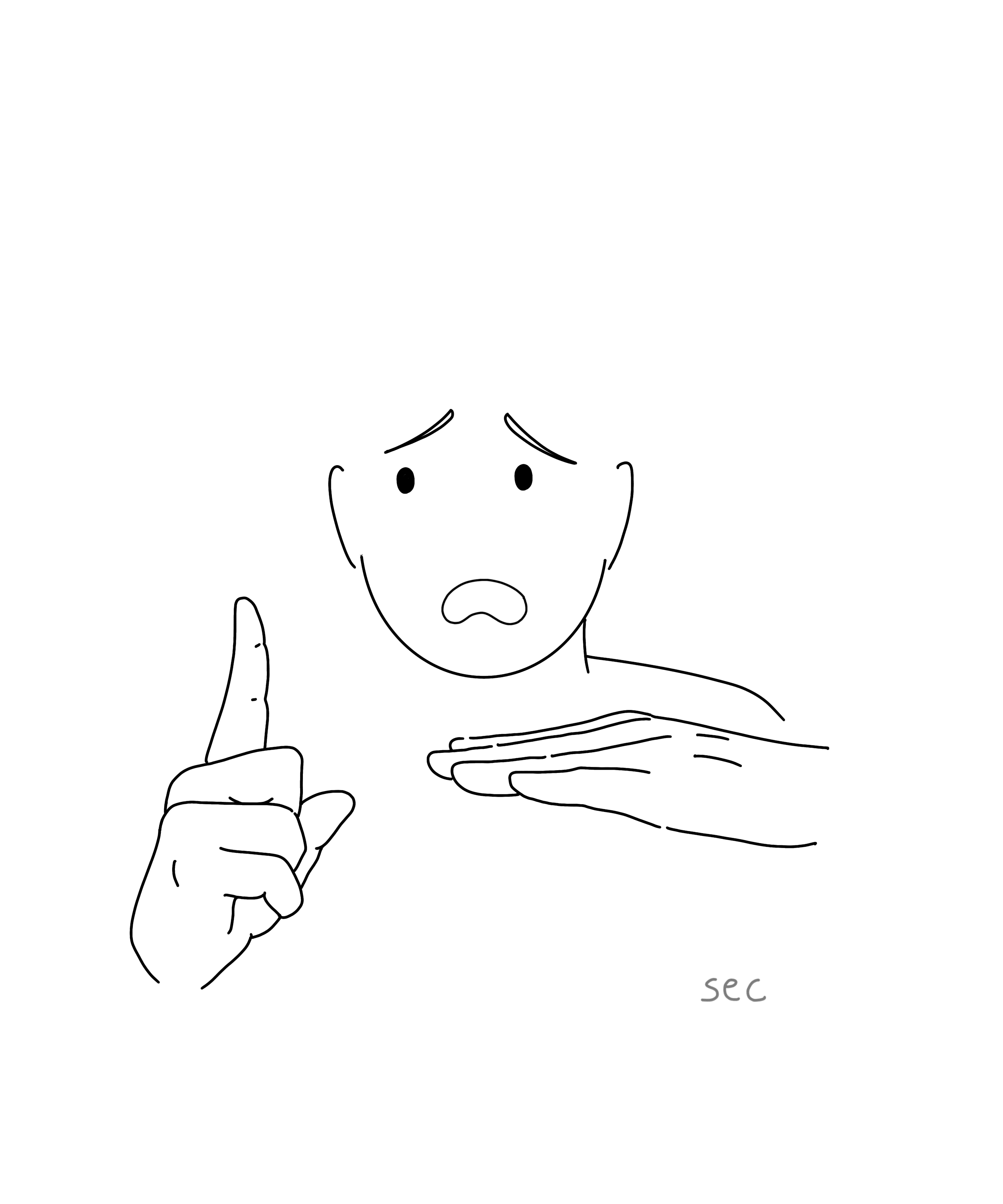 Classifier construction ‘car-apporaching-person’ combined with enactment: fear depicted through facial expression and body posture
The right hand represents the person, the left hand the car, and the movement of the left hand toward the right hand illustrates the movement of the car. Facial expression and body posture are used for enactment to depict the person’s fear at the sight of the rapidly approaching car. The hands function as classifiers here. Constructions with classifiers are probably used in all sign languages, and although the hand configurations are conventionalised and often differ across languages, classifiers constructions from different sign languages often look remarkably similar.
The end of Belgian Sign Language
In the southern part of Belgium, both the spoken language and the sign language differ from those in Flanders. The sign language used there is called “langue des signes de Belgique francophone” (French Belgian Sign Language – LSFB). Until about thirtyfive years ago, people still spoke of a “Belgian Sign Language” and assumed that the various regional sign language variants in Belgium together formed one single sign language. Until the 1970s, there was also a single Belgian Deaf federation.
Following the federalisation of Belgium, the national Deaf federation split into a Flemish and a Walloon federation. As a result, contacts between Flemish and Walloon deaf people decreased and sign language initiatives were increasingly developed at a regional rather than a national level. In 2000, the Flemish Deaf community chose “Vlaamse Gebarentaal” (Flemish Sign Language – VGT) as the name for the collection of sign language variants used in Flanders.
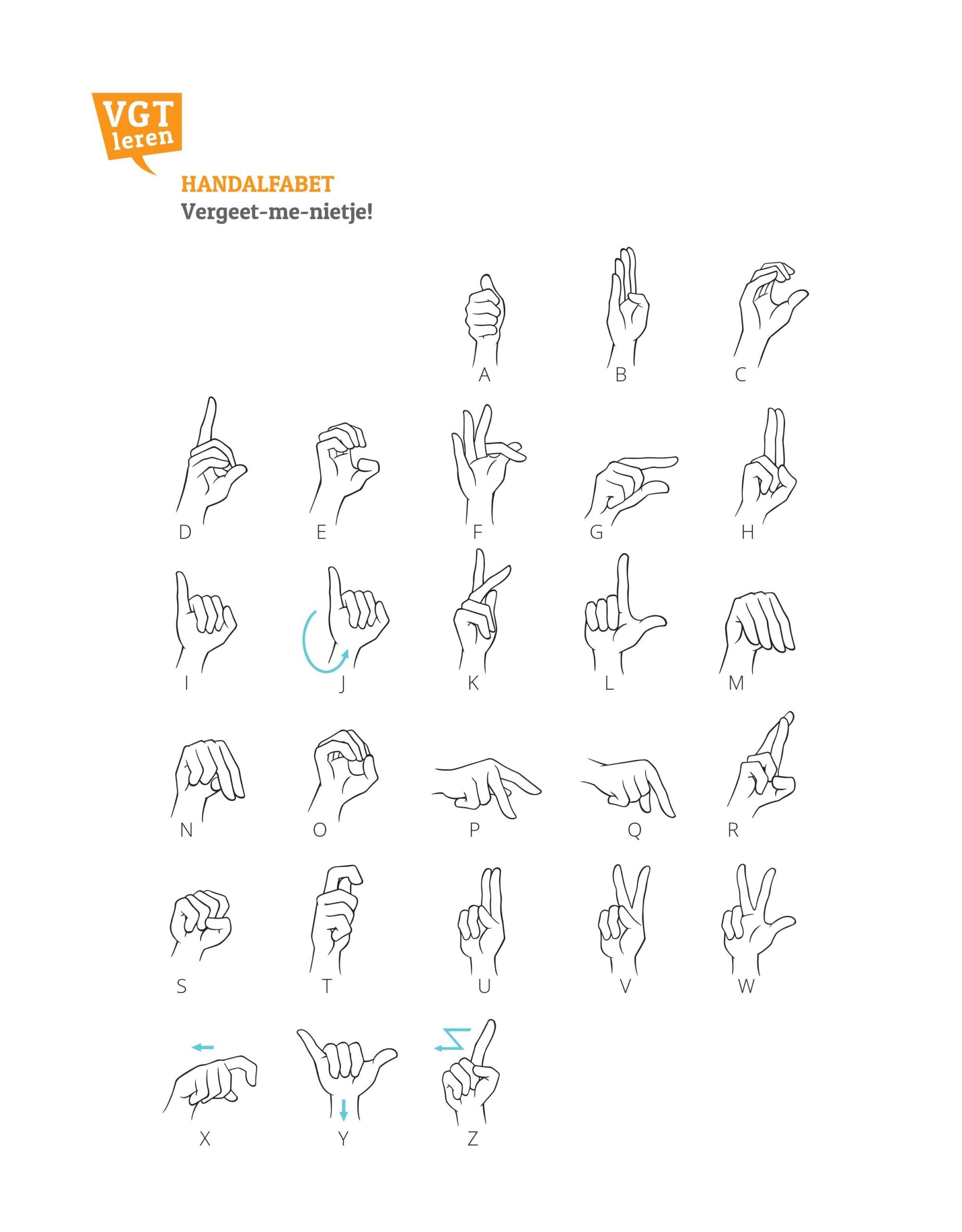 Flemish Sign Language finger alphabet
© VGT Leren
Flemish and French Belgian Sign Language have much in common
In a small study from 1984, the sign linguist Bencie Woll compared signs from twelve different sign languages, including Flemish and Dutch Sign Language and French Belgian Sign Language. She found that LFSB and VGT share many signs, unlike Flemish and Dutch Sign Language.
In two more recent articles (from 2004 and 2013), the relationship between Dutch Sign Language and Flemish Sign Language is discussed in greater detail. Attention is paid, for example, to the possible historical role of Old French Sign Language in the context of deaf education, as well as to the role of moutings. A mouthing is the silent articulation of a word or part of a word from the spoken language simultaneously with the production of a manual sign. When signing the manual sign CHAIR, for example, signers may articulate (mostly without voice) the Dutch word stoel; the manual sign SIT is usually accompanied by the mouthing zit or zi. The possible functions of mouthings in Dutch Sign Language have been studied and it was shown that one of the functions is to distinguish meaning, as in the case of the signs BROTHER and SISTER, which are manually identical in the Amsterdam variant of NGT (but not in VGT). As both Dutch and Flemish signers use mouthings drawn from Dutch, this might make it easier to understand each other’s sign language production.
This is precisely what Sáfár, Meurant, Haesenne, Nauta, De Weerdt and Ormel investigated in 2015. They examined whether Dutch deaf participants understand Flemish Sign Language more easily than Walloon deaf participants, or vice versa, and the extent to which mouthings and certain iconic structures, such as classifier constructions, play a role in this. Their study shows that the use of iconic structures in Flemish Sign Language makes it easier for both Dutch and Walloon signers to understand VGT production. Mouthings also help Dutch signers to understand Flemish Sign Language. This is much less so for Walloon deaf participants, though similarities between certain Dutch and French words (such as chocolade and chocolat) mean that mouthings are sometimes useful for Walloon deaf people too. When the mouth of the signer is made invisible, Walloon participants understand Flemish Sign Language more easily than Dutch deaf people do, but the difference is smaller than the researchers had expected.
In the autumn of 2025, the large-scale research project ChangIN’Signs was launched at KU Leuven and Ghent University. The project focusses on language change in Flemish Sign Language. It investigates, among other things, whether and to what extent VGT and LSFB have further diverged, and whether regional variation within VGT has decreased.
Variation, standardisation, and recognition
As mentioned earlier, regional variants of sign language exist in both Flanders and the Netherlands. In 1997, the Flemish Deaf community decided against the guided standardisation of Flemish Sign Language. However, it was considered important to take initiatives to support the existing spontaneous standardisation process. The online dictionary for Flemish Sign Language, first published in 2004, reflects the existing regional variation. In 2006, Flemish Sign Language was officially recognised by the Flemish Parliament as the visual-gestural natural language used in the Flemish Community and in the bilingual area of Brussels-Capital Region. Three years prior, in 2003, the Parliament of the French Community of Belgium recognised French Belgian Sign Language.
Since 2002, the Netherlands has had a standard lexicon of basic and educational signs. The standardisation was based on an extensive inventory of over 15,000 signs, which showed that the greatest differences existed between the northern region (Groningen) and the west and south. The official online dictionary for NGT by the Dutch Sign Centre includes both standard signs and regional variants.
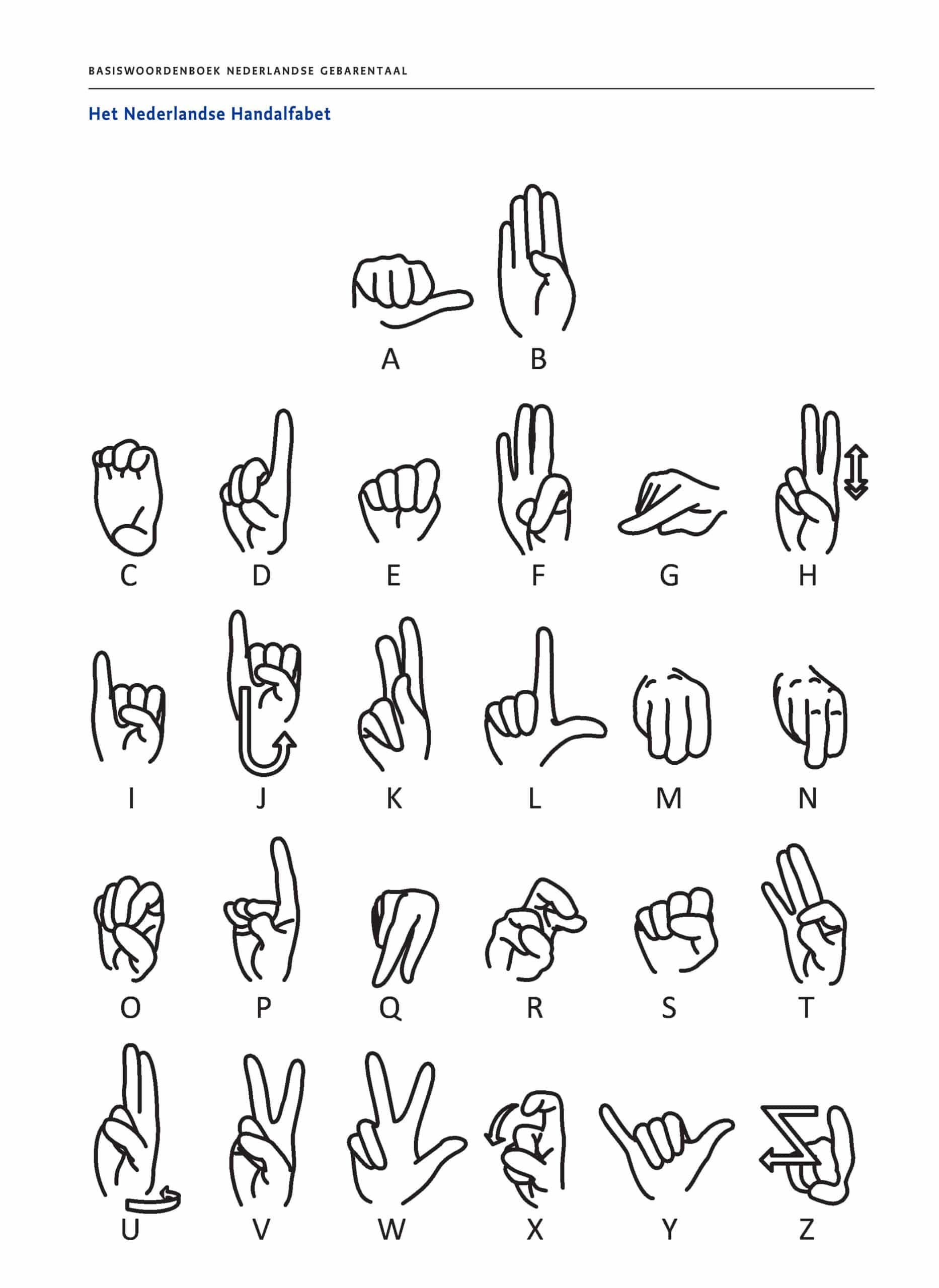 Dutch Sign Language finger alphabet
© Van Dale
The standardisation of part of the NGT lexicon was a condition set by the Dutch government for the legal recognition of the language, but it would take almost twenty years before this legal recognition would take place. In September 2019, three political parties proposed a draft legislation supported by Dovenschap and the Dutch Sign Centre. On 22nd September 2020, the House of Representatives voted unanimously in favour of the legislative proposal to recognize NGT as an official language in the Netherlands. On October 13th the Senate accepted the proposal also unanimously. The law was signed by the King on March 16th 2021. The law gives Deaf people the right to use NGT and to obtain information in NGT. The government is required to actively stimulate the use of NGT.


You might also like






Leave a Reply
You must be logged in to post a comment.