
Until Language Itself Cracks: Dementia in Dutch Literature
We’re constantly hearing that the ageing population is one of the great challenges our society faces, but how do people age? Above all, many fear the advent of forgetfulness, which may sometimes come on suddenly but generally seeps in slowly but surely. Until nothing remains even of language, although language remains the best means of outlining the process. This article presents a selection of Dutch-language novels in which dementia plays a role.
There’s no denying it: we’re growing ever older. The average life expectancy in the Low Countries continues to rise, to almost 80 for men and more than 83 for women. What’s more, the baby boomers are beginning to enter old age now. Of course that calls for associated reading material, which has been in ample supply in recent years, for instance in the form of Hendrik Groen’s humoristic, fictitious diary series, including the prizewinning titles The Secret Diary of Hendrik Groen, 83¼ Years Old and On the Bright Side. The New Secret Diary of Hendrik Groen, 85 Years Old. In brief, apparently light-hearted, but above all warmly written excerpts, Hendrik Groen invites the reader to accompany him through all the ups and downs of life in an Amsterdam care home.
As in real life, Groen has to deal with an increasing number of ailments. Over the course of the books he grows increasingly forgetful. Fortunately the diaries offer a firm footing: here he can read over what he has lost among his thoughts.
The success of the books on Hendrik Groen’s ups and downs reveal the need in the Dutch-speaking region for reading matter on the subject of ageing. The popularity of Mom, in which sports commentator Hugo Borst describes how he cares for his mother who has dementia, is a further indicator of this demand.
The success of the books on Hendrik Groen’s ups and downs reveal the need in the Dutch-speaking region for reading matter on the subject of ageing
The fact that the theme of forgetfulness appeals to many readers is no surprise: with the growing number of elderly people, the figures for dementia sufferers are also on the rise. Anyone who reaches the age of 80 has a 25 percent chance of being affected by this disease; among people in their 90s the chance is as much as two in five.
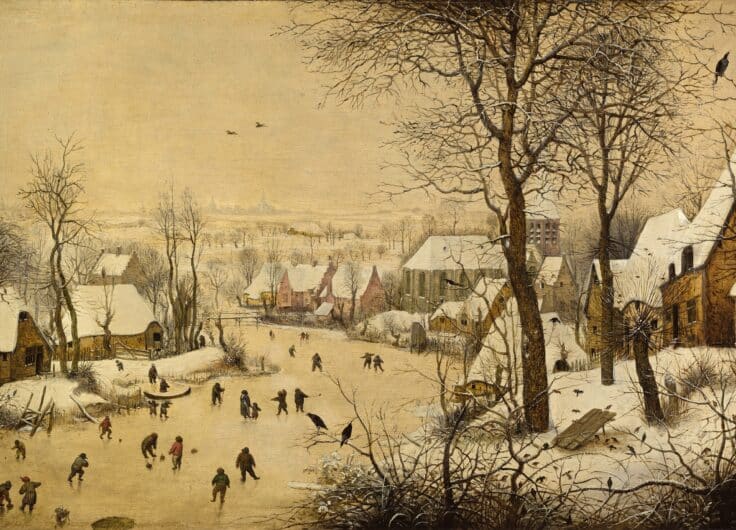
Snow-covered
Literature turns out to be perfectly suited to mapping out that process of forgetting. By far the most famous novel on dementia in the Dutch-speaking region is Out of Mind by J. Bernlef (1937-2012), in which the main character Maarten Klein slowly but surely loses his grip on reality. Present and past are ever more difficult to distinguish. For instance he has long been retired, but suddenly thinks he has to go to work again. He also increasingly alienates his wife Vera, until he no longer recognises her.
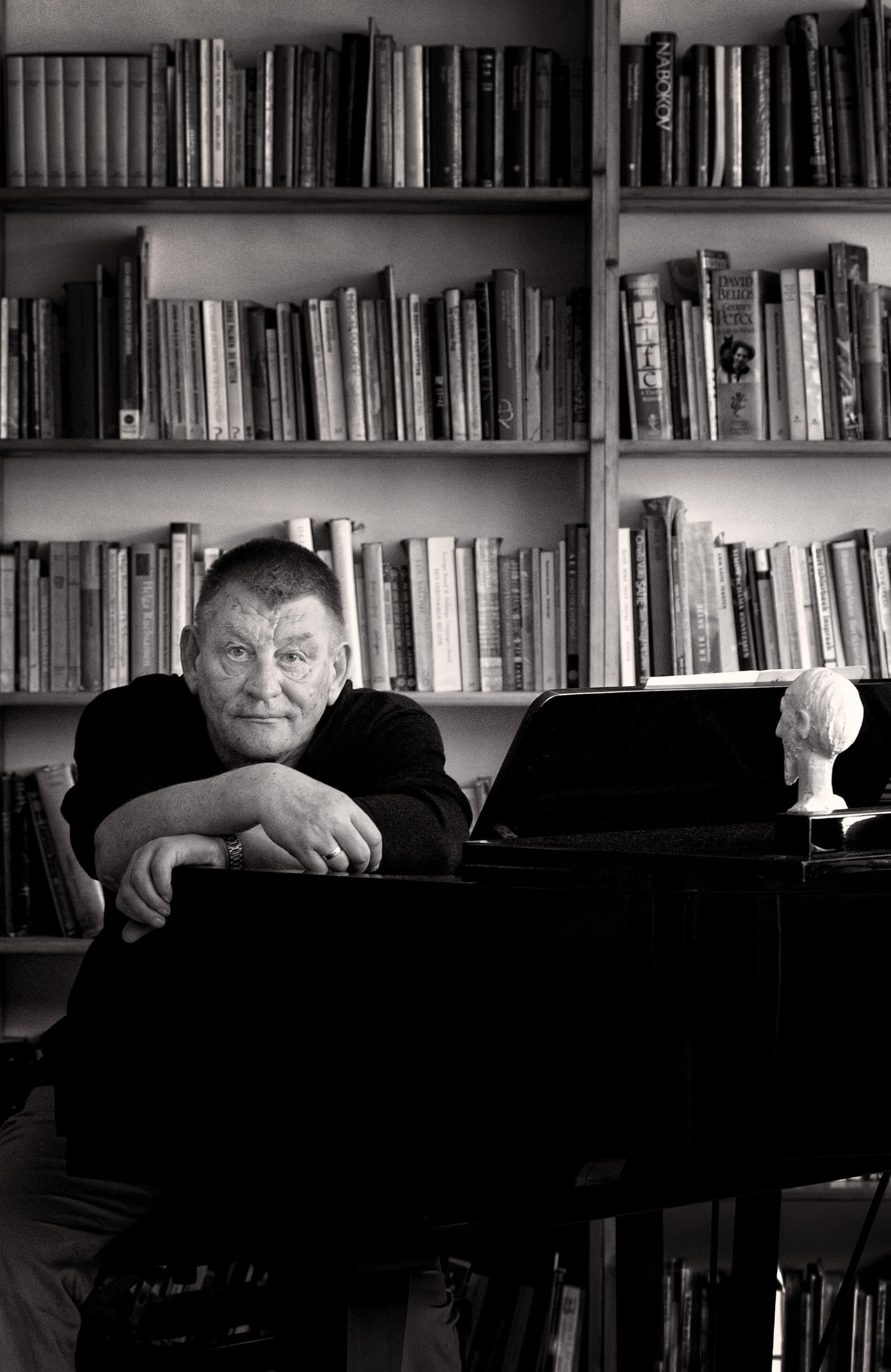 J. Bernlef at home in Amsterdam in 2002.
© Michiel Hendryckx
When someone is steadily losing their grip on the present, they retreat into the past. The greater the gaps in Maarten’s memory, the more he thinks back to his early life, which appears still unaffected by his memory loss. In particular, memories of the war are crystal-clear. Nature, too, continues to fascinate Maarten. He regularly stands at the window, staring at a squirrel in search of food, as it continues to snow – a recurring theme in the novel and a metaphor for Maarten’s increasingly snow-covered memory. The book in fact opens with the sentence, ‘Perhaps it’s because of the snow that I feel so tired in the mornings.’
Acting is part of dementia, as Bernlef illustrates in Out of Mind. He is overcome with fear of being caught with his brain faltering, leading to overcompensation: Maarten is frequently angry with his wife because she no longer remembers a specific occurrence and he hides behind the excuse that his memory was never any good in the first place. The gulf between self and other is further widened by this.
External memory
Within the deterioration inextricably linked with dementia, the body plays a special role. In Maarten’s case, it forms a kind of external memory, decoupled from the mind’s decline. The feet of a person with memory loss can still follow dance steps learned decades earlier, the hands can still find their way around the piano keys. These are moments of relief in Out of Mind, in a narrative that derives tension from decline.
Bernlef succeeds in showing the crucial role that language plays in this process of deterioration. Maarten is forced to search ever longer for the right words: he can tell that he is not using the correct terms, but no longer knows what they should be. The final pages of Out of Mind are famous, filled with ever more white, ever fewer complete sentences and ever more signs of impediment, until nothing remains of language.
The final pages of Out of Mind are famous, filled with ever more white, ever fewer complete sentences and ever more signs of impediment, until nothing remains of language
Out of Mind sets itself apart from the other novels featuring dementia by taking the dementia sufferer as its focus. That offers the opportunity to add nuance to the image which sometimes arises of dementia: Maarten is far more than a hazy figure, and there are enough matters which make his life more than worth living until the end – not least the endless stream of memories from a distant past.
Strapped down
A more recent successful novel on dementia is Cliënt E. Busken by Jeroen Brouwers (1940-2022). Cliënt E. Busken centres on a day in the life of an elderly man strapped into his wheelchair in a secure care institution. To the outer world he is silent, but internally he continues to ponder.
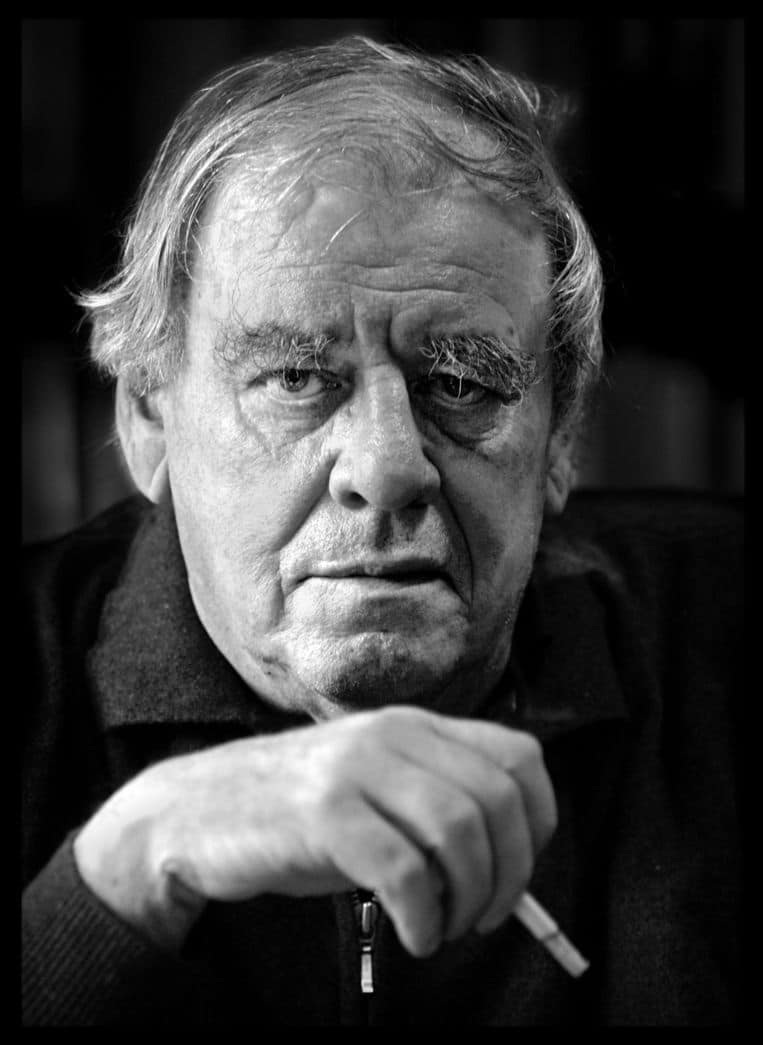 Jeroen Brouwers
© Joost van den Broek / de Volkskrant
What he sees and experiences, he links directly or indirectly to his own memories. The carers’ uniforms, which offer him no clue as to whether they are male or female, remind him of his mother once remarking that she would have preferred a girl. The institution in which he is now compelled to stay is built from memories, as we can tell even from its name: Huize Madeleine, undoubtedly referring to Marcel Proust’s famous madeleine scene, which brings back a flood of memories to the main character of À la recherche du temps perdu. Initially Mr Busken appears still to have an excellent command of language: in his thoughts he rattles on in magnificent cadenced sentences. With increasing frequency, however, the reader catches him using a word that doesn’t quite fit the context. The content is also increasingly unreliable: Busken claims to be a brain surgeon, ‘polar meteorologist’, ‘paleogeneticist’, ‘strategist of the general staff’, ‘cryptozoologist’ and a celebrated painter, composer and writer.
It may well be compensation for the increasing monotony of the world around him. His flights of fancy bring colour to his life, which otherwise contains few highlights. At the same time, all those entangled realities are symptoms of Busken’s loss of control over his own brain. Just as his virtuoso language appears to become ever more frequently derailed, the memories he shapes with that language appear increasingly unreliable.
Experience of surroundings
In Flemish and Dutch literature the focus is often not on the dementia sufferer, and dementia is not always the main theme. Often it is merely part of a longer disease process, as in the case of Judith Koelemeijer’s The Silence of Maria Zachea, in which two children care for their mother after a brain haemorrhage. She spends the following eight years in silence, sitting at the window. The focal point is not her decline – in which traces of dementia can also be discerned – but the sometimes radically fluctuating images which the children have retained of their mother.
Sometimes it is not even entirely clear whether we are dealing with dementia, as in Speechless, for instance, in which the author Tom Lanoye, who has been translated many times into French, sketches a portrait of his mother Josée Verbeke. After a rich and turbulent life she suffers a stroke and ends up in a care home. Language is taken from her in a manner reminiscent of the examples mentioned above, characterised by the loss of the right words in context.
 Tom Lanoye
© Arthur Los Fotografie
In this story the loss is particularly poignant, given the background of both disease and narrator. Not only was Lanoye’s mother an amateur actor, depending on the power of the spoken word: Lanoye as her son suffers the utmost pain in seeing his own greatest weapon wrenched from the hands of his mother, the person who taught him language in the first place. Their communication grinds to a halt.
Without a trace
Literature turns out to be eminently suited to reflecting the decline brought on by dementia: by mixing present and past, allowing truth and fantasy to intertwine, allowing language to crack until it breaks. Readers of the novels discussed here understand the way the memory seeks coherence, preventing us from having to keep on starting from scratch in all our thoughts and actions. It gives our world all the meaning it holds for us. Or, as the main character Maarten in Out of Mind remarks, ‘In order to see something you must first recognise it. Without memory you can only look. Then the world slips through you without leaving a trace.’
You might also like

In Jozef Deleu’s Poetry, Nothing Was Lost





Leave a Reply
You must be logged in to post a comment.