
Sheffield Students Translate ‘Oroppa’ by Safae el Khannoussi
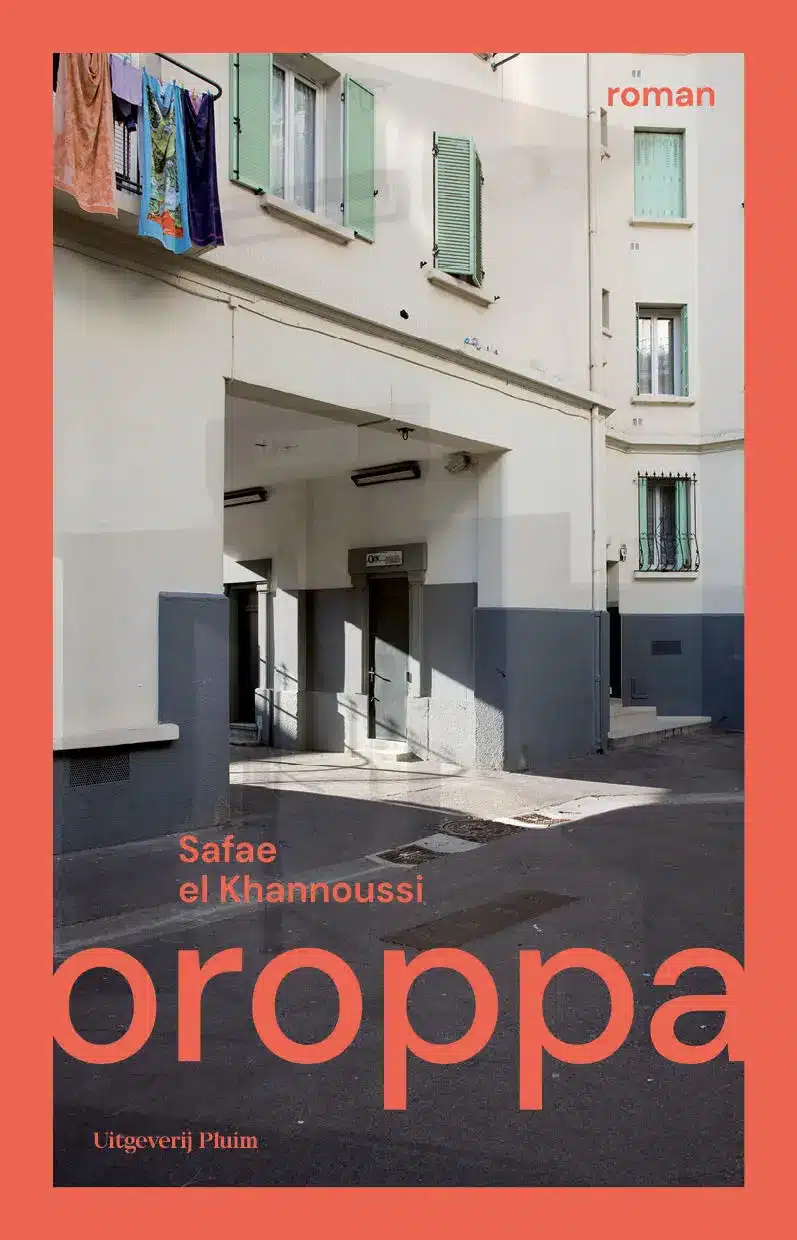
A bold, multi-voiced debut novel that bridges continents and histories, Oroppa by Safae el Khannoussi challenges what it means to belong in today’s Europe. In this article, Students of Dutch at the University of Sheffield take on the rewarding challenge of translating one of its richly layered stories—discovering along the way that literary translation is as much an art of interpretation as it is of language.
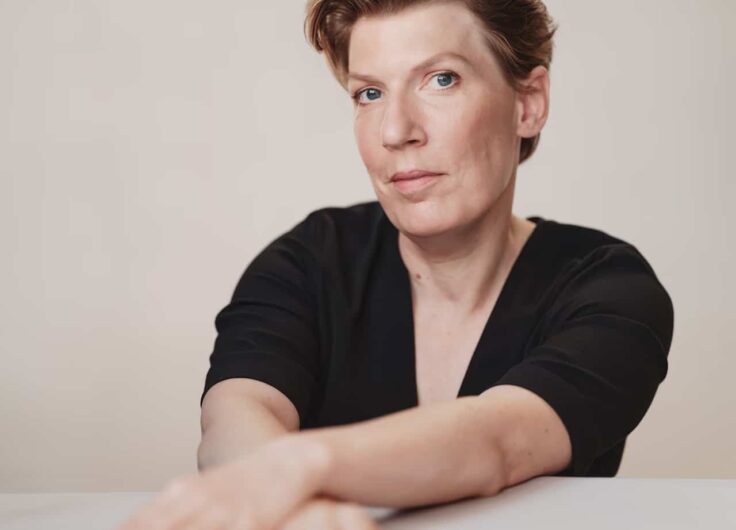
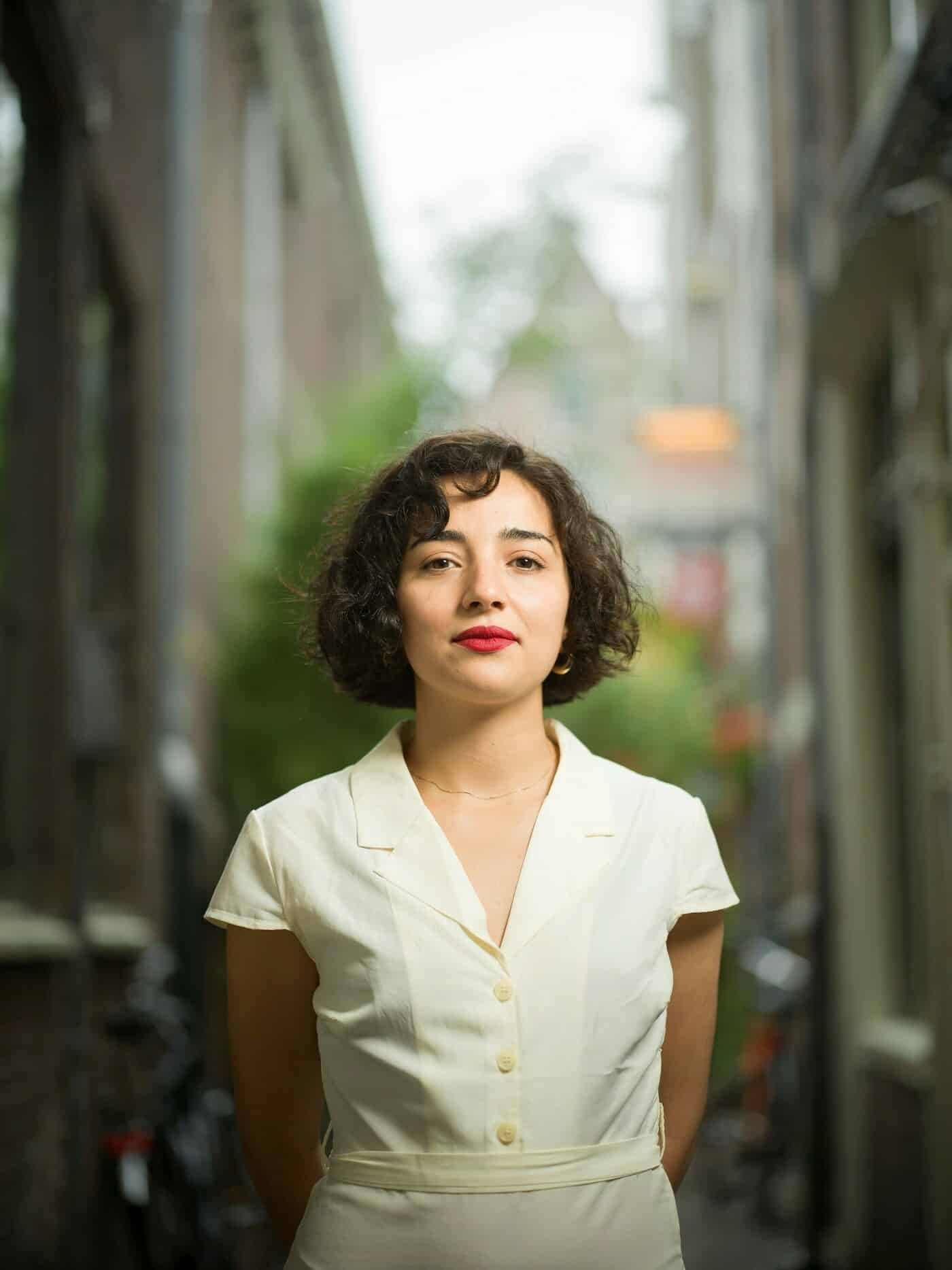 Safae el Khannoussi
 © Merlijn Doomernik
Oroppa, the 2024 debut novel by the Dutch-Moroccan author Safae el Khannoussi, is a trove of interconnected stories that span two continents and multiple perspectives. It weaves together pasts, presents, and futures, while depicting real lives in all their nuanced shades. Shedding light on the post-colonial and migration histories of Europe and North Africa, the novel is an ode to resistance and resilience, and contends with the notion of what it truly means to be European – something that could not be more relevant in our current political and cultural climate.
Considering all this, the prospect of translating an excerpt from such a compelling, complex and prize-winning novel was a little daunting and very exciting at the same time. My fellow students and I were tasked with the translation of ‘The tale of the taxi driver and the widow’, told from the perspective of a character in Oroppa and set in Morocco. We began with crafting individual translations, by taking smaller sections and interpreting the Dutch text in our own ways. Despite us all working with the same source text, it turned out that everyone had produced entirely different and unique translations. We then discussed our individual translations in small groups, comparing our choices with each other and combining our versions into one comprehensive English text.
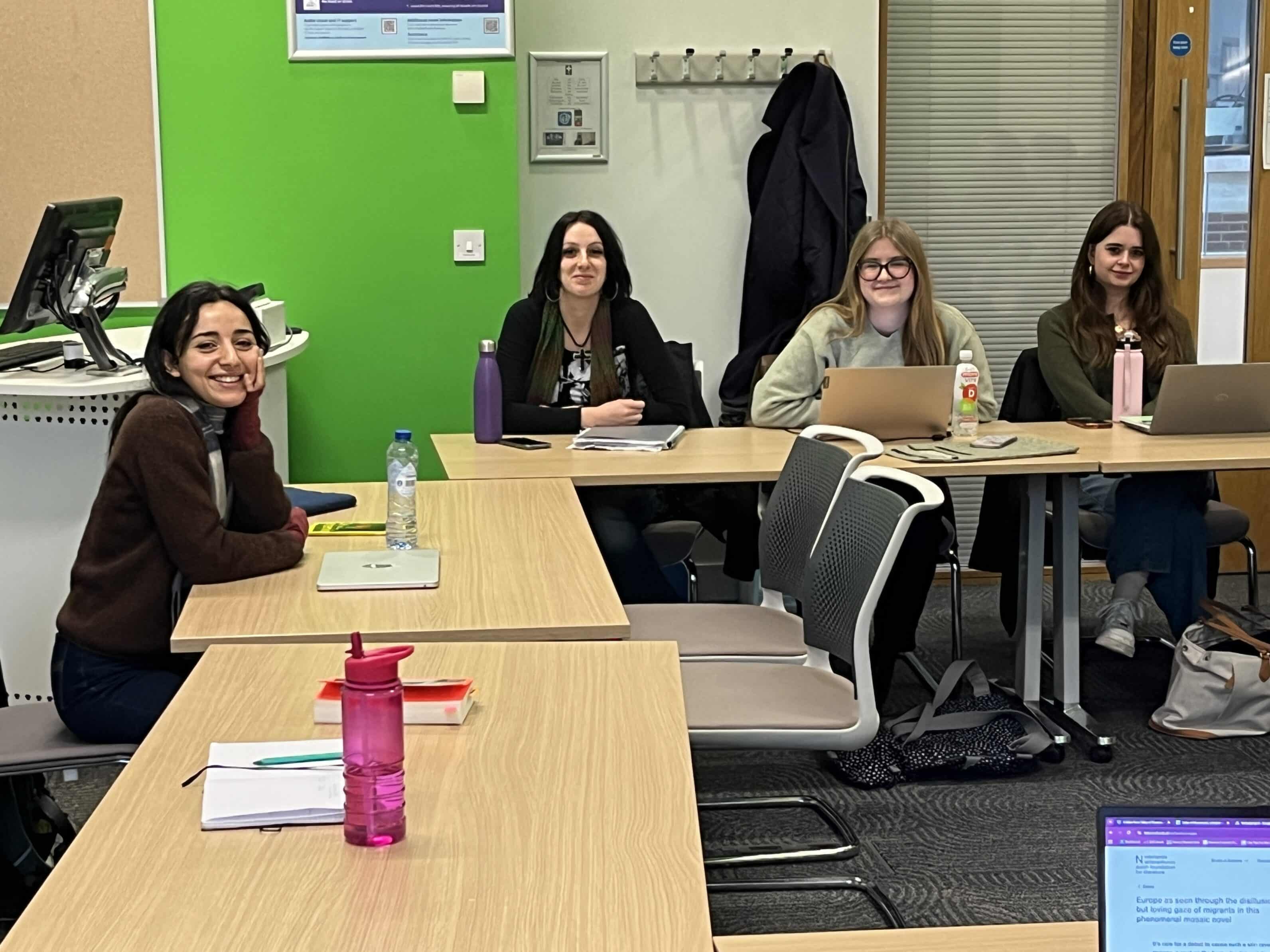
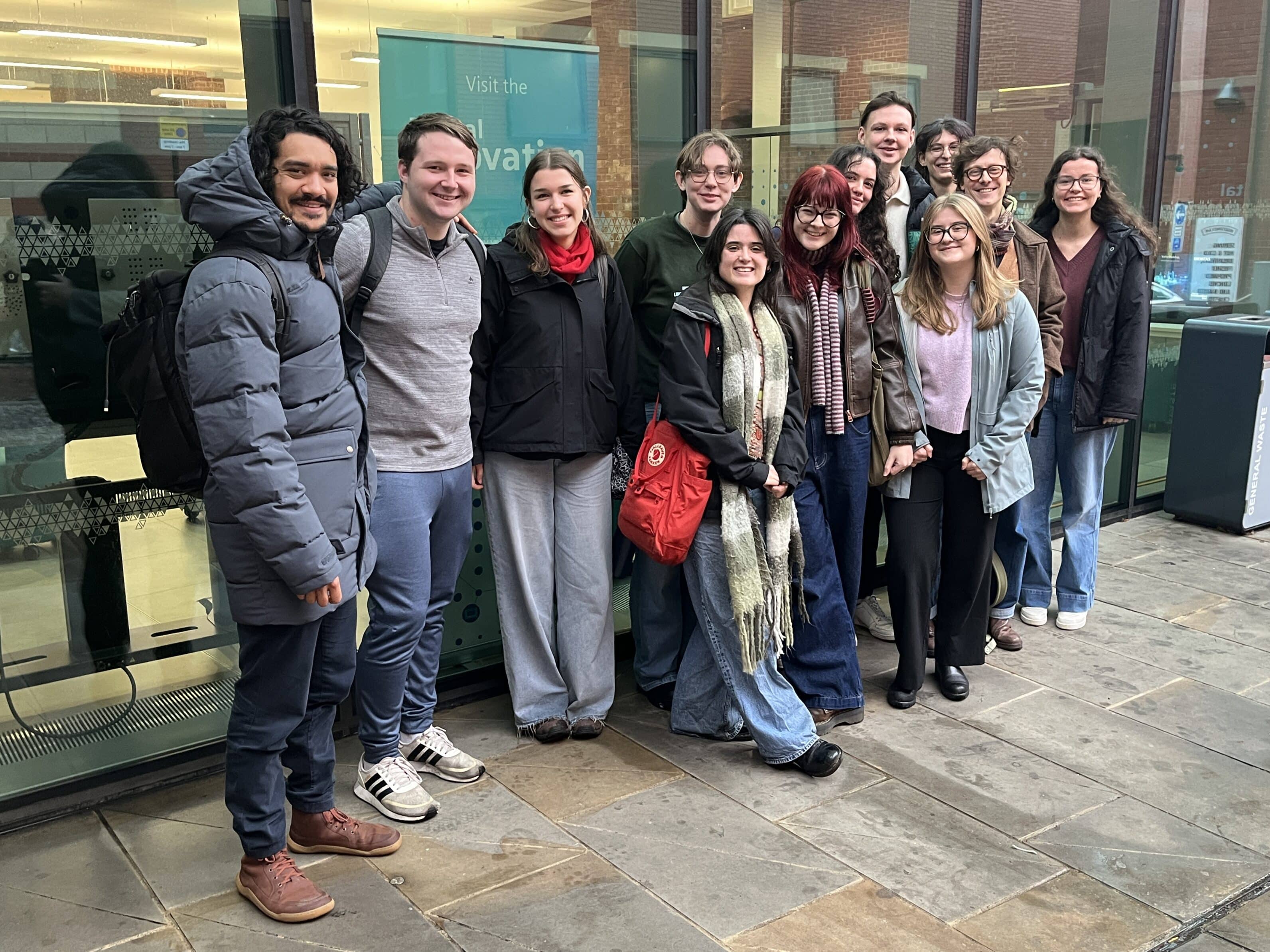 Students of the University of Sheffield with author Safae el Khannoussi (photo 1) and translator Shimanto Reza (photo 2)
Our project culminated in a Translation Symposium, where we worked closely with Shimanto Reza, who is the official English translator for Oroppa and who also contributed in 2022 to the Sheffield translation of the graphic novel Quaco. My Life in Slavery by Ineke Mok and Eric Heuvel. Together we discussed our translation decisions, corrected mistakes, and shared our thoughts. Here, I discovered just how complicated and detailed literary translation really is. With every single word choice must also come a consideration of meaning, tone, literality, representation, perspective, and flow. And Khannoussi’s language is rich and full of subtle references. This is something that definitely posed challenges for the editorial team when finalising our English translation.
Seeing everything come together was certainly satisfying, but it required a lot of thought over the style and register to make sure that it was consistent throughout, as well as checking punctuation and formatting.
Looking back at the project as a whole, I can only conclude that it was a truly wonderful, insightful and inspiring experience to work on this text and to discover more about the world of literary translation. Perhaps the most important thing that I learned from this experience is that translation is so much bigger than you may realise when you are reading something in translation – the impact that translators have and the role that they play significantly shape the final product. In this way, it was invaluable to have all of us contributing to this translation: we each brought a unique and special angle to it, just as Oroppa itself captures and highlights just how different and complex human perspectives can be, and how important it is to recognise that.
I hope that our English translation has done the original text the justice that it deserves, and that you can see how much joy we had in doing this together.
Summer Freeman (BA Modern Languages and Cultures, University of Sheffield)
Editors and translators: Aggie Bos, Eleanore Bradley, Sophie Coe, Lucas Creaton, Aine Cronnelly, Marie Denk, Summer Freeman, Florence Gavel, Wouter Houben, Oliver McKeown, Luca Smith, Charlotte Van Bochoven.
Mentor: Shimanto Reza
Project Coordination: Filip De Ceuster (University of Sheffield), Henriette Louwerse (University of Sheffield)
The tale of the taxi driver and the widow
Amine Meskini was perhaps the most well-known taxi driver in Casablanca. He was a gentle, loyal, and cheerful man no older than thirty-five who loved not only his God but also his wife and children dearly. Despite working night shifts, he would wake up early each morning to give his two children the fatherly love they so deserved. And his wife had nothing to complain about either. The love that the children received, she received too, maybe even more so. It all happened on a cold winter’s night. Meskini was driving down an abandoned road just outside the city when he came across a woman and child sitting on a stone to one side. In any case, I don’t know if you gentlemen are aware, but for the love of God take this as advice from a good friend: you must always remember to change the names of anyone you’re talking about when passing on a rumour or an anecdote. Because if you don’t, and you use the same names twice, or even worse, their real names, then it’s very likely you’ll meet the same misfortune – that I can guarantee. Anyway, this poor man, this Meskini, was driving along the abandoned road when he saw a woman with a child huddled together against the cold wind. He found it odd that a woman and child should find themselves in such a remote place, at this hour. Nevertheless, he decided to mind his business and hoped that the pair were waiting for a friend or relative. But when he drove back the same way an hour later, the woman was still sitting there, now with the child sleeping in her arms. The sight of his weary little legs dangling there was so heartbreaking that, after dropping off his client, Meskini turned right back around and drove back to that same spot, where he found the woman again. When the car came to a halt a few metres in front of her, she lifted the still sleeping child without so much as a glance towards the car and sat down a little further up the road. God, oh God, if only poor Meskini could have known the fortune that awaited him! If only he’d been warned to prevent this terrible tragedy! But no, the guardian angels remained silent, as it was their job to let fate run its course, and the truth, as you shall soon come to see, no matter how painful it may be, will always triumph in the life of a godly man.
Right, so Meskini stepped out of his taxi and called to the woman from a distance: ‘Madam, could I give you a lift somewhere?’
‘That is very kind of you,’ replied the woman, her accent immediately revealing that she wasn’t from the city. ‘But I have nowhere to go,’ she added with a sadness in her voice.
Without coming any closer, Meskini called out, ‘But surely you must know that it’s not safe here for a woman and child?’
‘Of course I know that!’ wailed the woman, and at this she burst into tears, cursing herself and her ancestors for her fate. Awoken by the outburst of his mother, the poor child opened his eyes and looked at her without any surprise, as if he had witnessed this same scene play out a hundred times before. Then he simply closed his little eyes again, tired as he was.
‘My husband suddenly passed away less than a month ago,’ continued the woman, ‘and his death has left us to fend for ourselves. I was on the way to the place I was born, with my child, as you can see, when I was robbed of everything I had by a group of thugs. They chased me into an alley and pressed me against a wall with a knife to my stomach. If I had been alone, I would have fought them to the bitter end. But I had to think of my little one, who had started crying and thrashing furiously, while those scoundrels laughed and taunted his mother.’
Let the record show that by now Meskini had already decided to help this woman, whatever the cost.
Spurred on by his sympathetic silence, she continued her story: ‘And now I have nothing left. Not a cent. My gold jewellery, my clothes, my child’s clothes – it’s all gone. But anyway, you know how it is. When emotions are inflamed by despair and misery, you tend to overestimate yourself. After the thugs had cleared off, I grabbed my child, sat him on my back, and decided to just start walking, counting on the kindness of strangers along the way: a piece of stale bread and a bit of olive oil in the morning, a plate of leftover bisara. I swear to you that, in my rage, I couldn’t feel the ground beneath my feet. But soon evening crept up again and the child began to cry from hunger, and I was beginning to struggle too. In the distance, I could still see the city. And such a heavy feeling came over me that I had to sit down on this stone to rest.’
‘But don’t tell me that you’re going to walk the whole way on foot?’ Meskini cried out, with a crack in his voice. ‘Where’s the village you’re heading to?’
‘About two hundred kilometres from here,’ said the woman.
She’ll never survive that, he thought. ‘God almighty,’ he said, and drew a little closer, coming to stand in front of the woman. ‘Listen, I can take you to your hometown, but not tonight. You can stay at mine tonight. And don’t worry, I have a wife and two children. My wife will receive you and your child warmly into our home, and my children will have a new friend to play with. Tomorrow we’ll have breakfast together, and then I’ll take you both to the village.’

You might also like




Leave a Reply
You must be logged in to post a comment.