
Dutch Art Movement De Ploeg Finds a New Home in Groningen

“There’s nothing like Groningen”, is the well-known slogan with which marketeers have put the most important city in the Northeast Netherlands on the map. But for the countryside to the north of the provincial capital, it was taken a bit too literally: the surroundings were regarded as insignificant. The newly opened Kunstcentrum De Ploeg (De Ploeg Art Centre) in the village of Wehe-den Hoorn shines a spotlight on this long-forgotten area and the artists’ collective that once found inspiration here.
The last thirty kilometres to Kunstcentrum De Ploeg in Wehe-den Hoorn will easily take you half an hour. You leave the motorway, following provincial roads that are sometimes so narrow you wonder whether two-way traffic is really sensible. Oncoming traffic, however, can be seen from afar. The vast openness of the flat landscape is only occasionally interrupted by a solitary tree or a terp. The road winds past centuries-old villages and the broad-framed farmhouses of wealthy landowners, locally known as “grain palaces”. At your destination, you can almost smell the Wadden Sea.
The legacy
This is the territory of De Ploeg. The artist collective was founded in 1918 and is Groningen’s claim to fame in the field of painting. It emerged from Pictura, one of the Netherlands’ oldest societies for the promotion of the arts, which, as early as 1896, was already progressive enough to organise an exhibition of work by the then largely unrecognised Vincent van Gogh. His dynamic Post-Impressionist style can be seen in the work of founding Ploeg member Johan Dijkstra. Jan Wiegers, on the other hand, inspired his colleagues with German Expressionism. De Ploeg was not a school or movement with consistent stylistic characteristics. The group had no manifesto, only the intention to “plough the Groninger soil and let something new grow.”
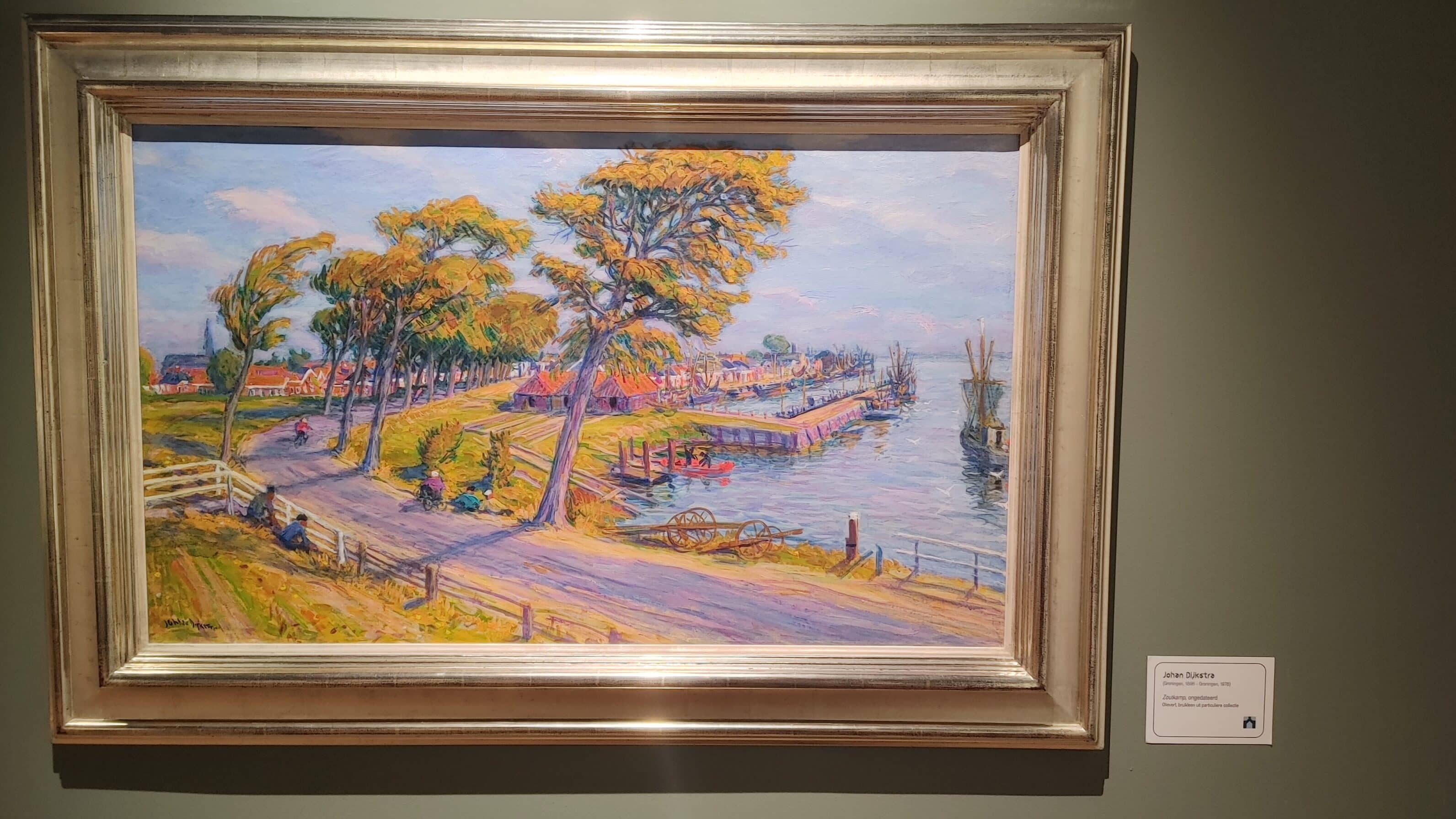 A painting by Johan Dijkstra, founding member of De Ploeg
© Kunstcentrum De Ploeg
Although Vereniging Kunstkring De Ploeg (De Ploeg Art Society) still exists and organises an annual exhibition, the pre-war years are considered its heyday. A few exceptions aside, such as the printing king H.N. Werkman, its members never achieved national recognition. Outside their own province, the group has largely faded from view. Even the Ploegpaviljoen (Ploeg Pavilion) in the Groninger Museum is little more than a modest side room.
Restoring honour
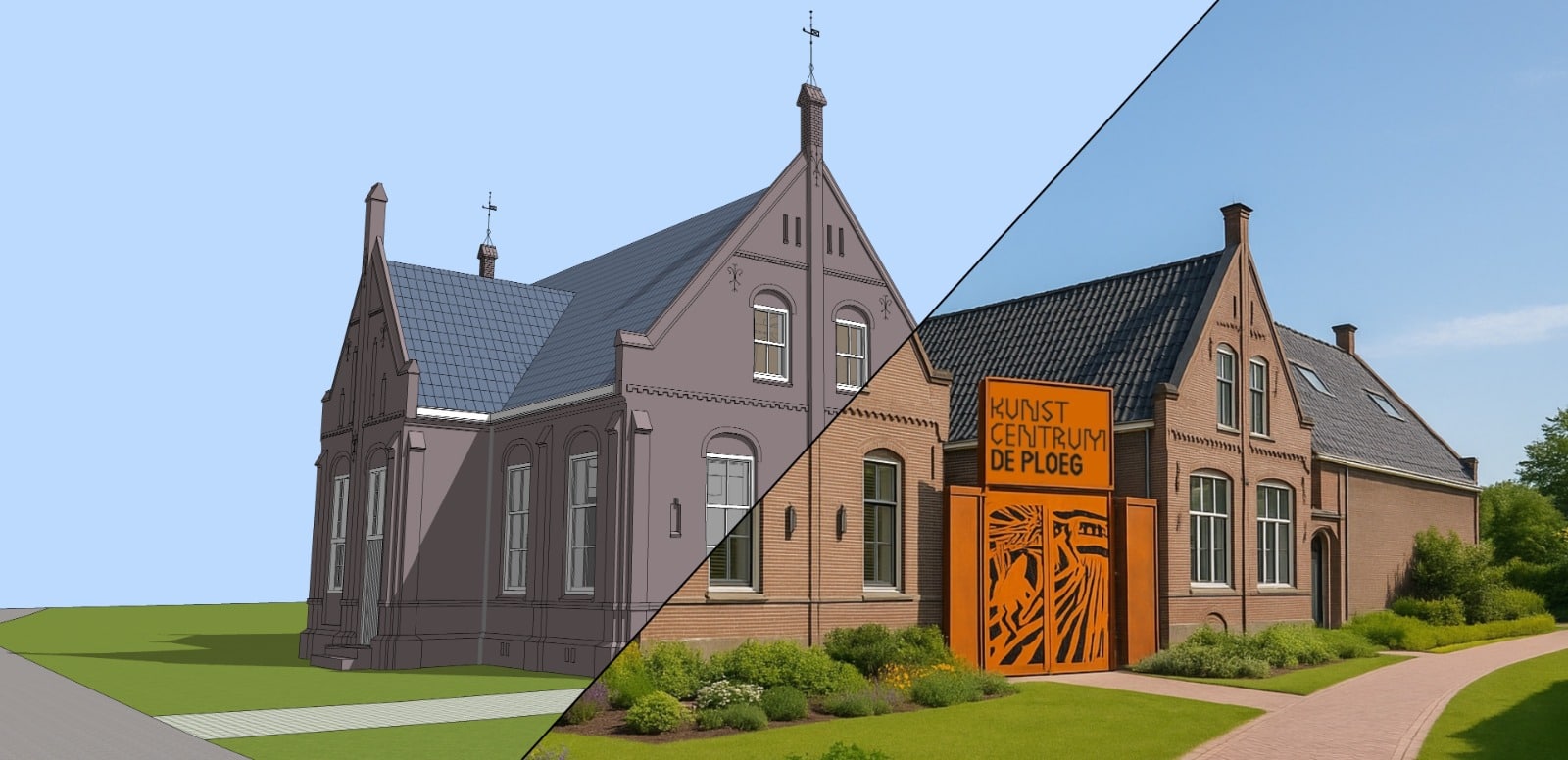
This autumn, the museum aims to remedy that with a major retrospective across seven galleries. Yet the province’s most prominent art institution is no match for a village of just 705 residents. On 8 July, Kunstencentrum De Ploeg opened its doors there. The name adorns the Corten steel doors, which feature a Ploeg depiction of a farmer with a horse. The rust-red hue beautifully complements the brickwork of the monumental Sint Jozef School, built in 1873, the first Roman Catholic school in Groningen.
While the location isn’t a traditional museum space, it is fitting nonetheless. Many Ploeg members worked as drawing teachers in schools like this to supplement their income. And when you step outside, you’re standing amidst the landscape that was their main subject. It’s not far from the no longer existing Blauwbörgje farm – the ‘Barbizon of the North’ – where they would paint outdoors for days at a time.
© Kunstcentrum De Ploeg
Restoration with vision
The desire to create a dedicated centre for De Ploeg had existed for some time but gained momentum with the establishment of the Nationaal Programma Groningen (Groningen National Programme). Its accompanying €100 million fund – compensation for years of earthquakes caused by gas extraction – was partially earmarked for the repurposing of historic buildings. The Sint Jozef School was on the verge of collapse, but a recommendation committee comprised of political heavyweight managed to channel over €5 million to Wehe-den Hoorn.
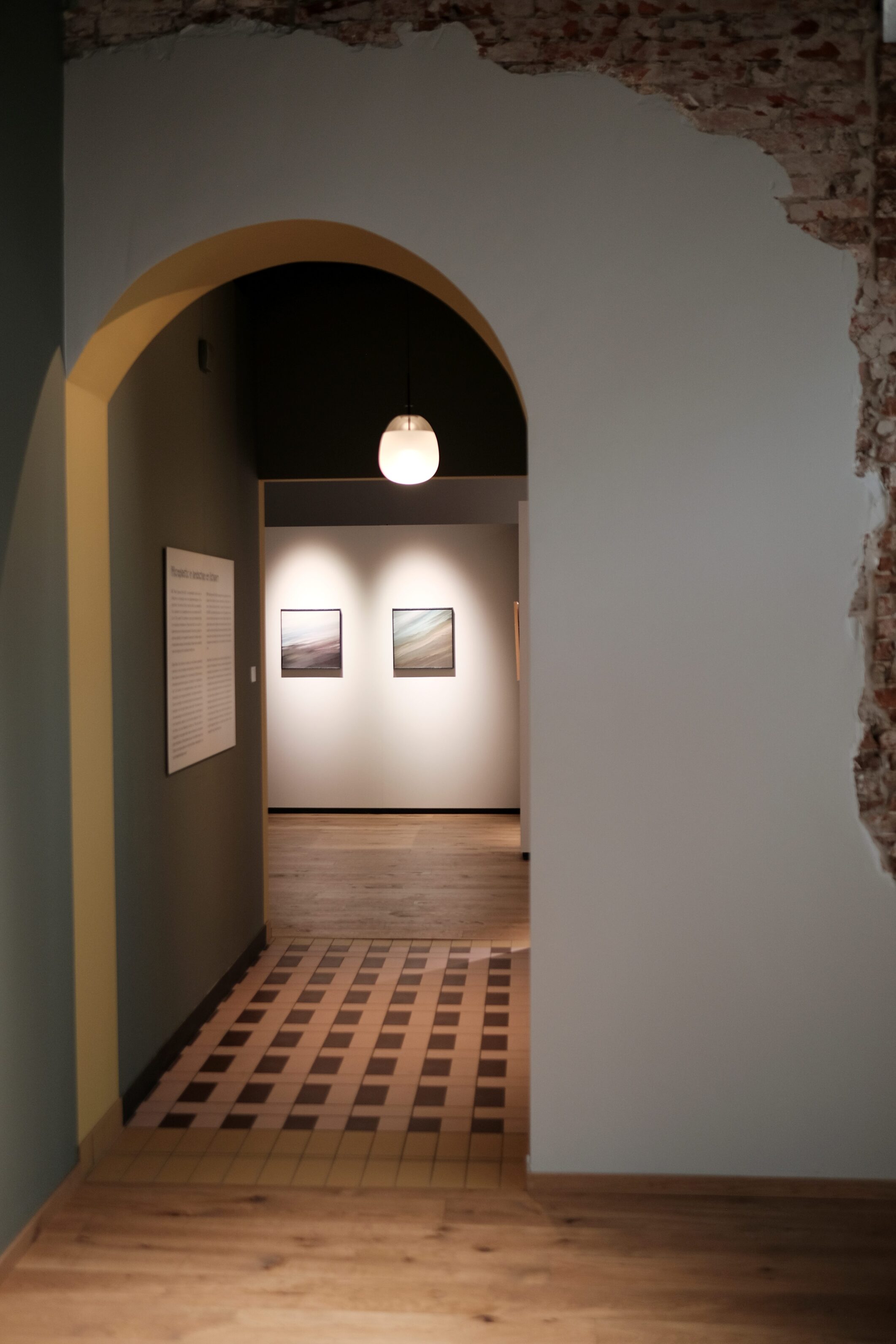 View on the exposition "De Kleuren van het Wad" at Art Centre De Ploeg
© Kunstcentrum De Ploeg
The restoration was carried out with equal resolve. Skilled craftspeople restored the wooden roof beams to their former glory and re-laid the tiled floors according to the original design. The two classrooms of the small school were transformed into four exhibition halls spanning 125 square metres, which, however, feel more spacious, thanks to a clever use of movable walls. A conference room and a studio for workshops, which can both be rented, have been built in the attic. The lighting is state-of-the-art – including Finnish daylight lamps in the studio –and there are power and USB outlets throughout, so projectors and other equipment can be used as needed without having to hide meters of wiring.
A focus on sustainability
At the front of the building, in the former society room, there is now a brasserie. Here you’ll find the pièce de résistance: a Constructivist mural by Jan van der Zee. The burly factory workers and their machinery originate from a demolished school in Veendam. The entire mural – wall and all – was removed and then hoisted into place here via the roof. As a final touch, the garden hosts the tjalk (traditional sailing barge) Alida, in which Ploeg member George Martens often sailed the Wadden Sea – another classic Ploeg motif.
During the renovation, original or recycled materials were used as much as possible. This circular philosophy is also reflected in the interior. Lamps have been made from old CD cases, the large black reading table is mostly made from potato peelings, old jeans are incorporated into the lockers, and the bar is made from a mix of shells. At the counter, you can order Moj lemonade from Groningen or Eggens Lokaal Blond beer brewed from local grain. Everything is organic and, where possible, sourced within a fifty-kilometre radius.
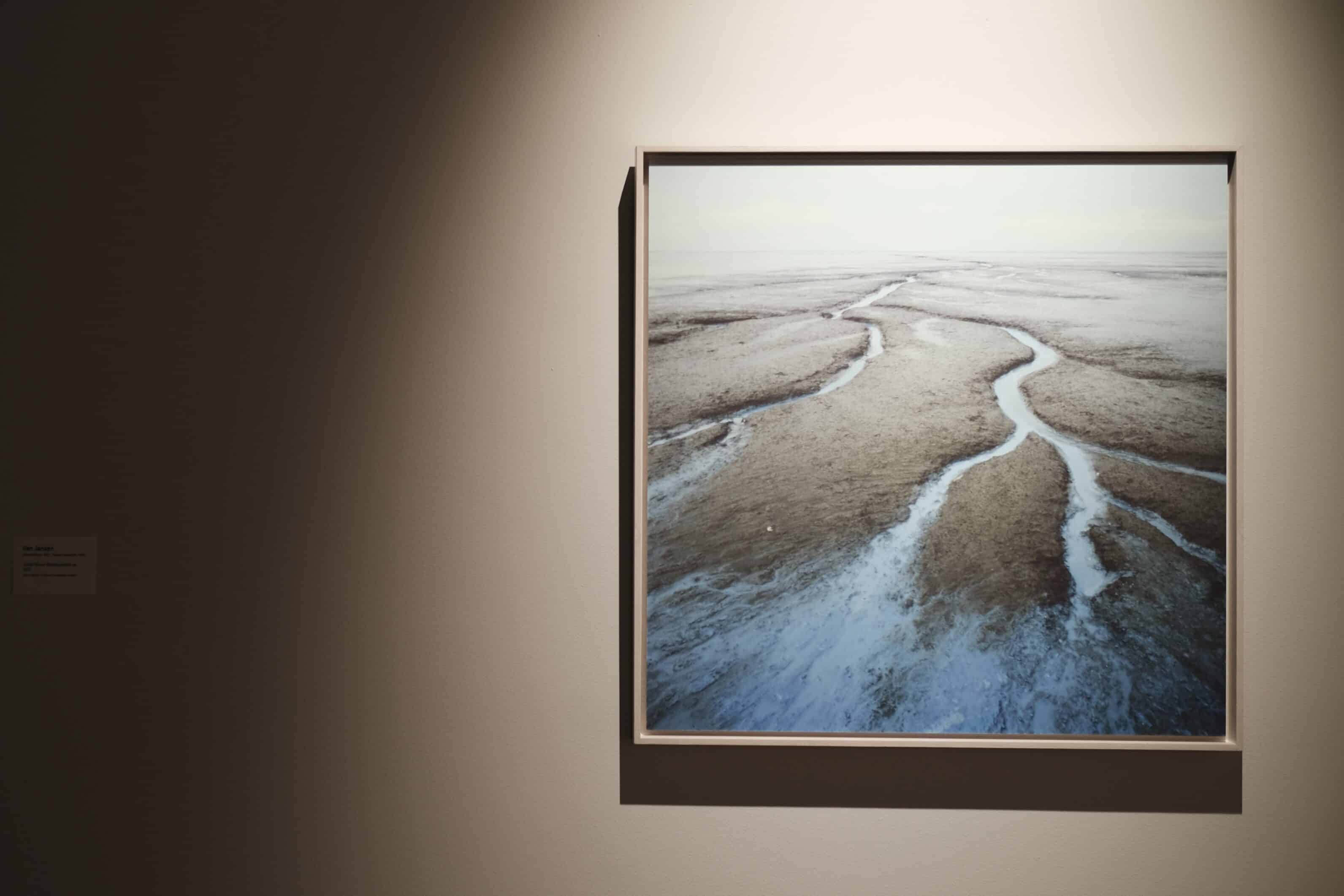 View of the exposition "De Kleuren van het Wad" at Art Centre De Ploeg in which the works of De Ploeg are linked with contemporary art.
© Kunstcentrum De Ploeg
A flying start
Sustainability is a subject close to Merijn de Boer’s heart, who was appointed business and artistic director in February 2025. He has a background in technology and innovation, supervised projects at living labs in Groningen and the Media Innovation Campus in Leeuwarden and curated the exhibition Kunst in Games (Art in Games) at Museum Belvédère. While most museums take 18 to 24 months to develop an exhibition, De Boer organised the centre’s debut exhibition in under five months – without a permanent collection. The Groninger Museum, which holds around two thousand Ploeg works, initially took a wait-and-see approach, but private individuals and small foundations were eager to support the new centre. No fewer than 42 of the 45 loan requests were approved. This resulted in Het Uitzicht van De Ploeg (The View of De Ploeg), featuring works that had not been shown to the public in decades. Within a month and a half, seven thousand tickets were sold, and the once-dormant Wehe-den Hoorn was suddenly brimming with visitors.
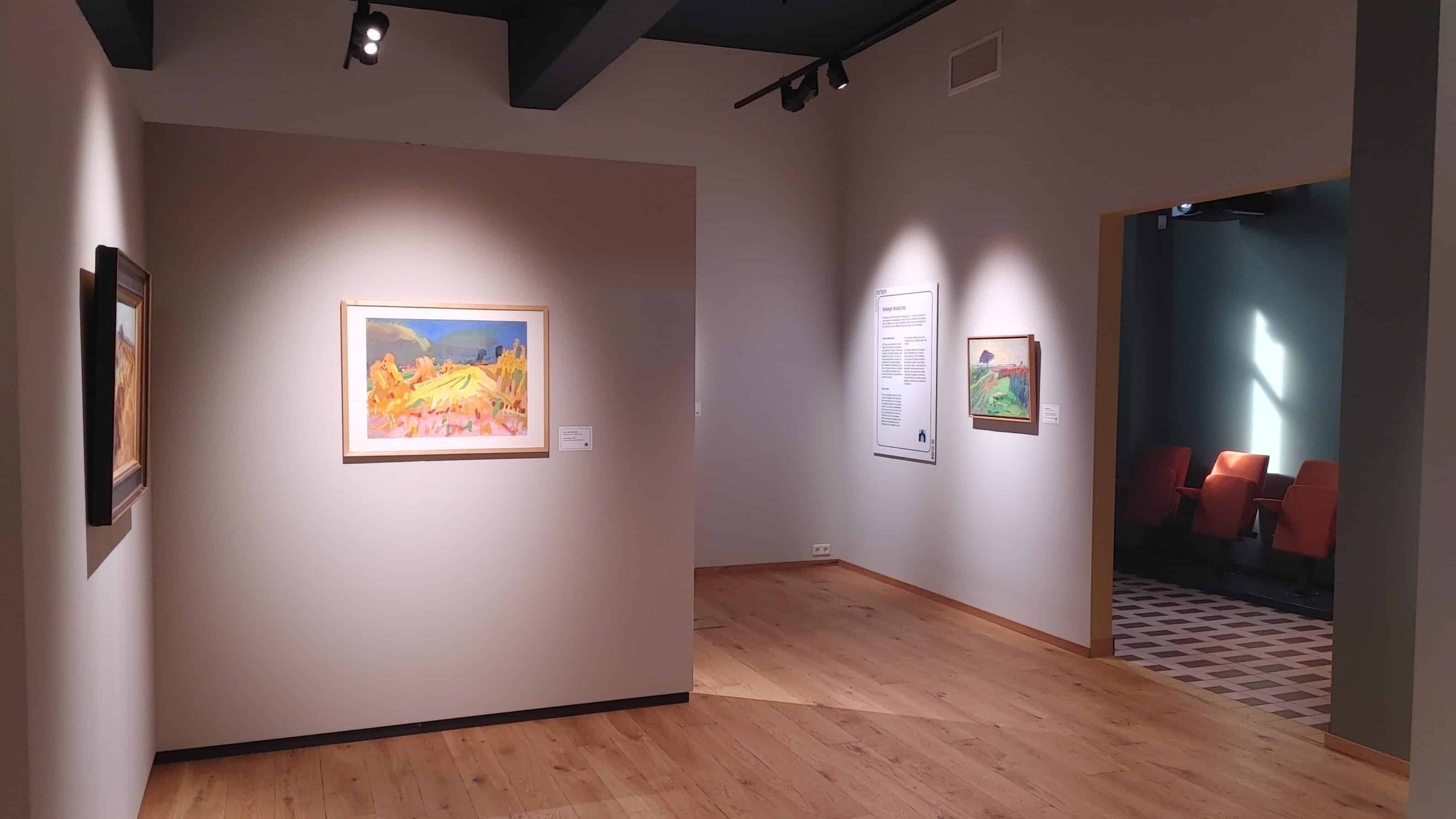 View of the exhibition Het Uitzicht van De Ploeg. It was possible to see works there that had not been shown to the public for decades.
© Kunstcentrum De Ploeg
One of the highlights of the opening exhibition was the small gallery where paintings were brought to life through animation. Such interventions can go horribly wrong – think of the immersive spectacle at Fabrique des Lumières – but here it was done with subtlety and the consent of the foundations involved. An idea to add two deer was swiftly vetoed. The goal here is not entertainment but education: with tiny movements of five to seven seconds, viewers’ eyes are triggered so they notice the details in the image and look more closely at the original painting.
Dialogue with the present
The second, current exhibition combines work by De Ploeg with contemporary art. Museum Cobra and Museum Kranenburgh (Bergen School) do the same, but because they have existed longer, the link between historical and contemporary art can sometimes be interpreted more loosely. The recently opened Kunstcentrum De Ploeg keeps the link tight but thankfully manages to steer clear of historicizing art or epigonism. Alongside the dune landscapes of Riekele Prins and a minimalist cloudburst by Johann Faber, you’ll find a piece by Sissel Marie Tonn addressing microplastics and an impressive installation by Linde Ex, which every seven minutes, following the rhythm of the tides, sprays a mixture of seawater, silt and goose droppings onto a tiled trough, slowly creating a small mudflat.
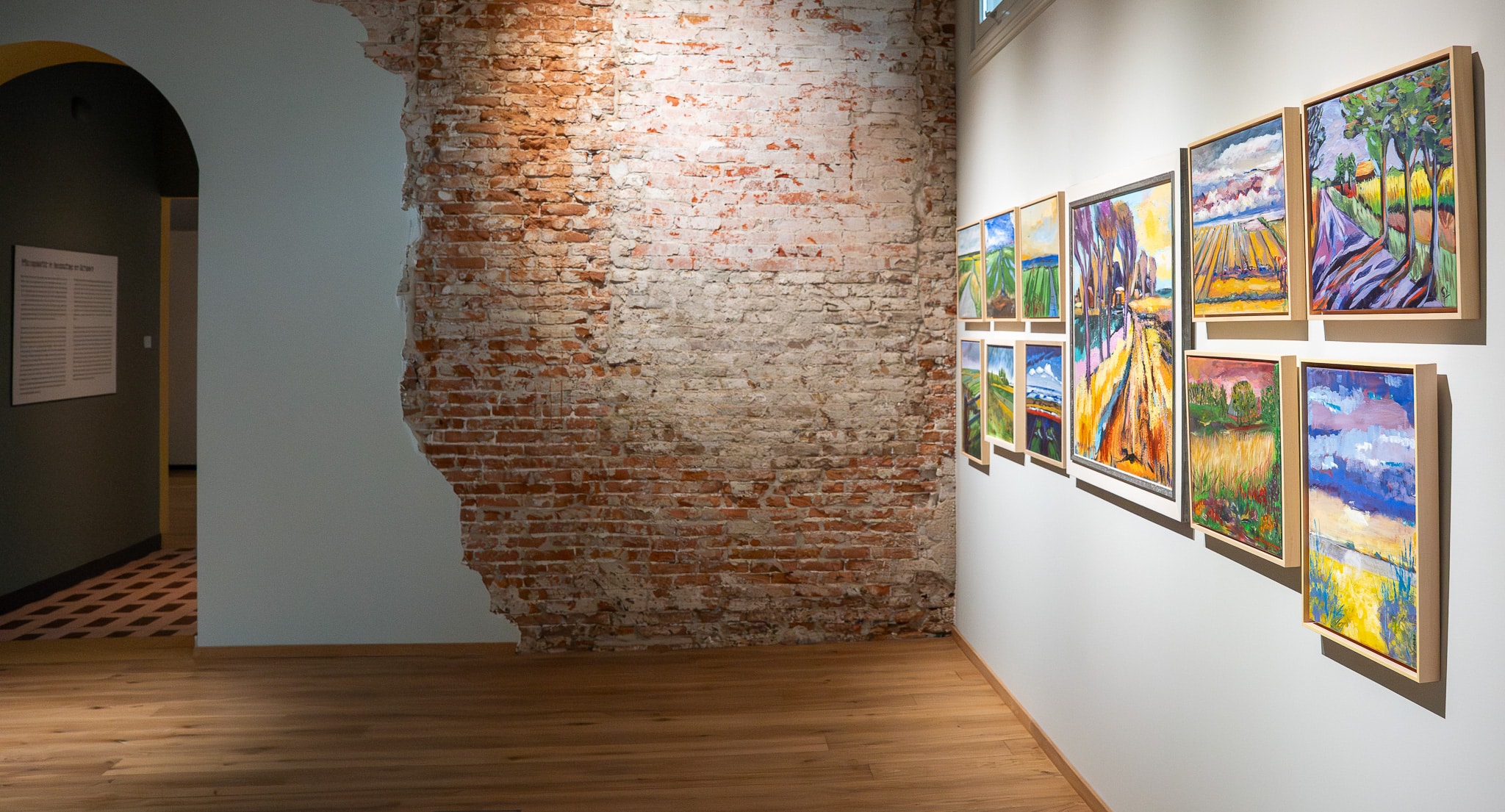 View on the exposition "De Kleuren van het Wad" at Art Centre De Ploeg
© Kunstcentrum De Ploeg
A few loose wires hang here and there, and the orangery hasn’t been furnished yet. But these are the finishing touches, and Kunstencentrum De Ploeg is already looking ahead. The intention is to produce a publication with each exhibition, and there are plans for guest studios. The next exhibition is already in the pipeline and will focus on cityscapes. “We may be a provincial museum,” says director De Boer, “but our ambitions go further. Eventually, we’d love to exhibit a Van Gogh here – perhaps The Potato Eaters. Combined with work by De Ploeg and, who knows, perhaps a competition among local farmers.”

You might also like


Leave a Reply
You must be logged in to post a comment.