
‘Unforgettable’ Invites Visitors to Gaze at the Breathtaking work of Female Artists
In the early modern period, women were not merely active in the arts. They were well-respected and enjoyed widespread acclaim … until, that is, they gently faded from the spotlight. The current exhibition Unforgettable: Female Artists from Antwerp to Amsterdam, 1600-1750 at Ghent’s Museum of Fine Arts (MSK) returns female artists to their place in the spotlight not only with a wealth of paintings and sculptures, but also with numerous examples of papercutting, calligraphy and embroidery. Moreover, the exhibition marks a new reference point in a long line of research into female “makers”.
In an unknown year, somewhere in that lengthy seventeenth century, Johanna Koerten (1650-1715) created a breathtaking garment for a Holy Roman Empress. She fashioned a creation composed of braided silk with bell-shaped trim elements (campanen), for which she earned the colossal fee of 4,000 guilders. Johanna could have received another 1,000 guilders for three pieces of papercutting, the craft that had made her famous, but she refused the offer because she did not want to part with her work – not after she had devoted so much time to it!
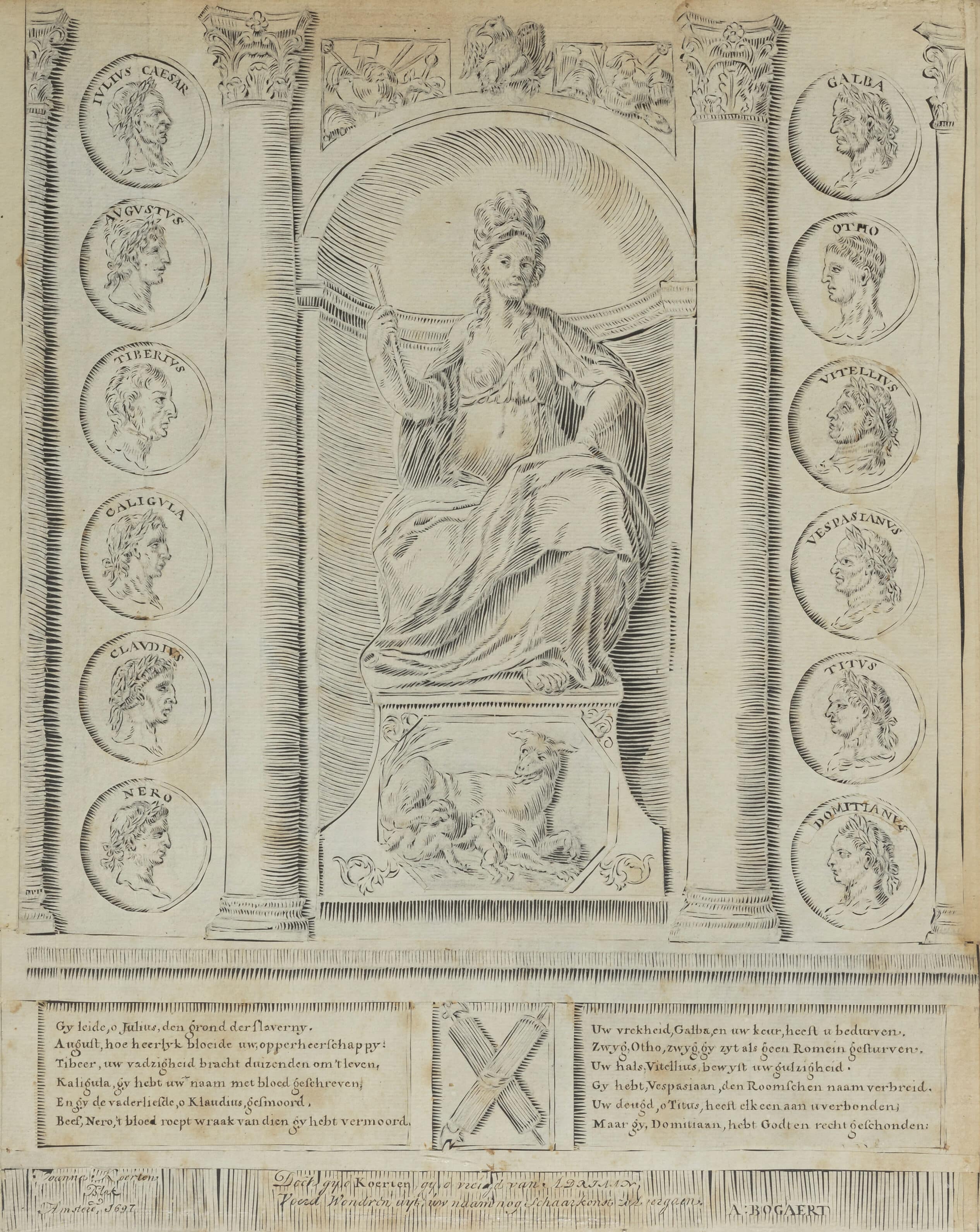 Johanna Koerten, De Romeinse vrijheid, 1697
 © Collectie Westfries Museum, Hoorn (via MSK)
In comparison, the average male wage earner in the Republic earned about 250 guilders a year. Rembrandt’s fee for The Night Watch amounted to about 1,600 guilders – less than half of what Johanna Koerten received for her garment of woven silk. In 1627, Henrietta Maria, Queen of England, Scotland and Ireland, paid 300 pounds for an embroidered skirt and waistcoat. Eleven years later, she commissioned a full-length portrait from Anthony van Dyck and paid the artist only 60 pounds.
These are just a couple of the telling anecdotes that stuck with me from the exhibition catalogue. These stories tell us two things: first, that luxury goods made by women were considered valuable and desirable in the seventeenth and early eighteenth centuries; and, second, that female artists such as Johanna Koerten were apparently so prosperous and self-confident that they could refuse to sell their work if, for any reason, they did not want to.
Rembrandt, ...who? Anyone of real standing in the seventeenth century bought a work by Johanna Koerten!
The Unforgettable exhibition was created in collaboration with the National Museum of Women in the Arts in Washington D.C., where it was shown in a slightly different form. It displays two hundred and thirty works by fifty female artists from the Low Countries, many of whom are stepping into the spotlight for the first time, thanks to the international character of the research for this exhibition.
What roles did women play in the early modern art world? Why did they gradually fade into obscurity? How did status, family, and social expectations influence their educations and career choices? Did the women work independently, or as part of larger networks? How did they relate to one another? And why are so many of these female creators relatively unknown today, when they enjoyed significant recognition in their own time? In the catalogue, a range of in-depth essays guides us through themes such as identity, choices, networks,and legacy, helping readers to explore all of these questions.
The catalogue and the exhibition both devote considerable attention to individual female artists. For instance, Catharina van Hemessen (1528-1565) stepped into the spotlight because she was the first European artist to depict herself at an easel. Together with her husband, who was an organist, she was invited to the Habsburg court in Madrid by Maria of Hungary, who provided a generous lifelong annuity for the couple after her death.
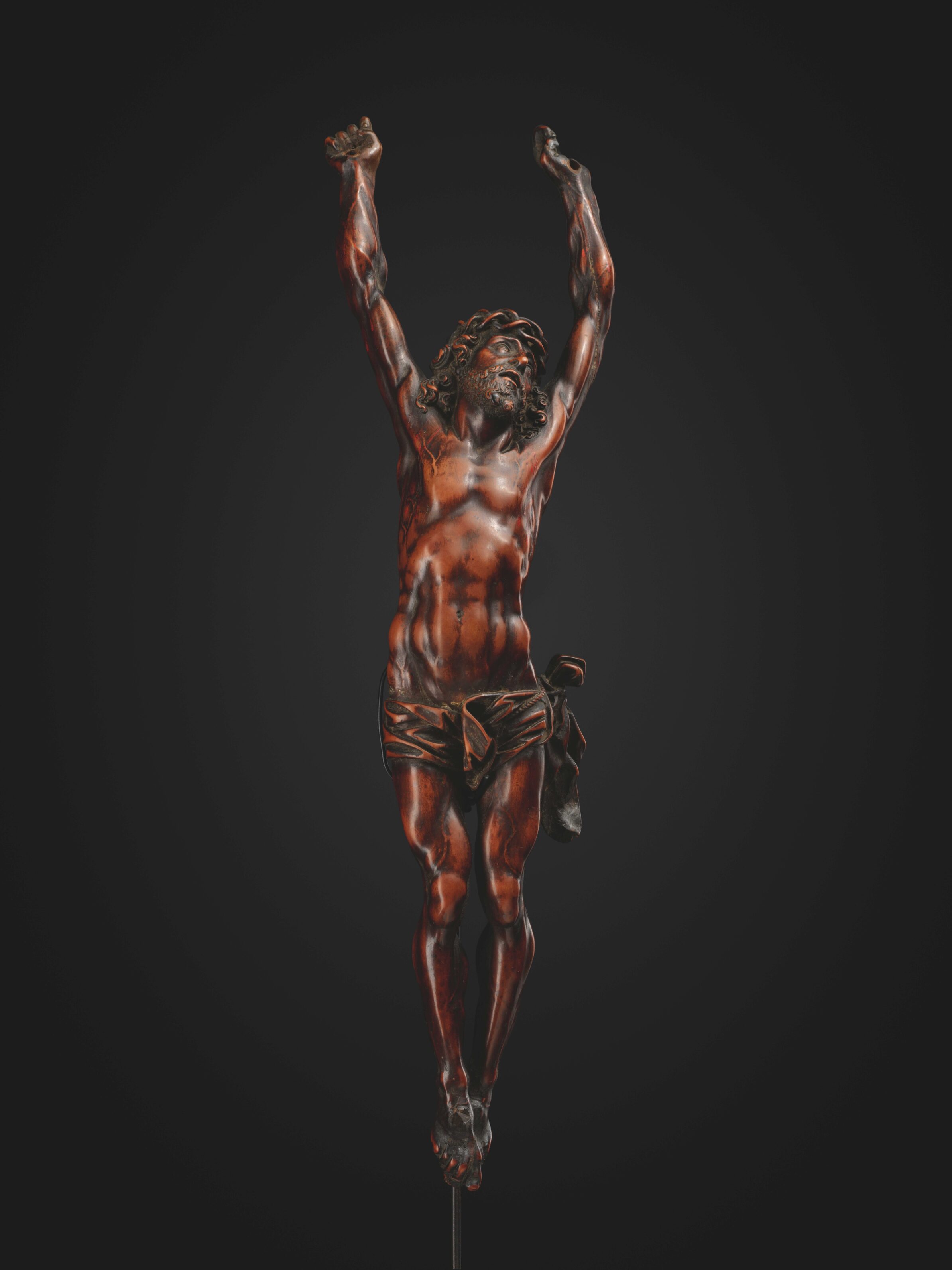 Maria Faydherbe, Crucifix, 1625-50
 © Museum Hof van Busleyden, Mechelen (via MSK)
Another notable figure is Maria Faydherbe (1587-1643), a Baroque sculptor from Mechelen, and the only female sculptor of her time who left behind a signed oeuvre. Women worked in workshops but generally did not sign their work – it may have been considered less appropriate for women to do so at that time. Two of Faydherbe’s carved wooden sculptures, along with a work in alabaster, are on display in the current exhibition
The catalogue also mentions numerous women whose names we recognise but whose work is unknown to us, in order to include them in the dialogue as well. It is refreshing that the exhibition does not focus only on women with famous names: ample space is also provided for the nameless lacemakers, linen seamstresses and washerwomen who made a substantial contribution to the production of art in the Low Countries, demonstrating that women were deeply, and substantially, involved in that production.
Slowly Disassembling
Unforgettable is, to some extent, the product of a long line of research into female makers. The exhibition catalogue devotes an entire chapter to past research on the subject, complete with a historical overview of international exhibitions featuring Dutch and Flemish female artists that took place between 1993 and 2026.
Was the 1993 exhibition titled Judith Leyster, Painter in a Man’s World at the Frans Hals Museum (Haarlem) and the Worcester Art Museum (Massachusetts) the starting point for more attention to female artists? Not at all. In 1971, the art history world had already been shaken up by by Linda Nochlin’s now iconic essay, ‘Why Have There Been No Great Women Artists?’ An excellent question. Why, indeed?
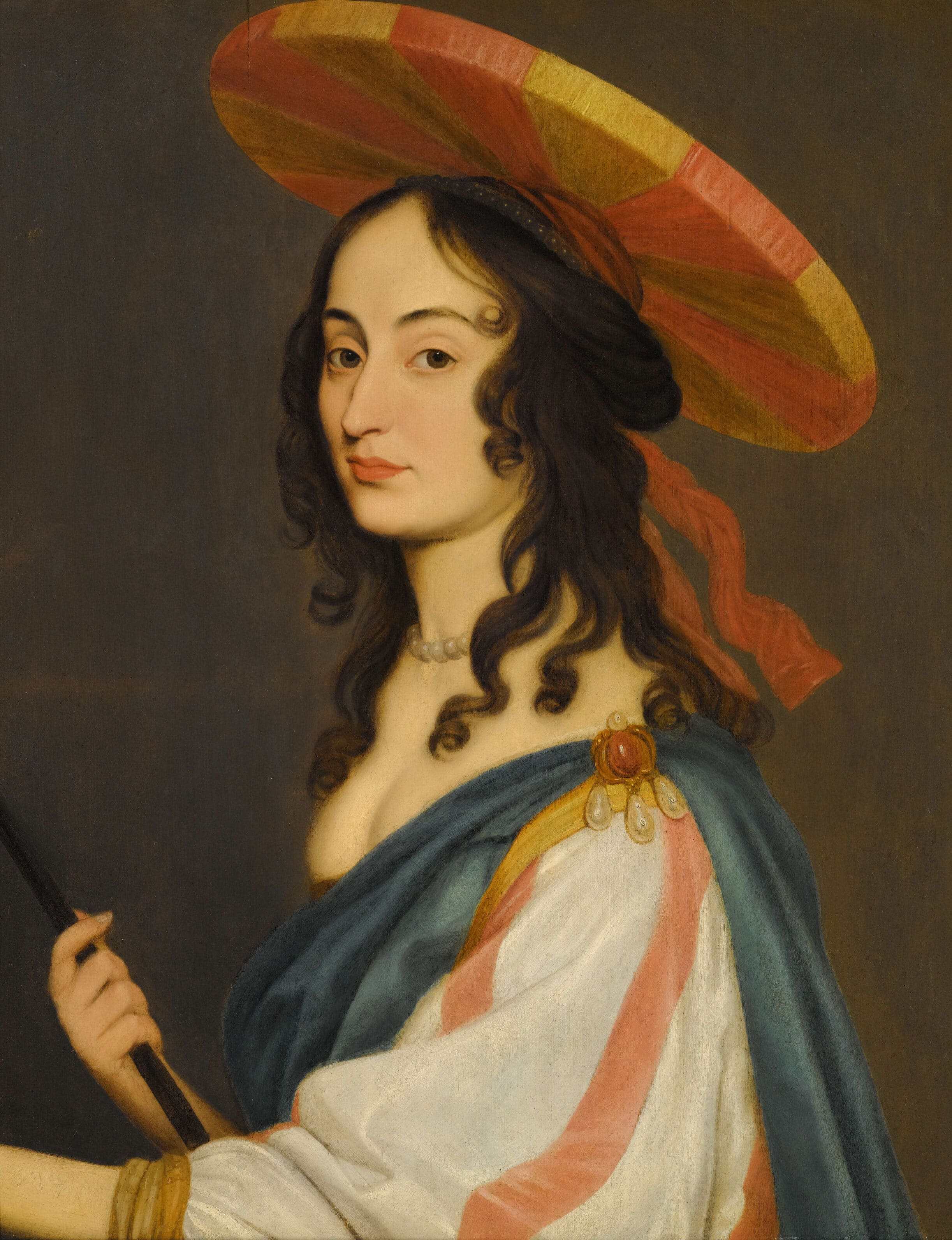 Louise Hollandine van de Palts, Selfportrait, ca. 1650-1655
© Private collection (via MSK)
Could it be, for example, that since the Renaissance there has been a powerful hierarchy defining what can be considered “great art” with painting and sculpture (primarily practiced by men) at the top and needlework or papercutting (in which women excelled) dangling somewhere at the bottom or completely left out? Could it be that artistry depends on the education, opportunities or networks that women have traditionally been less able to access without a male relative who was an artist himself and could gain access to those networks on their behalf? Or could it be because perceived “genius” is not a natural phenomenon, but rather a social construct into which women have not fitted? Such a construct can only change if the concepts of “greatness” and “genius” are redefined. In other words, the works of female artists could not be labeled ‘great’ until the idea of what ‘greatness’ is was rewritten.
Art by these female creators could only be called 'great' if the entire idea of what 'great' is - the canon - were be rewritten
Nochlin’s essay marked the beginning of a different historiography of women in art. In 1976, together with Ann Sutherland Harris, Nochlin published Women Artists: 1550-1950, one of the first books on (forgotten) female makers.
I should note that little of this new historiography was noticeable during my own student days in Leiden in the 1980s. The portrait of the Egyptian queen Nefertiti (1345 BC) adorned the cover of H. W. Janson’s History of Art, the bible of art history students. Regrettably, the 1977 edition of the eight-hundred-page book contained not a single work by a female artist. It was only from 1986 onwards that women were gradually (grudgingly?) included.
Slowly, very slowly, feminist discourse sparked research into female makers and began to disassemble the established frameworks of art history research and museum management. Groundbreaking in the Low Countries was the 1999 exhibition Elck zijn waarom. Vrouwelijke kunstenaars in België en Nederland van 1500 tot 1950 (To Each Her Own Why: Female Artists in Belgium and the Netherlands from 1500 to 1950), curated by Katlijne Van der Stighelen and Mirjam Westen, which was shown at the KMSKA in Antwerp and the Museum of Arnhem. It was the first major retrospective of female artists in Belgium and the Netherlands throughout the centuries. At the time, the museum in Arnhem was led by Liesbeth Brandt Corstius (1940-2022) who, after becoming director of the museum in 1982, reserved at least half of the acquisition and presentation space for female artists.
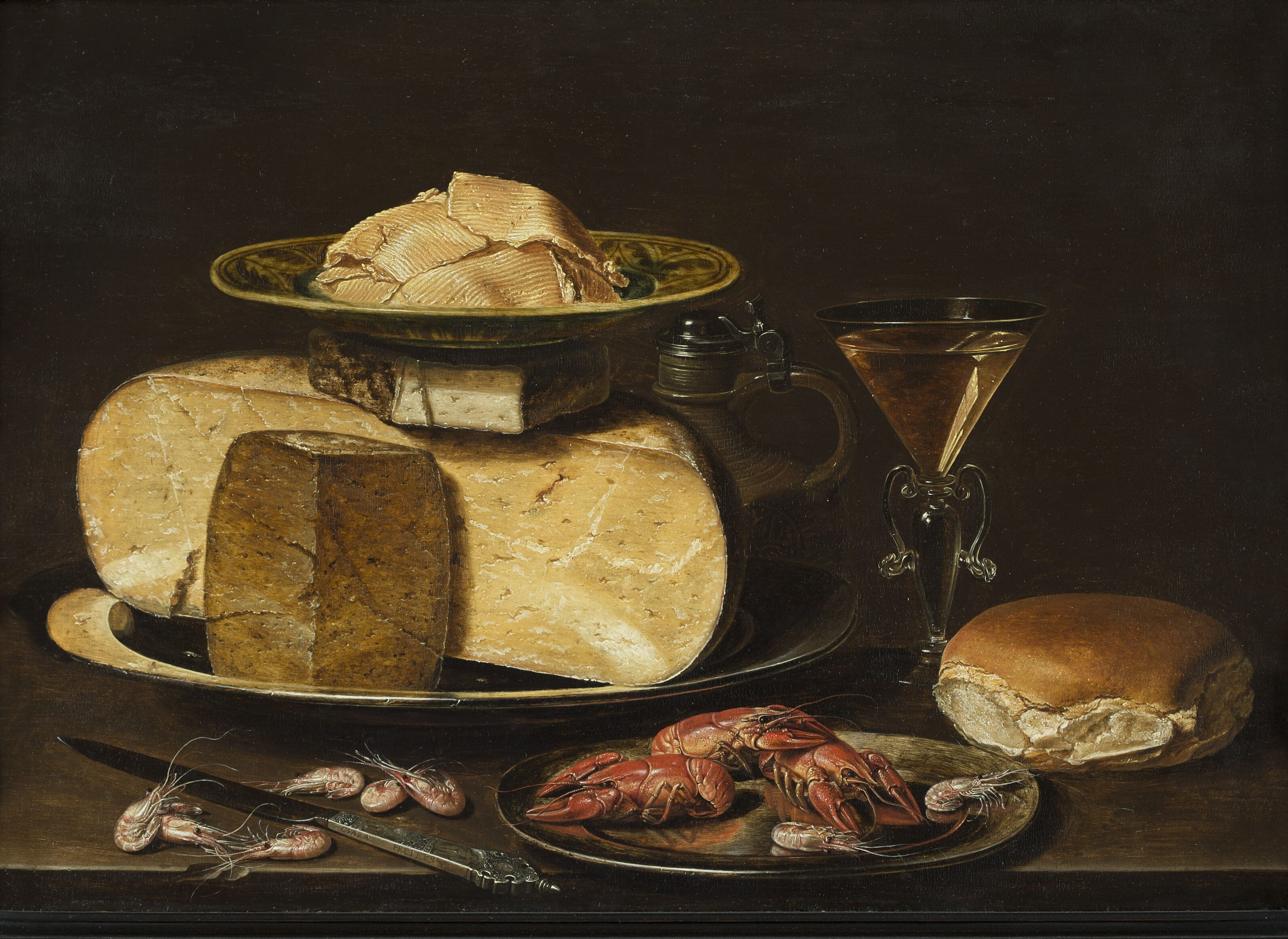 Clara Peeters, Still Life with Cheeses and Crayfish, ca. 1615
© Antwerpen, privécollectie (via MSK)
It took some time but eventually several monographic exhibitions of the Dutch and Flemish “mistresses” were developed to show the works of Judith Leyster (in Haarlem and Washington, 2009-2011), Anna Boch (in Ixelles, 2015, and Ostend, 2023), Clara Peeters (in Antwerp and Madrid, 2016-2017), Michaelina Wautier (Antwerp, 2018, and again in Vienna and London, 2025-2026) and Ladies of the Baroque (Ghent, 2018).
New publications have also appeared, such as The Story of Art Without Men (2022) by Katy Hessel, a response to E.H. Gombrich’s standard work The Story of Art (in which, indeed, not a single woman appeared in the first edition of 1950). More recently, there has been a Belgian response to Gombrich and Hessel’s works: the beautifully designed book by Christiane Struyven, Wie is bang voor vrouwelijke kunstenaars? Belgische kunstenaressen van 1880 tot nu. (Who’s Afraid of Female Artists? Belgian Female Artists from 1880 to the Present), which presents the art history of Belgium through the oeuvre of fifty Belgian female artists.
Drawings, Embroidery and Lace-Making
Meanwhile, journalist Wieteke van Zeil was working on her essay ‘Gaan we nu eindelijk van vrouwelijke kunstenaars houden?’ (‘Are We Fnally Going to Love Female Artists?’), which appeared on 27 December 2019 in de Volkskrant. She telephoned a number of Dutch museums to ask how many female artists were represented in their collections. One day, her call was answered by Jenny Reynaerts, at that time the senior curator of nineteenth-century painting at the Rijksmuseum in Amsterdam. “The Rijksmuseum didn’t have those figures at hand,” Reynaerts and her colleagues Marion Anker and Laurien van der Werff explained in an interview for CODART. Van Zeil’s question became the impetus for the Women of the Rijksmuseum project. Due to the coronavirus, it ultimately did not really get underway until 2021, with the kick-off of the Presentation of Three Works by Women in the Honours Gallery. (de presentatie van drie werken van vrouwelijke kunstenaars in de Eregalerij)
The aim of the project has been to increase the permanent visibility of women in the museum and put them on an equal footing with their male counterparts. As such, the project explicitly concerns not only female artists, but also women who were active as subjects, collectors, dealers and patrons.
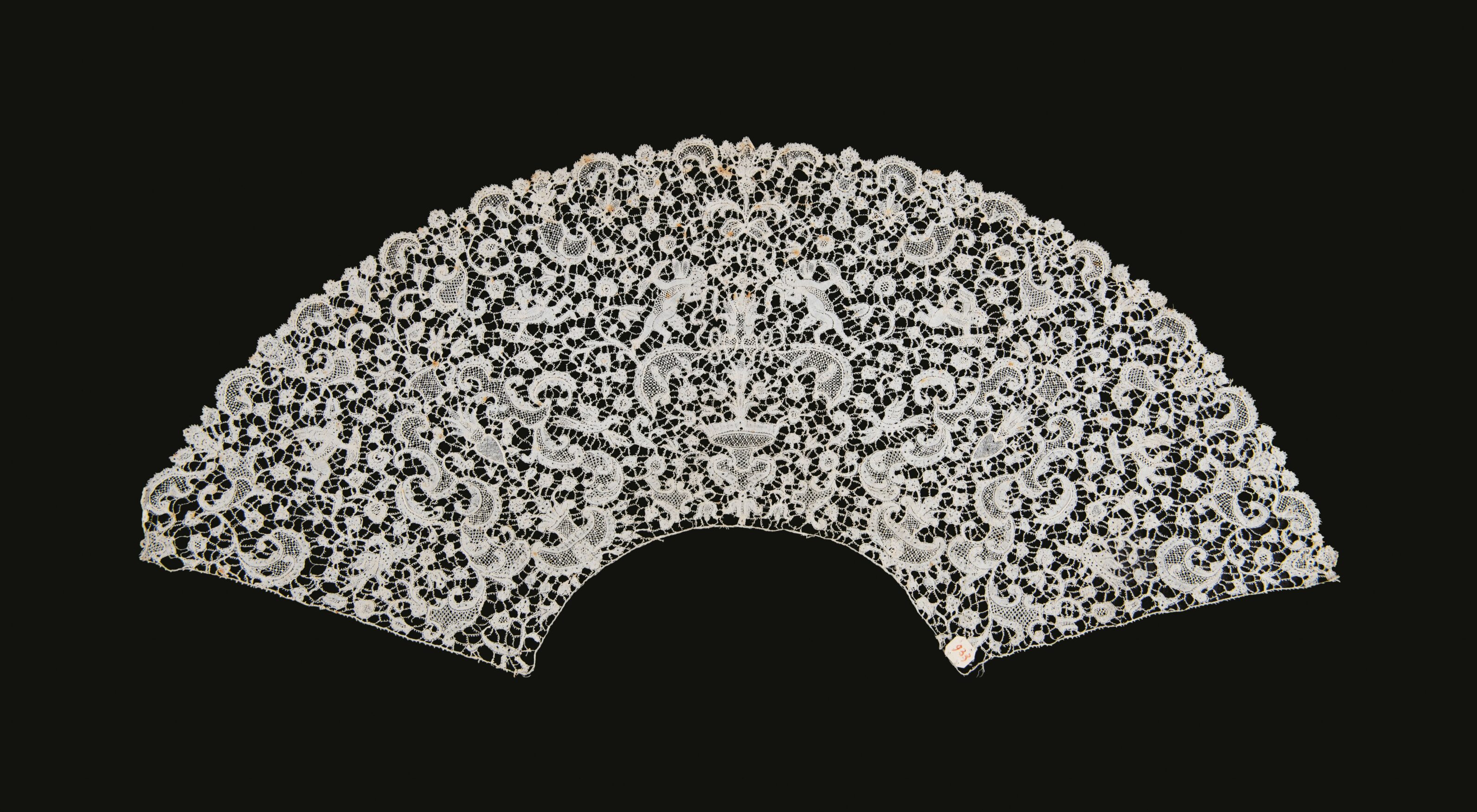 Anonymous, Southern Netherlands, Brussels, (Wedding) fan in Brussels bobbin lace, 18th century
© Museum Kunst en Geschiedenis, Brussel (via MSK)
One of Johan Vermeer’s most important patrons was a woman and he painted more than half of his oeuvre for this female client: Maria de Knuijt. We know this thanks to another initiative: the NWO (Dutch Research Council) project, The Female Impact, which explores the often overlooked role of women as artists, patrons and buyers in the 17th-century art market. Attention has also been given to the subject in Flanders. On 8 March 2023, the Does Sex Matter study-day took place in Ypres, organised by a number of Flemish museums and heritage organisations. Following this, the Flemish Support Centre for Cultural Heritage (FARO) launched various activities on the theme of gender diversity. On the day, writing sessions were organised to create Wikipedia pages about female makers, dealers or art experts such as Maria Anna Goetiers, Josina Margareta Weenix or Catarina Ykens-Floquet.
Like Linda Nochlin five decades earlier, Jenny Reynaerts reaffirmed in the aforementioned interview that the traditional hierarchy, in which painting stands at the top, followed by sculpture and the other disciplines, does women no good service. She notes that “women were very active on paper and in textiles and while that was appreciated in their own time, it largely disappeared from view in the nineteenth century.” Reynaerts would like to see a kind of revolution that will lead to a more equal appreciation of different art forms.
'Women were very active on paper and in textiles, and while that was appreciated in their own time, it largely disappeared from view in the nineteenth century' – Jenny Reynaerts (Rijksmuseum)
The Rijksmuseum in Amsterdam has been redirecting its focus on the issue. Works by Gesina ter Borch, Maria Sibylla Merian and Maria van Oosterwijck have recently been acquired, along with an eighteenth-century embroidered cloth made by Anna Maria Van Lennep-Leidstar for the trousseau of her daughter Elisabeth Clara Morier upon her marriage to Isaac Morier. A work of embroidery!
Beautiful needlework was also on display in the exhibition Making Her Mark: A History of Women Artists in Europe, 1400-1800 (2024), at the Baltimore Museum of Art and the Art Gallery of Ontario. The exhibition was groundbreaking because, rather than shining a spotlight on the work of exceptional, individual artists, it focused on remarkable objects that together tell a broader story about the women who made them. Thus, paintings and sculptures were displayed alongside material art with ample space given to drawings and prints, weaving and embroidery, lace-making and silver-crafting.
New Benchmark
The current Unforgettable exhibition in Ghent focuses on this same multitude of disciplines. By showcasing papercutting, glass engraving, lace-making, embroidery and calligraphy alongside paintings, sculptures and prints, the exhibition “distances itself from gender-determined hierarchies of materials” and offers an alternative art history that I could not have imagined during my student days in Leiden. As such, the MSK exhibition serves as a new benchmark for the study and presentation of the work of female makers, their families and networks. “The exhibition is part of a broader research project in which we investigate the role of female artists in our collection and give them more visibility in the galleries,” says Griet Bonne, Curator of Collections and Research at the MSK.
Since the research was launched in the second half of 2025, the number of works by women in the galleries has tripled. “We did not want to separate or isolate their works in a separate category. That is why we established five new gallery themes, to enable more inclusive perspectives on art history,” says Bonne. “For example, the theme of the Theo van Rysselbergh gallery became the Les XX: in this way, we could emphasise the significance of Anna Boch, the only female member of that movement. And within the Bruegel’s Legacy Gallery, we highlight grandmother Mayken Verhulst and the role she played in the artistic endeavours of the Bruegel painting dynasty. Thanks to these new themes, we were also able to retrieve works by male artists from the depots and add them to the exhibits.”
In addition, object labels are being rewritten, titles of works changed and new educational material developed in many museums. With symposia, lectures and podcasts like Women on the Wall (Vrouwen aan de muur), the public is being drawn into the new narratives. And there’s another story being told in the art market: the works of female artists and makers are gradually coming under the hammer at higher reserve prices, while their share of attention is increasing at international auctions, art fairs and galleries. For instance, in 2024, the Rijksmuseum purchased Gesina ter Borch’s Portrait of Moses ter Borch as a Two-Year-Old Child at the TEFAF fair for approximately 3 million euros.
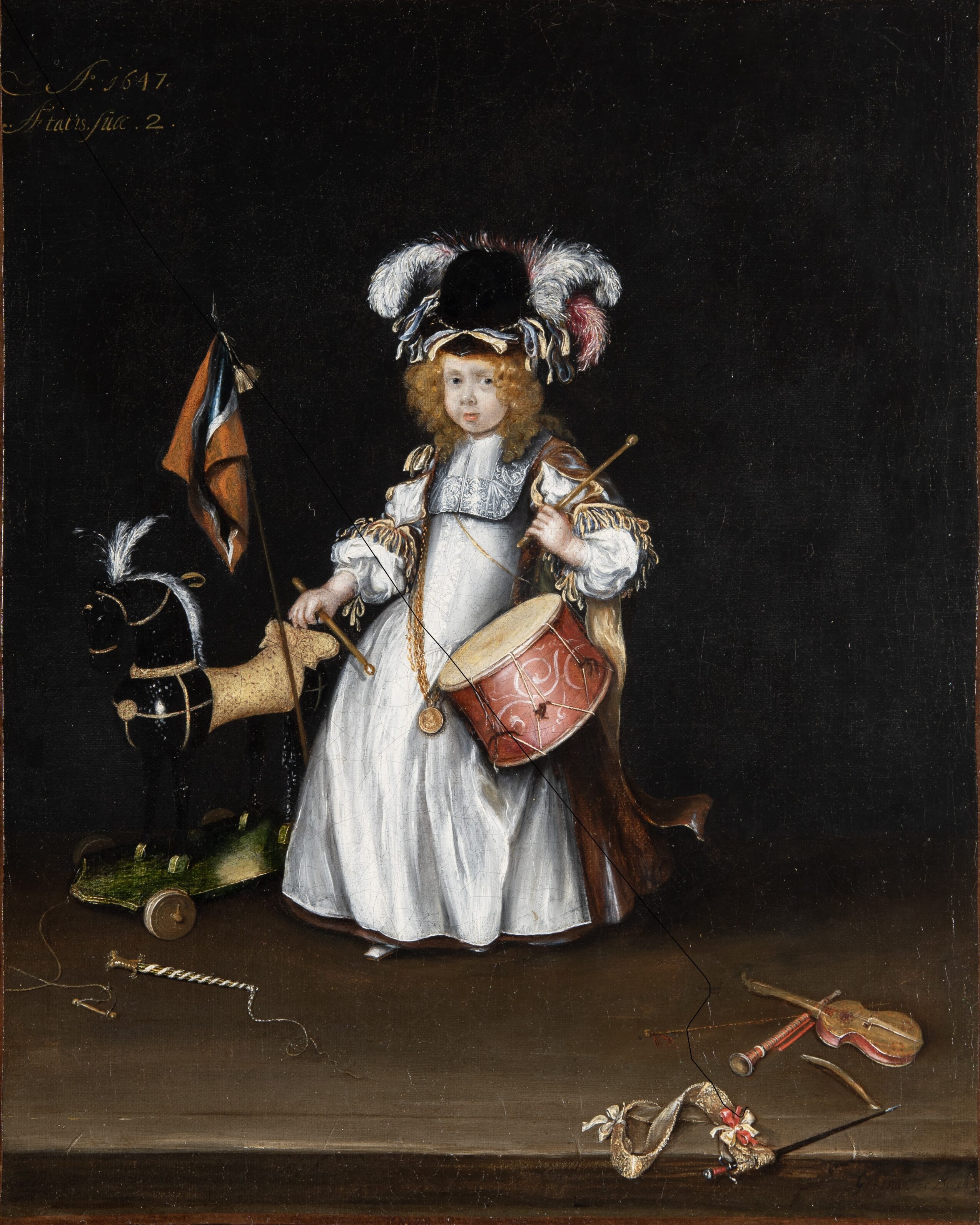 Gesina ter Borch, Portrait of Moses ter Borch as a two-year-old child, after 1667
© Rijksmuseum, Amsterdam
Not everyone, however, has been caught up in the revolution, as we can see from a recent spat surrounding the Kunstmuseum in Den Hague. ‘Uproar over More Men Making Way for Women in the Museum’ (‘Ophef over meer mannen die plaatsmaken voor vrouwen in museum: “Doorgeslagen feminisme”’ ) was the headline of an article in the Algemeen Dagblad on 18 February 2026. What is the perceived problem? A mural by a man has been removed to make way for the work of a female artist. In making the switch, museum director Margriet Schavemaker is continuing the policy of her predecessor, Benno Tempel – both of whom have been committed to showcasing more female artists. To the anger of three former employees of the Kunstmuseum, including former director Wim van Krimpen, three works by women will ultimately take the place of three works by male artists. (For the record: of the three existing works, two are being covered up and the third is being painted over, in accordance with agreements made with the artist when the museum purchased the concept for the work). It’s “feminism gone too far,” according to van Krimpen.
The museum will soon undergo renovations and in 2035 will celebrate its centenary which, according to Margriet Schavemaker, will be the perfect moment to take a fresh look at the use of the museum’s spaces. It will also give van Krimpen and his cronies some time to get used to the idea. Incidentally, 2026 seems to be the “long-awaited year of women artists”, one can even organise a mini-world trip around this theme.
Is all this attention to female makers really necessary? Shouldn’t it be primarily about quality? Yes, of course, and it is about quality. But it is also the start of a conversation about quality vis-a-vis the existing canon; about new stories, emotional worlds, approaches, insights, disciplines…. The fascinating thing about this revolution is that, thanks to new research, artists who were unknown or forgotten until recently are being (re-)discovered. More is becoming understood about the role of women in artistic networks and more knowledge is emerging about traditionally typical “female” disciplines or techniques.
Equally fascinating is that visitors to the MSK in Ghent can now gaze at a delicately painted – and breathtaking – cabinet by Susanna van Steenwijck-Gaspoel, a paper diorama created by Elisabeth Rijnberg or a gossamer-fine sleeve fragment of bobbin lace, crafted by a maker whose name we will probably never know.
Unforgettable
Women artists from Antwerp to Amsterdam, 1600–1750 runs until 31 May 2026 at MSK Ghent. The similarly titled catalogue (catalog), curated by Virginia Treanor and Frederica Van Dam, is now available at Hannibal.
With thanks to Griet Bonne and Frederica van Dam (MSK Ghent), Rosalie van Gulick (CODART) and Saida Steenhuyzen (FARO).

You might also like




Leave a Reply
You must be logged in to post a comment.