
Why Publishers Prefer Not to Mention Sensitivity Readers
Since the Roald Dahl scandal sensitivity readers have had a bad name. Nevertheless publishers will continue to make use of their services. They simply prefer not to mention it now.
It’s wonderful, wrote Flemish author Tom Lanoye in the Flemish weekly Humo in March 2023, that he can grapple with “two fantastic editors” over the full stops and commas in his text, not to mention the desktop publishing errors they protect him from. But if his texts were also to be evaluated by sensitivity readers? He would go looking for a different publisher right away: “A publisher that uses the services of sensitivity readers ceases to be a publisher.”
Look at the fate of Roald Dahl’s work when Puffin Books introduced the adapted versions of his classics to the market, the motivation for Lanoye’s column. One of the fortunate children permitted to visit Willy Wonka’s chocolate factory was no longer “fat” but “enormous”. Mrs Twit turned out to have been transformed from “ugly and beastly” to merely “beastly”. And the Oompa Loompas were no longer described as “small men” but “small people”.
How dare the publisher, Lanoye condemned the case. “Absurd censorship”, Salman Rushdie chimed in, albeit acknowledging that Dahl was “not much of an angel”; you simply don’t do that to a writer. Camilla – not yet crowned Queen of the UK at the time – was “shocked and dismayed”. Journalist Frits Abrahams wrote in the Dutch newspaper NRC that Dahl had been “posthumously castrated” by his own publisher. And so the list of critics continues ad infinitum: from comedian Ricky Gervais to columnist Sylvain Ephimenco.
Are sensitivity readers language fascists who censor the soul out of any literary work?
It was all the fault of those cursed sensitivity readers. Oversensitive moral crusaders, who attempt to polish a text to the point of absurdity, cleansing it of anything that might cause the slightest discomfort. Overly well-meaning pedagogues, who – in Lanoye’s words – turn a publisher into “a self-help group with too many members”. Or to put it in less friendly terms: language fascists who censor the soul out of any literary work.
Yet Anglo-Saxon publishers such as Puffin Books have been deploying sensitivity readers for some time. These are people who – due to their ethnicity, sexual orientation, religion or some aspect of their background – can read a text from a particular viewpoint. Or as in this case appears to have happened, people who evaluate a text with an eye for all-round sensitivities, according to the publisher’s guidelines. It happens on such a grand scale that it’s more the rule than the exception.
Why does this happen, if resistance is as extensive as it appears? And does it happen to the same extent in the Netherlands and Flanders?
Blind spots
The Zeitgeist has changed. That’s where the story begins. Minorities no longer silently accept exclusion – nor do they accept the language in which it happens. People with a non-Western background, LGBTQIA+ people, women, people with a disability, you name it, are making their voices heard when writers who are privileged in their eyes caricature them, even when they do so unconsciously, and when prejudices creep into texts simply as a result of lack of knowledge.
Over the last decade this has fundamentally changed the content of books. It happened most prominently with Zwarte Piet (Black Pete, traditional helper of Sinterklaas, the Santa figure of the Low Countries). Children’s book publishers have removed their Sinterklaas books from bookshop shelves en masse and replaced them with editions devoid of black servants. Even Charlotte Dematons, maker of by far the most popular Sinterklaas book of this century, was compelled to watch this lucrative source of income dry up.
But there are many more changes to be found in all conceivable genres, not only in children’s books such as those of Dahl and Dematons. From the abolition of the N-word to – rather more subtly – novels in which characters are not purely presented because they are homosexual, disabled or Islamic, with all the issues that may entail, but in which these traits are merely part of the background.
A modern publisher needs antennae for all modern sensitivities – from slut-shaming to fat-shaming –to be able to respond to this. And therein lies the problem. Publishers have small editorial teams that still represent little in the way of diversity, being largely composed of white, highly educated women. What could be more obvious than hiring in an expert whose background does give them an eye for particular sensitive details?
A modern publisher needs antennae for all modern sensitivities – from slut-shaming to fat-shaming –to be able to respond to this. And therein lies the problem
“Editors [always] pay attention to potential sensitivities,” said publisher Sander Blom of Atlas Contact earlier this year to RTL Nieuws. “But I’m white, old and male, so I have undeniable blind spots. I’m aware of that, that’s very important. If I’m uncertain if something is okay, I call in other readers from my network to read along. For that reason we always have readers double checking anything we publish.”
Art is a free space
The interesting point is that many of those who weighed in on the Dahl issue are able to follow this reasoning. They will applaud some changes. Neither Tom Lanoye nor Salman Rushdie would easily present a character who carelessly uses the N-word. Frits Abrahams will never write in his column that Charlotte Dematons has castrated her work now that she has republished her Sinterklaas book without Zwarte Piet.
Therefore, you might initially expect them to enter into discussion about the extent to which the sensibilities of others are taken into account in this case. Have “fat” and “ugly” become taboo in this day and age? Is it necessary to use “small people” to show that fictional creatures can be men or women? Does it matter that the readership is made up of children? And is Roald Dahl’s anarchic humour really eroded by it?
Anyone wishing, a few months after the media storm, to weigh up the matter fairly, no longer needs to limit themselves to those few notable examples which continue to circulate, as demonstrated by this very article. Now you can simply take a look at Wikipedia. The page dedicated to the matter lists no fewer than a hundred altered passages, alongside the original wording, and in combination they offer a balanced view.
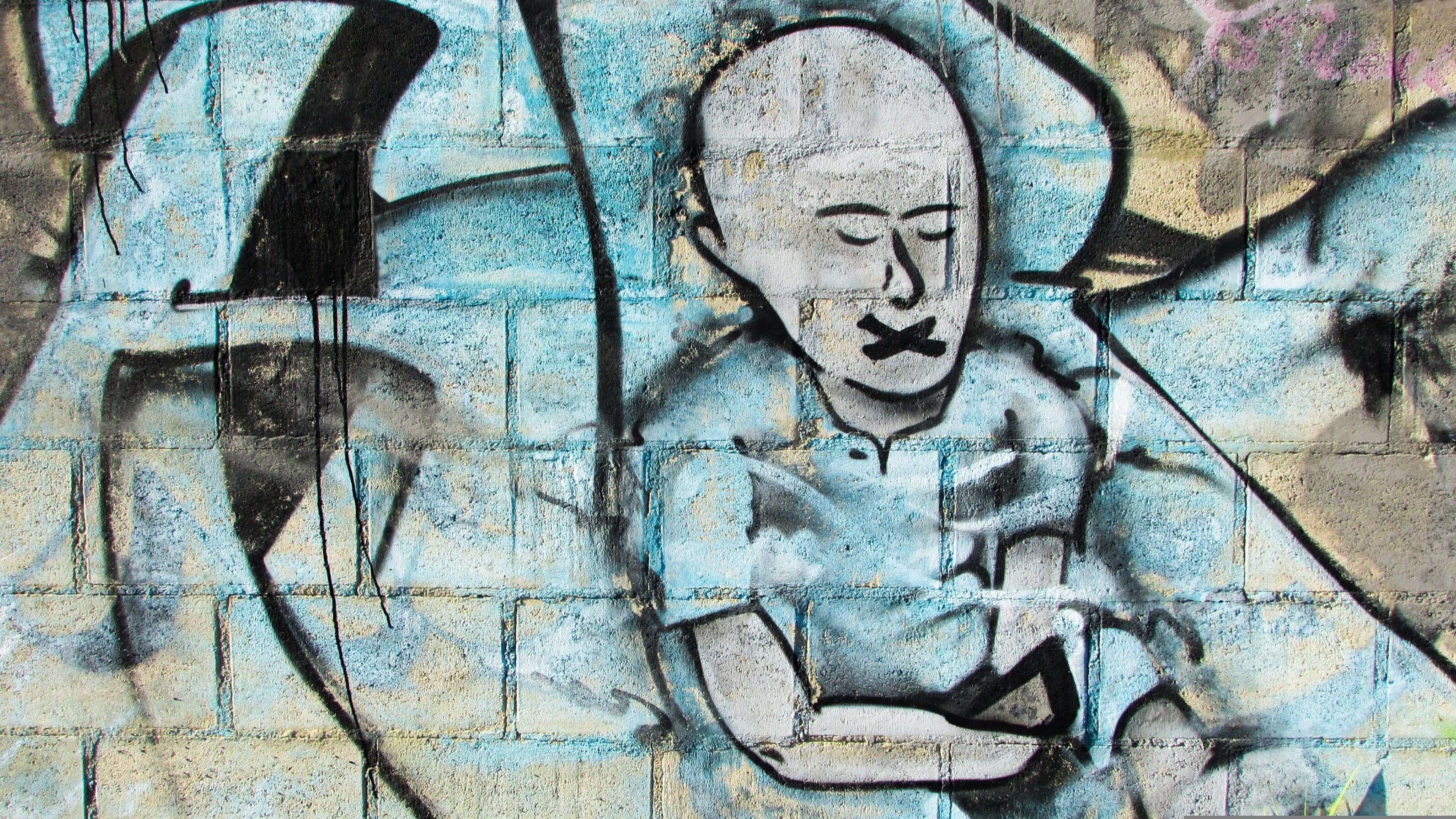 Intervening in literary texts is seen as an infringement on the freedom that art in the Western world—rightfully so—enjoys
© Pixabay
The fact that reactions have been so fierce is down to another issue. Dahl is not just any writer who has published an article in the newspaper or on a blog. He’s an artist, one who has been particularly beloved for decades, at that, and whose major classics are still reprinted almost annually – also in Dutch: Sjakie en de chocoladefabriek was reprinted for the hundredth time in 2020, as well as Matilda this year.
Interfering in such texts is therefore seen as an erosion of the free space that art in the Western world – quite rightly – is. If there is one space where writers can literally say anything, exposing the deepest human experience or challenging the ingrained convictions of readers, it is literature. If boundaries are set around that space for legal or moral reasons, their work is automatically weakened. It is no longer entirely worth the effort.
The only people who can therefore tinker with published texts, are the writers themselves – whether it comes to commas and full stops or significant choices such as the use of the word “fat”. Dahl did so himself before his death in 1990, due to racism, for instance: in the first edition the Oompa Loompas were African Pygmies. But now that he is no longer with us, the general consensus is that everyone should keep their hands off. Everyone.
The only people who can therefore tinker with published texts, are the writers themselves
That puts publishers in a difficult position. They are eager to accommodate modern sensitivities, mostly out of conviction – publishers are generally bastions of progressive thinking – but also out of enlightened commercial self-interest. Publishers who continue to sell Sinterklaas books with Zwarte Piets will not sell many of them. But more importantly, they will lose many of their authors, who will not want their work published by such houses.
That puts publishers in a difficult position. They are eager to accommodate modern sensitivities, mostly out of conviction – publishers are generally bastions of progressive thinking – but also out of enlightened commercial self-interest. Publishers who continue to sell Sinterklaas books with Zwarte Piets will not sell many of them. But more importantly, they will lose many of their authors, who will not want their work published by such houses.
The status of the writer as an artist compels publishers – particularly literary publishers – to position themselves purely as coaches and managers. They leave the writer free, merely providing the best possible guidance. And they exploit the work, yes, but, honestly, in the best interests of the writer. Think of how often we hear them say it’s not books they publish, but authors. As if a writer really has carte blanche over a career spanning decades.
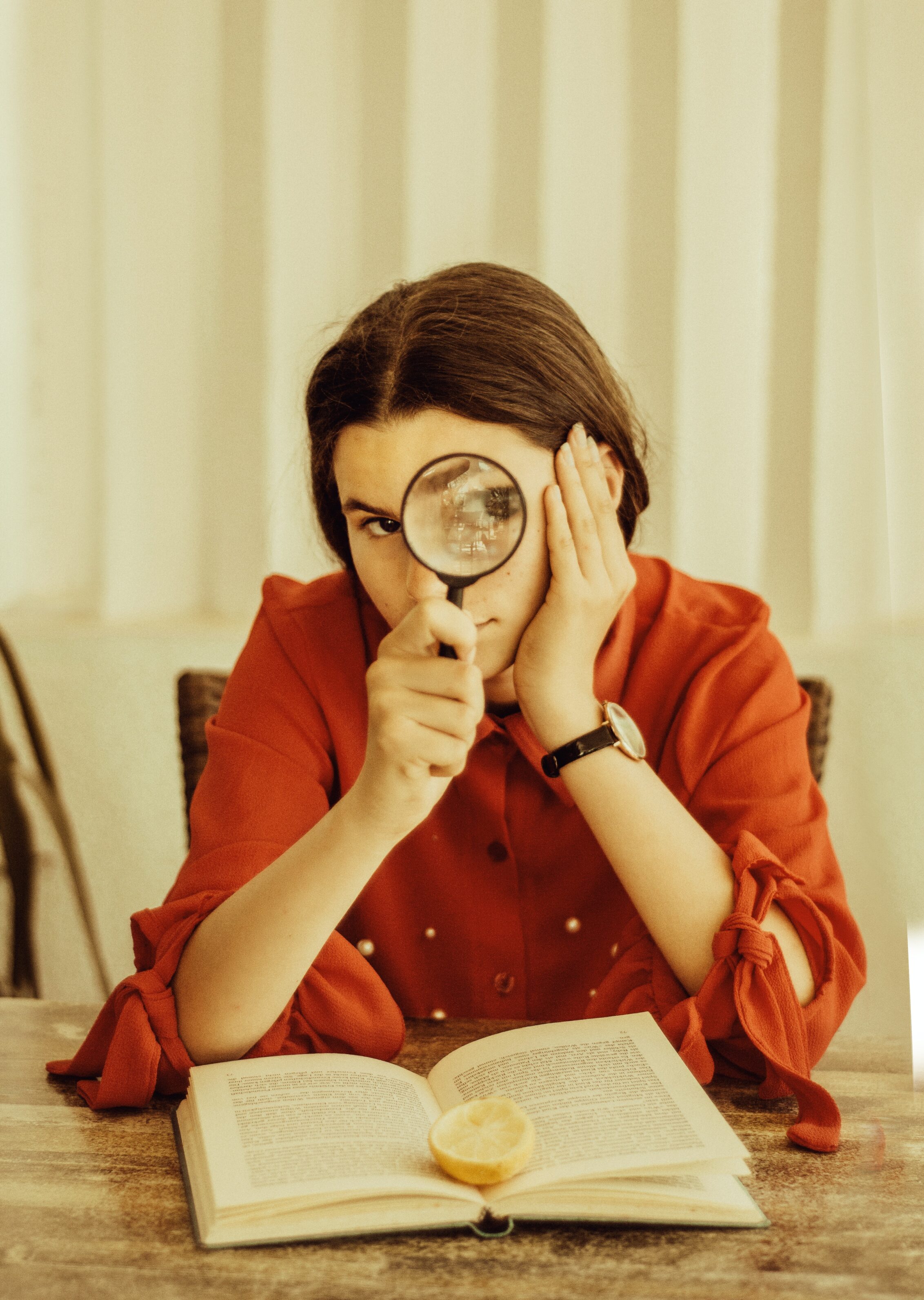 Sensitivity readers are often quickly dismissed as oversensitive moral crusaders, trying to absurdly scrub a text clean of anything that might cause even the slightest discomfort to anyone
© Houcine Ncib / Unsplash
The aims of authors and publishers can easily be aligned, especially when it comes to living authors, with whom publishers can enter into negotiations as to the content of their texts – whether or not they wish to accommodate the judgement of external experts as to the literary quality or specific issues such as representation of Indonesian Dutch citizens or first-generation guest workers. “Would you write that now? Do you understand the consequences for your image or sales figures?”
Such conversations generally take place in rational tones. Publishers are not trying to produce texts that are universally inoffensive, nor are authors out to provoke readers as much as possible. Take this recent statement from Arnon Grunberg in Het Financieele Dagblad: “I’m in charge of my text, but I’m not blind. I’m aware of the era I’m living in. In 1972 you could still use [the N-word] and far from everyone who used it was racist. That’s completely different now.”
Sometimes things go wrong and publisher and author go their separate ways, whether amicably or not. The author sometimes blames sensitivity readers, as in the case of the British poet Kate Clanchy who last year broke up with her publisher Picador, but that’s never really the reason. In reality something has gone wrong in the communication or the relationship, causing the author to lose their sense of complete freedom and of good care for their work.
Dilemma
Yet it is awkward when it comes to dead authors. Not a comma of their work can be changed, while it is precisely these books that become each year a little more out of step with what can be said these days. What can a publisher do then? Particularly one with commercial reasons who wants to continue publishing Roald Dahl – or all those other authors who sell well and whose work has been revealed to have been adapted in recent years: Ian Fleming, Agatha Christie, Astrid Lindgren, Enid Blyton… and so on.
A publisher can be honest. Earlier this year Penguin republished Ernest Hemingway’s The Sun Also Rises and Men Without Women with warnings such as the following: “[The Sun Also Rises] was published in 1926 and reflects the attitudes of its time. The publisher’s decision to present it as it was originally published is not intended as an endorsement of cultural representations or language contained herein.”
But Hemingway is a bona fide literary author with his own place in the canon. You can expect a reasonably large readership to want to get to know his work– if only because he is mentioned in literature lessons. This is less true of authors such as Dahl and all those others, who – despite their literary quality – people read first and foremost for enjoyment. So publishers adapt their work, as the rights often belong to commercial parties – as in the case of Dahl, where Netflix owns the rights – who are all too happy to consent.
Such cases invite no publicity. The fact that we know that the work of the above-mentioned authors has been adapted is thanks to external detective work.
The dilemma means that publishers and editors in the Dutch-speaking region prefer not to talk openly about the use of sensitivity readers – including Sander Blom, RTL Nieuws adds. The media storm around Dahl has made them very wary of going on the record. At most they admit that they have others look at texts due to their own blind spots, but what are the consequences for their publishing policy?
Publishers prefer to deny that they use sensitivity readers. Denial is easy, since the profession does not exist as such
Publishers prefer to deny that they use sensitivity readers – especially now that they are known as moral crusaders, pedagogues and language fascists, as mentioned above. Denial is easy, since the profession does not exist as such, particularly in a market so small that a book can easily become too expensive if money is spent on professionals to evaluate the text for sensitivities. If anyone does that job, it is the editors themselves.
With a few exceptions, outsiders – publishers stubbornly assert – are only brought in for their knowledge of the content. Anyone publishing a book on controversial subjects such as Islam or the climate wants the information to be correct. Anyone publishing a memoir of a war criminal doesn’t want that person to be able to clear up their reputation too easily. Of course there are plenty of other conceivable examples.
Only other kinds of publishers have admitted to using what they themselves call sensitivity readers. The educational publisher Malmberg is one example. Teaching methods should reflect a balanced view of society and, more importantly, should not exclude anyone. So in 2019 Malmberg set up a “contact point for sensitive subjects” and put together a group of sensitivity readers, who cast an extra-critical eye over the teaching materials.
Another example is Storytel. Subscribers receive unlimited access to their enormous range of e-books and audiobooks – instead of purchasing a particular individual title. No one can therefore be unpleasantly surprised. So Storytel in fact deploys sensitivity readers for all the texts it publishes. If the rights holders refuse a particular change of terminology, the title is not included in the catalogue.
So how wide is the use of sensitivity readers really? And how far does their influence reach? We cannot say.
Does the publisher remain a publisher?
The only thing you can do to check whether a publisher, in Lanoye’s words, is still a publisher, is to compare new editions with the original, particularly when it comes to children’s books and commercial publications. What adaptations have the works of Dick Bruna and Annie M.G. Schmidt undergone? Are the old thrillers by Aspe and Baantjer still being exploited in their unadulterated form? What of Elsschot’s Het dwaallicht (‘Will o’ the Wisp’)?
Roald Dahl’s Dutch publisher immediately told the press they had resolved not to take on the changes. In his view the power of the humour lies in the stereotypes and exaggerations, and in all the years he has worked for this publisher, not a single complaint has reached him. That may well be his sincere view, but that does not mean that he will never adapt a text, only that it was not necessary in this case. Not yet.
Any publisher wanting to maximise their earnings from their backlist will make sure it doesn’t become dated. If that requires sensitivity readers, no problem. Otherwise they would cease to be publishers.

You might also like







Leave a Reply
You must be logged in to post a comment.