
My superpower? Making sense of story structures!
Our language columnist has discovered a new superpower. Marten van der Meulen became fascinated by story structures, and once you start studying them, you uncover all sorts of unwritten rules.
Sometimes you listen to a story and just think: what a load of boring talk. Sadly, this can happen with all kinds of people and in many circumstances. With distant acquaintances at birthday parties, with colleagues at the coffee machine, with guests on talk shows. A lot of people like hearing their own voice. And when they finally get their moment, they seize it with both hands. The result is that the content becomes bland, and I’m utterly bored.
It happens more often than I’d like. But I’ve always had a superpower. Thanks to studying the most wonderful subject in the world (linguistics), I can ignore the content and focus on the language of the conversation. The boredom disappears faster than unwanted Christmas gifts vanish to the charity shop. Everything becomes interesting in an instant: the pronunciation of certain sounds, the way a speaker finishes or doesn’t finish their sentence, the use of fillers such as uh and um, word choice, tone, and so on.
Recently, I’ve gained another superpower. In addition to all those linguistic aspects, I now also pay attention to the structure of an anecdote or story. Which story elements follow each other? How does the speaker build suspense? How do they recount their experiences? What aspects does the storyteller leave out? I’m currently reading a fascinating book about such narrative structures, The Language of Life and Death, by what I consider the greatest linguist of the twentieth century: William Labov, who recently passed away at the age of 97.
You often only discover the unwritten rules of narrative structure when they are broken
Labov was the father of sociolinguistics. This field of linguistics examines the connection between society and language. Labov was particularly interested in pronunciation, specifically the most “natural” form of speech. He discovered that the best way to draw this out of people was by asking them about stories where they escaped death. In the course of this research, where he listened to many narrative memories, he uncovered all sorts of fascinating things about story structure.
I can understand Labov’s fascination with story structure. When you start paying attention to it, you notice all sorts of unwritten rules. You often only notice them when they are broken. This is something that TV shows effectively play with. A great example is presented in the Netflix hit series Derry Girls, which tells the story of a group of teenage girls in 1990s Derry, Northern Ireland. A frequent character in the show is the incredibly boring Uncle Colm. He is not only boring because of his hairstyle, but especially because of the way he tells stories. He doesn’t quite understand that not every detail is important, nor that there is a clear limit when it comes to how long a story should last. That disastrous combination results in comically never-ending anecdotes.
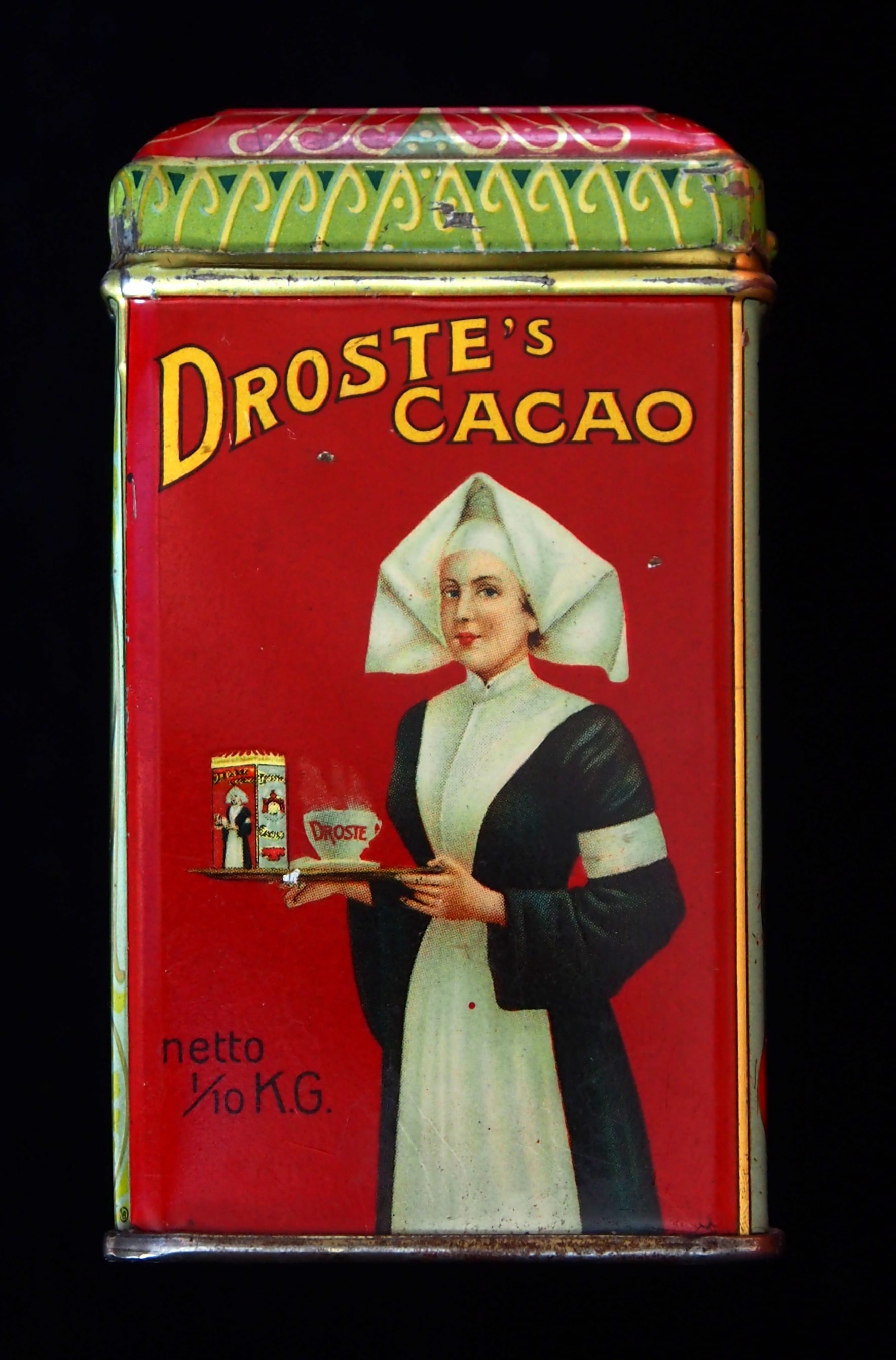
Another great example of narrative play comes from the superhero film Antman. In one scene, a character named Luis talks about a house that might be worth breaking into. Luis is also not great at choosing which details to include. However, that’s not what makes his storytelling so compelling. What makes it truly interesting is his ability to nest stories within stories. He tells a story about his cousin, who tells a story about a friend, who tells a story about his girlfriend. Reporting these kinds of embeddings (“Jack said that Piet thought that Ernesto believed that Rose said the house was empty”) is a fundamental aspect of human language. This is called recursion. It’s a concept that can work well visually: just look at the droste-effect. But in stories, it doesn’t bring the same clarity.
For a long time, I’ve been interested in two other aspects of storytelling. The first has to do with the moment the event being reported took place. We can approach this from different levels of detail. “Tuesday, August 7th at two minutes past nine in the evening” is very specific. “Last week” is much less precise, “last month” even less so, and so on. You can also use one of my favorite words: recently. It’s so wonderfully vague and undefined, how can you not love it?
So why do people still think it’s important to specify exactly when something took place? I believe it is related to credibility. One of the key principles of communication is that you speak the truth. This is referred to as the “maxim of quality,” a term introduced by American philosopher Paul Grice. If it turns out that you’re not being completely honest about the day of the week, people might start doubting the rest of your story. Even when the listener is unsure whether you’re telling the truth, there is still an internal mechanism that ensures what you tell is as close to the truth as possible.
Take a moment to think about how stories work. You'll be amazed at how much fun that brings
The second aspect of storytelling that fascinates me is how much detail is included. As I mentioned above, this is something that is frequently experimented with. But how do people know how much detail to include in a story? How do they figure out how long their audience will stay interested? This can be effectively studied by observing how people retell the same story. Sometimes they include all sorts of descriptive details (“I limped home with caution that evening. It was a pitch-black night”), but other times they don’t (“I walked home”). Why is that? It seems like one of those mysterious aspects of language that people naturally get right, without ever being explicitly taught, like the order of adjectives or the right time to interrupt someone in a conversation.
The structure of stories is just another metalevel of human interaction that fascinates scientists. You can also simply stick to the content, as it’s often engaging enough by itself. But for those moments when your mind starts to wander, think about how stories unfold. You will be amazed at the enjoyment it brings.

You might also like

In Jozef Deleu’s Poetry, Nothing Was Lost






Leave a Reply
You must be logged in to post a comment.