
Speak, Maestro!
Composers like Janáček, Bach, and Andriessen almost managed to capture spoken language in music. But speech is a slippery thing.
Sometimes everything comes together as if by magic. In 2017, I happened to meet the American writer and linguist Michael Erard during his time as Writer in Residence at the Max Planck Institute in Nijmegen. I invited him as a guest speaker in a lecture on science communication. He told me that he was interested in people’s first and last words, not only because of their poetic aspect, but also because of the misconceptions around them. He was gathering material for a book.
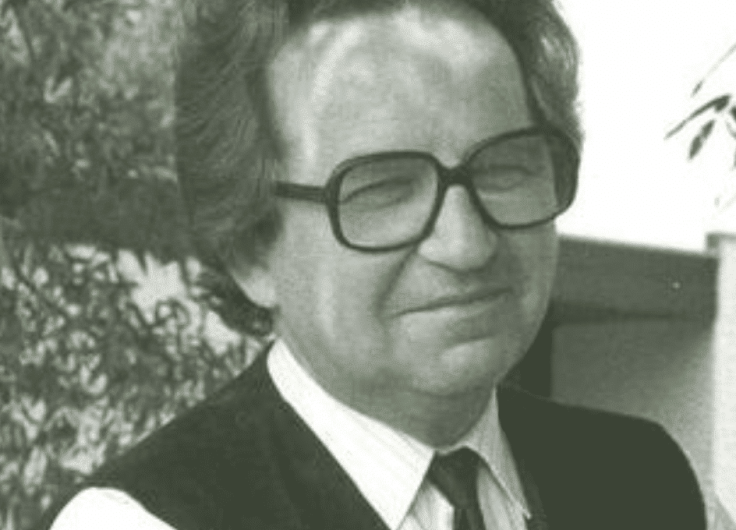
We fast-forward five years, to 2022. My Czech colleague Marta Kostelecká showed me the Leoš Janáček House during my visit to Brno. It was there that I learned that Janáček, a Czech composer, had the habit of transcribing people’s sentences according to their pitch. He called it speech melody. Janáček spent his life gathering a vast collection of musical fragments, from sentences he overheard at the market to comments by his relatives. He would never borrow directly from that material in his compositions, yet his attention to the melodic and rhythmic qualities of speech deeply influenced his music.
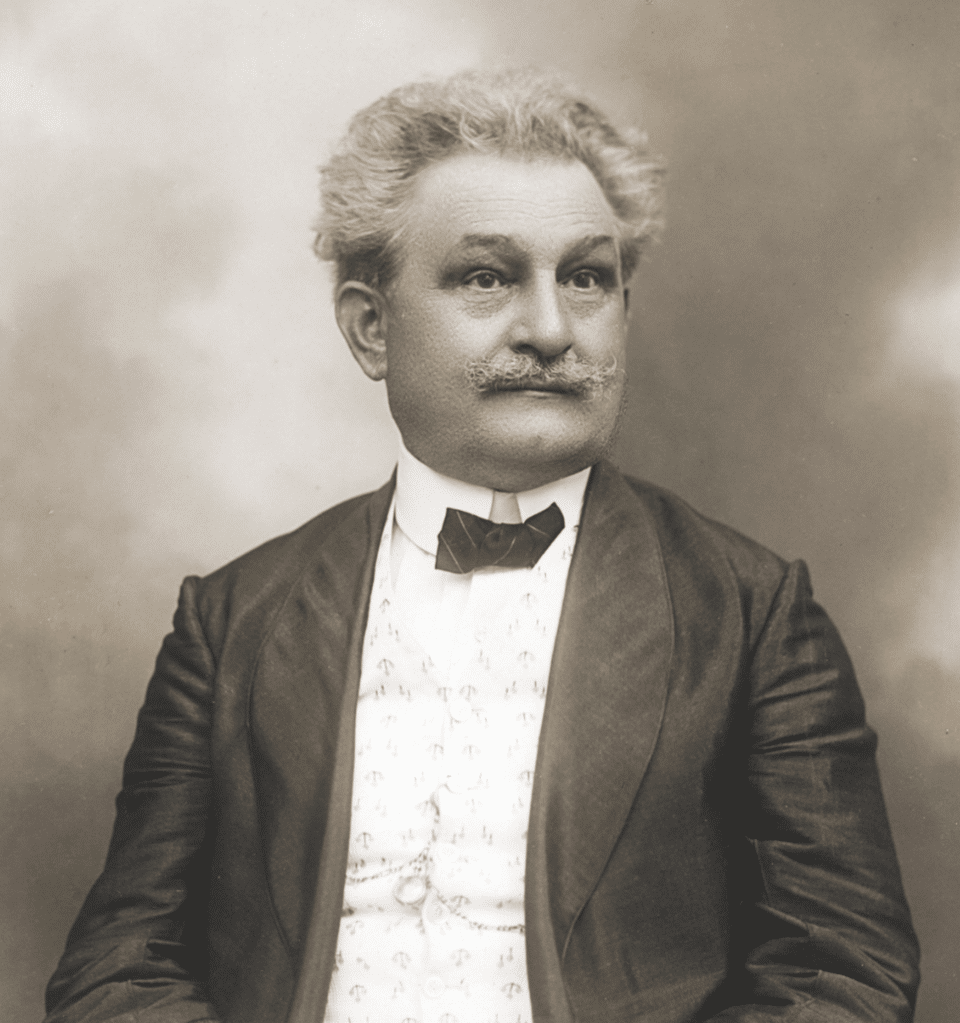 Czech composer Leoš Janáček in 1914
© Wikipedia
Even when his daughter Olga died of typhoid at the age of twenty in 1903, Janáček wrote down her final, heartbreaking words and recorded their pitch: “I do not want to die, I want to live. Such fear, I want to resist it. I am dying, I am dying.” Later that year, he composed an elegy in her honour.
I was instantly reminded of Michael’s project and sent him a postcard with Olga’s words, which were new to him. They eventually ended up in Bye Bye I Love You (2025), the comprehensive book he wrote about first and last words. He also worked with various people on musical interpretation of speech melody. Michael pointed out that this could have been the very first time the music was played.
Janáček was not the first composer to work with the music of speech. This exploration had already started with the recitatives of composers like Johannes Sebastiaan Bach, though these were not genuine attempts to transcribe speech in speech as accurately as possible. At that point, Arnold Schönberg, whom Janáček admired, was already working on this technique in Sprechstimme, that he used in Pierrot Lunaire (1912). Dutch composer Louis Andriessen, famous for The nine symphonies of Beethoven for orchestra and ice cream bell from 1970, also experimented with methods of turning spoken language into music. He did this in Nietzsche redet (1989), a work so obscure that it is impossible to find a recording.
During my time at the conservatory, I had the questionable privilege of performing that piece on the bassoon. Fun, but utterly exhausting, and musically not very interesting. Years later, I find it fascinating to reflect on how Andriessen mostly followed the natural rhythm of speech, yet chose arbitrary notes for a strangely assembled ensemble.
The examples of Andriessen and Janáček demonstrate that spoken language and rendered speech are very different. So why do speech and song differ? Function, context, and content naturally make that clear. Language is intended for communication, for describing reality, and for fulfilling social roles – something music cannot do. However, in terms of sound, the two forms are quite alike. Spoken language also has pitch, volume, rhythm, and tempo, all of which are characteristics that we usually link to music. They are more like different points on a continuum.
You could say that speech is more irregular and harder to predict. Speech is usually quicker than music when measured in hertz. When it comes to volume, speech contains more fluctuations between loud and soft, and these are often more spread out.
It's precisely because of that unpredictability that we keep producing new expressions, and that generative AI tools like ChatGPT inevitably get it wrong
I find that a fitting conclusion. Unpredictability lies at the heart of everything humans do with language (and perhaps beyond). This unpredictability is precisely why we will always produce new forms of speech, and generative AI tools like ChatGPT will inevitably keep making mistakes. They are incapable of creating authentic human creations, let alone capture the emotion of a dying daughter.
Music can achieve that, though in an entirely different way. It is odd how the profound emotions music can evoke are so far removed from the ordinary and monotonous nature of the dying words of someone like Olga Janáčková. Music is an amplification of reality. Iy can move me, bring me to tears. And yet music is not language. Language is greater; it does more. Olga’s words make that unmistakably clear.
You might also like
In Jozef Deleu’s Poetry, Nothing Was Lost




Leave a Reply
You must be logged in to post a comment.