
Spinoza: Not Your Average Anti-religious Enlightenment Thinker
The world knows Spinoza as a philosopher and free-thinker, but the internationally renowned Spinoza researcher, Herman De Dijn, resists the limitations of this image.
Baruch de Spinoza is not only the most important and most studied philosopher of the Low Countries; he is also part of its general cultural heritage. The study of his philosophical and political standpoints is, therefore, not only relevant to the circle of (international) experts. Indeed, the image we have of Spinoza is important to anyone who is interested in the cultural history of the Low Countries.
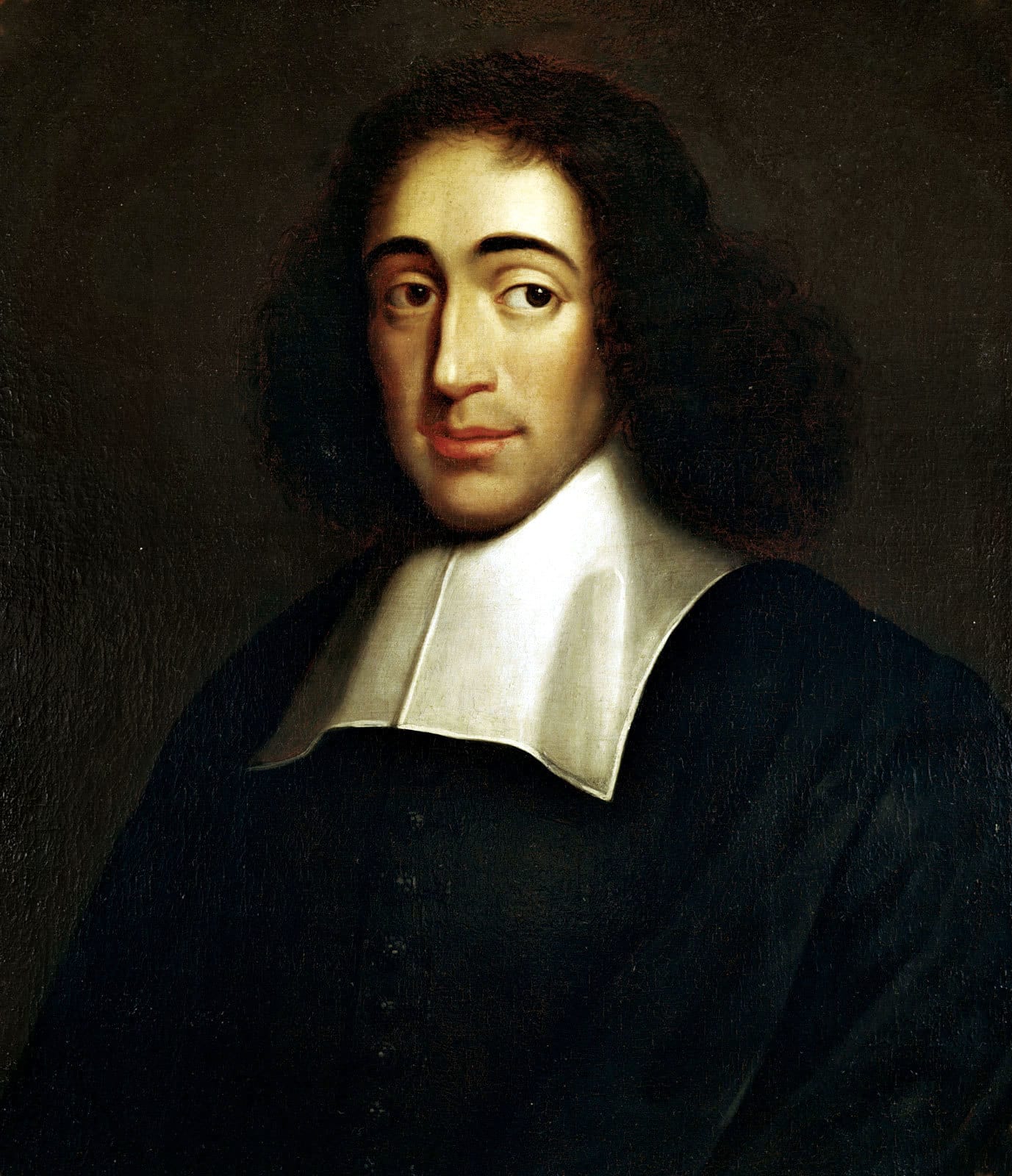 Anonymous, Posthumous Portrait of Spinoza, oil on canvas, c. 1700
© Herzog August Bibliothek, Wolfenbütte
Ever since the British historian Jonathan Israel referred to the Netherlands as the cradle of the radical Enlightenment – with Spinoza as the figurehead – the image of Spinoza as a radical enlightenment thinker has dominated. In The Other Spinoza (De Andere Spinoza, 2020) author Herman De Dijn (1943) sets out to rehabilitate the religious aspects of Spinoza’s philosophy.
He does this by placing Spinoza back in his own time, when the idea of God was, unlike it is today, a dominant feature of society. That Spinoza used the word “God” as a means of protecting himself from a possible accusation of atheism is, according to De Dijn, an anachronistic reading from a contemporary perspective.
The search for God played a central role in Spinoza’s quest for true happiness. That he no longer recognized himself in the standard image of the God of Judaism and Christianity does not mean he would have rejected every image of God. On the contrary, De Dijn wants to demonstrate that Spinoza was both an enlightenment thinker and a religious thinker.
Spinoza cannot simply be reclaimed as a purely anti-religious Enlightenment thinker
On his quest for God, Spinoza travelled two paths: the broad highway of the masses that he outlined in Theological-Political Treatise (Theologisch-Politiek Traktaat, 1670) and the steep philosophical path of the individual that he constructed in Ethics (Ethica 1667). In the former, he presented himself as a radical reformer of Christianity as a religion for the masses, even though he never referred to himself as a Christian. He did this by making a sharp distinction between religion and philosophy/science. While philosophy/science was concerned with truth, the goal of religion was to set humanity on the path to salvation or true happiness.
Against the background of that distinction, Spinoza interpreted the Bible on the basis of two principles: the principle of adaptation and the principle of restriction. According to the first principle, the prophets attempted to reach ordinary people through to use of simple, suitable language. According to the second principle, the Bible was never meant to be interpreted as a doctrine of truth but, rather, as a moral message of salvation.
In contrast, Ethics was meant to be read as a philosophical/scientific search for truth which is, at the same time, connected with a personal quest for salvation. To prove this connection, De Dijn reviews all the points of discussion arising from centuries of research concerning Spinoza: the distinction between knowledge of the second (rational) and third (intuitive) kinds; the relationship between imagination, understanding and reason; and the immanent and transcendent nature of God. After a close analysis of the final two parts of Ethics, De Dijn characterises Spinoza as a pan-and-theist (everything is in God), not as a pantheist (everything is God), and certainly not as an atheist.
De Dijn's 'religious' interpretation of Spinoza will certainly meet with opposition
By now, as a reader, you might get the impression that this book is mind fodder only for a Spinoza expert. Although De Dijns’s in-depth analysis stems from his own phenomenal knowledge of the sources, and despite the fact that the secondary literature includes difficult, technical passages, this book nevertheless succeeds in clarifying the concrete meaning of Spinoza for his and our time in all its (paradoxical) nuances. De Dijn shows how Spinoza developed a meditation practice in which man was no longer central, but which could, nevertheless, lead to human salvation and happiness. That is why Spinoza is often described as the most Eastern of all Western modern thinkers.
Spinoza was, then, not only a political thinker concerned with freedom and democracy, but also a radical reformer of metaphysical thought about religion. According to Spinoza, we can philosophically/scientifically reconstruct our knowledge of God, but this reconstruction only teaches us how little we actually know. We can only truly know the two essential properties of the Divine Nature that we share, namely the ability to think and the ability to expand upon our thoughts. But Divine Nature has an infinite number of properties, which means it transcends finite scientific knowledge.
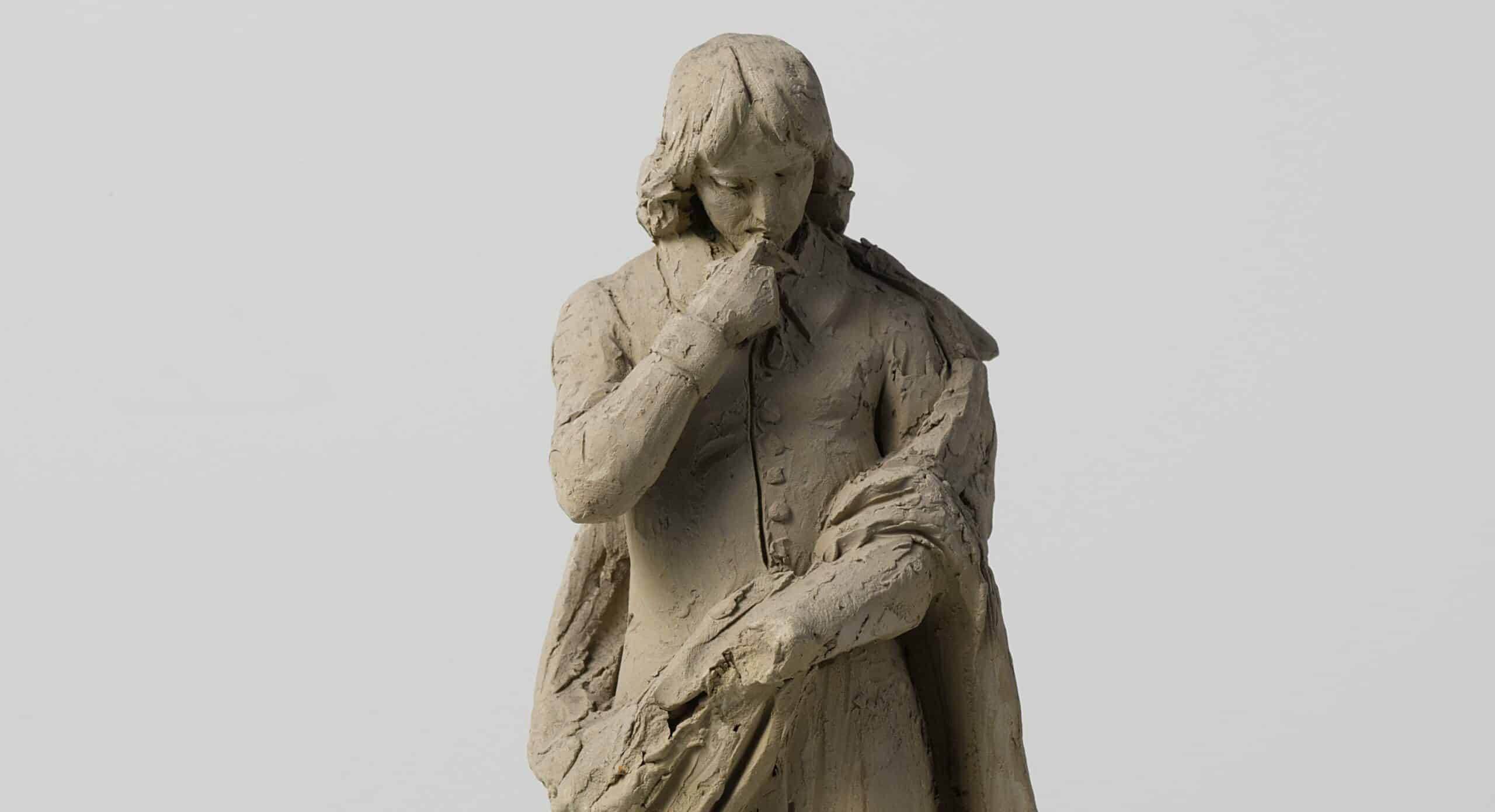 Eugène Lacomblé, design for a statue of Spinoza, circa 1860-1880
© Rijksmuseum, Amsterdam
This “religious” interpretation of Spinoza will certainly meet with opposition. Recently in Dutch-language research, Maarten van Buuren and Tinneke Beeckman have propagated the image of Spinoza as a freethinker. De Dijn calls this viewpoint one-sided and, as mentioned earlier, wants to free readers from contemporary biases by placing Spinoza back in own historical era. Seventeenth-century philosophy cannot be understood in isolation from the over-arching religious context of the age. Even for Spinoza, the breakthroughs of modern science and philosophy did not bring an end to thoughts or discussions of God. They only meant the end of the anthropomorphic and “superstitious” speech he experienced within the prevailing Calvinism of his day.
In response to the social clutches of Calvinism, Spinoza went in search of a new place for religion in society and a new philosophical form for it. He described this new position of religion in society in his Theological-Political Treatise when he advocated the separation of church and state in support of the regents in the First Stateholderless Era (1650-1672). In Ethics, he developed a new, philosophical form of religion by thinking about God in a rigorously mathematical way.
But he had no desire to reconcile faith and science, as Galileo and Descartes had attemped before him, nor did he seek to reject faith entirely on the basis of scientific propositions. No wonder, then, that the rebellious Spinoza was attacked from all sides in his time. Yet De Dijn convincingly shows that, even today, Spinoza cannot simply be cast, for example, as a pure, anti-religious Enlightenment thinker.
At the end of his book, De Dijn poses the question whether Spinoza’s view of religion is sufficient for the contemporary reader. Though a great admirer of Spinoza, he is not a slavish disciple. Certainly he questions Spinoza’s disregard for the ritual and material aspects of religious experience.
The dispute over the proper relationship between science, religion, and the search for meaning is still relevant today
One question remains unresolved in this essay (though De Dijn touches on it in his discussion of the relationship between rational and intuitive knowledge), a question that was already being asked in the seventeenth century and which is still relevant today: can the mathematical method indicate the way to salvation? And by extension: can we reconcile a deterministic view of man and world with the recommendations provided in a collection of ethics?
The playwright and poet Joost van den Vondel (who may have known Spinoza from the circle of the ex-Jesuit Franciscus Van den Enden of Antwerp) was already pondering these questions in the seventeenth century. Vondel firmly rejected the use of a mathematical method in the field of religion, though he did share Spinoza’s aversion to both the zealotry of countless ministers and the Calvinist doctrine of predestination which, in his view, was part and parcel of the image of a vengeful God.
Spinoza’s naturalistic image of God, defined as the one and only eternal substance did, however, propose an alternative image of predestination “not by an extremely arbitrary (Calvinistic) God, but by a God-Nature for whom good and evil do not exist, and are not characterized by emotions.”
Vondel, on the other hand, distanced himself resolutely not only from the Calvinist image of God, but also from a pan-and-theistic image of God. He did not consider scientific language subtle enough to gauge the essence of reality. While not doubting that the language of science could be used to formulate astute arguments, he thought it was neither deep nor refined enough to be used in a domain for which it not suited. This “Golden Age” dispute about the appropriate relationship between science, religion and meaning – and it is noteworthy how multidisciplinary the interest and knowledge of the leading thinkers and artists of that era were – is still topical today.
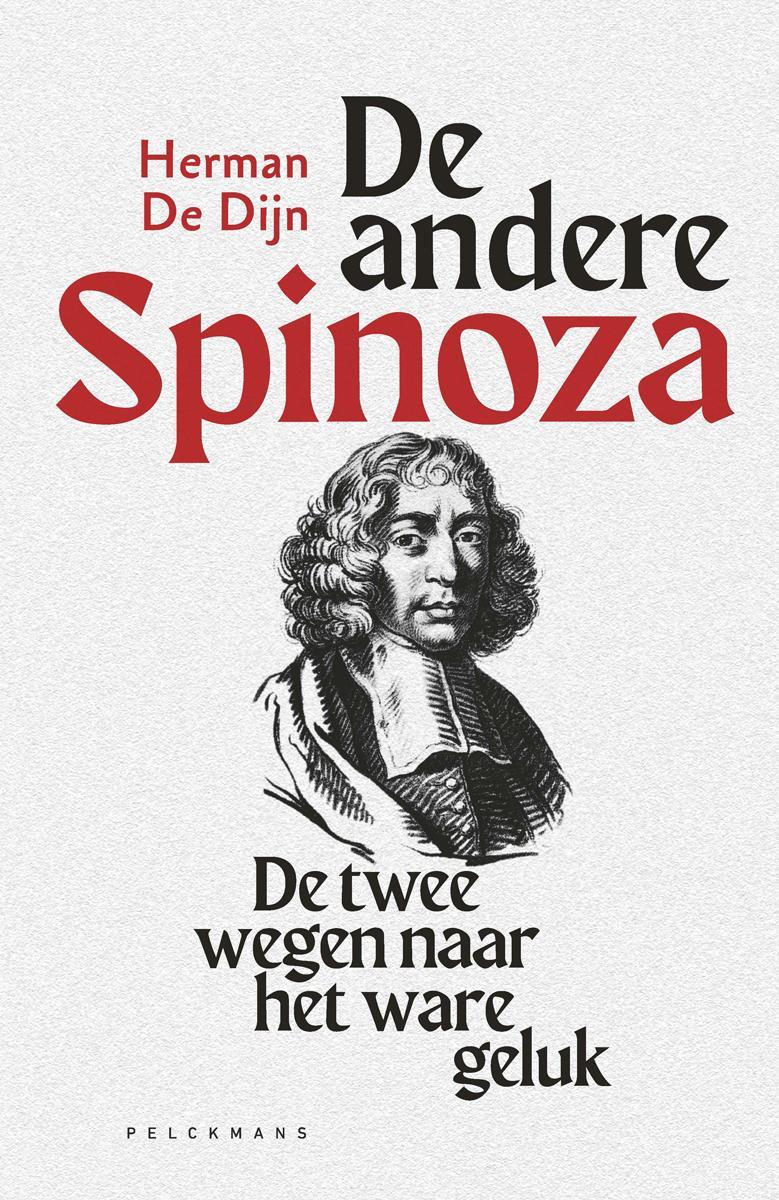
Herman De Dijn, De andere Spinoza. De twee wegen naar het ware geluk, Pelckmans, Kalmthout, 2020, 253 p.
You might also like
In Jozef Deleu’s Poetry, Nothing Was Lost






Leave a Reply
You must be logged in to post a comment.