
A Dynasty Divided: Philip the Good and the Fractures Within
The Burgundian state in the mid-fifteenth century looked, from the outside, like one of the most formidable powers in Europe. But power is always partly performance, and behind the tapestries, the tournaments and the gilded ceremonies of the Order of the Golden Fleece, it was quietly coming apart.
Listen to this episode on Spotify.
Between 1454 and 1457, Philip the Good fought to extend his grip over the last independent bishoprics in the Low Countries, forced a papal appointment in Utrecht and installed an incompetent nephew in Liège. These misinformed moves would store up trouble for years. Meanwhile, the heir to the French throne turned up unannounced on his doorstep, a chancellor was brought low by enemies who had been sharpening their knives for years, and a father and son came to blows – possibly literally – over a name on a list. By the time a baby girl was born in February 1457, the Burgundian dynasty had a future but its present was badly frayed.
When Philip the Good travelled to the Imperial Diet (Reichstag) in Regensburg in 1454, his absence from the Low Countries gave his son Charles his first real taste of governance. On his return, Philip turned his attention to consolidating Burgundian influence over the church as well as his temporal domains. When the Bishop of Utrecht died in 1455, Philip bypassed the chosen candidate and pressured the new pope, Calixtus III, into appointing his illegitimate son David instead. Around the same time, he forced the incumbent Bishop of Liège into resignation and had his eighteen-year-old nephew Louis of Bourbon installed there. This proved to be a disastrous choice, as the fiercely autonomous people of Liège promptly rebelled and turned to the French king for protection.
The Utrecht situation required more direct action. Philip marched his army north in the summer of 1456, and the rival claimant Gijsbrecht van Brederode, facing military defeat, negotiated a surrender. Philip accepted his resignation in exchange for a pension and honorific positions, then made a ceremonial entry into Utrecht to install David as prince-bishop. Resistance continued in the Oversticht (the name for Overijssel at the time), however, and Philip laid siege to Deventer, which eventually capitulated in late September 1456.
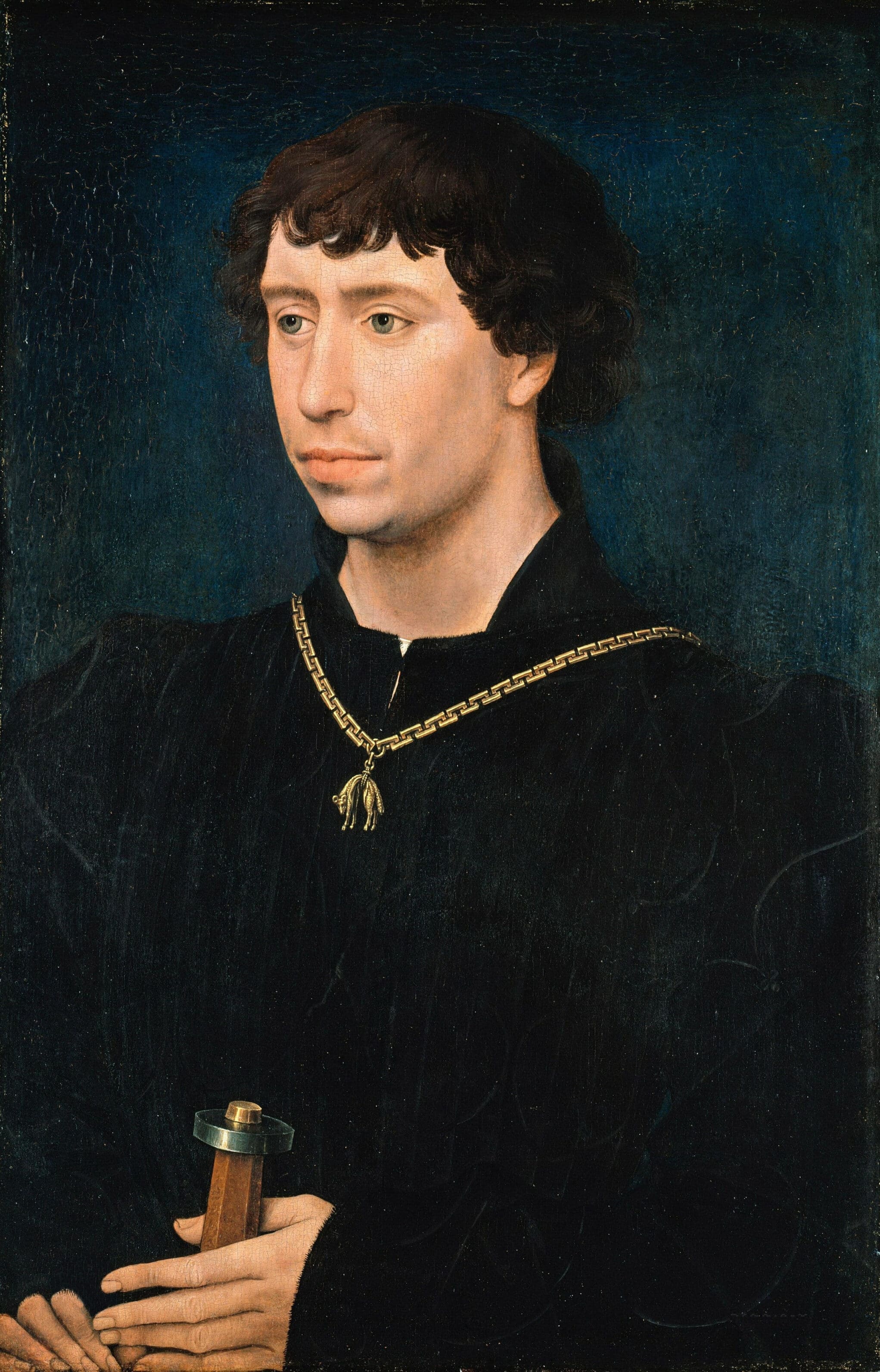 Charles the Bold of Burgundy (1433–1477), depicted here as Count of Charolais. All subsequent portrayals of Charles as Duke of Burgundy refer back to this original by Rogier van der Weyden.
© Public Domain
While the siege was still underway, a dramatic and unexpected development transformed the political landscape: Louis, the dauphin of France, fled his father’s court and sought refuge in Burgundy. Philip, sensing an opportunity to cultivate influence over France’s future king, welcomed him warmly and granted him an annual income and a castle at Genappe. The French king Charles VII was furious but pragmatic, reportedly predicting that his cousin of Burgundy was nurturing a fox that would one day eat his chickens.
The dauphin’s arrival sharpened existing tensions within the Burgundian court. Charles of Charolais, Philip’s heir, returned from a mission abroad to find a rival for his father’s favour. The longstanding power struggle between the chancellor Nicolas Rolin and the noble Croy family came to a head over a minor court appointment, with Philip siding firmly with the Croys and erupting in fury when Charles refused to comply. The confrontation reportedly drove Philip into a midnight ride through the forest of Soignes in a rage. A reconciliation of sorts followed, but the damage was lasting: Rolin lost his real influence, Isabella of Portugal – Philip’s wife and a steady political force at court – withdrew to a convent, and Charles retreated to Holland. In February 1457, amid this fractured family, Charles’s wife gave birth to a daughter, Mary of Burgundy — who would one day reshape the dynasty entirely by marrying into the House of Habsburg.

You might also like



Leave a Reply
You must be logged in to post a comment.