

Compared with the United States, the Low Countries are a tiny spot on the world map. Yet books from here find their way across the Atlantic and sometimes achieve great success. How does this literary crossing happen?
For many writers, having their work translated in the United States is a real dream. Even in today’s rather hostile political climate, the prospect of a large readership remains attractive. Perhaps the most successful book to make the crossing is The Dinner by Herman Koch, which appeared in the United States in 2013, four years after its Dutch publication. It was a triumph: the novel appeared for several weeks on The New York Times fiction bestseller list and was nominated for The National Book Award.
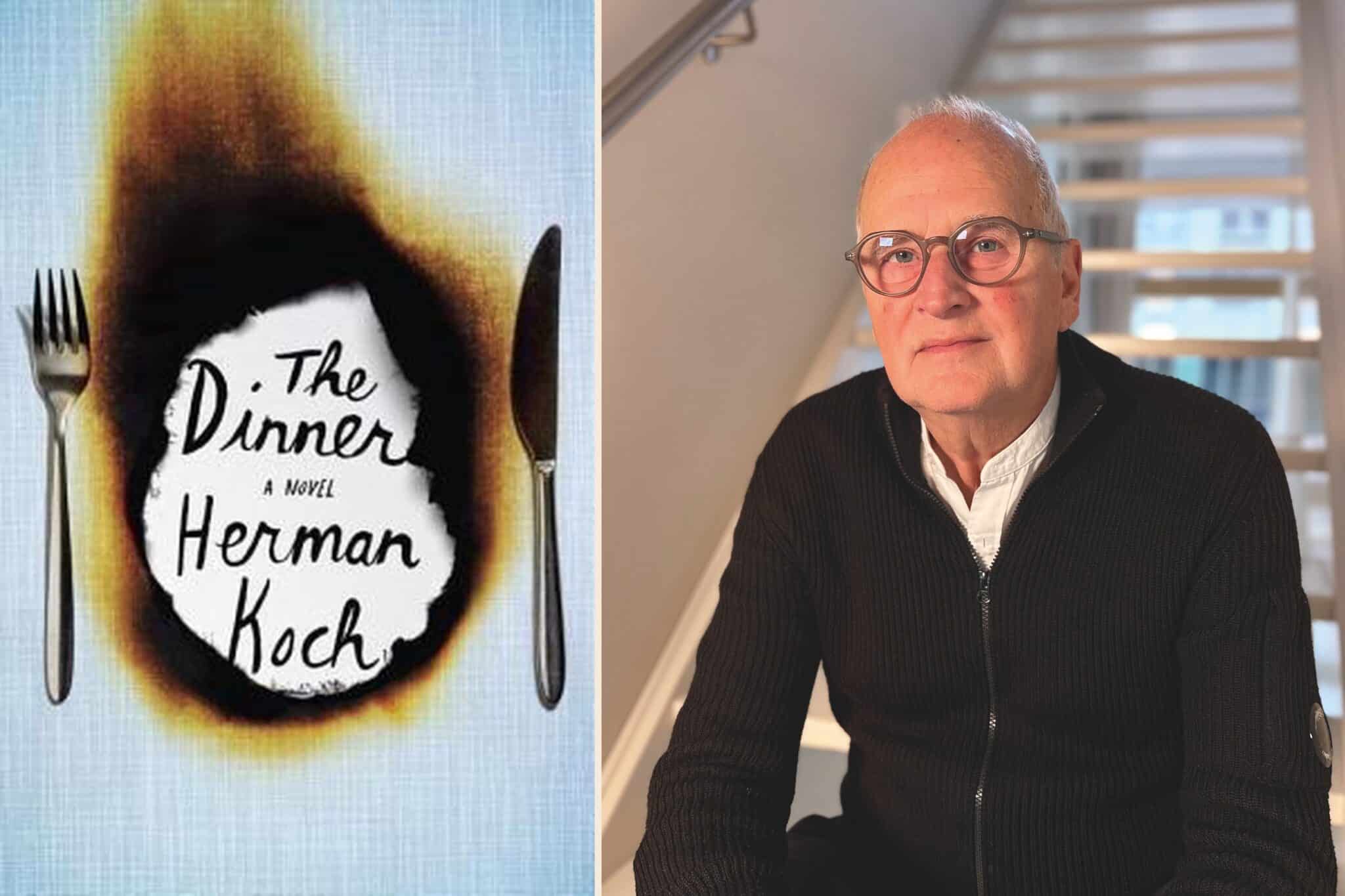 The English translation of Herman Koch’s The Dinner appeared on The New York Times fiction bestseller list for several weeks and was nominated for The National Book Award
 © Pablo Koch
This type of literary crossing is less common than authors and publishers would like. Of the estimated tens of thousands of literary works published in Dutch between 1998 and 2023, only 576 were translated into English and published in the United States. The majority were fiction (187), followed by children’s literature (185) and non-fiction (149). Poetry (25) and graphic novels (6) make up a much smaller share. Of all translated books, 424 were originally written by Dutch authors and 103 by Flemish authors. The most frequently translated authors include Edward van de Vendel (7 titles), Margriet de Moor (7), Arnon Grunberg (6), and Cees Nooteboom (6).
According to Jack McMartin, who studies the circulation and reception of Dutch-language literature in translation at KU Leuven, the Netherlands is a relatively small player in the international translation market. “If you sell 5,000 copies, you can already be happy. Translations often cost more than they bring in: in addition to translation rights and author royalties, the translator must also be paid. Thankfully, American publishers receive subsidies from the Dutch Foundation for Literature and Flanders Literature. These lower the financial risk for publishers and ensure that translators are paid a fair market-rate fee.”
The translator as intermediary
But what determines which books are translated into English? There is no clear system behind it, says Victor Schiferli, who is responsible for promoting Dutch literature abroad at the Dutch Foundation for Literature. “Similar to the original publishing process, it’s about a book landing on the right desk. That is not always easy in the United States. I have travelled to New York a number of times to pitch Dutch books to American editors. Meeting with a publisher in one of those skyscrapers requires confidence: they are extremely busy, and you are out again before you know it.”
It doesn’t help that the United States is further away than Germany or France. “You are less likely to meet each other at events such as the annual Frankfurt Book Fair,” says Schiferli. “Some Dutch publishers stay in close contact with their American colleagues, so they can quickly pitch a book if they think it fits the market there. Take the relationship between Querido in the Netherlands and Levine Querido in the United States; they work closely together.”
Every so often, a Dutch author gets lucky, such as Anjet Daanje, who recently found success with the American translation of The Remembered Soldier. The New York Times and The Wall Street Journal called it one of the best books of 2025, and it was later nominated for the prestigious National Book Award and the International Booker Prize, similar to The Dinner.
Michael Wise of New Vessel Press, an American publisher specialised in translations, came across Daanje’s novel via translator David McKay. He had translated the first few dozen pages of The Remembered Soldier, convinced of its literary quality. “I was immediately impressed,” says Wise. “Because I can also read German, I requested that German translation of the novel.”
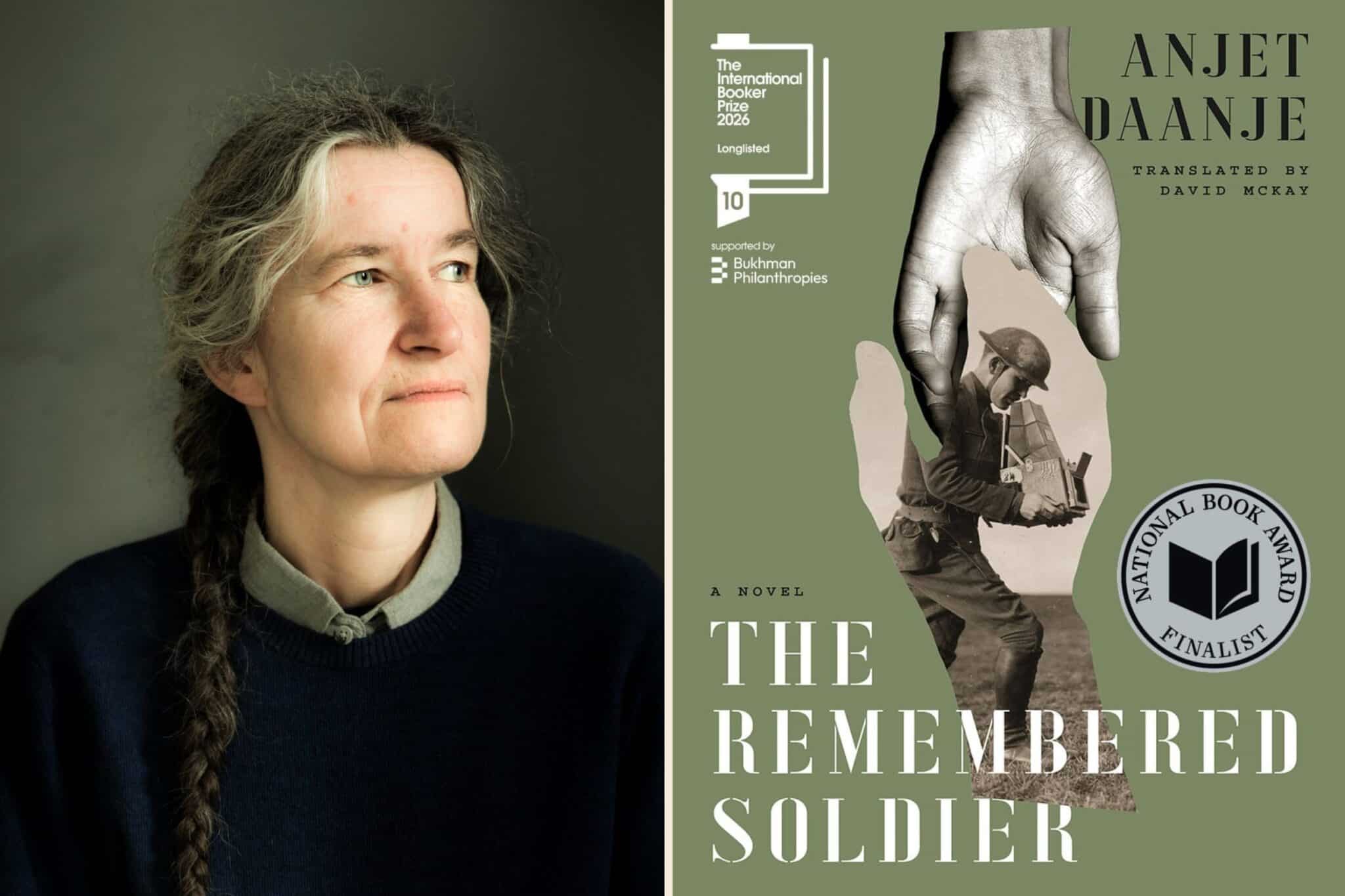 The Remembered Soldier by Anjet Daanje was listed by The Wall Street Journal and The New York Times among the best books of 2025 and was nominated for the National Book Award and the International Booker Prize
 © Hen Veenstra
He knew publishing it would be risky. “It’s a substantial book, which makes it expensive to translate. Luckily, it has more than paid off: helped by literary prizes, the novel is selling better than expected. Everyone who has read The Remembered Soldier is impressed, partly because of the excellent translation. Readers find it interesting that the story is set in Flanders. Even if you are not familiar with the setting, the book contains many familiar elements: from the Second World War to a universal love story and the role of photography.”
Wise has found that Americans are very much interested in literature from other countries. “Of course, you need to build enthusiasm for books and writers they don’t know. In the case of Anjet Daanje, I always encourage people to discover her work for themselves, for example through the excerpt on our website.”
It certainly helps when a book has sold well and been widely discussed in its home country, as with Daanje. “That makes it more likely that multiple people will tell an editor: you should keep an eye on that title,” says Schiferli. “That is what happened with The Discomfort of Evening by Lucas Rijneveld: the American publisher bought it without reading it, because he had already heard about it from a translator, colleagues abroad, and the Dutch Foundation for Literature.”
Translators, alongside publishers, the Dutch Foundation for Literature, and Flanders Literature, play a key role in the recommendation process
In addition to publishers, the Dutch Foundation for Literature, and Flanders Literature, translators play an important role in the recommendation process: they prepare reading reports and sample translations, sometimes on their own initiative, and talk to foreign publishers. One of them is David McKay, who, in addition to translating Daanje’s work, has translated works by Stefan Hertmans and David Van Reybrouck.
Recognisable
How does McKay determine whether a book is suitable for the American market? “A story must also be easy for foreign readers to understand. A book with too many references to Dutch history can make translation difficult. Publishers prefer books with familiar Dutch themes, such as the countryside, ice skating, and the Second World War.”
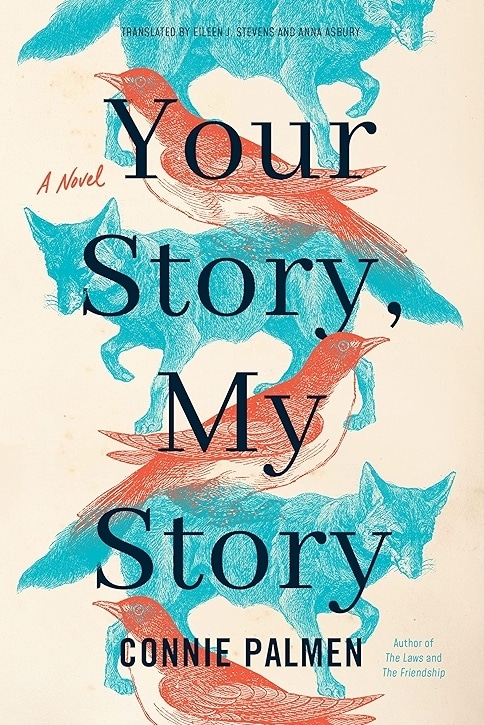
Interestingly, Americans are often drawn to books that resonate with their own experience, such as Connie Palmen’s You Said It, about the relationship between poet Sylvia Plath and Ted Hughes. McKay points out that there are also small independent publishers that are willing to take greater risks. “They do not necessarily expect a translation of a Dutch book to be profitable. Their main concern is literary quality. They sometimes have that freedom thanks to donor support, but it also simply takes courage.”
Books originally published in Dutch perform relatively well in the English-language market, especially considering how small the Dutch-speaking region is. We receive a relatively large number of literary prizes. In addition to Daanje’s success, Lucas Rijneveld won the International Booker Prize for The Discomfort of Evening, and Jente Posthuma was nominated for What I’d Rather Not Think About. McKay, like Schiferli, attributes these successes to the well-organised literary landscape: “We do not only have talented writers, but also a healthy writing culture. Thanks to the support of the Dutch and Flemish governments, authors and translators can focus on their work.”
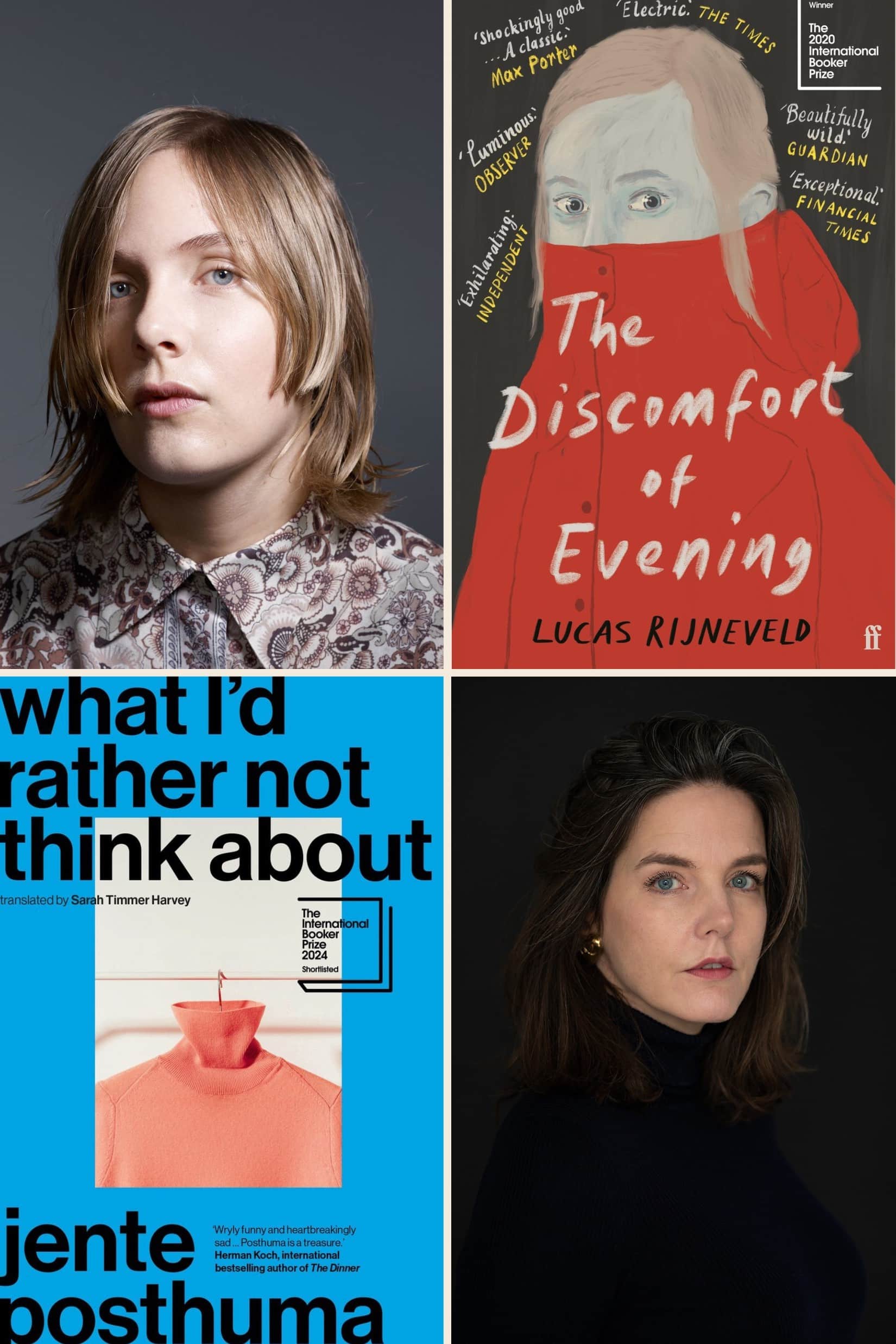 Lucas Rijneveld won the International Booker Prize with The Discomfort of Evening, and Jente Posthuma was shortlisted for What I’d Rather Not Think About
 © Jouk Oosterhof / Bas Uterwijk
Another striking trend is the growing interest in the colonial side of Low Countries culture and history. “What I enjoy most is translating books that make information accessible that is not yet widely known in the Anglophone world,” says McKay. Examples include Revolusi by David Van Reybrouck and We Slaves of Suriname by Anton de Kom. “At the same time, non-fiction translations are more difficult to get published: these are usually handled by larger publishers, which are harder to get into.”
The growing demand for diversity in recent years has also had a positive effect on the Low Countries’ literary landscape. “The Black Lives Matters movement has had an effect on the publishing market,” says McKay. “More attention is now being paid to authors’ identities and to work by minorities. For years I unsuccessfully tried to promote the work of Surinamese-Dutch writer Astrid Roemer; after Black Lives Matters, there was suddenly interest.”
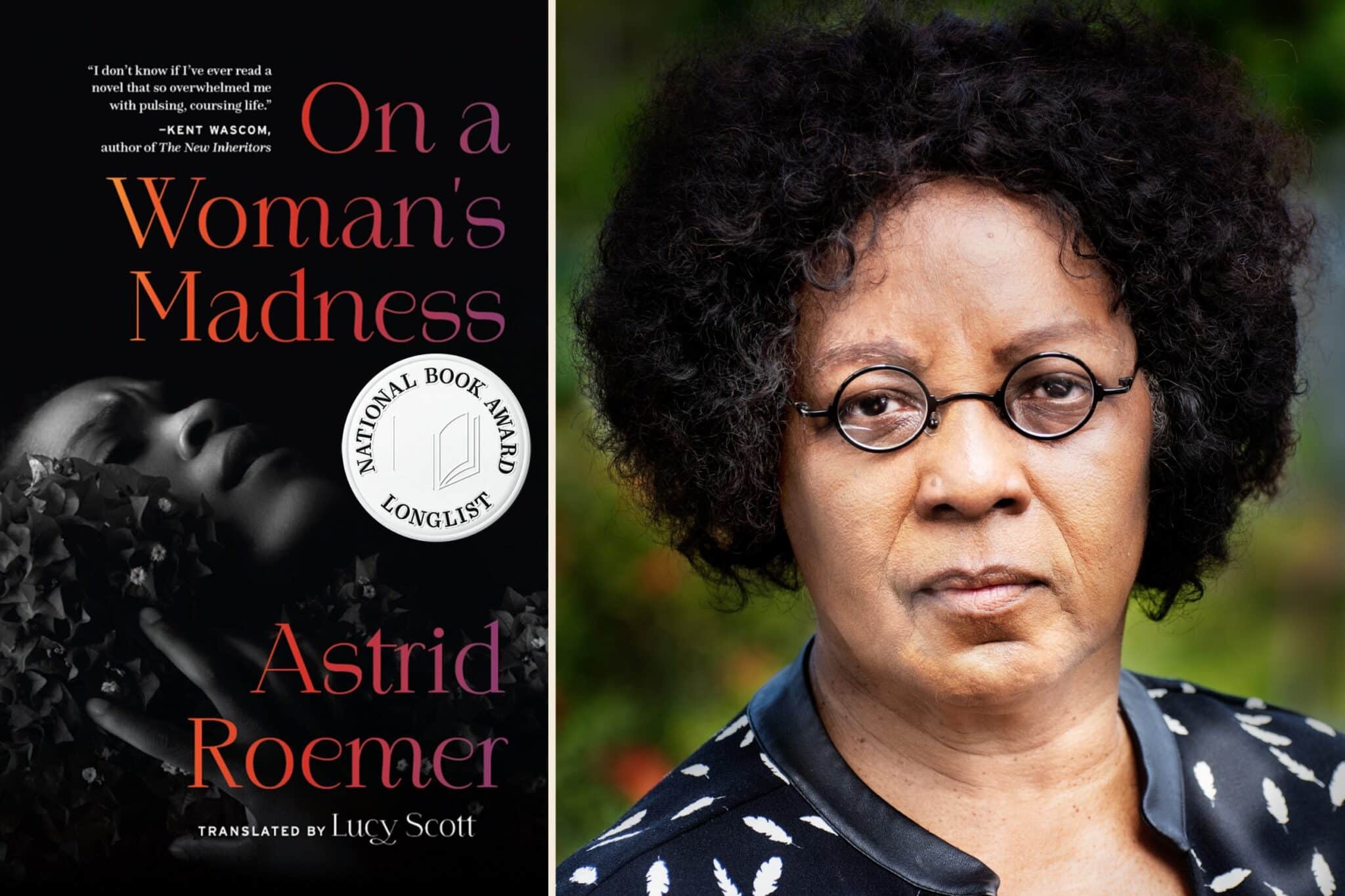 Astrid Roemer appeared on the International Booker Prize longlist with On a Woman’s Madness. After Black Lives Matter, international interest in her work grew
© Sirano Zalman
International literature
Sometimes, against all expectations, a Dutch book fails to make it to the American market. For years, various translators have tried to bring Thomas Rosenboom’s bestseller Public Works to the attention of publishers, but without any success. Incomprehensible, McKay thinks: “The book is even about the historical ties between the Netherlands and the United States. It seems that this shared history is not very important to publishers.”
In some special cases, this may be different, for example because the publisher has Dutch roots. “For example, there are a few English translations of Frisian novels, including works by Hylke Speerstra, Rink van der Velde and Obe Postma, published by Mokeham, Permanent Press and Librario, respectively. But those books never become real bestsellers.”
The previously mentioned book that did achieve success, The Dinner by Herman Koch, was not promoted by the American publisher Hogarth as typically Dutch, but as European. This approach is quite common, says KU Leuven researcher Jack McMartin: “Many Americans are unfamiliar with Low Countries stories, so publishers tend to present those books as international literature.”
Schiferli also sees little interest in Dutch literature specifically. “An editor mainly wants to publish a very good book, no matter where it comes from. For American readers, a Dutch book is no different from a book from Denmark or Poland: it is all foreign. Fortunately, there is a growing interest in foreign literature in general. For a long time, the idea was: we have more than enough good writers of our own. Younger editors are helping to change this. Thanks to the internet and international book fairs, they come into contact with foreign titles more often and become enthusiastic.”
Some publishers from the Low Countries choose to bypass the American selection process and launch their own imprint in the United States, including the Flemish children’s publisher Clavid and De Geus (via World Editions). They work with local distributors to ensure their books reach readers.
The broader impact of an English translation should not be underestimated, says McMartin. “Publishers keep an eye on each other, even across language borders: if a publisher sees that its American counterpart has published a book, that can encourage them to bring out their own translation. An English translation also serves a practical purpose: even if it is only a fragment, a book becomes accessible to publishers who do not sufficiently understand Dutch.”
Well-known and innovative
There has not been a major bestseller like Koch’s in recent years. Yet authors still see their dream of having their work translated come true. For example, Listen by Sacha Bronwasser was recently published by Penguin, and a translation of Safae el Khanoussi’s novel Oroppa is forthcoming. Poets such as Mustafa Stitou, Radna Fabias, Charlotte Van den Broeck and Ester Naomi Perquin have been published in the United States. Authors of children’s books also make the crossing, including Flemish writers Leo Timmers, Guido Van Genechten and Ingrid Godon.
Dutch-language classics are also still occasionally published in the United States, such as The Evenings by Gerard Reve, Chapel Road by Louis Paul Boon and Max Havelaar by Multatuli. This is often driven by a specific occasion, such as the commemoration of the First or Second World War, says McMartin. “You often need a hook like that to draw attention to a book.”
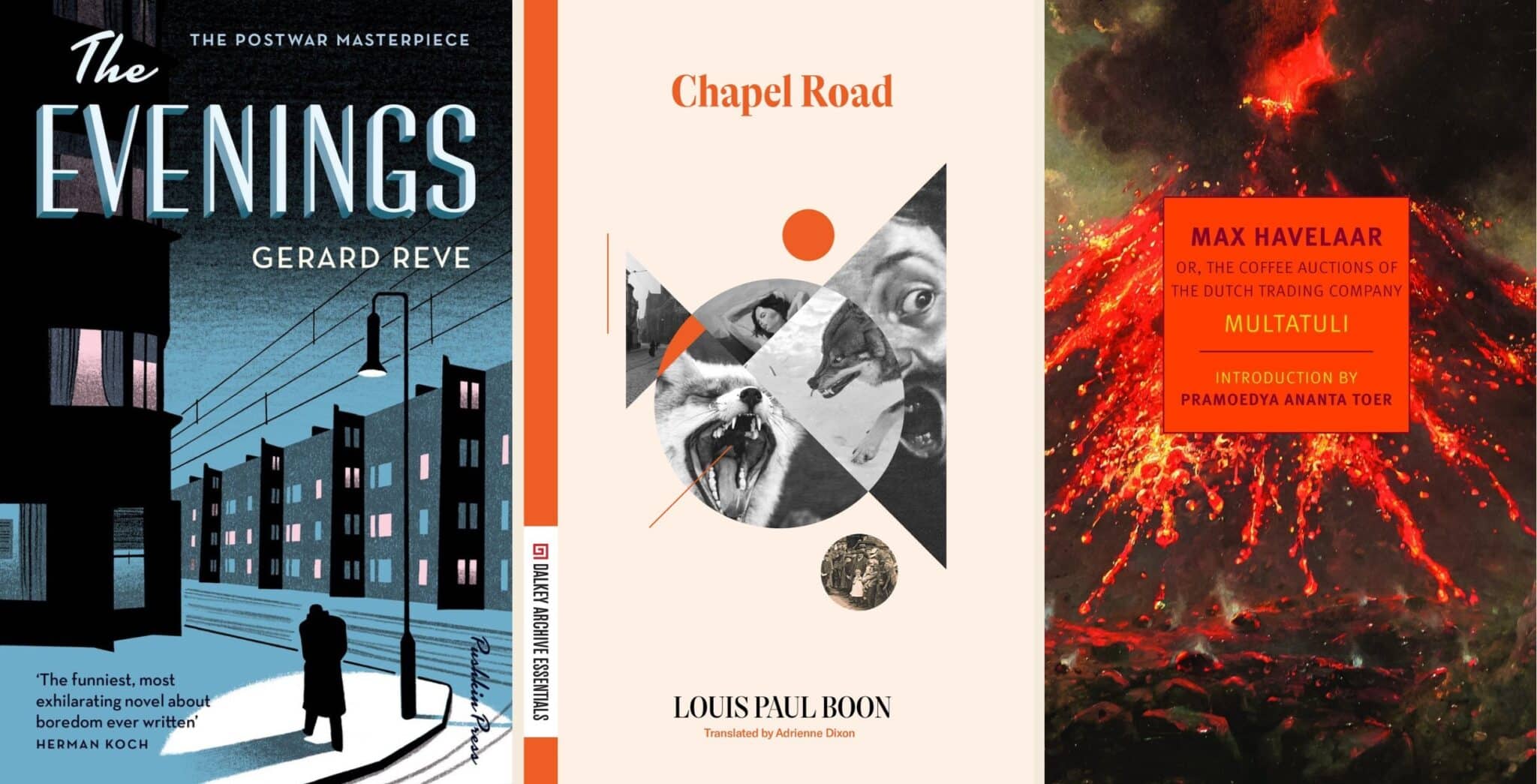 Dutch-language classics are regularly published in the United States, such as The Evenings by Gerard Reve, Chapel Road by Louis Paul Boon, and Max Havelaar by Multatuli
The question remains whether a Low Countries writer should appeal to American readers with a universal story without too many Dutch characteristics, or with one that confirms existing stereotypes. The truth likely lies, as with literature in general, somewhere in the middle: the ideal book broadens your world but also gives you something familiar to hold on to.
You might also like






Leave a Reply
You must be logged in to post a comment.