
Capitalism Was Invented by the Dutch: The Low Countries’ Influence on the United States

The Low Countries played an important role in the history of the United States according to journalist Greet De Keyser and historian Russell Shorto. And that influence still has an effect today. As Shorto says: ‘Just look at who lives in this country today: everything started with the eighteen languages spoken in New Amsterdam.’
This conversation took place in the aftermath of news from Washington DC: the shooting at the White House Correspondents’ dinner, at which both President Trump and Vice President Vance were present. Belgian journalist Greet De Keyser is back home for a short while after just having worked for eighteen hours straight. She has been a familiar Flemish face in the American capital for years, reporting for the commercial channel VTM since 2015. Unlike many Europeans who judge the United States from the outside, De Keyser knows it inside and out.
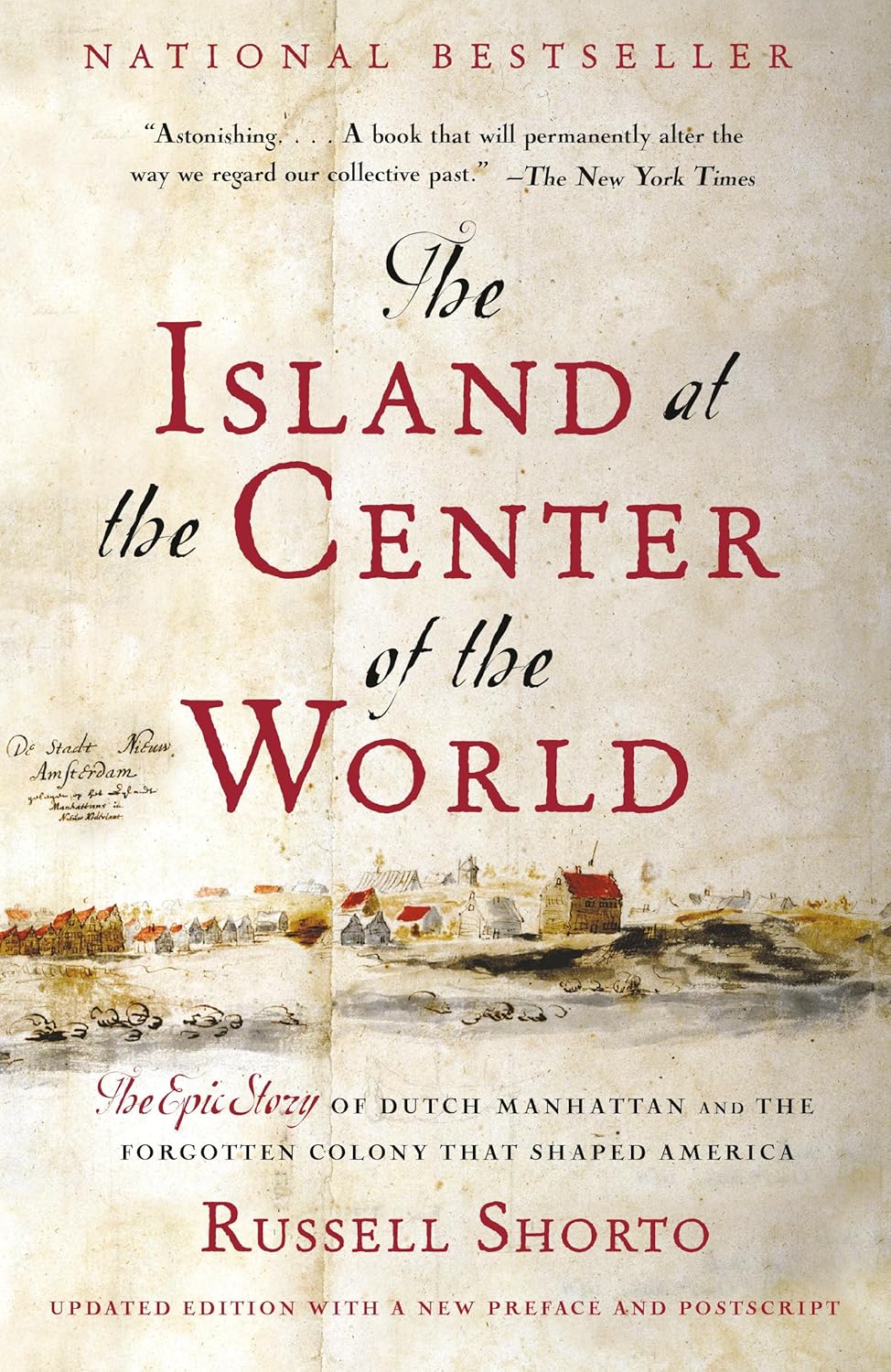
American historian and writer Russell Shorto phoned in from Maryland, so close to the Potomac River that on a clear day he can see West Virginia across the water. With his book The Island at the Center of the World, Shorto trolled the archives in 2000 to unearth New York’s Dutch roots. His most recent book, Taking Manhattan (2025), broadens the earlier narrative by including Indigenous and African perspectives.
As the United States celebrates its 250th birthday, we are asking what influence the Low Countries have had on American history, and how their influence still resonates today.
Russell, your first book about New York begins in the archives. The early history of New York was available, but not accessible to everyone: everything was in Dutch. What were the consequences?
SHORTO: “What we know about colonial New York comes to us through British eyes because the English permanently took over the colony from the Dutch in 1674. History is written by the winners. That only gradually dawned on me when I first started working with the original Dutch material around 2000.”
Does that make a big difference in the broader story of America?
SHORTO: “It makes an enormous difference. An American story that begins with New England, Boston and the Puritans becomes a theological story: chosen people coming to the Promised Land, the shining city upon a hill. The first American printing presses were in New England and the first books were written by the children of British colonists. The Puritan story became the story America learned. From there, it wasn’t a great leap to Manifest Destiny, the idea that God approved of the undertaking and the claim to the entire continent. That is an America First story. It is a Christian nationalist narrative. And it has been spectacularly revived in recent years. But if you tell the American story from the perspective of New Amsterdam, New Netherland, Lower Manhattan… at least eighteen languages were spoken there. As I like to say: New York was already New York before it was called New York.”
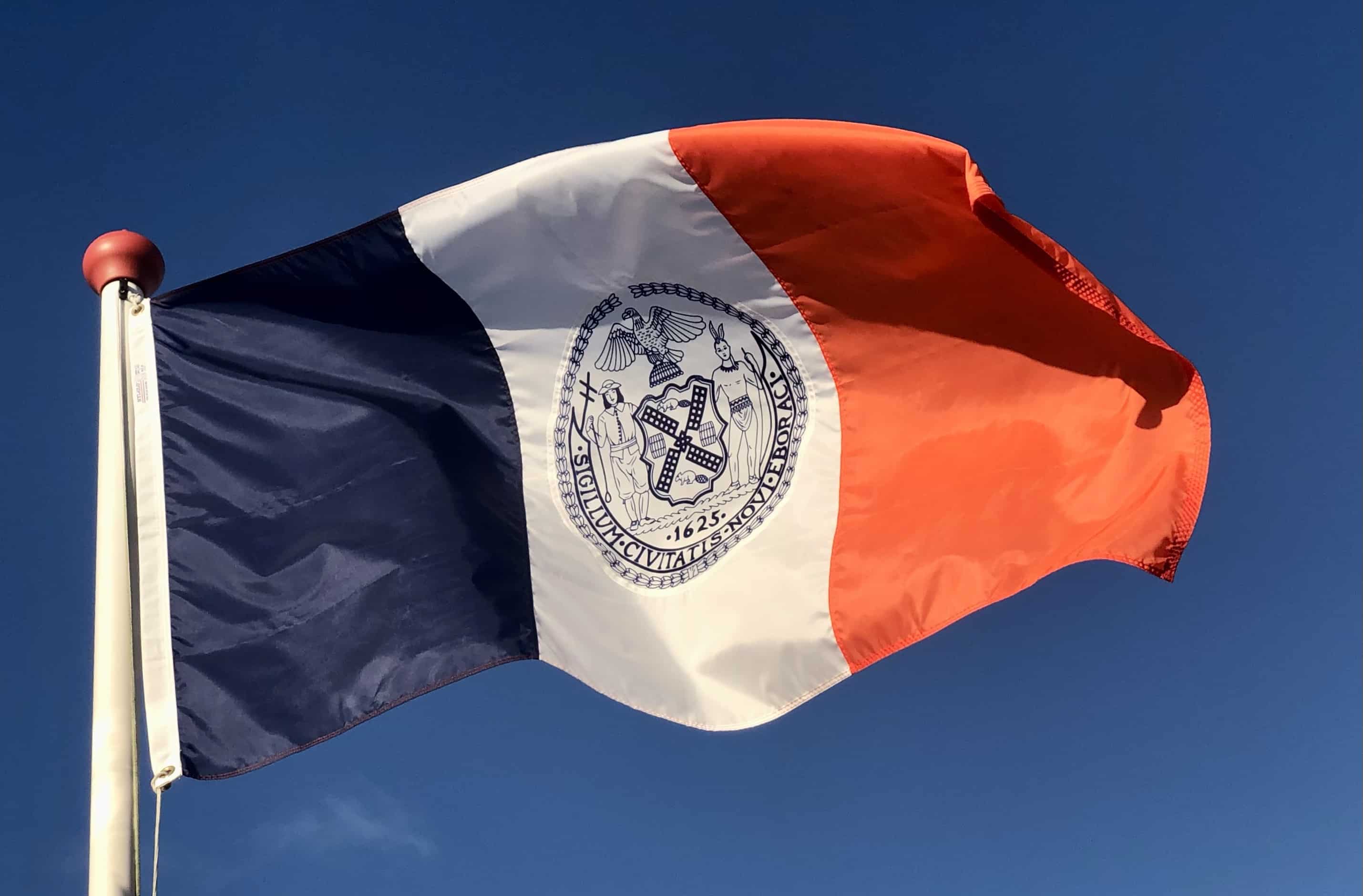 New York's official flag, with the city seal in the white stripe, clearly references New Amsterdam: the figure of the colonist on the left, the windmill sails, and the founding date 1625
© Wikimedia Commons
What does that say about early colonial society?
SHORTO: “It centered on trade, cultural integration, and a relative form of religious tolerance. Relative, because there was slavery and how tolerant are you, really, when you have slaves? It was certainly a melting pot society. At the same time, the Dutch brought the building blocks of capitalism with them: the stock market system, the infrastructure of trade and wealth. If you combine tolerance, pluralism and capitalism, you not only have a recipe for New York, but for the United States as a whole. If we look at it that way, we get a fundamentally different picture of what the country is at its core.”
Russell Shorto: 'If you take tolerance, pluralism and capitalism together, you have a recipe not just for New York, but for America as a whole'
Greet, you grew up in Belgium. Did you ever hear this side of the story?
DE KEYSER: “No. There was a vague impression that the Dutch were there, but Belgian schoolbooks say nothing about it. Keep in mind that Belgium has only existed since 1830, long after all this was happening. So, it is not part of the rhetoric about the formation of the new country. It’s only when a person moves to the US and really delves into history that the whole story comes out.”
“Incidentally, if you investigate the Belgian role in the story of the United States, you won’t immediately find anything to be proud of. In the nineteenth century, the immigrants from Belgium were primarily the people the young Belgian state wanted to get rid of. Around 1850, the Prime Minister literally decided to put the poorest people on boats and send them to America, because they were costing society too much. They were mainly impoverished farmers, not people fleeing religious persecution.”
“Anyone who looks at a map of the US will notice many place names from Belgium: Brussels, Namur, Ghent, Antwerp. But the stories behind those places are not all heroic. Ellis Island, which so proudly calls itself the gateway to freedom, could not always be called that. There, people were tested, examined, monitored and sometimes sent back for arbitrary reasons. They were treated like cattle and that, too, is part of the story.”
 Greet De Keyser: 'What began two hundred and fifty years ago was also an act of sharing: we have land, come and live here. That idea — sharing what you have to become stronger together — is still relevant today'
© PhotoNews
SHORTO: “If I can just jump in here: even before 1830, the contribution from the Southern Netherlands (roughly present-day Belgium) was fundamental. New Netherland was founded in 1624 and encompassed large parts of New York, New Jersey, Connecticut, Delaware and Pennsylvania, with New Amsterdam as its capital. The colony struggled to find settlers and the first group that did arrive consisted almost entirely of Walloons: people from the Southern Netherlands who had moved to Amsterdam in search of work.”
“And then, of course, there is the Eighty Years’ War. When the Spaniards invaded the Southern Netherlands, a massive migration to Amsterdam followed – particularly from Antwerp. Those people brought capital, expertise and a commercial network with them. Whenever I say this to Dutchmen or Belgians at a party, the Dutchman says: ‘We invented capitalism.’ The Belgian replies: ‘No, we did. We just happened to be living in Amsterdam at that time.’
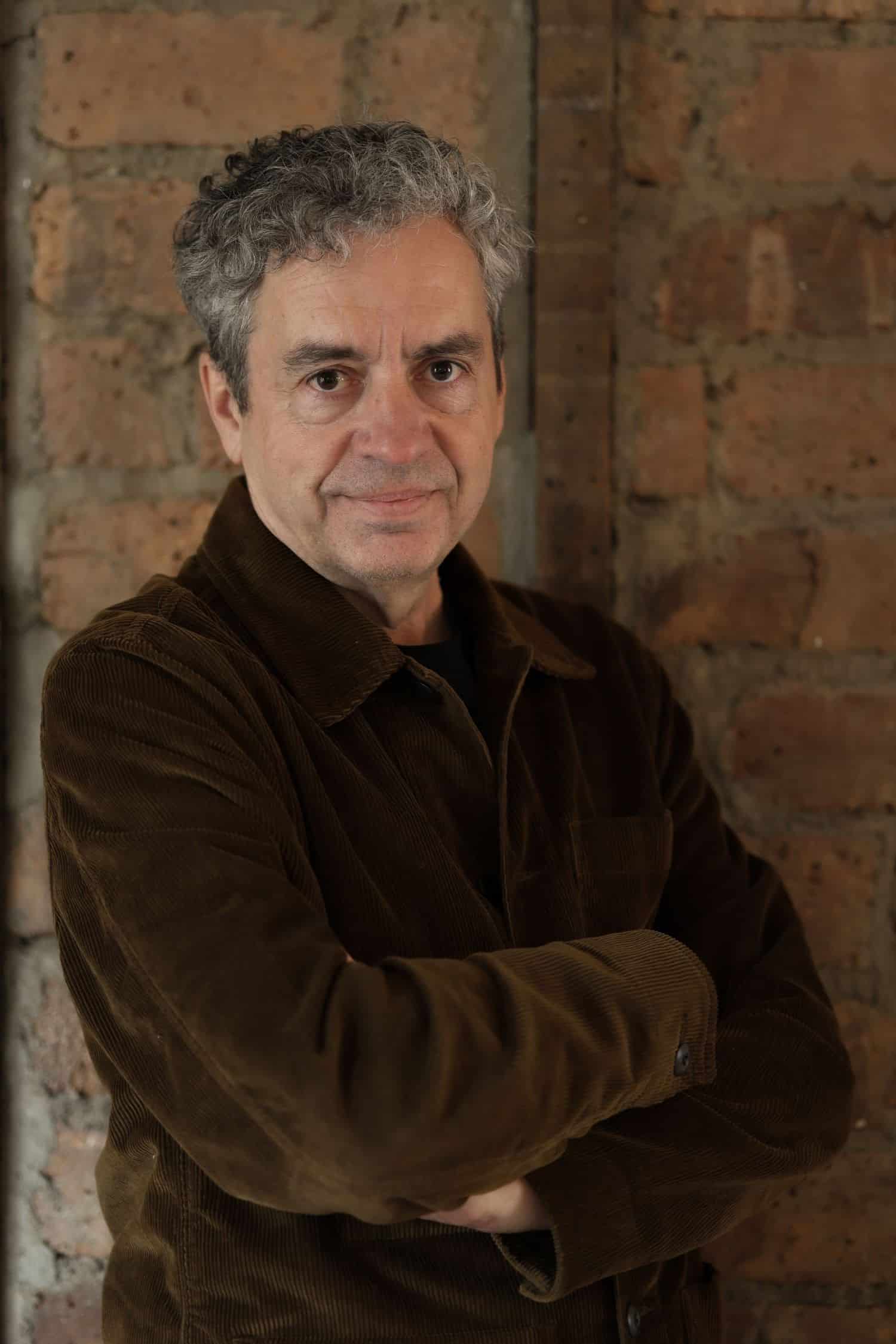 Russell Shorto: 'The colony of New Amsterdam struggled to find settlers, and the first batch of colonists consisted almost entirely of Walloons'
© Izzy Watson
Greet, You’ve also been looking at the role of Belgium in the American Civil War. What have you discovered?
DE KEYSER: “That it is neither a straightforward story, nor a comfortable one. There were Belgians who fought for the Union, even as officers, while other Belgians stood entirely on the side of the Southern States, the Confederacy, and slavery. The comfortable migrant narrative – we came, we worked, we made it – obscures that little secret.”
“And then there is the lesser-known story of Leopold I. During the Civil War, he offered support to the Confederacy because the cotton industry was dying due to the war: textile mills in Ghent were desperate for cotton. There is documentation showing how far he was hoping to go. He even had his own imperial dream featuring his daughter as Empress of Mexico and his son-in-law as Emperor. For that, he needed the support of the US, but above all of the Confederacy.”
Greet De Keyser: 'During the American Civil War, Leopold I tried to support the Confederate States because the Belgian cotton industry was dying'
Those stories don’t feature in schoolbooks on either side of the Atlantic. Coincidence?
DE KEYSER: “No, coincidence is never the culprit. Every country selects the history it wants to tell about itself. Just look at what is happening in the US now: schools are no longer allowed to use the existing history books because Trump has decided that American history has to be rewritten. Museums have to adapt their presentation of history: how slavery is portrayed, how African American history is taught… The selection of history remains contested to this day.”
SHORTO: “In political conflicts, control over history is always part of the struggle. About twenty-five years ago, I wrote about the religious right in America for The New York Times Magazine. What struck me then was that they were channeling their energy not only into the White House but also into the school boards. A significant battleground was the Texas State Board of Education. Due to the way the textbook market works in America, Texas has a disproportionate influence on what children across the country learn.”
“A prominent member of that board, an outspoken evangelical dentist, used the word Christianity – an almost medieval word now, but at the time, it just sort of marginal. Now you hear similar language close to the center of power. Much of what is emerging under Trump – that America is a Christian nation at its core, that the Founding Fathers (or, more commonly today, the Founders) were Christians – was already playing out in Texas twenty years ago.”
That brings us to something that Europeans often find very difficult to assess: how deeply rooted is religion in the United States?
DE KEYSER: “The Founders drew many of their ideas from Europe – they traveled there and absorbed the ideas of the Enlightenment. Europeans understand that part of early American thought quite well, because we share those values. But then there was a shift. In the South, the sentiment was: leave us alone, we are here by the grace of God and that’s enough. We don’t need interference from a federal government. Whereas, in the North, the prevailing idea was ‘I think therefore I am. I do not need God to build or invent.’ That divide has never disappeared. It is no accident that the Bible Belt is located in the South.”
SHORTO: “I always say that there have been two Americas since the seventeenth century, but for most of history Americans on both sides have ignored the divide. With the Fourth of July, the flag waving and the red, white, and blue, they stitch everything together, so it looks like one united country. But fundamentally, there are two different countries, and they hate each other deep down. If you wonder why a political discussion in America gets stuck, the answer is almost always because it started too late. Behind every opinion lies a whole foundation of assumptions. To understand the real disagreement, you would have to rewind all the way to the beginning, where you would find very little common ground.”
You are both talking a lot about the United States’ blind spots, but do Europeans have equally prevalent blind spots?
DE KEYSER: “Europeans often think they understand the United States because it is present everywhere. They read American newspapers, are surrounded by Hollywood films, television, music and commentary from the US. But when I tell Europeans that Americans are very conservative at heart, they look at me as if I am saying something strange. In Belgium and the Netherlands, America is still the land of progress and freedom. That image dates from the post-war period.”
SHORTO: “I like to say the opposite to Americans: that the Dutch are actually quite conservative. Most Americans find that completely incomprehensible, because they are thinking of coffee shops and euthanasia. Incidentally, I had a Dutch friend who loved America, read the International Herald Tribune, and spoke excellent English. One day he asked me: what does ‘dude’ actually mean? That says it all. He knew the laws being discussed in Congress but had never walked into a bar in Texas.”
DE KEYSER: “(laughs) Exactly. You can be incredibly well-informed about the United States and yet be absolutely blind to what the country is really like at street level.”
Russell, your latest book, Taking Manhattan, is a different kind of history than your first. How did that change come about?
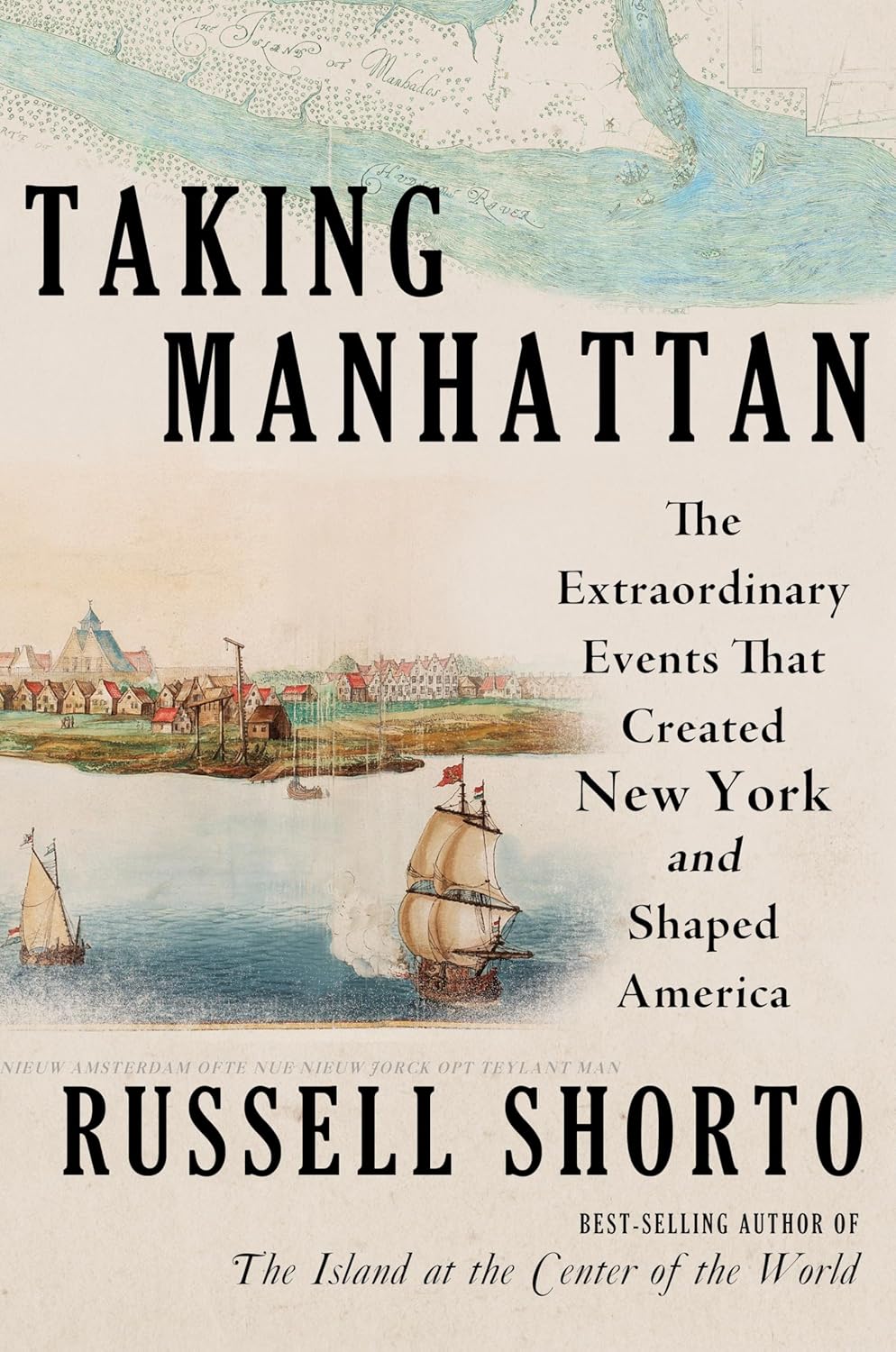
SHORTO: “The Island at the Center of the World was published twenty-two years ago. If you compare it to Taking Manhattan, you see that the new book is deliberately not just a European story. It is also a Native American story and an African story. That is how we have changed, how I have changed. There’s no longer just one history – I see things as much more layered now. And every layer has its own complication: the European story is multifaceted; the indigenous story is multifaceted – the tribes spoke different languages and had totally different perspectives on each other. So is the African story. When you mix all that together, it becomes confusing. But endlessly interesting.”
DE KEYSER: “The same applies to Europe. The EU has only existed for a short time. The Low Countries had a different form, Belgium did not exist, the British Empire did. Do we ever talk about Persian influence on Europe in recent history? It is always the same: you discover that you never know enough.”
Finally: Two hundred and fifty years later: is the glass half-full or half-empty?
DE KEYSER: “Half full. It is a milestone that deserves to be celebrated, in Europe as well. Europe sent many people – persecuted Protestants, poor people, farmers with no future – to America for many different reasons. They were not always ‘the best’ people but that is part and parcel of the human story: people are drawn to places where a good life seems possible, where there is art, literature, work and dignity. What began 250 years ago was also an act of sharing: we have land, we need people to fill it. That idea – sharing what you have to become stronger together – is still relevant. Even now that Trump is trying to turn Europe into a conservative mirror of his version of the United States.”
SHORTO: “When I think about what is truly relevant, I always come back to those eighteen languages spoken in New Amsterdam. That was the starting point. Look at who lives in this country now, who attends civic integration ceremonies – that is the direct legacy of those eighteen languages. The people who think they can turn back the clock are a few decades too late.”

You might also like





Leave a Reply
You must be logged in to post a comment.