

The Dutch Republic played a crucial role in American independence. Founding Fathers such as John Adams encountered not only ideas and ideals there but also substantial financial support.
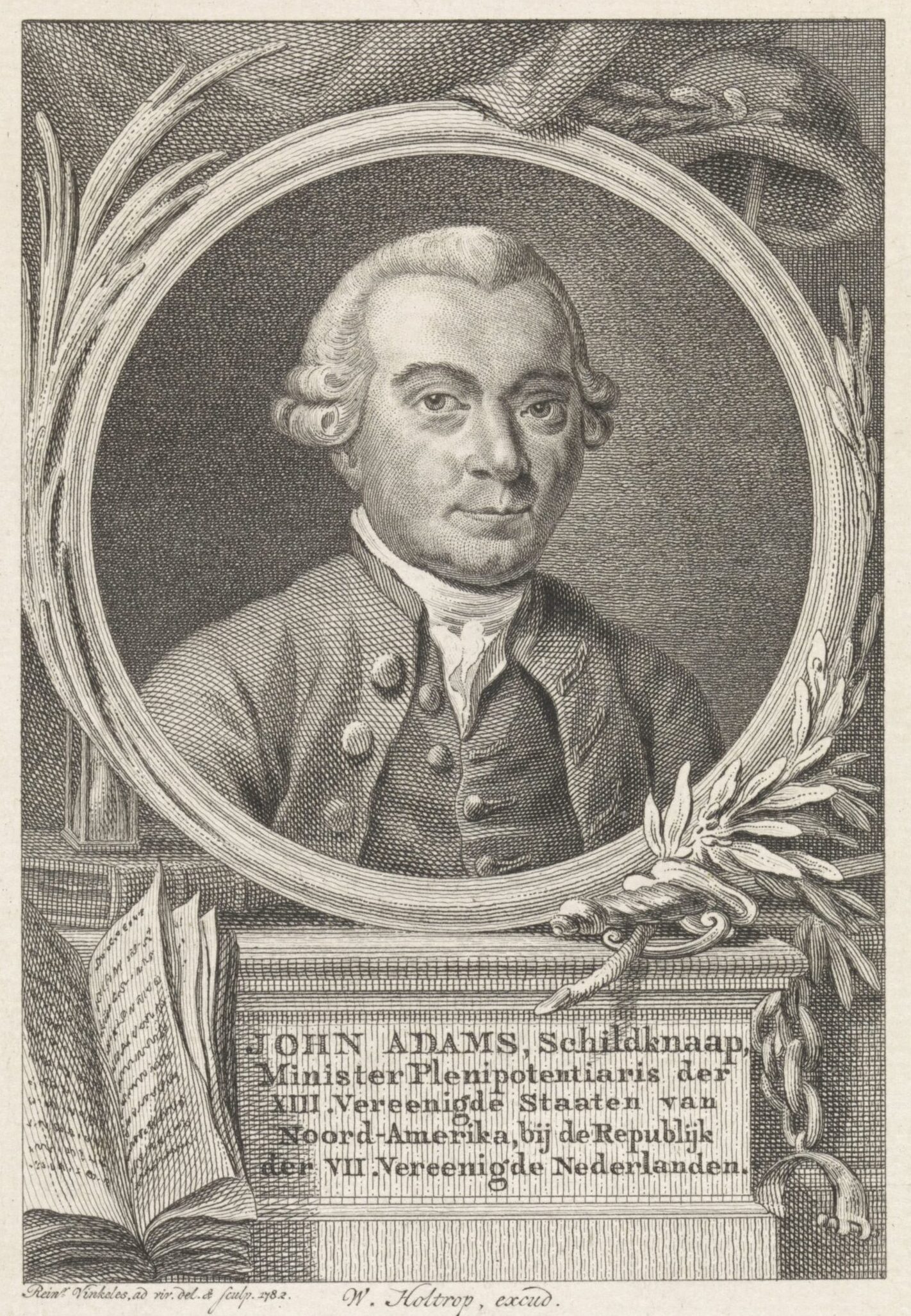 Portrait of John Adams by Reinier Vinkeles, 1782
© Rijksmuseum, Amsterdam
On a summer evening in June 1782, American Founding Father John Adams stood at Amsterdam banker Jan Willink’s door. Adams had been in the Dutch Republic since 1780, trying to secure recognition and funding for the new American state, with little success thus far. His meeting with Willink would change that. What were the consequences for the young American Republic and its ties to the Netherlands?
His meeting with Willink would change that. What were the consequences for the young American Republic and its ties to the Netherlands?
Inspired by the Dutch Republic
It was no coincidence that Adams specifically turned to the Dutch Republic seeking support in the war of independence against Britain. He made no secret of his admiration for the Republic: “I doubt much whether there is any Nation of Europe more estimable than the Dutch, in Proportion. Their Industry and Economy ought to be Examples to the World.” Adams enthusiastically wrote these words to his wife, Abigail, shortly after arriving in Amsterdam.
For American revolutionaries such as Adams, the Dutch Republic was a source of inspiration
For American revolutionaries such as Adams, the Dutch Republic was a source of inspiration. He had studied the history of the Eighty Years’ War; for example, he had read Della guerra di Fiandra by Cardinal Bentivoglio, an influential seventeenth-century account of the revolt. He even encouraged his sons, who were accompanying him in Europe, to study this history. At the end of the sixteenth century, the Dutch provinces had successfully won independence from a monarchy and subsequently united in a federation of free states. Adams viewed the Dutch Revolt as a popular uprising against Spanish oppression, comparable to the American struggle against Britain: “It is very similar to the American Quarrel in the Rise and Progress, and will be so in the Conclusion,” Adams said.
The influence of the Netherlands on the Americans was also felt indirectly, in terms of ideas and culture. According to historian Russell Shorto, American ideals of freedom such as equality, malleability and freedom of religion were inspired by the early modern Republic, where there was relatively ample room for tolerance, freedom of speech, free trade and openness, freedom of the press and religious diversity – at least, compared to other early modern European great powers.
According to historian Russell Shorto, American ideals of liberty such as equality, social mobility, and freedom of religion were inspired by the early modern Dutch Republic
Although their rose-coloured ideals by no means applied to everyone in the “tolerant” early modern Republic, which was, after all, also characterised by the slave trade, colonialism and great poverty and inequality, the Americans certainly saw their own ideals of freedom reflected in these “Dutch” predecessors. According to Adams, “Liberality of Sentiments, Freedom of Enquiry, and Liberty of Conscience” were characteristic of the Dutch national spirit.
Adams also saw parallels in religion, trade and government: “The Originals of the two Republics are so much alike, that the History of one seems but a Transcript from that of the other.” It was therefore no wonder that Adams had already been inspired by the example of the Netherlands when helping draft the text of the American Declaration of Independence in 1776. It is no coincidence that the Dutch Republic was frequently referred to as “the United States of the Low Countries” in the seventeenth and eighteenth centuries.
Conversely, Dutch sympathy for the American cause was evident early on. Officially, the Republic remained neutral, but that did not prevent Dutch merchants from generously supplying the American rebels with weapons and other contraband via the island of Sint Eustatius, a Dutch colony in the Caribbean. This greatly irritated the British. That relationship was already sensitive – three naval wars had been fought in the preceding years, with hegemony over world maritime trade at stake. Tensions nearly exploded in 1776, when a ship flying the American flag was saluted with a cannon shot by the Dutch on Sint Eustatius: an implicit recognition of independence.
A challenging mission
Adams believed he had found fertile ground for diplomatic success. He had been sent to France to secure military and financial support, and indeed, the French king entered into an alliance with the Americans in 1778. However, Adams could not get along at all with the other American envoy, Benjamin Franklin, and therefore decided to travel to the Dutch Republic on his own accord.
Once there, he discovered that his mission would be less straightforward than he had anticipated. The political system of the Republic was so complex that Adams barely knew where to begin. He quickly realised that not everyone was enthusiastic about the Americans.
Upon arrival, Adams quickly discovered that not everyone was a fan of the Americans
Supporters and opponents were divided along the lines of the Patriots, the revolutionaries who wanted to break with the ancien régime, and the Orangists, who wanted to preserve the status quo. The Orangists and the political establishment in The Hague were unwilling to support the Americans, as they did not want to risk another war with Britain. Stadtholder William V, himself related to the British royal family, was openly pro-British. Regarding the American Declaration of Independence, he is said to have remarked: “It is a parody of the document that our forefathers had issued against King Philip II.” He was referring to the Act of Abjuration, with which the rebellious Dutch provinces renounced the Spanish king as their sovereign in 1581.
The revolutionary Patriots, on the other hand, felt a kinship with the American revolt. Radical Patriot leaders such as the nobleman Joan Derk van der Capellen tot den Pol and the Mennonite Leiden minister Adriaan François Van der Kemp were both ardent supporters of the American cause and personal friends of Adams. Van der Capellen’s pamphlet To the People of the Netherlands (1781), a plea for democracy and human rights, was directly inspired by the ideas of the American war of independence. Moreover, among the Patriots were many merchants and wealthy citizens in their ranks who were keen to explore the trade opportunities offered by the new state. Adams therefore realised that he should have been in Amsterdam rather than The Hague. Even in the eighteenth century, Amsterdam remained one of the world’s principal financial centres, although the glory days of the Golden Age were long gone. In January 1781, Adams took up residence in a stately building at 529 Keizersgracht.
Even so, Adams initially found little success among Amsterdam’s bankers, who were reluctant to antagonise political The Hague. According to Adams, they were consumed by “a general Littleness arising from the incessant Contemplation of Stivers and Doits, which pervades the whole People.” Apparently, even in Adams’ time, the stereotype of the miserly Dutch, motivated by nothing but pennies and farthings, already existed. By the autumn of 1781, he was so fed up with the city that he fell ill, blaming what he described as the “pestilential Vapours” rising from Amsterdam’s stagnant canal waters.
New chances
Shortly afterwards, the tide began to turn. In 1780, the Fourth Anglo-Dutch War had broken out, partly because the British had discovered a secret draft trade agreement between Amsterdam’s pensionary, Engelbert van Berckel, and the American representative William Lee. The document – legally completely untenable, as neither had a mandate to speak on behalf of his country – gave Britain a reason to declare war on the Republic. St Eustatius was thoroughly plundered and the Dutch fleet wiped out. At the same time, the Americans appeared to gradually be gaining the upper hand against the British, and peace seemed increasingly within reach. In October 1781, the decisive Battle of Yorktown took place.
These developments created new opportunities for Adams. Although the States General initially attempted to maintain neutrality, the conflict with Britain had already escalated. Moreover, by then Adams had developed a much deeper understanding of the Republic’s political system and adopted a different strategy: he appealed directly to the Dutch people. Strong anti-British sentiment prevailed, and the Dutch did not want to miss out on trade opportunities with America, now that peace seemed to be drawing ever closer. This proved to be a masterful move. Adams mobilised support among the bourgeoisie, encouraging them to submit petitions to the government for the recognition of America. In the spring of 1782, the individual Provincial States, led by Friesland, decided to recognise America, and the States General followed suit shortly thereafter. In April 1782, this paved the way for financial transactions, negotiations and treaties.
A successful deal
And so Adams approached Jan Willink. Correspondence had begun in May 1782 between Adams and Jan Willink, his brother Wilhelm Willink and their co-financiers, the bankers Nicolaas & Jacob van Staphorst and De la Lande & Fynje. The gentlemen soon reached a preliminary agreement, and in June, Adams visited the group in Amsterdam to finalise the deal.
Originally from Winterswijk in the eastern Netherlands, the Willinks had been active in Amsterdam as linen merchants since the seventeenth century before moving into banking. In the eighteenth century, they rose to become members of the city’s elite. Beyond business and politics, there were also religious ties between the Willinks and the Americans. The Willinks were Mennonites, or Anabaptists, and Jan Willink himself was active in Amsterdam’s General Mennonite Society. During the religious persecutions of the sixteenth century, many Mennonites had immigrated to America, where they established thriving communities. Adams was descended from Puritan immigrants who, in the seventeenth century, had first gone into exile in the Republic after leaving England and subsequently departed for America.
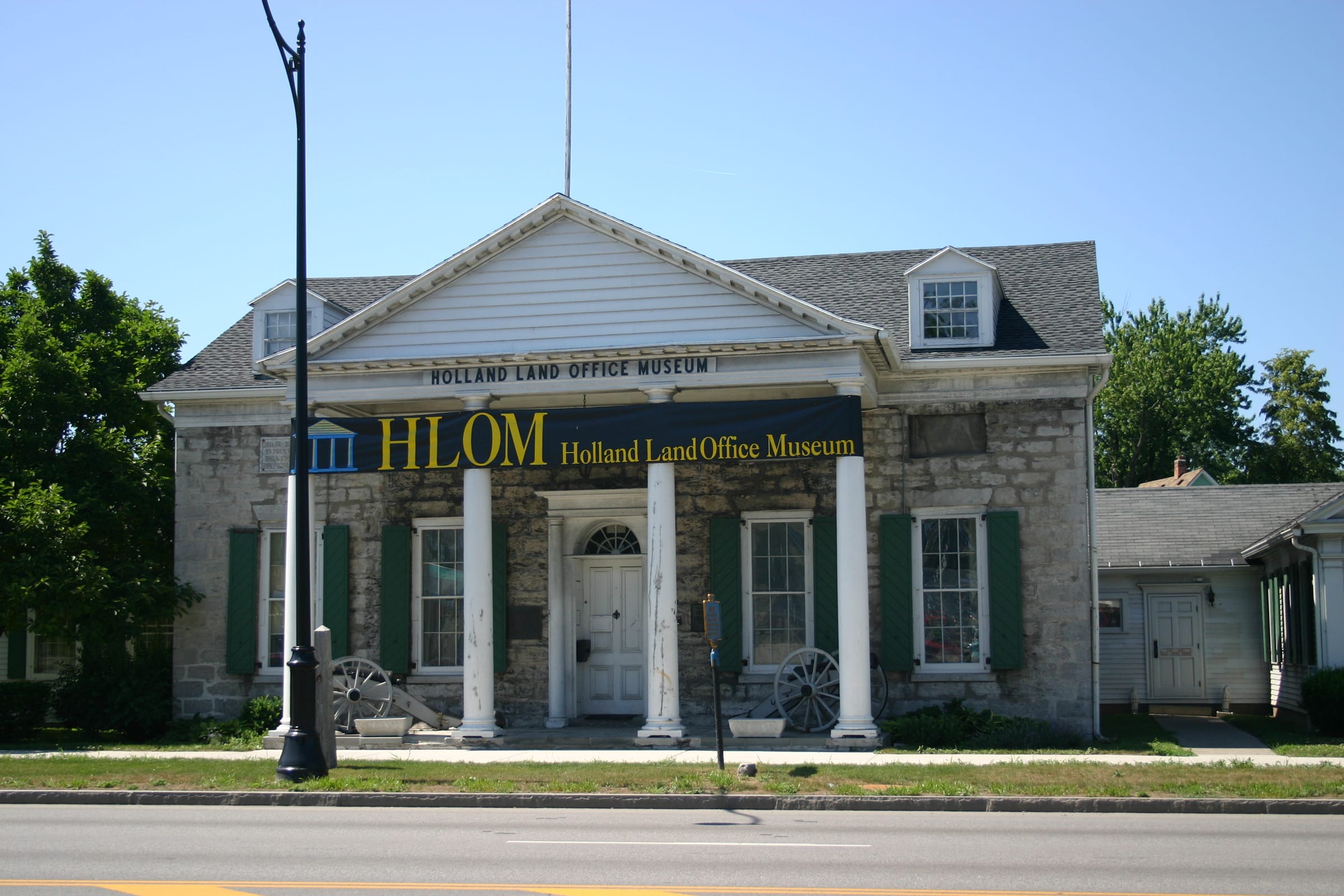 In the late eighteenth century, Amsterdam bankers united in the Holland Land Company, a trading company that bought up tracts of American land on a large scale for speculation and development
© Wikimedia Commons
What was said during the meeting itself will never be known, but we can deduce the outcome from the preserved correspondence between Adams and Willink. The Amsterdam bankers agreed to lend the Americans five million guilders at five per cent interest, plus a further five per cent expense reimbursement. It was an enormous amount at the time and would help finance weapons and other supplies for the war against Britain. For Adams, the deal marked the beginning of remarkable success. In the spring of 1782, he officially settled in The Hague, in the first American embassy on Fluwelen Burgwal. Around the same time, the American had his portrait painted by Reinier Vinckeles, the most famous Dutch engraver of the time. Proud and surrounded by symbols of liberty – a hat mounted on a spear and a flourishing branch – Adams gazes at the viewer.
In the autumn of 1782, Adams succeeded in concluding a Treaty of Amity and Commerce between the United States and the Dutch Republic. This informal alliance constituted a definitive recognition of the United States as an independent nation and was intended to promote trade between the two countries.
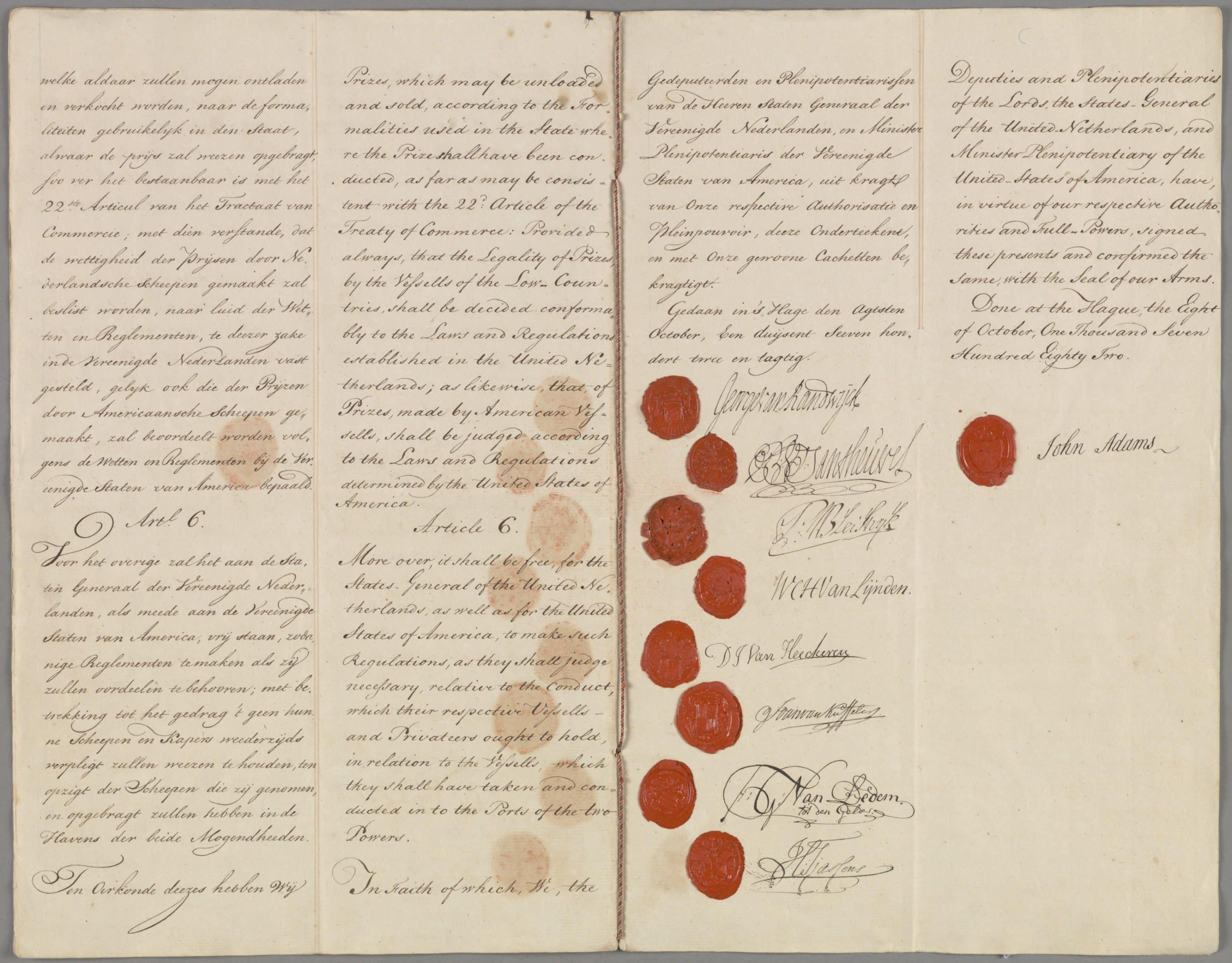 The American-Dutch Trade and Friendship Treaty of 1782 with John Adams' signature
© National Archives, The Hague
Jan Willink would profit greatly from this new friendship. In the years that followed, Adams repeatedly visited the Willinks to secure new loans, totalling more than thirty million guilders. There, he would be received in the stately canal house at Herengracht 386, which Jan and Wilhelm Willink purchased in 1790, and where the brothers also maintained their offices. Their business associates were undoubtedly welcomed in the building’s magnificent period rooms, decorated in 1776 by the popular wallpaper mural painter Jurriaan Andriessen. Those rooms have been preserved and can still be admired by visitors, as the building now houses Grachtenmuseum Amsterdam (Museum of the Canals).
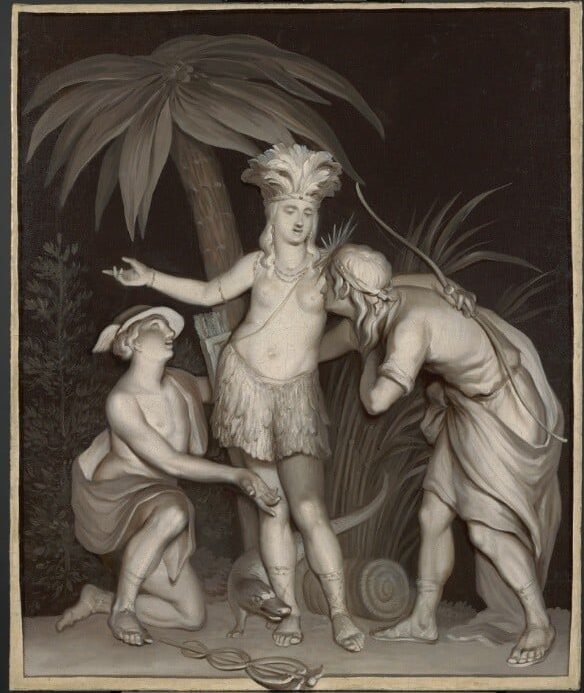 Around 1790, Jurriaan Andriessen painted this allegory of the negotiations between the Republic and the United States
 © Amsterdam Museum
It is no coincidence that Andriessen himself painted an allegory of the negotiations between the two republics around 1790. Moreover, during this period, the Amsterdam bankers united in the Holland Land Company, a trading company that bought up tracts of American land on a large scale for speculation and development. By the early nineteenth century Jan Willink would even rank among Amsterdam’s wealthiest citizens. Tax records indicate that in 1813 he was one of the hundred highest taxpayers in the city. The deal he struck with John Adams in June 1782 undoubtedly contributed to that success.
Mutual admiration
While John Adams had come to the Dutch Republic inspired by admiration for its past, the inspiration would prove to be mutual. In the Republic, the Patriots – Adams’ revolutionary friends foremost among them – were inspired to unleash their own Batavian revolution in 1795, seeking to overthrow the ancien régime.
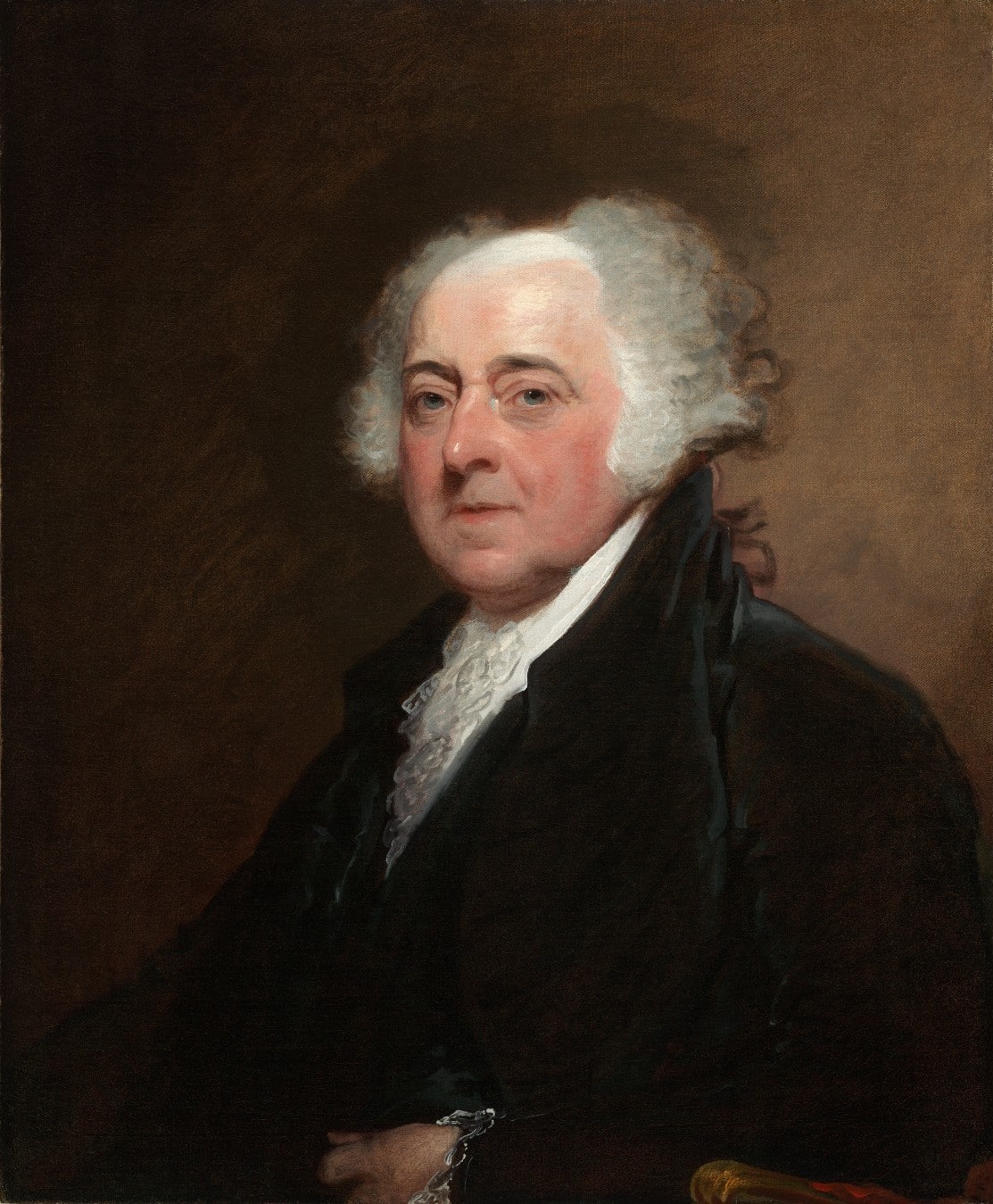 The elderly John Adams called his years in the Netherlands the most important of his life
© National Gallery of Art, Washington
The first direct imitation, however, emerged as early as 1790 in the Austrian Netherlands. At that time, the States of Flanders published the Manifesto of the Province of Flanders, modelled on the American Declaration of Independence, proclaiming independence from Emperor Joseph II of Austria. The other Southern Netherlands provinces followed suit, after which they united in the confederal republic of the United States of the Netherlands. It was short-lived: the territory was recaptured by Imperial troops at the end of 1790 and would be incorporated into the French Republic in 1795.
A similar fate befell the Batavian Republic. Although officially independent, it turned out to be more of a vassal state of the French Republic, with whose financial and military support it had been founded. In 1806, Emperor Napoleon established the Kingdom of Holland, placing his brother on the throne, and in 1810, the country was annexed into the French Empire.
Back in America, Adams went on to become the second President of the United States in 1797. He regarded his negotiations in the Dutch Republic among his greatest achievements. Towards the end of his life, he declared dramatically: “Whatever you may think; I know, that, if ever my name deserved to be mentioned, from my Birth, on the 19th of October 1775 to this 29th of May 1814; it ought to have been noted in Holland in 1780, or 1781, or 1782, for this Period was the most important of my whole Life.”

You might also like




Leave a Reply
You must be logged in to post a comment.