
Belgian Beats and Dutch Dance in the United States

Sure: America gave the world house and techno. But Belgium and the Netherlands took electronic music to the next level. And eventually we sent it back west again, with a few extra bleeps thrown in.
When Little Richard passed away, the Flemish public broadcaster wrote that he had, “together with Chuck Berry, brought original white rock ‘n’ roll to a Black audience.” This is not the kind of article that pretends the roots of house and techno don’t lie with Black musicians in the United States. From Larry Levan through Derrick May to Jeff Mills, the European club scene may not owe everything to them – we don’t want to forget Kraftwerk and Giorgio Moroder – but it owes a great deal to what happened in the 1970s and ‘80s in New York, Chicago, and Detroit.
But – and here’s the thing – a number of European countries, including Belgium and the Netherlands, have also had an impact on the American club scene over the past forty years. Partly because house and techno in the US remained somewhat underground in the 1990s, whereas over here large-scale raves such as I Love Techno (Ghent) and Dance Valley (Velsen) sprang up like mushrooms. As a result, American electronic pioneers often spent more time in Europe than back home in the US, and some eventually moved to Berlin, where they helped drive up rent prices with the generous fees they earned here. Or they moved to Amsterdam, like Derrick May, who was taken under the wing of then still very young booker Anna Knaup, one of the later founders of the now world-renowned Amsterdam Dance Event.
But equally, Yanks such as Juan Atkins, Kevin Saunderson and Joey Beltram were waiting for the tram on a rainy weekday in Ghent in the early days of the scene, where R&S Records had taken up residence and rent prices were still reasonably low. Unlike many other Belgian dance labels that lingered too long on a new beat trip, the label of Renaat Vandepapeliere and Sabine Maes (R&S) quickly realised that the future of electronic music lay in Detroit and Chicago. The two record executives, however, were not keen to make the trip themselves, so they bought plane tickets for those American pioneers to come to Ghent to experiment with state-of-the-art studio equipment – with no one quite sure what would come out of it. (A long list of club hits, as it turned out.)
The influence of R&S Records on the early club scene can hardly be overstated. In those years, more Belgians scoring international hits – including in the US. Songs like ‘Pump Up the Jam’ and ‘Get Ready for This’ by Belgium’s Technotronic and the Dutch group 2 Unlimited didn’t just make it onto the Billboard Hot 100; more than thirty-five years later, these songs still blast out of speakers in American sports stadiums every weekend.
Headhunter
Undoubtedly, Front 242 is the Belgian band that had the greatest influence in the Paleozoic era of electronic music. The Brussels pioneers of electronic body music (EBM) quickly gained a following in the US thanks to their industrial sound and militarised image, and in 1993 even secured a place on the main stage of the travelling Lollapalooza festival, alongside rock bands Tool and Alice in Chains. Admittedly, the four Belgians were consistently given afternoon slots to perform under the blazing sun, and their bone-dry drum sounds did little to boost their popularity with the average festival goer. But the mere fact that Tom Morello of Rage Against the Machine would occasionally join them on stage says something about the respect they earned from the other future rock legends on the line-up.
Perhaps the greatest compliment Front 424 ever received came a few years earlier, when Trent Reznor openly admitted in the American magazine Keyboard that he had borrowed heavily from the Belgians for Pretty Hate Machine, the 1989 debut album by Nine Inch Nails. Even the artwork brings to mind the Belgians’ output on the Wax Trax! Records, the Chicago label that owed much of its strong reputation in the 1980s to Front 242 (and Ministry).
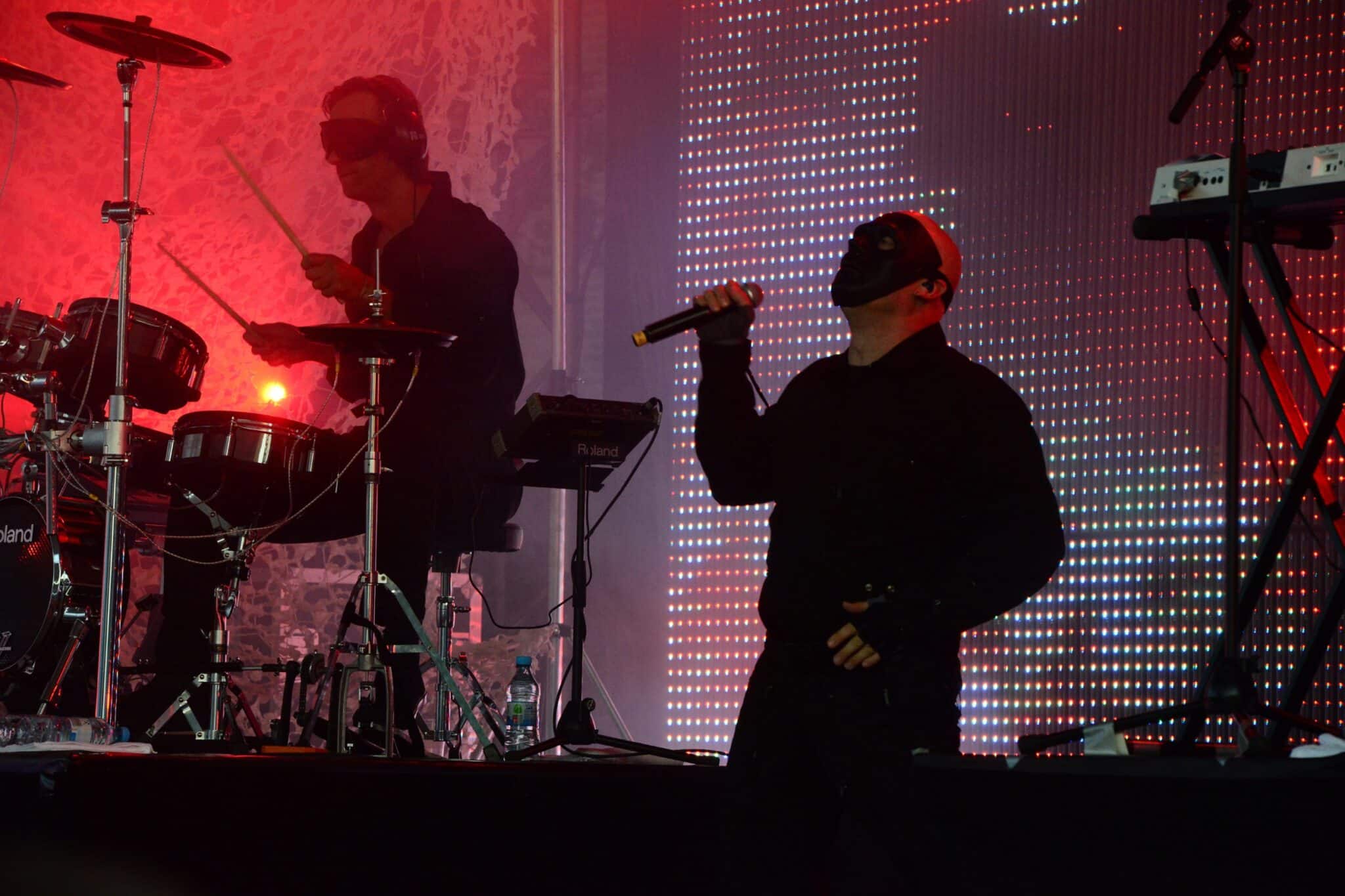 Front 242 is undoubtedly the Belgian band with the greatest influence in the United States in the early years of electronic music
© Wikimedia Commons
Not that American media at the time held the band in as high regard as Reznor did. Whenever Front 242 was mentioned, it was often a dig at their – as Robert Christgau put it in The Village Voice – aggressively passive image. “The worst you could say of them is that they’d try to make their way no matter who took over – and become antifascist sic months too late,” as the legendary music critic put it.
But when Rolling Stone published its list of the 200 best dance tracks of all time in 2022, Front 242’s ‘Headhunter’ was ranked 60th, ahead of Underworld’s ‘Born Slippy,’ Jeff Mill’s ‘The Bells,’ and – we’ll come back to this – Tiësto’s ‘Adagio for Strings.’ The reason? “With a hovering pulse doubled by a kick drum like a Doc Marten to the head, the greatest industrial dance tune ever made has the most iconic Eighties drum-machine intro this side of ‘Blue Monday’.”
Too many DJ's
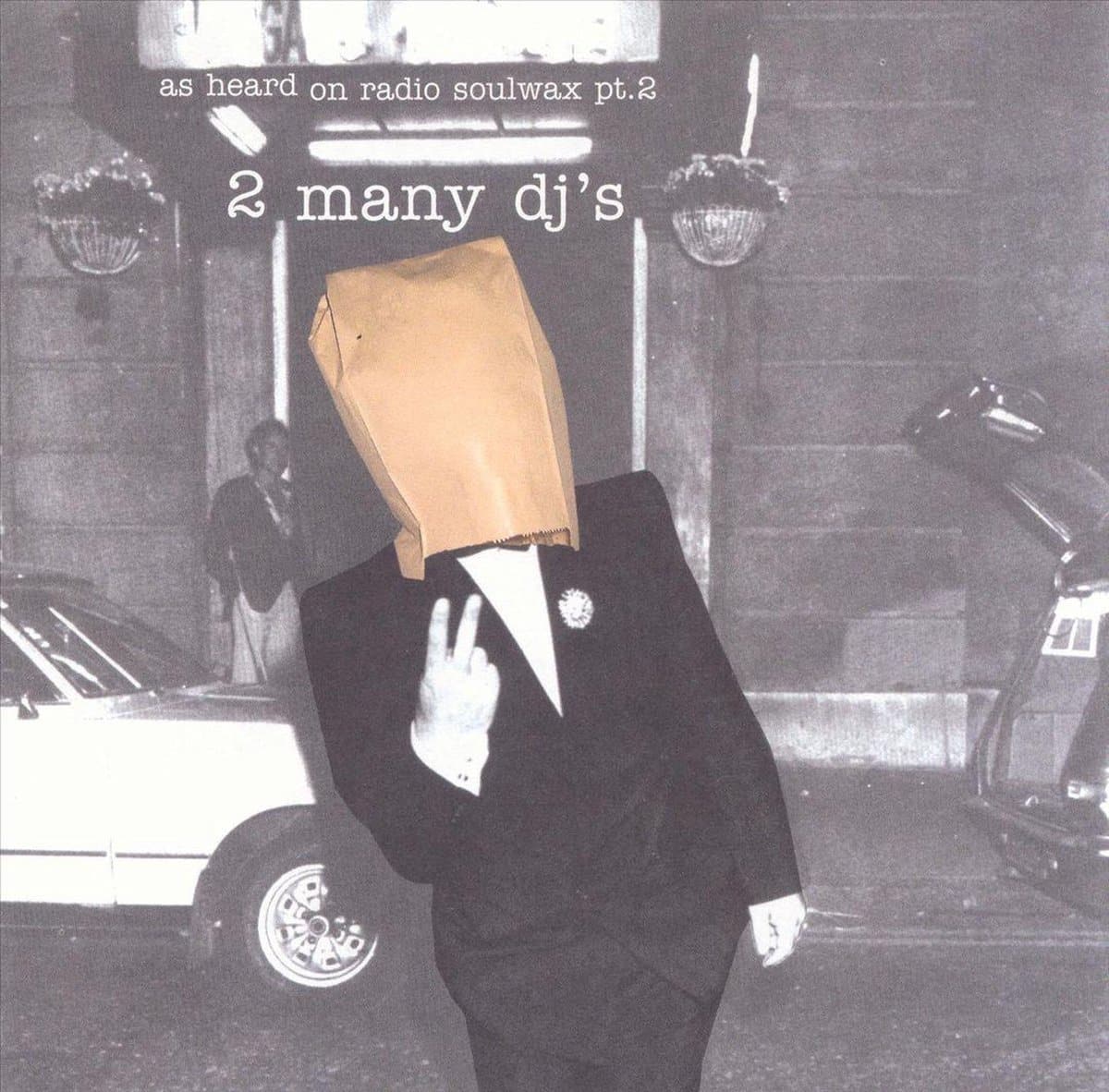
More than a decade later, two rockers from Ghent would face far less resistance in their conquest of the American continent. When David and Stephen released As Heard on Radio Soulwax Pt. 2 under the name 2manydjs in 2002, in which they mixed pop and rock classics, the world stopped for a moment. Early fan David Bowie described it as “dynamite,” The New York Times called it “album of the year,” and Rolling Stone ranked it among the ten best electronic albums of all time. They love their lists over there.
“Any good DJ should be able to play anything,” one writer wrote. “But it takes a truly great one (or two) to play everything – and make it all sing.” But also: “It remains an instant party-starter and proof that even Girl Talk has roots.” Girl Talk, for context, is an American sample artist who was hugely popular in the 2000s with the kind of mashups that 2manydjs had made their trademark. To be fair, his career soon took the same turn as the mash-up hype: downhill.
That is not to say that the Dewaele brothers were destined for the same fate. After their mash-up phase, they firmly placed themselves within the electro-punk scene around New York bands such as LCD Soundsystem and The Rapture. It can even be argued that they had helped shape that scene with As Heard on Radio Soulwax Pt. 2. By mixing The Stooges and Dolly Parton with Salt-N-Pepa and Röyksopp, the two men from Ghent didn’t just combine genres, but entire music scenes. Electronic music received a dose of rock ’n’ roll, rockers a dose of ecstasy. And suddenly, America was ready to embrace the club scene.
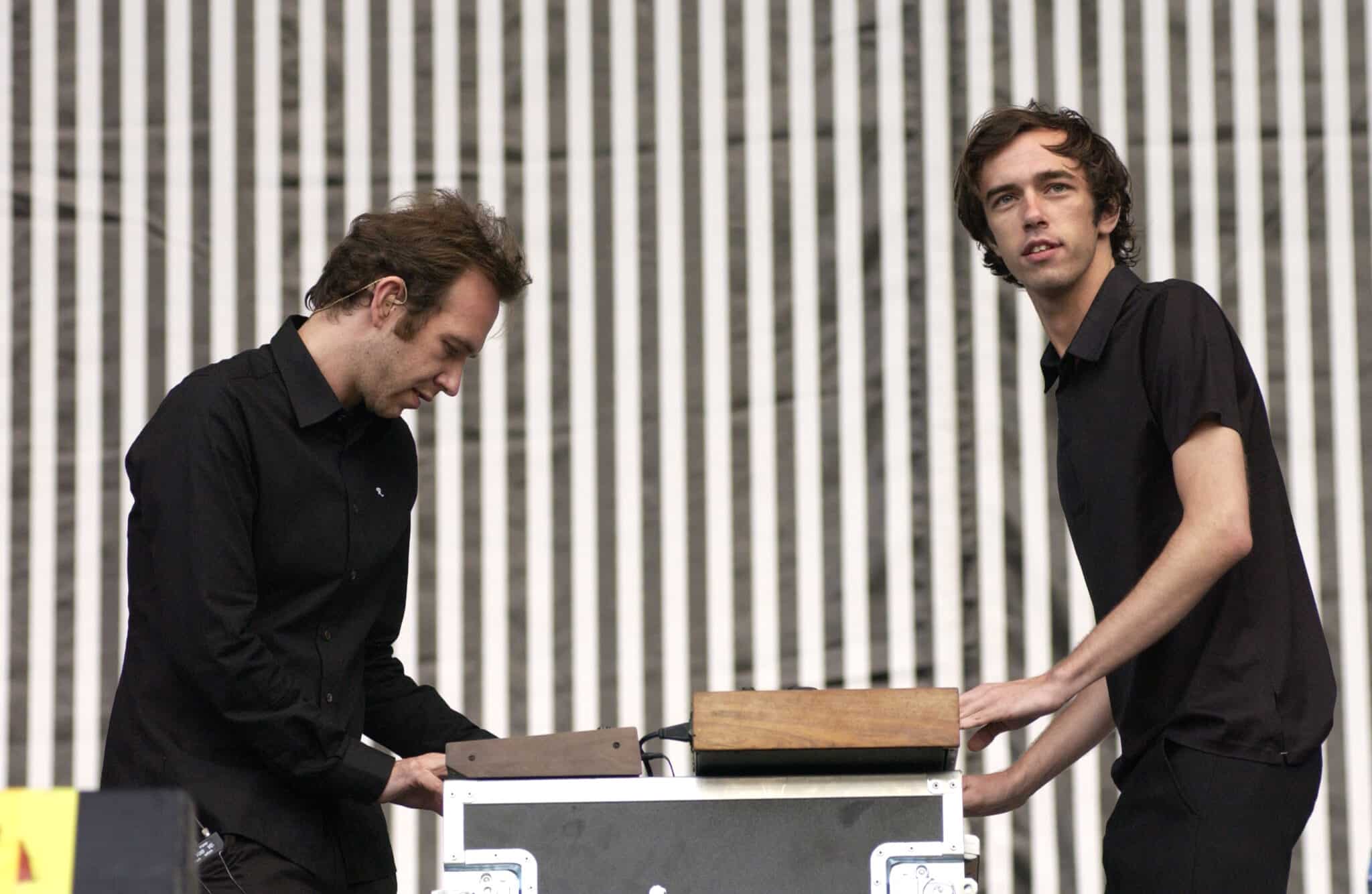 In the early 2000s, the brothers David and Stephen Dewaele from Ghent, known as 2manydjs, broke through in the US with their rock-and-dance mash-ups
© Alex Vanhee
The problem was not only that Americans at the time had no real club culture – unlike in Europe, the scene there had never really taken off – but also that they had largely forgotten they had been at the heart of what happened in Europe. American pioneers such as Derrick May and Jeff Mills meant nothing to American club kids, whereas they had already heard of Dutch DJs such as Tiësto and Armin van Buuren. (Possibly also Junkie XL, the alter ego of producer Tom Holkenborg. But after his monster remix of Elvis’s ‘A Little Less Conversation,’ he has mainly focused on video game soundtracks and Hollywood films such as Mad Max: Fury Road, so we’ll leave him out for now.)
 Tiësto (Tijs Verwest) behind the decks. In the US, dance fans rarely know the names of their own pioneers like Derrick May and Jeff Mills, yet they do know Tiësto and Armin van Buuren
© Tomorrowland
And so it happened that the US suddenly began importing Dutch DJs en masse, as it had previously done with Heineken. The latter is still understandable, of course, even Heineken has more flavour than Budweiser. But the former seems bizarre to Dutch electronic music expert Mark van Bergen , “because you could see how those Dutch DJs and producers brought EDM back to its roots – a quarter of a century later!”
Sky high
To be clear: EDM, or Electronic Dance Music, was the term Americans used for pretty much any electronic music genre back then. House, techno, dubstep or italodisco: it was all one and the same. That’s not exactly a major offence – just a minor one – but it says a lot about how much Americans needed a helping hand. With its sky-high energy, plenty of bleeps and Latin American influences, the Dirty Dutch sound of Dutch producers such as Chuckie, Sidney Samson and Afrojack was exactly the helping hand American clubbers needed . Or at least in Miami, where the genre found its way in via the Winter Music Conference – the Cannes of electronic music.
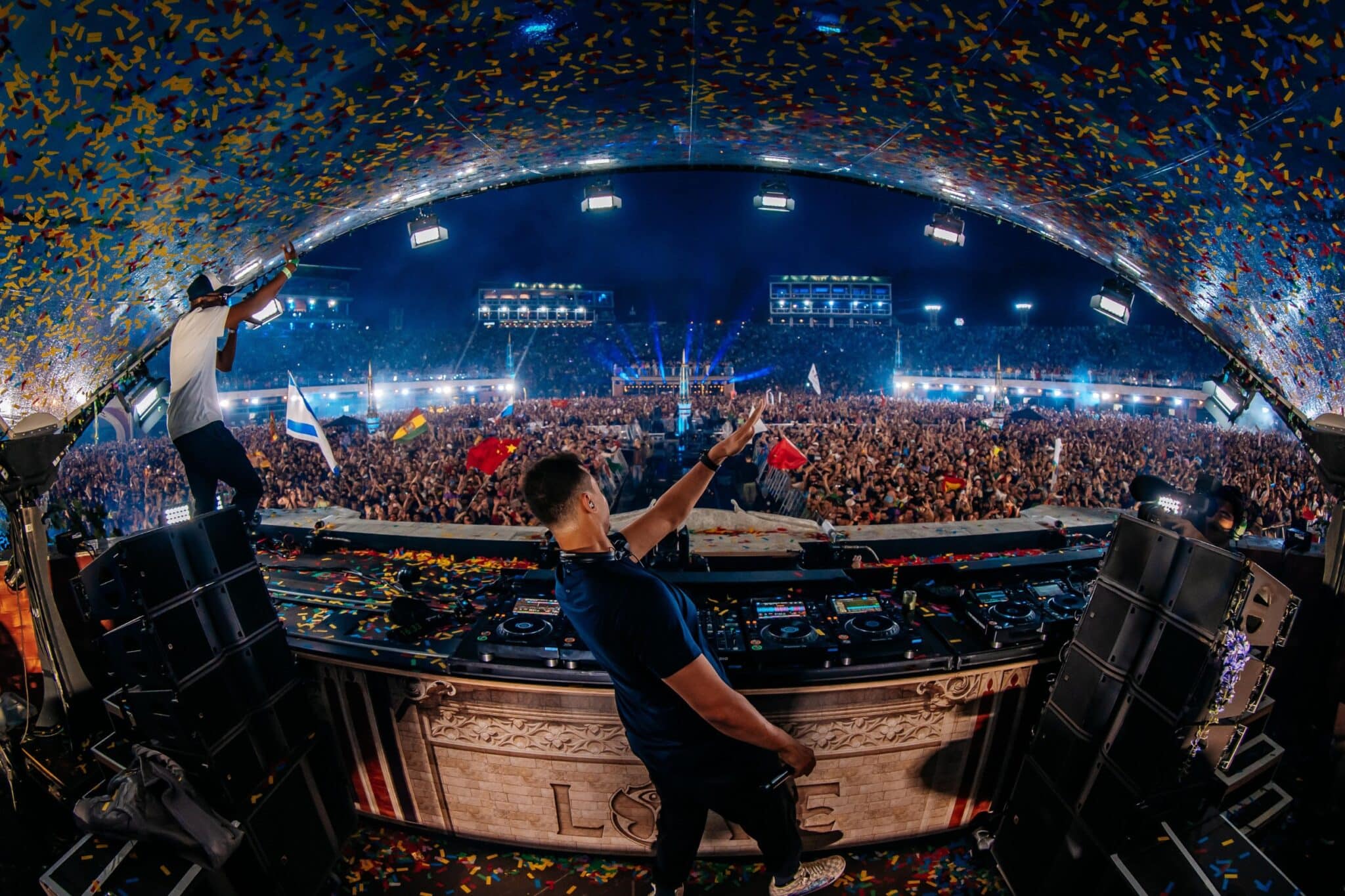 Afrojack at Tomorrowland. He is one of the Dutch DJs and producers who gave dance music in the US a final push with their Dirty Dutch sound
© Tomorrowland
They did receive help from a certain Frenchman, says Mark van Bergen, author of Dutch Dance (Xander, 2013), the go-to reference work on the history of the Dutch club scene. “One of the reasons house and techno never became mainstream in the US is that it is fairly anonymous music, “ says the author, who is now also a music teacher. “And I get the impression that Americans need heroes. They need to be able to put a face to something. French producer David Guetta, a big Dirty Dutch-fan, also realised this, but noticed that the genre still stayed just under the radar of the American mainstream.”
The solution Guetta came up with was simple but genius: just add vocals from big stars like Rihanna and will.i.am, et voilà! “In no time, the US had taken to the Dirty-Dutch sound, and following the Frenchman’s success, Dutch DJs suddenly appeared on festival line-ups like Coachella,” says Van Bergen. Electronic music had finally broken into the American mainstream, and for the first time had become big business.
Tomorrowland
Anyone in the US who says “music” and “big business” in the same breadth says “Las Vegas.” In 2013, the MGM Grand announced it had signed Tiësto as a resident DJ for its new club Hakkasan. Tiësto’s response (in Rolling Stone): “With the scene blowing up in America, Vegas is so much fun now. It’s the right time to do it.” That, of course, plus a generous paycheque that no European club could match at the time.
Not that this meant the European club scene had entirely lost its leading role, or that it was the fault of those Dutch DJs. The international success of Tomorrowland, which began as a Belgian-Dutch collaboration, also contributed significantly to the EDM boom and the rise of Dutch DJs. Thanks to its world-building – imagine a video game brought to life – the Belgian festival still stands head and shoulders above the competition, closely followed by Dutch counterparts such as Awakenings and Mysteryland.
In contrast to Tiësto and his peers, those festivals proved much more difficult to export to the US. Not that no concerted attempts were made. Between 2013 and 2015, Tomorrowland arrived in Georgia with its spin-off TomorrowWorld, and from 2014 to 2016 Mysteryland USA was held on the sacred site of the Woodstock festival in New York State. The line-ups naturally included plenty of Dutch and Belgian acts, alongside a growing number of American headliners, and the know-how behind both festivals also came from our part of the world.
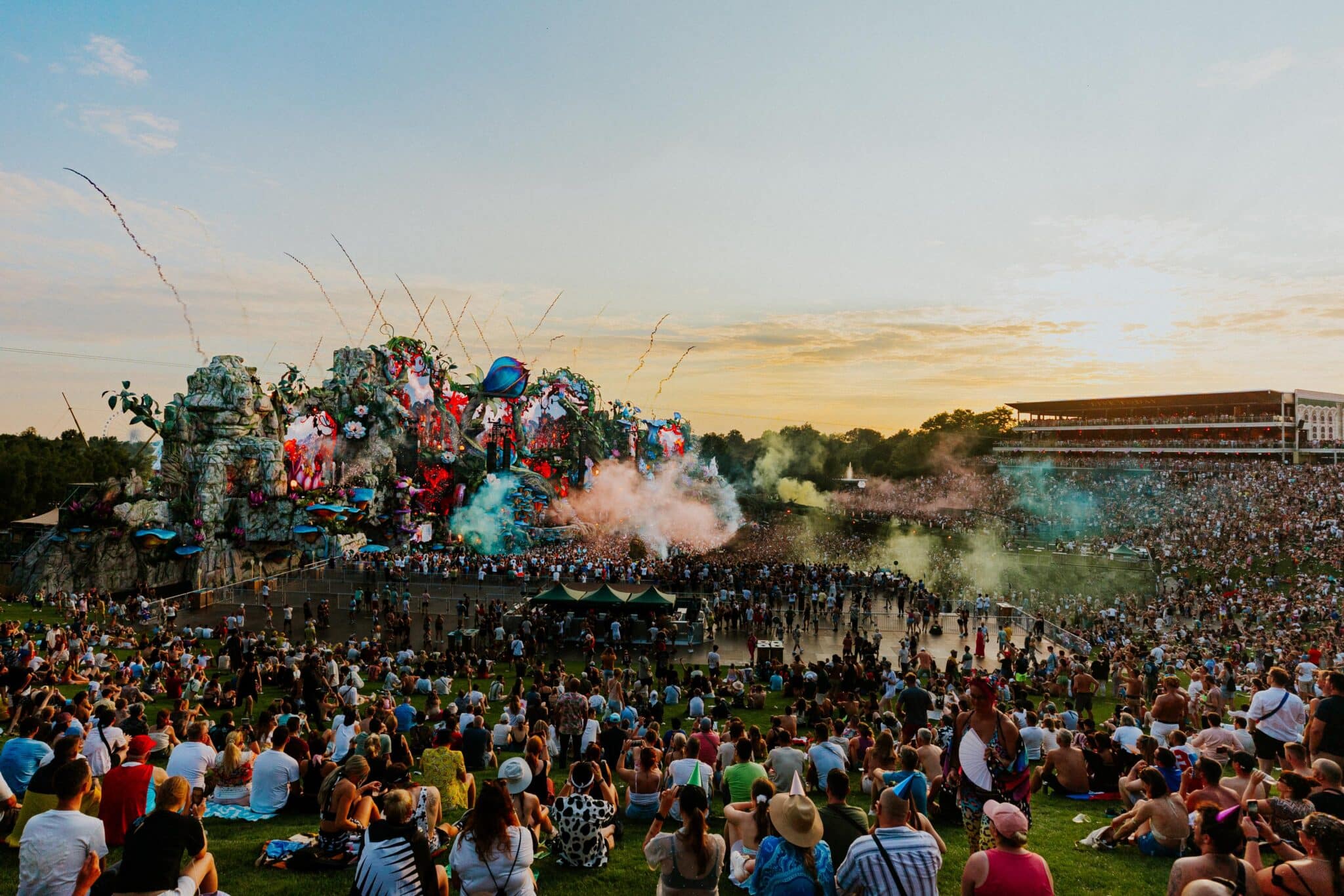 The Belgian success story Tomorrowland also gave rise to an American edition, TomorrowWorld, as well as several international spin-off festivals
© Tomorrowland
But both organisations independently fell short of the production standards of Belgian and Dutch festivals, with American festivals not even getting close. Anyone who finds themselves in the US with money to burn is welcome to test for themselves. But it might be wiser to simply take our word for it – American festivals don’t quite measure up to ours – and go waste your money elsewhere.
It turns out that while money alone can buy you spectacular clubs in Vegas, the expertise and passion needed to build a festival are still two things in which we, after 250 years, still outperform the US.
Ben van Alboom’s book Belgium, USA, will be published by Ertsberg in 2027. It will be accompanied by a podcast, in collaboration with fellow US expert Elke Vanhaecke.

You might also like

In Jozef Deleu’s Poetry, Nothing Was Lost






Leave a Reply
You must be logged in to post a comment.