
Donald Niedekker: The Playful Writer
In his latest novel Nevenwezen, as in all of his books, Donald Niedekker evokes a vast world within a concise space through fizzing, flowing prose that tells stories within stories, time and time again.
I am still grateful to the scoundrel who, some years ago, placed Als een Tijger, Als een Slak by Donald Niedekker in one of those street book cabinets. On the first page, I encountered not only Berlin, my second home, but also a narrator residing on a napkin in the protagonist’s inside pocket. I read it in one sitting and knew it was the kind of book I would return to time and again, just as I would to the author who I learned, to my delight, had penned numerous titles.
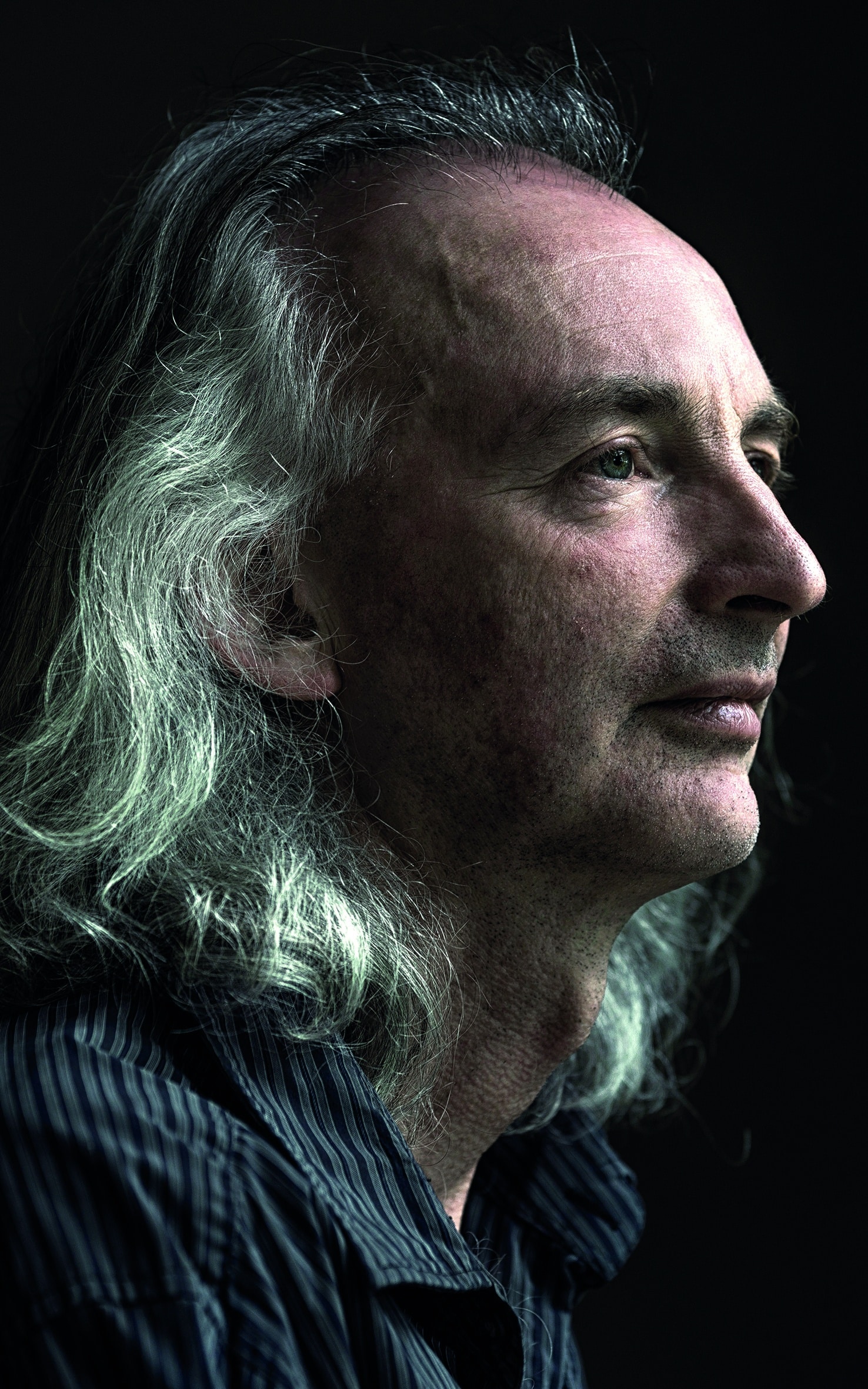 Donald Niedekker tells his story associatively and fragmentarily; his stories branch out, yet at the same time fit together ingeniously.
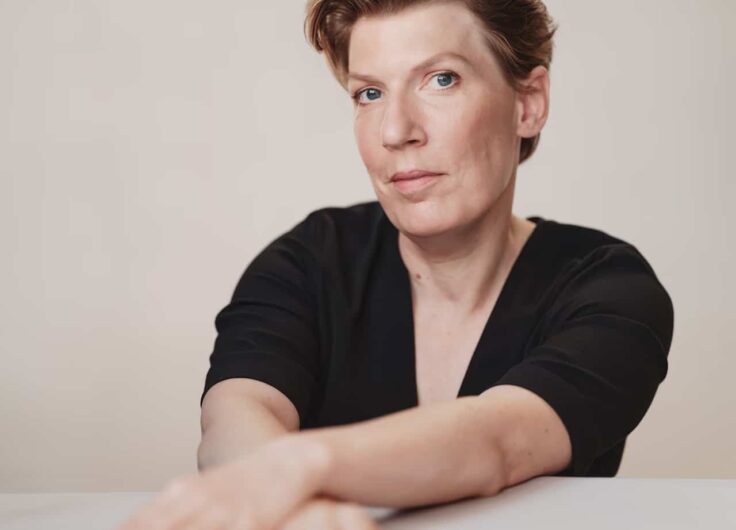
© Tessa Posthuma de Boer
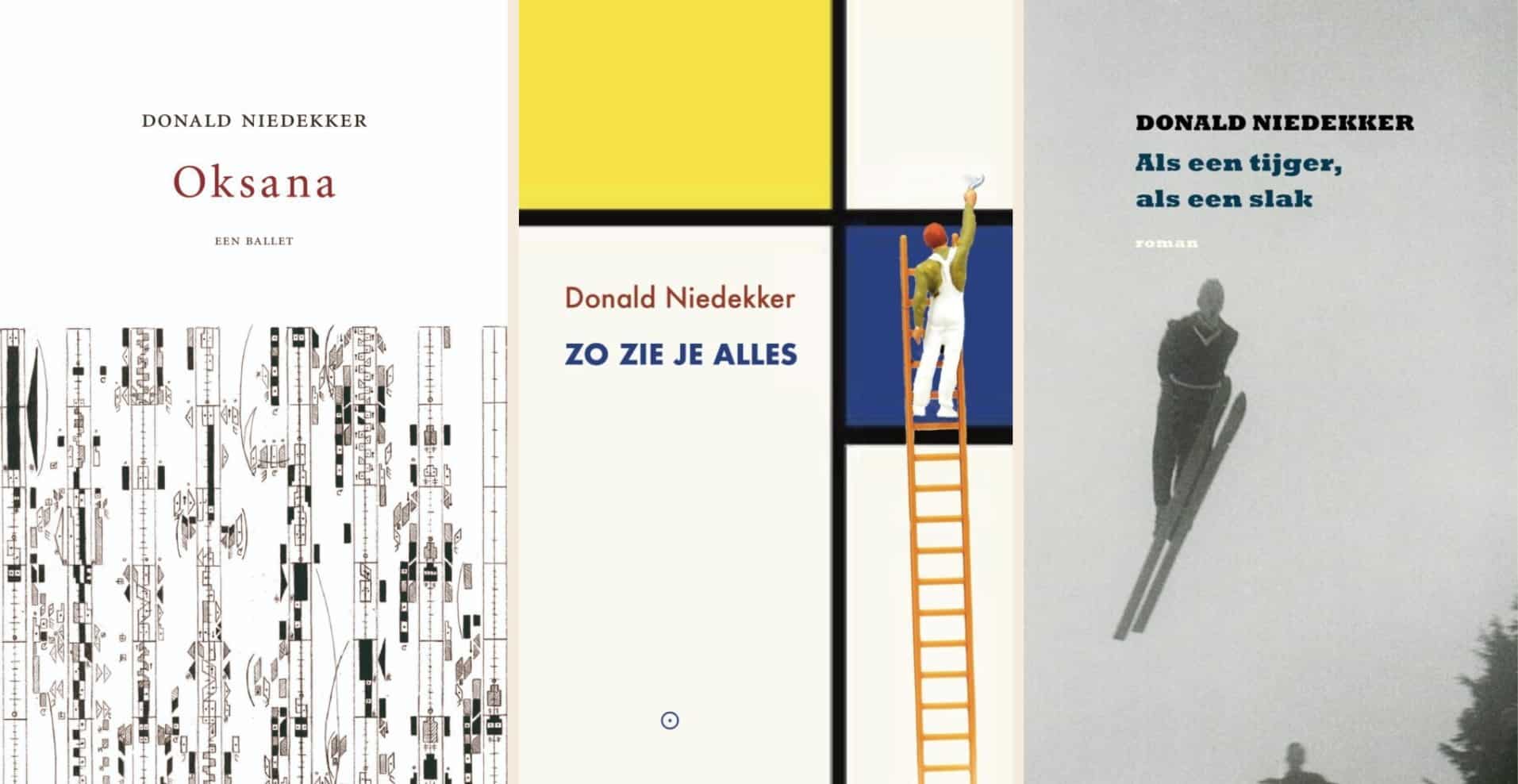
The narrator of Als een Tijger, Als een Slak (2014) is a poem – yes, you read that correctly, a poem, not a poet – that wrestles with the so-called rules of the novel. The narrator of Niedekker’s Waarachtige beschrijvingen uit de permafrost (True Descriptions from the Permafrost (2022) has been buried in a layer of ice for over four centuries. In Zo zie je alles (2019) the narrator sharpens pencils for IKEA and builds scale models to capture lifelike moments. Oksana (2016) tells of a Ukrainian woman who, despite having lost her parents in the Chernobyl nuclear disaster and falling prey to human traffickers, never stops dancing.
Donald Niedekker’s (1963) exceptional ideas would, in less gifted hands, quickly become painful or pretentious. Yet he manages to express those ideas in an extraordinary manner; a manner that has earned him the epithet ‘idiosyncratic’. In fact, in 2021 he won the Luc Bucquoye Prize from the Vrije Universiteit Brussel (VUB) precisely for his idiosyncrasy.
The Droste-Effect
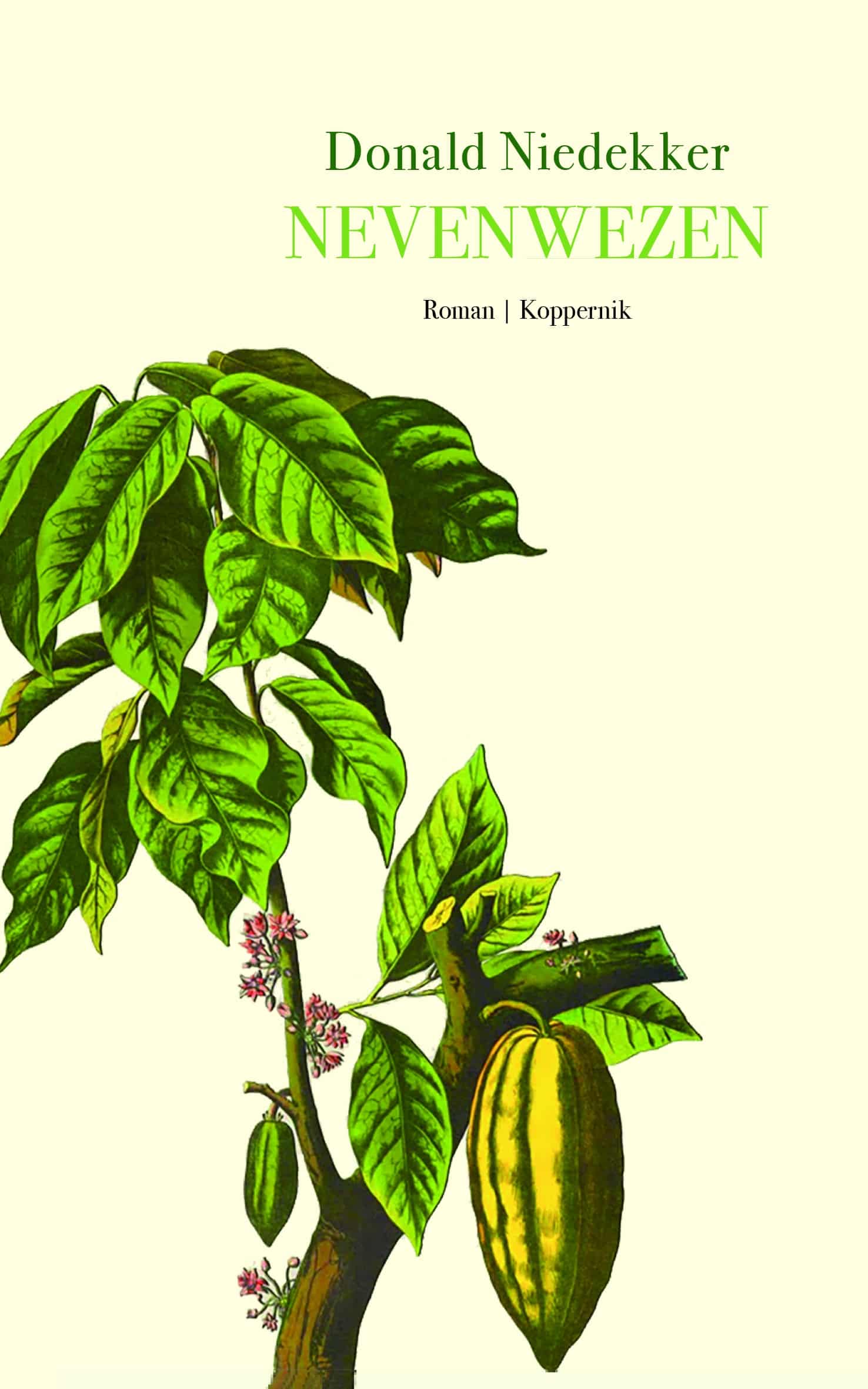
In this piece, I will take an over-arching look at Niedekker’s oeuvre, which expanded to include Nevenwezen in early 2026. He has published twenty books so far, both fiction and non-fiction, as well as one title under the pseudonym Ellen Wenkelbach. My focus here will be the novels published by Koppernik. Because of the sheer size of Niedekker’s body of work, much of note remains undiscussed, including the beautiful travel stories he has created in collaboration with photographer Harold Naaijer.
Niedekker’s latest book explains much about the beginning of his writing adventure, so it seems a fine place to start. The central character of Nevenwezen is a boy, called ‘the boy’ throughout the story, growing up in the 1970s in the area around the Zaan River in North Holland where, ever since the seventeenth century windmills and factories have been providing prosperity and producing commodities such as soap, paper, and chocolate.
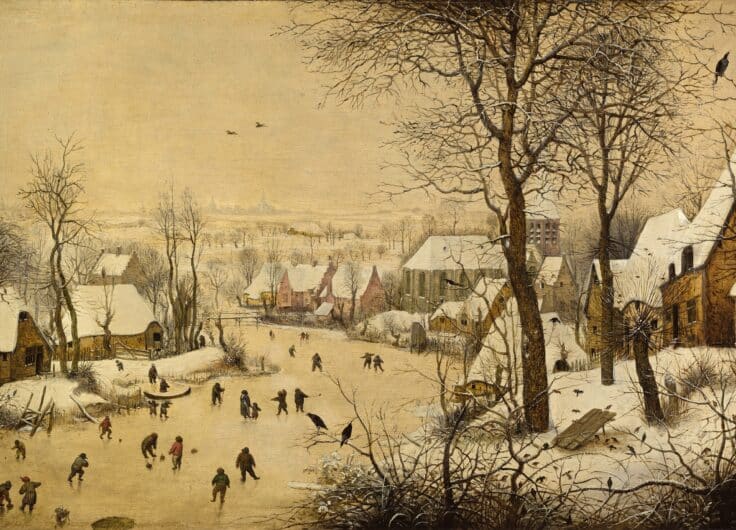
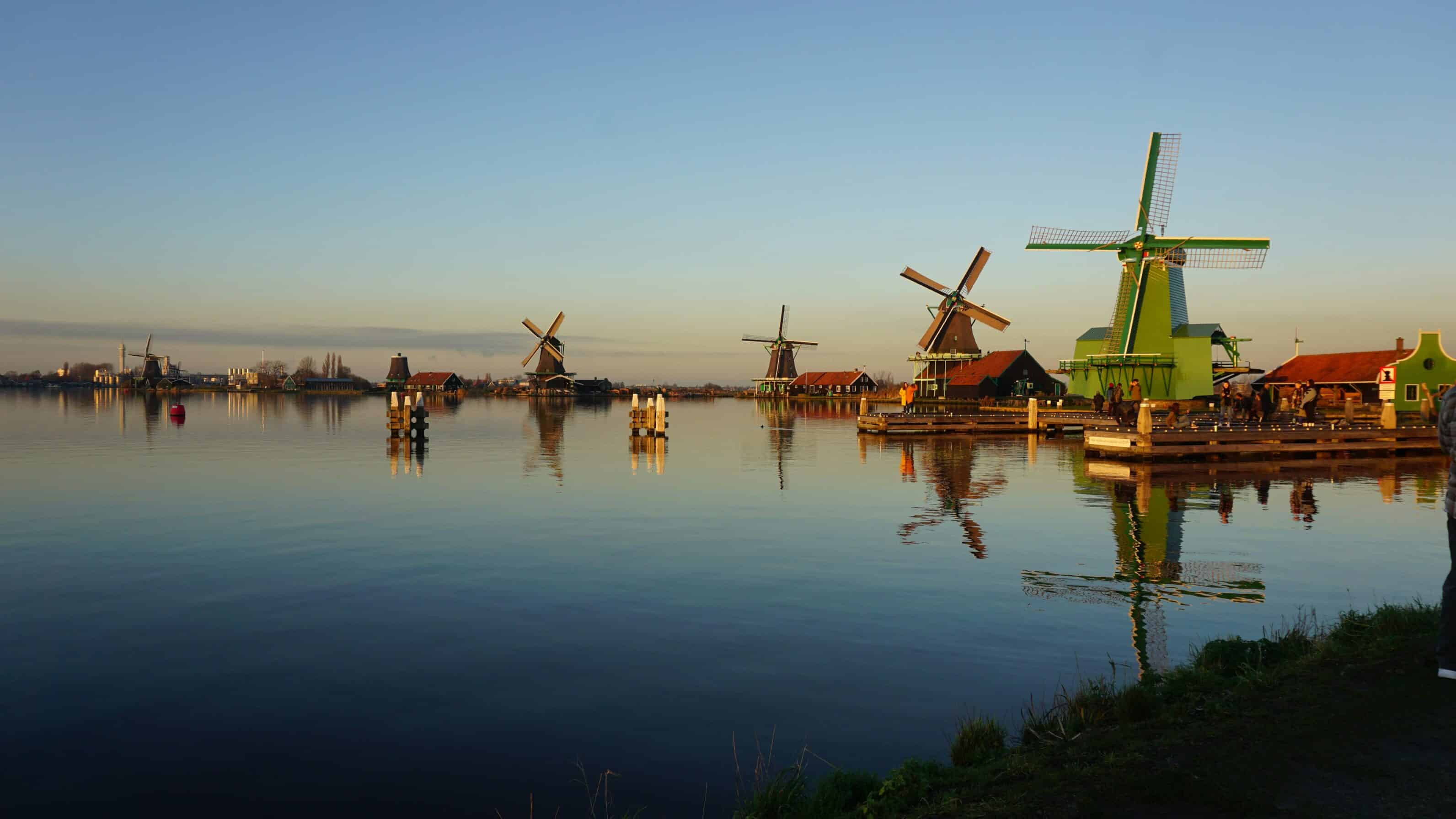 Niedekker's most recent novel, Nevenwezen, centers on a boy growing up in the Zaanstreek in the 1970s.
 © Nathalia Morales / Unsplash
The boy has a notebook in which he collects words and phrases that intrigue him, from lines of poetry to the names of flowers or places, that he wants to remember – perhaps a word like ‘cacao’, which is spelled more or less the same in almost all languages. In addition, the boy has a dream tree, a chestnut in the garden, where he sits and imagines another boy, an alter ego, a sort of cousin, growing up on a cocoa plantation in West Africa, who, in turn, imagines him. “He invented the one who invented him.”
This boy from Zaandam, a true Niedekker character, savours words and devours stories. This boy knows that nothing returns, yet he still wants to “preserve everything, cherish it within himself, and bring it back to life” because he is a born writer and, like the author, he employs the literary variant of the Droste effect, mise en abyme, or the play of mirroring and repetitions, where a boy invents a boy who invents him.
Niedekker has exceptional ideas that in less gifted hands would quickly become painful or pretentious
This principle recurs in virtually all of Niedekker’s books. He tells stories associatively and fragmentarily; his tales branch out, yet at the same time fit together ingeniously. A photograph of a crossroads leads to a remarkable encounter at that crossroad; a change in a scale model alters the real-life event that inspired that model. The stories within the story become stories outside the story and create a sensation of infinite storytelling; a never-completed mosaic of dreams, recollections and histories that intensify life and give it meaning.
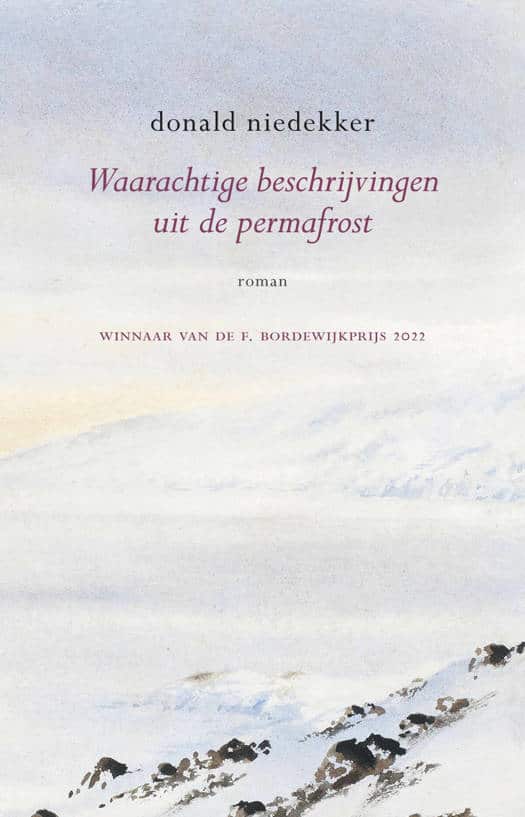
The narrator of True Descriptions from the Permafrost, who sailed as a bard on Willem Barentsz’s failed expedition to the Northeast Passage, sums this up most succinctly from his thawing ice grave on Novaya Zemlya when he speaks of “stories from which stories emerge.”
Even in Niedekker’s debut novel, aptly titled Hier ben ik (Here I Am; Vassallucci, 2002) a (drunk) man delivers a “contemporary Song of Songs” to his beloved with humour and bravado: “And no matter how much you write, there will always be an unknowable story lurking in the background.”
Imagination and Concentration
Like the boy in Nevenwezen, Donald Niedekker grew up in the Zaan region. He studied cultural anthropology and Russian Studies, then worked as a journalist and copywriter until in the mid-1990s he committed himself completely to independent writing, which for him is closely linked to travel and ‘useless’ wandering. Niedekker may be rooted in the Zaan, but his gaze ranges from Groningen to Chernobyl, from the Norwegian island of Ona to the Carpathians in Central Europe. Yet he always settles down again in Berlin, his soulmate city since the fall of the Wall. The city suits him perfectly, precisely due to its indefinable boundlessness: in Berlin, you can be anything.
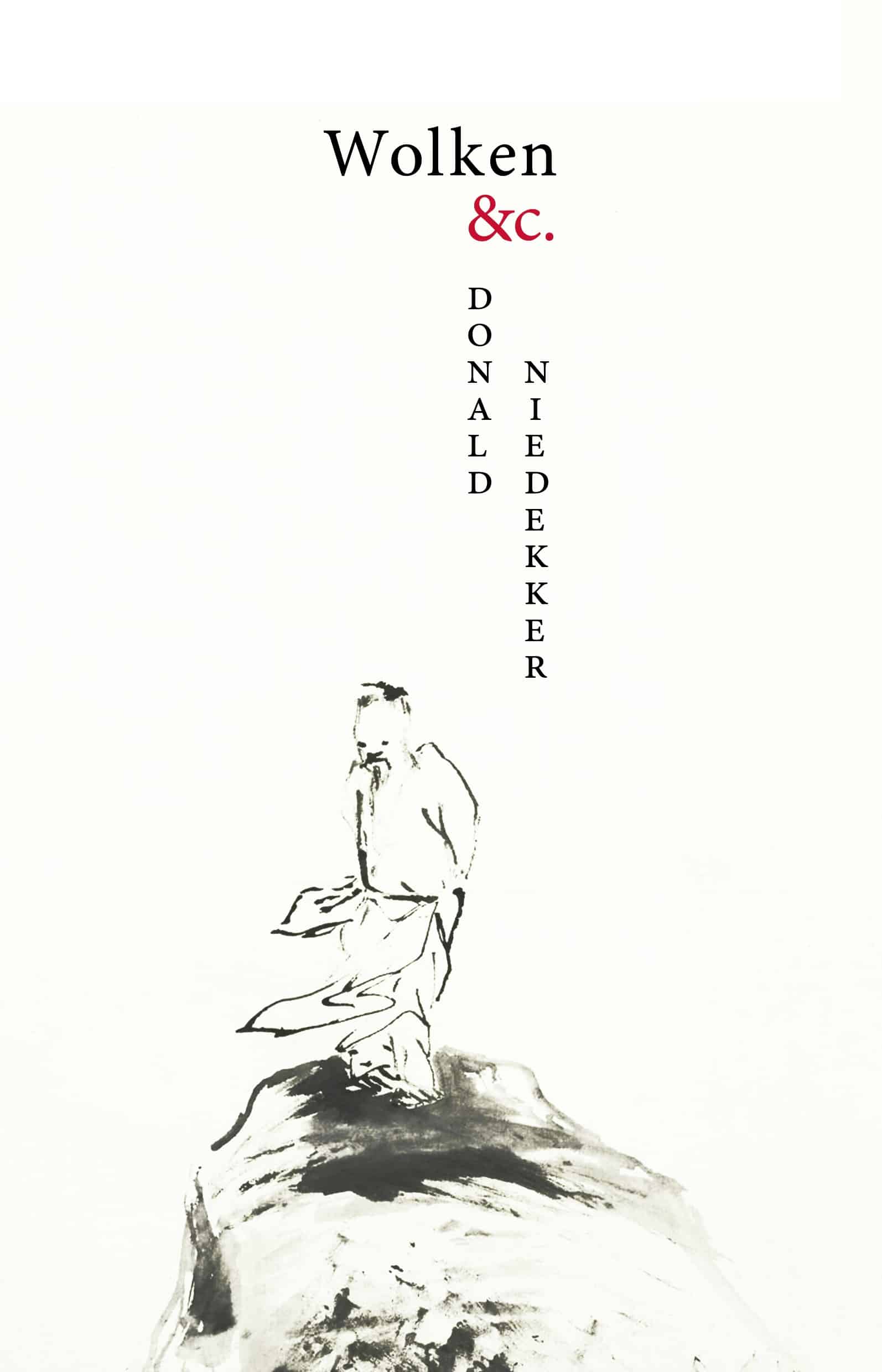
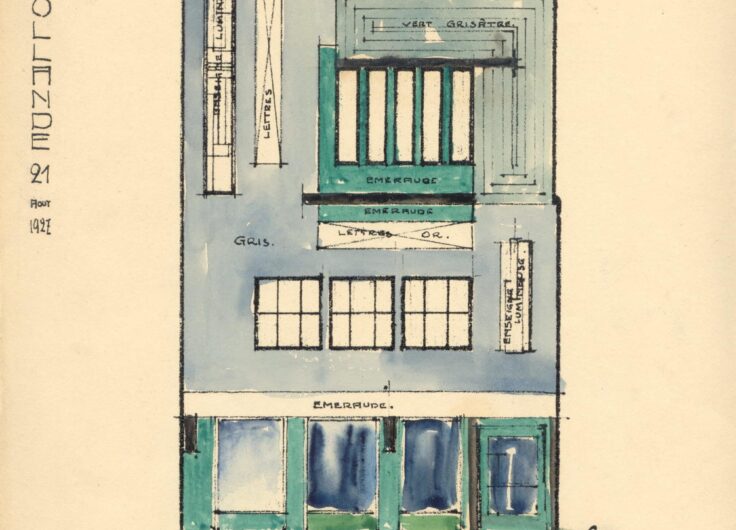
In Wolken &c. (2018), the intertwining of writing and travel reaches a climax as an unnamed narrator travels through Europe for three years with a notebook. Niedekker captures the traveller’s impressions with extraordinary precision. Whether describing a Hague townhouse, a bumblebee searching for pollen or a sunrise over Berlin’s Hauptbahnhof, the precise descriptions not only reveal the beauty of the everyday but also sharpen the reader’s own powers of observation.
Furthermore, that reader is drawn into the liberating world of a writer who, while mastering all the rules of his craft, cheerfully flouts them and boldly declares: “[…] somewhere between Osnabrück and the sea he became me and I stepped into the present.”
Niedekker plays the game of perspective and time with so much verve that it never seems confusing or contrived. Instead, his play creates space, breaks things open and enlivens his prose. The German poet Schiller believed that art is the place where man becomes what he essentially is: homo ludens, man the player. Niedekker is a scriptor ludens, a playing writer.
For Niedekker, literature is the sanctuary where imagination and concentration lift both writer and reader to greater heights
For him, literature is the sanctuary where imagination and concentration – two of the most important human faculties –propel both writer and reader to greater heights. In this sanctuary, it is entirely logical to empathise not only with another human being or animal, but also with, for example, “the late November grass”.
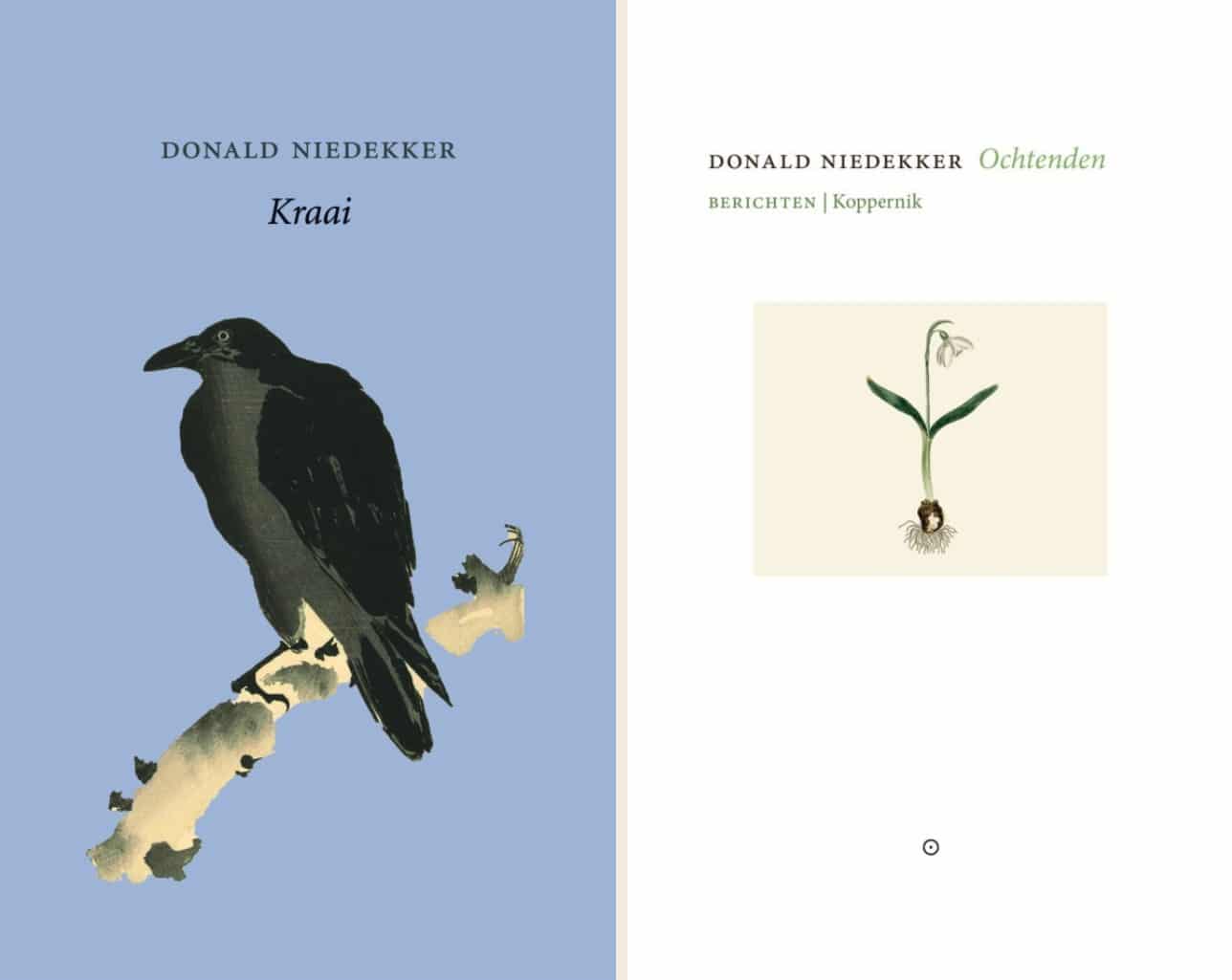
Is it a bit airy-fairy, or even esoteric? Certainly not. It is writing as exploration. And Niedekker works in the same way when he writes non-fiction. In Kraai (2021) and Ochtenden (2023), he engages all his senses to capture what surrounds us: the scent of felled pine trees, the sound of rain or the colour of reeds in the winter sun.
He was once described as the “Zen master of Dutch literature” which, to me, is a dubious honour. Too often, “Zen” is misused to conceal a therapeutic-capitalist imperative of self-optimization through self-help books. Donald Niedekker steers well clear of that. The fact that he begins his days with tai chi exercises and reciting poetry falls more within the realm of concentration than literature.
Dazzling Book
In every one of his books, Niedekker evokes a vast world in a concise space, using fizzing, flowing prose in chapters of just a few pages. He is a writer who makes few concessions. Sometimes this causes friction: the distorted, one-sided view of reality in the admittedly witty but insistent monologue of the national interest-obsessed archivist Keldermans in the novel of the same name (Vassallucci, 2004) disrupts the story. In Nevenwezen, a storyline featuring Aztec gods and social democratic politicians obstructs the rest of the narrative.
As a person, that is, as a writer within the ‘literary world’ (a phrase the Zaanstreek boy would consider very ugly), Niedekker seems to focus first and foremost on… his books. He gives interviews only sporadically, doesn’t use social media or have a website. Even the obligatory author portrait is missing from the back covers of his works.
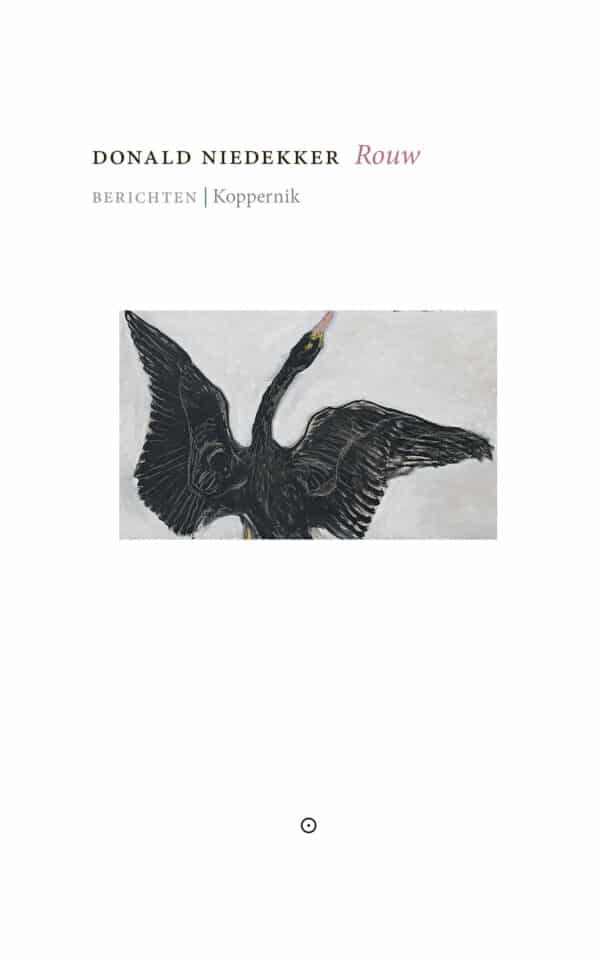
Speaking about Rouw (2024), the loving notes he wrote following his mother’s death, Niedekker explained: “For a long time, the literary world passed me by. Nowadays, I get to feature in it as an outsider, a secret tip.” Little by little, since the success of Strange and Perfect Account from the Permafrost, the only one of Niedekker’s novels to be translated into English, he has indeed been reaching a larger audience. His novels get onto shortlists and win prizes.
He’s an idiosyncratic fellow, is Niedekker. He has commented wryly on the ins and outs of the literary business ever since his debut in Hier ben ik where the narrator, an as-yet unpublished writer, discusses the importance of a plot with a publisher who tells him flatly that “without a plot, there is no market.”
In Als een tijger, als een slak too, readers sense the tension between conformity and autonomy, between an ordered existence and a capricious writer’s life. This novel, narrated by a poem, traces the development of Martin Frigg, the person who will put that poem, “me” (the narrator) down on paper – or, more precisely, on the napkin that came with a ham and cheese sandwich. As a child Frigg, like Niedekker, was also an observant, imaginative boy from Zaandam who grew up to write one-liners for an advertising agency. “When he went too far in his self-denial, he called it the poetry of modern times.”
In 'Als een tijger, als een slak' the tension between an ordered existence and an erratic writing life lies dormant beneath the surface
Als een tijger, als een slak is a dizzying book, elusive as a cloud, at times very funny, sometimes quite stern. This was Niedekker’s first book published by Koppernik and the beginning of a fruitful collaboration. Admittedly, it may not be his most accessible work. If you are just starting out on your Niedekker journey, you might want to start with Oksana.
Oppressive Ballet
Oksana tells the tragic tale of Lena, an injured Ukrainian ballerina who, nonetheless, continues to dance . Eventually, she ends up in the basement of an Albanian villa where she and other women are trafficked for sex. There, Lena meets the free-spirited Oksana who cannot resign herself to this fate and suffers all the consequences that entails. “There stands Oksana. In the clothes in which we last saw her. A tattered V-neck sweater, bleached jeans.” Even with these very ordinary words, Niedekker constructs a haunting ‘ballet’, finding a perfect balance between what is shown and what is omitted.
Despite the themes, this is by no means a wholly dark book. There is the warmth of a grandmother making elderberry jam and baking poppy seed rolls, the outstretched hand of a truck driver who cannot speak, the freedom of the “incomprehensible simple being.” Oksana is a book into which everything fits.
Or, on second thought, maybe your first step on the Niedekker journey should be Zo zie je alles. In this book, a model maker sets himself the almost impossible task of capturing a moment – of catching time red-handed. He knows that well-chosen details make all the difference and that those who observe with passion will always see differences.
But can he foresee the effect the scale model of the Swedish Food Market, which he intends to present to his IKEA colleagues when he retires, will have? As the village bells ring, the boundaries between the miniature world and the real world shift…. I won’t say more for fear of spoiling the pleasure of the brilliant denouement.
Finally, while re-reading Niedekker’s books for this piece, I found myself standing on platform 7A at Amsterdam Central Station waiting for the train to Alkmaar. In my bag was Als een tijger, als een slak, in which Martin Frigg (from Alkmaar) was waiting on platform 7B of the same station for the train to Berlin! It was the first day of spring and I turned my face towards the sun with my eyes closed. When I opened my eyes again, my breath caught in my throat. No, surely not! I looked away, blinked, looked again. I have emailed Donald Niedekker before, mainly about Berlin, but have never met him personally, but now I believed he was standing diagonally behind me, reflected in the passing windows of the train gliding in. I boarded without verifying this suspicion.
…A writer boards a train with a book in her bag by another writer who is also boarding that train, and in that book a writer who boards a train and who writes about a writer, who…
And that is how it happens: stories beget stories.
Donald Niedekker, Nevenwezen, Koppernik, Amsterdam, 2025, 208 p.

You might also like

In Jozef Deleu’s Poetry, Nothing Was Lost





Leave a Reply
You must be logged in to post a comment.